
The Japanese Golf Market in Outline
One of the world's largest golf economies: thousands of courses and driving ranges, a participation base measured in the millions, a domestic brand culture with strong premium expectations, and a market that rewards quality discipline over price aggression.
The market's shape, in the frames a program needs: an infrastructure base measured in thousands of courses and driving ranges (the range density is the distinctive fact — the practice culture runs at a scale no Western market matches, and it carries its own product logic the next sections cover), a golfer population in the millions with one of the world's older average ages and one of its strongest equipment-spending habits per player, a domestic manufacturing and brand culture that sets the quality reference (the premium domestic aesthetic — refined, weight-conscious, detail-obsessed — is the bar the market's shelves teach), and a retail-and-channel structure that has consolidated while keeping its service culture (the pro shop and specialty retail relationship remains a serious, consultative channel rather than a price floor).
Why the market rewards the B2B program structure this site documents: the Japanese buyer runs the full discipline stack at a level most markets only gesture at — the sample process treated as a formal stage with documentation, the AQL plan read line by line (the cosmetic classes discussed in earnest), the reorder consistency expected as a norm rather than praised as an achievement, and the relationship cadence (the negotiation guide's annual structures arrive naturally, because the Japanese program calendar assumes multi-season continuity). The program that clears the quality bar finds a market whose loyalty compounds; the program that cannot should sell elsewhere first and learn here second.
The Quality Bar: Cosmetic and Structural
The Japanese quality bar is a two-layer discipline, and the cosmetic layer is the one that surprises Western-trained programs: the structural layer is the universal one (the seam classes, the anchor points, the hardware loads of the AQL guide — Japanese buyers read these fluently and discuss them in the RFQ), but the cosmetic layer runs a visible class tighter — the stitching alignment, the logo registration, the fabric's surface consistency, the interior lining's finish, the zipper pulls' feel — inspected at a sampling intensity and a defect tolerance that treats visible imperfection as defect rather than character. The B-grade discipline the market runs at retail (the second-quality channel that sorts visible-cosmetic product out of the first-quality flow) is the commercial expression: a Japanese first-quality shelf is sorted, and the sorting is upstream of the shelf.
What the bar means operationally for a manufacturing program: the cost stack carries a cosmetic-QC line (the inspection intensity, the rework loop, the sorting labor that the tolerance implies — line items the Japanese quote includes without surprise), the color discipline tightens a grade (the metamerism controls and the batch-to-batch consistency the anchor discipline holds, read at a stricter eye), and the sample approval runs its full formality (the golden-sample logic — the sealed reference both sides honor — which the sample guide documents and the Japanese buyer institutionalizes). The honest summary: the quality bar is not a trick or a trap; it is a published discipline, and the manufacturer who runs the checklist at full seriousness is most of the way to clearing it.
The Practice-Range Culture and Its Bags
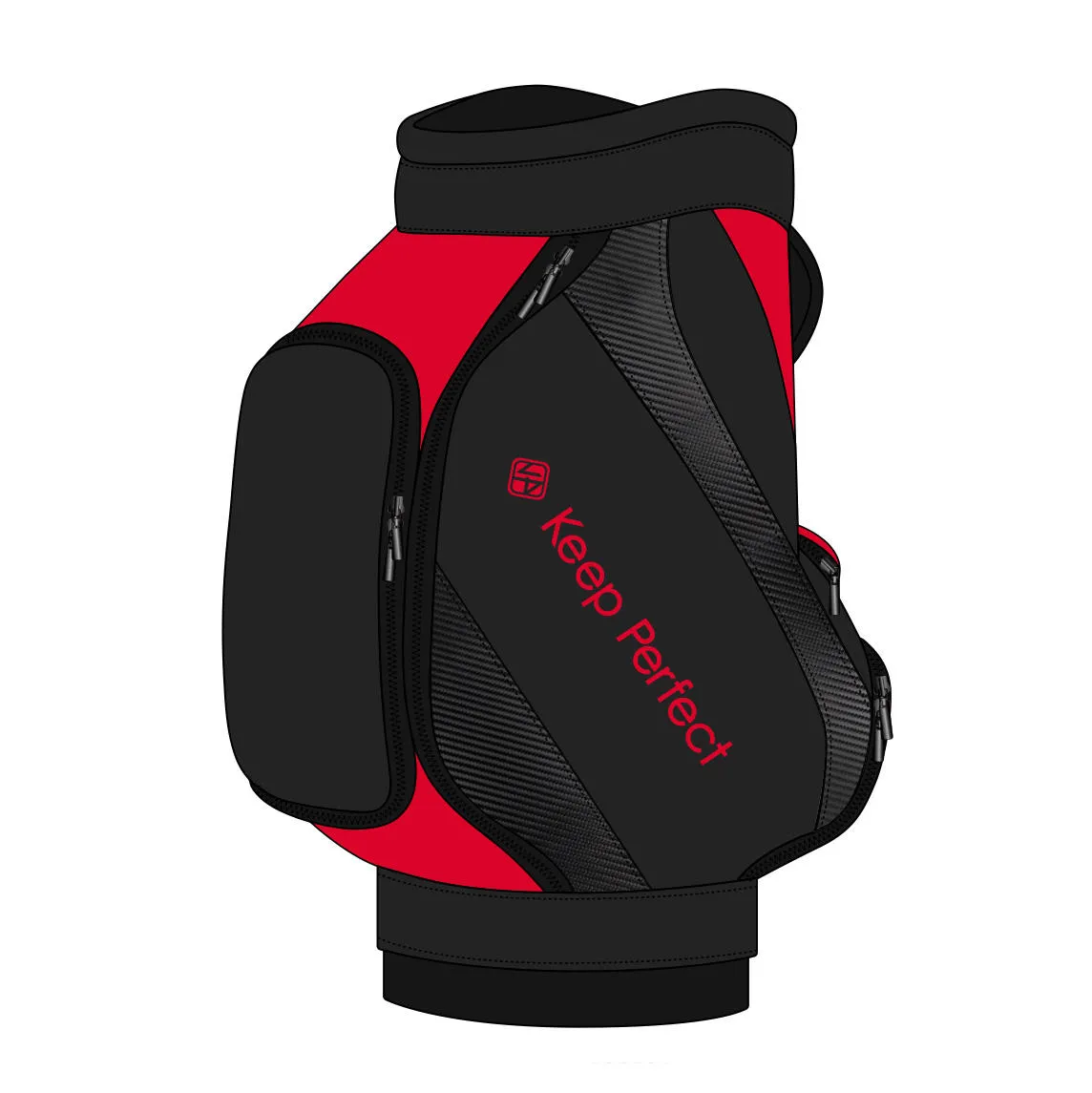
Japan's driving-range density is the market's distinctive infrastructure fact: the practice habit (lunchtime range sessions, the after-work bucket, the lesson culture's volume) runs at a scale that supports a bag category most Western programs barely know — the range bag (the standing practice caddy: the compact, club-standing, ball-pocket-forward construction that lives at the range rather than the course), the mini and half-size carriers, and the den-caddie class of small-format staff-style bags that the market's aesthetics elevated into a genuine segment. The program logic: the range bag is a recurring-consumption product (the practice bag wears at bucket scale and replaces at lesson scale — a reorder cadence the warehousing math prices at velocity), and its branding real estate is premium (the range is a public practice in a dense urban culture — the logo's impressions run at gym-membership frequency, not golf-round frequency).
The program opportunities the range culture opens beyond the obvious: the academy and lesson channel (the teaching studios whose branded practice equipment is both tool and merchandise — the junior and academy guides' logic at adult scale), the corporate wellness crossover (the lunchtime range as a company-culture institution — the corporate gift and incentive programs that brand the practice bag as a wellness SKU), and the youth pipeline (the junior range habit that feeds the junior equipment market — the age-band constructions the junior guide documents, specced at range-first dimensions). The range category is also the market's laboratory for the compact and the lightweight: the sunday-class constructions and the mini formats iterate fastest where the range culture buys them weekly.
Caddie Courses and the Walking Tradition
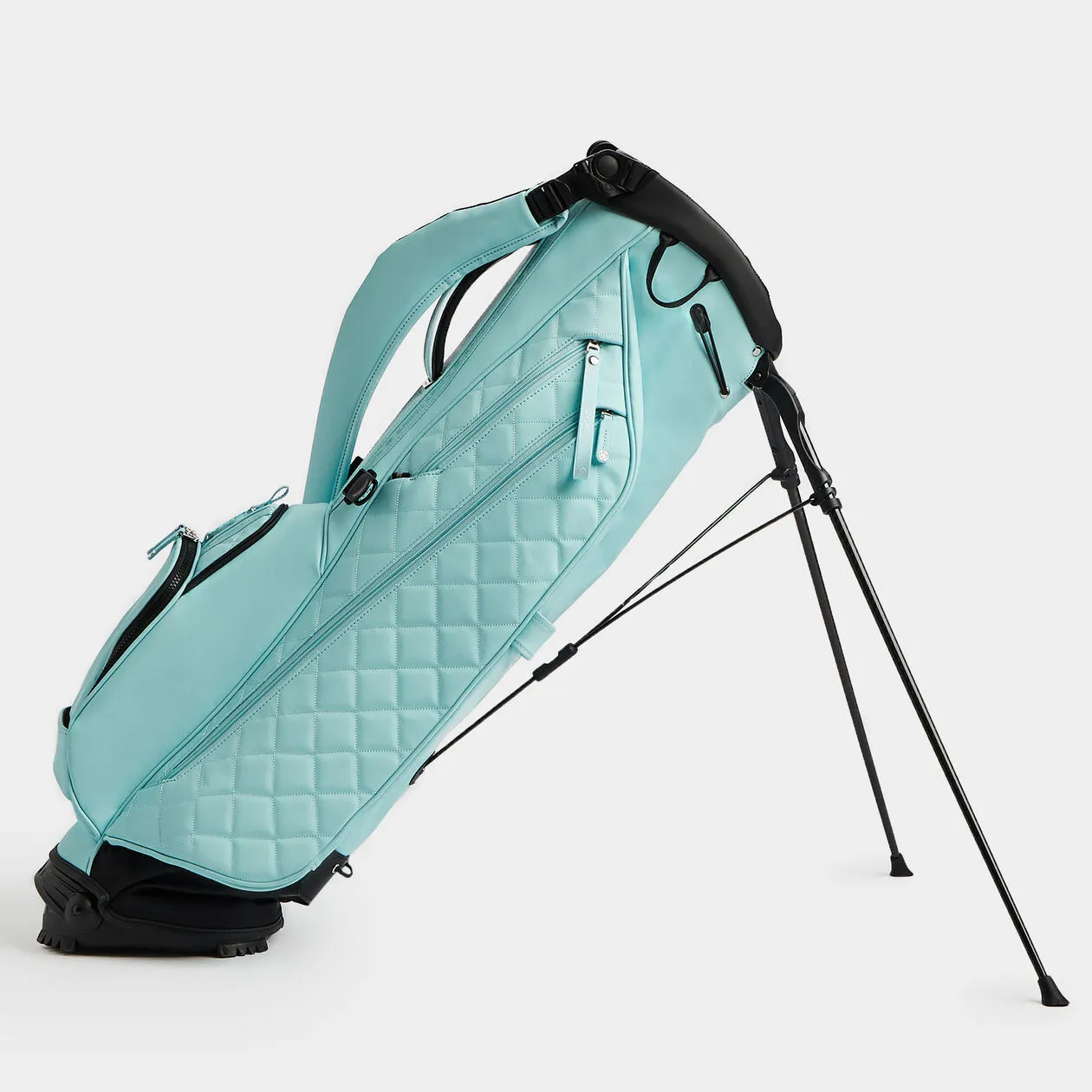
The resort-course tradition that runs against the global cart grain: Japan's premier courses were built on the caddie model — the walking round, the two-bag caddie service, the ceremony of the escorted game — and a meaningful tier of the market still plays it. The program consequence: the walking chassis (the stand bag and the caddy-carried executions) holds a premium tier in Japan that the American program logic would never predict — the weight discipline and the ergonomic strap engineering at their most rigorous, because the walking market's expectations were trained by the domestic premium standard. The caddie-carried construction (the staff-style bag in caddie service — the two-bag carry the caddie's technique loads) also survives as a niche with its own spec logic: balanced paired geometry, the caddie's grip points, the club-organization the escorted service assumes.
The honest segmentation note: the cart culture is simultaneously large (the everyday courses run cart-heavy, the senior market rides, the mountain courses require it) — the market holds both traditions at scale, which makes the chassis map genuinely two-poled rather than cart-dominant like Australia or walking-nostalgic like America's college circuit. The program that maps Japan as one thing gets half the market wrong; the program that maps it as a quality-barred market with a two-pole chassis logic — cart feature bags at the everyday tier, walking premium at the resort tier, range formats at the practice tier — has the market's actual shape, and the price-tier logic maps accordingly: the premium band runs deeper in Japan than in most markets, because the quality expectations and the gift economy (below) both price it.
Compact Transport and Bag Dimensions
The dimension lines a Japanese program writes that a Western spec sheet never sees: the parking and transport reality (the compact-car classes and the urban garage dimensions that cap the bag's length and the trunk's carrying geometry — the folded and the shorter executions priced at a premium the transport reality explains), the train commute (the golf-bag-on-transit pattern for the range sessions and even the course rounds of the rail-served precincts — the weight discipline and the carry comfort at commuter standards, the sunday and pencil chassis at their most functional), and the storage reality (the urban dwelling's storage economics that premiumize the compact and the storable — the bag that lives in a closet rather than a garage).
What the dimension discipline does to the spec sheet: the height and length caps become named lines (the RFQ that carries explicit dimension ceilings rather than the Western program's open geometry), the weight class tightens (the market's premium aesthetic was weight-trained from the start — the stand guide's sub-2-kilogram classes are the entry expectation of the quality tier, not the racing edge), and the compact formats earn real price (the mini and half-size executions — the den-caddie class — carry premium bands that their material cost does not explain and their lifestyle function does). The transport reality is also the travel-chassis logic: the domestic golf travel culture (the resort trips, the stay-and-play circuits) runs the weekender and soft-travel formats at volumes the travel-cover guide's airline logic only partially covers — a compact-travel niche the domestic program can own.

The Gift Calendars That Drive Programs
The institutional gift seasons that move premium product on rhythms no Western promotion calendar matches: the mid-year season (the summer gift-giving of roughly late June into July) and the year-end season (the December gifting that concentrates the fourth quarter) — corporate and personal gifting cultures with centuries of formality behind them and a golf-equipment dimension that runs strong (the golf bag as the gift of consequence, the premium accessory set as the gift of relationship). The program logic: these are institutional calendars, not retail promotions — the demand is dependable, the quality expectations are gift-grade (the gift guide's tier psychology at Japanese formality), and the packaging discipline is serious (the packaging guide's gift tiers at their most ceremonial — the wrap, the presentation, the unboxing as part of the product).
The calendar worked backward from the seasons: the year-end gift demand lands the premium programs' goods by early November (the production window through the Northern autumn, the ocean leg timed against the year-end port peaks), and the mid-year season lands its goods by early June (the spring production window) — two gift calendars interleaved with the market's seasonality (the Japanese playing season runs its own spring-autumn rhythm, with the summer humidity and the winter cold pulling play toward the shoulders), giving a well-mapped program three demand waves a year: spring season, mid-year gifts, autumn season plus year-end gifts. The reorder discipline follows the calendar's shape (the anchor system running on institutional dates), and the second season is the profit (the gift calendar that renews annually is the program's compounding asset — the relationship that gives again, on schedule, every year).
The Aesthetic Register
The market's aesthetic — trained by its domestic premium brands and its own design culture — runs to a specific register: clean colorways and disciplined palettes (the color-story discipline at its most restrained; the loud Western print programs localize carefully or not at all), refinement over statement (the details earn the price: the lining's finish, the zipper pull's weight, the stitching's alignment — the cosmetic quality bar's aesthetic expression), weight-conscious engineering as a design virtue (the lightweight heritage the evolution guide's 2000s chapter documents runs deepest here — the market that most prizes the engineered-light construction), and the personalization register (the name and the crest at monogram scale — the quiet custom rather than the billboard brand).
What the register means for program design: the design directions that travel to Japan run the refined end of the range, and the execution matters more than the concept (the techniques comparison's embroidery and woven-label methods at their densest and most precise; the placement logic at its most disciplined — the small, correct position rather than the large, visible one), while the statement programs that do work (the character and anime-adjacent cultures — the market's own subcultures run deep and license carefully) run through their own specialist channels with their own quality bars. The honest design summary: the Japanese market buys execution — the program whose construction discipline is impeccable may choose a modest design vocabulary and win, and the program whose design is loud and whose stitching is visible in the wrong way has chosen its own failure.
Border Mechanics: Duty Lines, RCEP and the 10 Percent Tax
The import economics in honest outline: the duty treatment for golf bags (the HS 4202.92 family) runs through the RCEP-era schedules — the regional agreement's phased reductions mean the China-origin line has been stepping down, and the current schedule line for the specific construction is the broker's first check (the incoterms guide's HS discussion holds the parallel structure; the Japanese quote conversation names the line early because the landed math depends on it). The consumption tax runs at 10 percent at the border — the VAT-like mechanics of the European guide's discussion apply, with the recovery structure for registered importers making it a cash-flow line rather than a cost line for the properly structured program.
The freight and consolidation reality: the Japan run (the ports the program consolidates toward — the Yokohama and Osaka gateway logic) runs shorter than the Australian leg and at higher schedule frequency, which changes the calendar math (the ocean leg is a smaller uncertainty, the production window dominates the timing — the timeline guide's 35–50 days is the program's clock), and the LCL-versus-FCL arithmetic of the incoterms guide runs at Japanese program scales (the mid-sized, high-quality orders that characterize the market rarely container-load alone — the consolidation discipline is the default, and the freight forwarder relationship is part of the program's standing infrastructure). The landed-cost summary the program should hold: FOB plus a modest duty line (the RCEP step-downs moving it) plus the 10 percent tax plus a realistic freight share — a border stack that rewards preparation without punishing it.
Channels and the Domestic Brand Reality
The channel structure a program actually meets: the specialty and pro-shop retail channel (consultative, service-cultured, brand-conscious — the shelf that teaches the market its quality expectations and defends them), the department and gift-retail layer (the gift calendars' merchandise arm — the premium gift SKUs of the seasonal sections, sold where gifting is the purchase logic), the corporate channel (the institutional gifting and incentive structures — the corporate programs' Japanese formality, the company anniversary and the client relationship as program occasions), and the direct-to-consumer digital channel (growing, quality-barrowed, and the natural home of the specialist and character programs). The domestic brand reality sits over all of them: the market's reference brands are strong, premium and deeply distributed, and the imported or custom program prices its identity against them honestly.
The program positioning that works against strong domestic brands: the specialty and identity programs rather than the head-on value plays (the custom and private label structures that offer something the domestic shelf does not — the club's own identity, the corporate gift's own exclusivity, the character program's own license), the mid-premium band executed at domestic-grade discipline (the price-tier guide's premium band at Japanese cosmetic standards — where the cost stack's QC lines earn their keep), and the format innovations the domestic shelf has not claimed (the compact and range categories' niches, the drop structures where scarcity meets a culture that honors limited editions with particular seriousness). The head-on value play — the cheaper bag against the domestic premium — is the market's most reliable way to teach a program humility.
Working With Japanese Buyers
The working norms, described for the program that wants the relationship rather than the stereotype: the formality is real and functional (the sample process documented as a formal stage, the specification discussed in writing with precision, the approval a procedure rather than a vibe — the design process guide's stages arriving with their paperwork), the communication runs indirect by Western convention (the concern arrives as a question rather than an objection — the program that learns to hear the question's weight saves a cycle; the written follow-up that confirms the meeting's meaning is the norm, not the insult), and the decision pace is the relationship's own (the Japanese program decision takes its season — the trade-show guide's two-week follow-up protocol stretches to a patient quarter, and the patience is repaid in the loyalty's compounding).
The operational disciplines that earn the relationship's trust: documentation as a habit (every spec, change and approval in writing — the anchor discipline the market assumes as a baseline), the quality honesty that the AQL plan's transparency provides (the Japanese buyer reads the plan, asks about the cosmetic classes and expects the numbers to mean what they say — the plan that survives being read is the plan that wins), and the long-game service posture (the reorder that matches the first order exactly, the issue that gets fixed rather than argued — the negotiation guide's relationship structures are the market's native language). The one-line summary the section earns: the Japanese relationship is slow to open and permanent when it does — the program that budgets for the opening is buying the permanence.
Spec Adjustments for Japanese Programs
The spec sheet deltas, collected for the RFQ stage: the cosmetic-QC lines (the inspection intensity and the cosmetic tolerance classes of the quality section — named line items, not implied standards), the dimension caps (the length and height ceilings the transport reality writes — explicit numbers in the spec, honored in the pattern), the weight classes (the premium tier's entry expectations — the sub-2-kilogram discipline at the quality tier), the finish register (the lining, the pulls, the stitching alignment — the execution-forward design the aesthetic section describes), the packaging tiers (the gift-grade presentation the calendars price — the packaging guide's ceremonial end), and the labeling blocks (the care and content sets the market expects, with the maintenance guide's care-card discipline as a deliverable).
What the Japanese deltas do not change — the never-drop lines hold as everywhere, but the market reads them at a stricter eye (the structural seams, the AQL discipline, the labeling integrity — the universal lines, inspected at the Japanese intensity). And what the deltas add up to commercially: a program costed honestly at the cost breakdown's full stack plus the cosmetic and dimension lines — a landed cost that carries real margin because the market pays for discipline (the premium band's Japanese depth is the reward side of the quality bar), and a program that competes on execution rather than price — which is the only competition the market scores.
| Spec Line | Western Default | Japanese Program | Why the Delta |
|---|---|---|---|
| Cosmetic QC | Standard tolerance | Tighter class, named line items | The B-grade shelf norm sorts visible imperfection |
| Dimensions | Open geometry | Explicit length and height caps | Compact cars, train commutes, storage reality |
| Weight class | Band by chassis | Sub-2 kg discipline at quality tier | The lightweight heritage as entry expectation |
| Finish register | Feature-forward | Lining, pulls, stitching alignment | Execution over statement as the aesthetic |
| Packaging | Retail tiers | Gift-grade presentation options | The gift calendars ceremonial demand |
| Design vocabulary | Statement-friendly | Refined, disciplined palettes | The domestic premium register as the bar |
Junior and Academy Opportunities
The junior dimension of the Japanese market runs deeper than most programs price: the after-school lesson culture and the academy infrastructure train young players at an intensity that feeds a genuine junior equipment market (the age-band constructions of the junior guide — the 1.0–2.2 kilogram targets and the size-band geometries — specced for a market that buys them seriously), the family practice culture (the range habit shared across generations — the parent-and-child practice session as a weekend institution, carrying the range-bag and compact-format logic of the practice sections into the family channel), and the school and youth structures (the school programs and youth circuits that run team and academy identities — the school guide's structures at Japanese formality).
The program economics of the junior channel: the reorder velocity (kids grow — the size-band replacement cadence the junior guide documents runs at Japanese lesson frequency, a genuine consumable rhythm), the gift-culture crossover (the junior equipment as the grandparental gift of consequence — the gift calendars' premium tiers reaching the smallest players), and the compliance weight the junior guide's CPSIA-and-EN 71 discussion carries for the export market importing into it (the chemical disciplines of the European stack as the reference frame for the toy-adjacent constructions — the strictest PAH and phthalate lines applied where the junior product warrants them). The junior channel is the market's compounding segment: the junior player is the adult buyer of the 2030s, and the brands that carried the lesson bag carry the memory.
A Worked Japanese Gift Program
The worked program: a 300-unit year-end corporate gift order (the premium gift tier — the client-relationship constructions of the gift guide's summit: a refined mid-premium chassis at the premium band's Japanese depth, the restrained palette and the monogram-scale personalization the aesthetic register prices, the gift-grade packaging the ceremonial tier demands). The calendar, worked backward from the early-December delivery: the goods landing by early November (the year-end port peaks priced in), the production window through September–October (the timeline guide's 35–50 days at full documentation discipline — the cosmetic-QC lines adding their inspection days), the sample approval through August (the formal golden-sample process of the sample guide, the cosmetic classes read line by line), and the program decision in the spring — which is to say, now, if the year-end is the target.
The economics and the lesson: the landed structure (FOB plus the RCEP-era duty line plus the 10 percent consumption tax plus the freight share — the border section's stack), the cosmetic and packaging deltas carried as deliberate spend (the cost stack plus the QC and gift-packaging lines — real money, repaid in the gift tier's margin depth), and the reorder shape the program sets up (the same order, next year, against the anchor discipline — the institutional calendar as the program's annuity, and the consistency as the relationship's proof). The lesson the worked program carries: the Japanese program is a discipline market with a patient calendar and a loyal second season — the program that clears the bar once gets to keep clearing it, on schedule, indefinitely.
Common Mistakes in Japanese Programs
The mistakes first Japanese programs make, in the order the market collects them: the quality-bar miscalculation (the Western cosmetic tolerance shipped against the Japanese shelf — the B-grade sort that greets it is the market's polite receipt of the error), the dimension miss (the full-length Western geometry against the compact-transport reality — the bag that does not fit the trunk does not fit the market), the aesthetic miscalculation (the loud Western print program against the refined register — the statement that reads as noise), the calendar miss (the year-end or mid-year gift window discovered late — the institutional dates that do not move for the unprepared), and the pace error (the two-week follow-up protocol against the quarter-scale decision rhythm — the relationship rushed into exactly the misunderstanding the patience exists to prevent).
The quieter mistakes that cost the second season: the sample-formality shortcut (the verbal approval where the golden-sample process belongs — the anchor discipline the market assumes as a baseline, skipped exactly once), the reorder drift (the year-two bags a visible step from the year-one anchors — in a market that notices stitching alignment, the drift is not subtle), and the correction mishandled (the issue argued rather than fixed — the quality system's fix-it-first posture is the market's expected grammar, and the program that litigates instead of correcting has misread the entire relationship). The root of all of them is the same misread: the Japanese market is not a harder Western market — it is a different market, whose difficulty is a published discipline and whose loyalty is the compounding return on meeting it.
Frequently Asked Questions
Is Japan a good market for custom golf bags?
Yes, with the right posture: one of the world's largest golf economies, a gift culture that moves premium product on institutional calendars, a range-culture category most suppliers barely serve, and a loyalty that compounds for programs that clear the quality bar. It is not a market for the head-on value play — the domestic premium brands set the reference, and the custom program wins on specialty, identity and execution.
What quality standards do Japanese golf bag buyers expect?
A two-layer bar: the structural layer (seam classes, anchor points, hardware loads — the AQL plan read fluently and discussed in the RFQ) and a cosmetic layer a visible class tighter (stitching alignment, logo registration, surface consistency, interior finish), inspected at an intensity that treats visible imperfection as defect. The B-grade sorting discipline at retail is the commercial expression: the first-quality shelf is sorted, and the sorting is upstream.
What is a range bag and why does it matter in Japan?
The standing practice caddy — a compact, club-standing, ball-pocket-forward construction that lives at the driving range. Japan's range density (thousands of facilities, the lunchtime and after-work bucket culture) makes the category a genuine market: a recurring-consumption product with premium branding real estate (gym-membership-frequency impressions), and the laboratory where the compact and lightweight formats iterate fastest.
Do Japanese golfers walk or ride?
Both, at scale, in a genuinely two-poled market: the everyday courses run cart-heavy (the senior market, the mountain courses), while the premier resort tier keeps the caddie-service walking tradition — two bags per caddie, the escorted round. The program that maps Japan as one thing gets half the market wrong; the chassis map runs cart feature bags at the everyday tier and walking premium at the resort tier.
What dimensions should golf bags for Japan meet?
Compact-transport dimensions: explicit length and height caps against the compact-car classes and urban storage, honored in the pattern — the RFQ carries the numbers rather than open geometry. The weight discipline tightens with them (sub-2-kilogram classes as the quality tier's entry expectation), and the compact and mini formats (the den-caddie class) carry premium bands their material cost does not explain and their lifestyle function does.
What are the Japanese gift seasons for golf products?
Two institutional calendars: the mid-year season (late June into July) and the year-end season (December, concentrated in the fourth quarter) — corporate and personal gifting with golf-equipment depth, gift-grade quality expectations, and ceremonial packaging discipline. Worked backward: the year-end goods land by early November, the mid-year goods by early June — the program that maps both interleaves them with the spring and autumn playing seasons for three demand waves.
What duty does Japan charge on golf bags?
The HS 4202.92 family runs through the RCEP-era schedules — the China-origin line has been stepping down under the regional agreement's phased reductions, and the current schedule line for the specific construction is the broker's first check (name it early in the quote conversation; the landed math depends on it). The consumption tax runs at 10 percent at the border, recoverable in the VAT-like mechanics for registered importers.
How should I design golf bags for the Japanese market?
To the refined register the domestic premium brands trained: clean colorways and disciplined palettes, refinement over statement (the lining, the pulls, the stitching alignment earning the price), weight-conscious engineering as a design virtue, and personalization at monogram scale — the quiet custom rather than the billboard brand. Execution beats concept: an impeccable construction with a modest vocabulary wins; a loud design with visible stitching problems has chosen its own failure.
What channels sell custom golf bags in Japan?
The consultative specialty and pro-shop channel (the shelf that teaches the market its quality expectations), the department and gift-retail layer (the gift calendars' merchandise arm), the corporate channel (institutional gifting and incentive structures at Japanese formality), and the growing DTC digital channel — the natural home of the specialist and character programs. The strongest entry plays are the specialty and identity programs: club identities, corporate exclusives, licensed characters.
How long does the Japanese sales cycle take?
A patient quarter is the working expectation for a serious program — the decision pace runs slower than the Western two-week cadence, and the patience is repaid in loyalty that compounds across seasons. The working norms that fill the quarter productively: documentation as a habit, the written follow-up that confirms every meeting's meaning, and the golden-sample formality the market assumes as a baseline rather than a courtesy.
Are compact golf bags popular in Japan?
Structurally, yes — the compact-car classes, train commutes and urban storage realities make the sunday and pencil chassis functional necessities rather than lifestyle choices, and the mini formats (the den-caddie class) run a genuine premium segment. The compact discipline writes the spec sheet directly: dimension caps and weight classes as named lines, and the storable, carryable formats priced at bands their material cost does not explain.
What is the junior golf opportunity in Japan?
Deep and compounding: the after-school lesson culture and academy infrastructure train young players at real intensity, feeding an age-band equipment market (the 1.0-2.2 kilogram junior constructions taken seriously), the family practice culture carries the range and compact formats across generations, and the school and youth circuits run team identities. The junior player is the adult buyer of the 2030s — the brand that carried the lesson bag carries the memory.
Can Western brands succeed in the Japanese golf bag market?
As specialty and identity programs, reliably: the club's own identity, the corporate gift's exclusivity, the licensed character programs, the compact and range niches the domestic shelf has not claimed — all priced against strong domestic premium brands without fighting them head-on. The value play (the cheaper bag against the domestic premium) is the market's most reliable humility lesson; the discipline play (mid-premium at Japanese cosmetic standards) is its most reliable margin.
What mistakes do first-time Japanese golf bag programs make?
The five the market collects in order: the Western cosmetic tolerance against the Japanese shelf, the full-length geometry against the compact transport reality, the loud aesthetic against the refined register, the gift-calendar windows discovered late, and the rushed relationship pace. The quieter season-two mistakes: sample-formality shortcuts, reorder drift, and corrections argued rather than made. The root misread is the same every time — treating Japan as a harder Western market instead of a different one.