
The Three Techniques in One Table
Embroidery for crests and premium positions, screen printing for large bold graphics at volume, heat transfer for gradients, photographs and personalization. The table below is the whole decision; the rest of this guide is the evidence behind it.
| Dimension | Embroidery | Screen Printing | Heat Transfer |
|---|---|---|---|
| Look & feel | Raised, textured, premium | Flat, bold, graphic | Smooth, photographic |
| Best logo size | Up to 120 × 120 mm | Up to 280 × 380 mm | Up to 250 × 350 mm |
| Colors | Up to 12 thread colors | 1–4 spot colors typical | Unlimited (CMYK) |
| Cost at 500 pcs | USD 0.80–1.80 / position | USD 0.30–0.90 / color | USD 0.60–1.50 / position |
| Setup cost | USD 25–60 digitizing (one-time) | USD 15–25 / screen | Minimal |
| Durability | Outlasts the bag | 50+ wash cycles, flex-rated | Good; edges can lift after years |
| Fine detail | Limited below 4 mm text | Limited below 0.8 pt lines | Excellent |
| Gradients | No | No | Yes |
| Best for | Crests, names, premium retail | Tournament graphics, promo | Photos, gradients, rosters |
Embroidery: the Premium Default
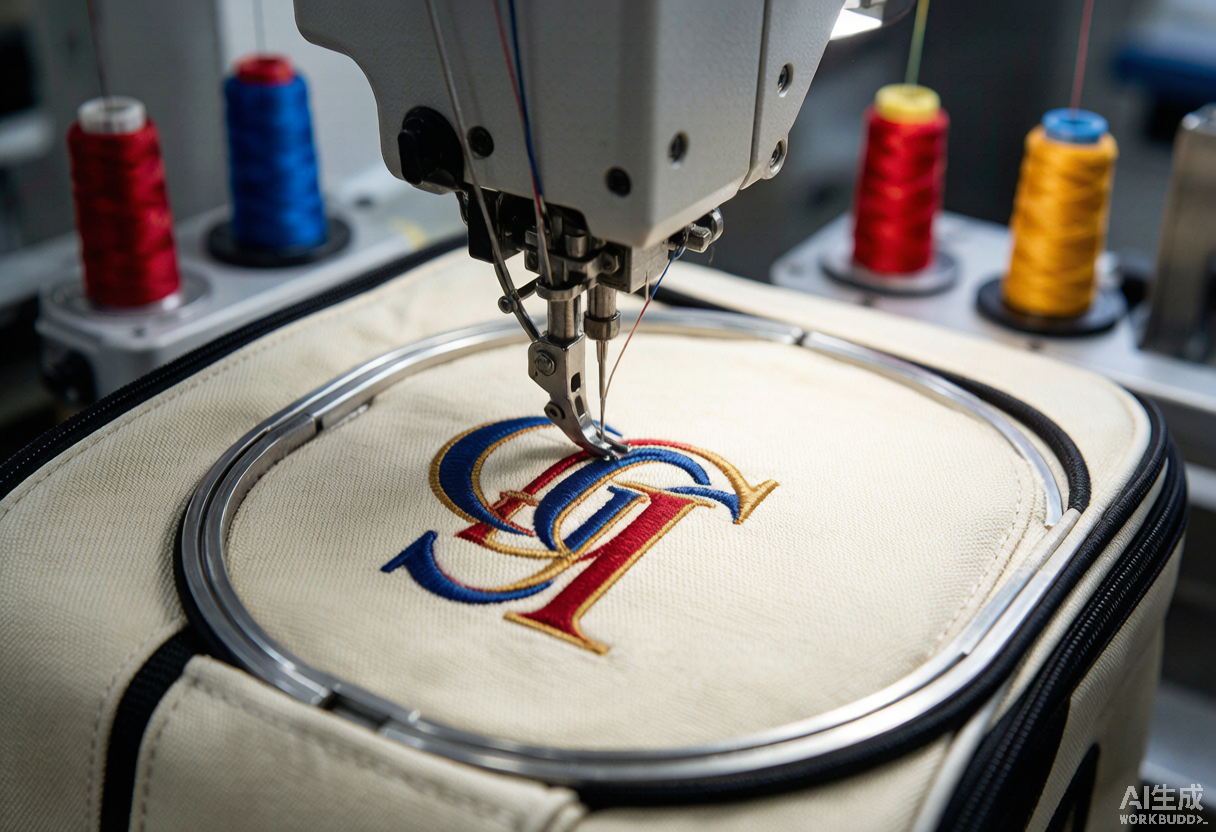
Embroidery is what customers mean when they say a bag "looks expensive." A crest sewn at 8,000–12,000 stitches has a physical presence — raised thread, directional sheen, shadow at the edges — that no flat print can imitate, and it communicates quality at the exact distance purchasing decisions happen: arm's length in a pro shop. It is the default for team crests, club logos and any retail brand whose price point needs defending.
The production reality behind the look: your vector artwork is converted to a stitch program (digitizing, a one-time USD 25–60 per design) that maps every stitch's position, direction and density. Good digitizing is invisible; bad digitizing shows as puckering on lightweight fabrics, filled-in small text, and crests that look like they were sewn through cardboard. We run Madeira and Robison-Anton thread systems — the two industrial standards — matched to your Pantone references, and we approve a sew-out on your actual bag fabric before bulk, because thread behaves differently on 420D nylon than on PU. The embroidery technique page carries the full size and placement specs.
Screen Printing: the Volume Workhorse
Screen printing earns its place on economics: once the screens are made (USD 15–25 per color), each impression costs cents in ink and seconds in labor, which is why tournament graphics, sponsor logos and promotional volumes default to print. A two-color event graphic that would cost USD 1.60 in embroidery lands at USD 0.60–0.90 in print — and at 1,000 pieces that difference is real money.
Ink chemistry is where print quality is won. Plastisol inks sit on the fabric surface, cure at 160°C, and deliver the boldest color — the correct choice for logos that must pop in photographs. Water-based inks penetrate the fiber, feel softer, and suit tonal or vintage looks, at some cost to opacity on dark fabrics. Either way, cure discipline is everything: under-cured ink cracks at flex points within a season; properly cured plastisol survives 50+ wash cycles and years of cart straps. Our cure verification is a stretch test on every batch — printed panel flexed 180° twenty times, no cracking — detailed on the screen printing page.
Heat Transfer: the Detail Specialist
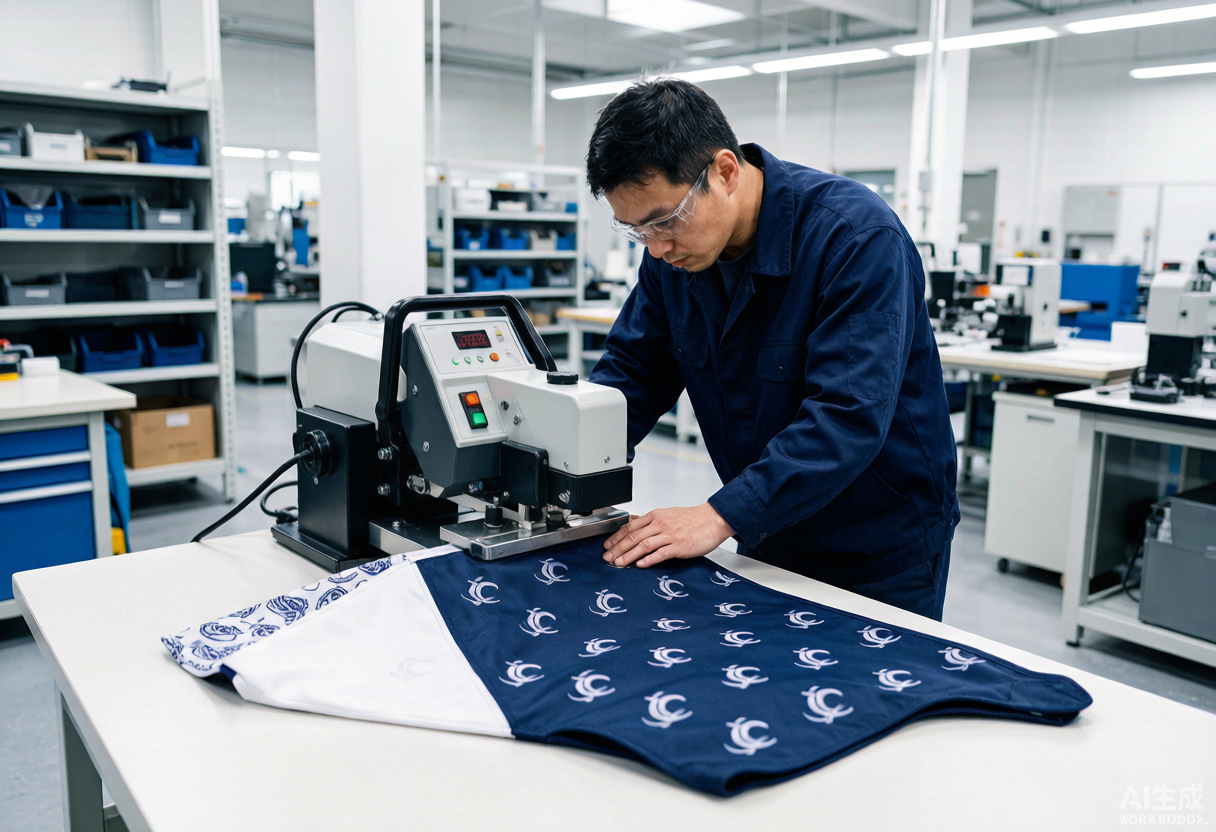
Heat transfer exists for the two jobs the other techniques cannot do: photographic reproduction and economical short runs. Full-color gradients, player photographs, watercolor illustrations — anything continuous-tone — transfers at resolutions embroidery and spot-color print cannot approach. And because setup is nearly free, transferring 60 unique names onto 60 bags costs a fraction of digitizing and sewing 60 embroidery programs.
The trade-offs are honesty-worthy. Transfer edges can lift after years of flex and UV — the failure mode is a slow peel at corners, not a crack — so transfers belong on panels that flex less (ball pockets, side panels) rather than strap anchors. Modern PU-based transfer films have largely closed the durability gap for normal use cycles, and for personalization-heavy programs — retail monogramming, team rosters — there is simply no economical alternative. Specs and size limits are on the heat transfer page.
Durability: How Each Technique Ages
Embroidery outlasts the bag — thread is solution-dyed and mechanically anchored; there is nothing to crack or peel. Properly cured plastisol print survives 50+ wash cycles and years of UV with gradual softening of color. Heat transfer ages at its edges: expect years of clean service on low-flex panels, with corner lift the first sign of age on high-flex zones.
UV resistance follows the same order. Embroidery thread in Madeira/Robison-Anton systems carries industrial lightfastness ratings; plastisol pigments hold well but chalk slowly in desert-sun markets (Arizona, the Gulf, Australia); transfer films vary by chemistry, with PU films outperforming PVC on both UV and flex. For programs shipping to high-UV markets, we spec materials to the destination — one of many reasons the quote form asks where the bags are going.
Abrasion is the third axis and the one golf bags actually die by. Cart straps, trunk lids and range-bag handles grind at branding daily. Embroidery loses individual stitches but never fails wholesale; print wears through at abrasion points over seasons; transfers scuff at the film surface. Positioning branding away from known abrasion zones is a design decision that adds years to any technique — covered in the logo placement guide.
Cost Curves by Quantity
Per position, per bag, setup excluded — digitizing USD 25–60 one-time per design, screens USD 15–25 per color. Full branding-suite math (crest + graphic + labels + hangtag at USD 2.30–4.50 all-in) is itemized in the MOQ and pricing guide.
| Quantity | Embroidery (crest) | Print (2-color graphic) | Transfer (full color) |
|---|---|---|---|
| 100 pcs | USD 1.40–2.60 | USD 0.80–1.40 | USD 0.90–1.80 |
| 300 pcs | USD 1.00–2.00 | USD 0.45–1.00 | USD 0.70–1.60 |
| 500 pcs | USD 0.80–1.80 | USD 0.30–0.90 | USD 0.60–1.50 |
| 1,000 pcs | USD 0.65–1.50 | USD 0.22–0.70 | USD 0.50–1.30 |
Design Limits: What Each Technique Cannot Do
- Embroidery: no gradients or photographic tones; text below 4 mm cap-height fills in; very large sew fields (over 150 mm) pucker lightweight fabrics; metallic threads break at production speeds and cost 30–40% more.
- Screen printing: no gradients in standard spot work; registration drift above 4 colors gets visible; fine lines under 0.8 pt plug on textured fabrics; printing over seams, piping or zippers is not possible — panels only.
- Heat transfer: metallic and neon effects need specialty films at premium cost; very large transfers on heavily textured fabrics can bridge the texture and silver at the edges; high-flex placements age fastest.
- All three: exact Pantone matching is achievable in thread and ink, approximate in transfer CMYK — if brand color is non-negotiable, say so at quote stage and we spec the technique around it.
Placement Engineering: Where Branding Lives on the Bag
Technique choice cannot be separated from placement, because each position on a golf bag has its own fabric tension, curvature and flex cycle. The ball pocket is the prestige position — flat, generous, visible when the bag stands on a range — and it takes embroidery beautifully up to 120 mm. The side panel is the billboard: largest flat area, visible in every on-course photograph, and the natural home for big printed graphics. The apparel pocket curves and flexes with every zipper cycle; transfers survive there, dense embroidery does not. Strap positions see constant friction and hand contact — woven labels and small embroidered marks only.
Two placement disciplines separate experienced programs from first-timers. First, panel-first design: branding is positioned on cut panels before sewing, never over seams, piping or zipper garages, which constrains maximum sizes per chassis — a Sunday bag's side panel offers barely half the billboard a staff bag's does. Second, the strap-path exclusion: cart bags carry branding clear of the strap channel, stand bags clear of the leg mechanism's travel arc. We map position limits per chassis at quote stage; the logo placement guide on this site publishes the full zone maps.
Thread, Ink and Film: the Consumables Behind the Techniques
Branding quality is consumables quality wearing a process costume. Embroidery thread: we run Madeira and Robison-Anton — the two industrial standards — because their color ranges cover the Pantone library and their tensile consistency keeps machines running at production speed without breaks. Budget thread breaks constantly, and every break is a restart mark a sharp-eyed customer can find. Screen ink: Union and Wilflex plastisol systems with documented cure windows, plus water-based ranges for soft-hand work; off-brand inks are where wash-test failures are born.
Transfer film: PU-based films from the Japanese and Korean mills for retail work — softer hand, better stretch recovery, slower edge aging — with PVC films reserved for short-lived promotional use where their cost advantage justifies the durability trade. Woven labels: damask weaves at 50-denier weft for the main label (satin itches; nobody forgives an itchy neck label on a USD 300 bag). These specifications appear in our quotes by name because consumables are where quiet substitutions hide — and the only defense against substitution is writing the brand of thread, ink and film into the purchase order.
Choosing by Program Type
Team and academy programs: embroidery for the crest, heat transfer for roster names and numbers — the roster changes every season and transfer is the only economical way to sew sixty different names. Corporate and tournament programs: screen print the event graphic, embroider nothing unless the budget is hospitality-grade — volume and photography favor print. Retail private label: embroidered crest on the ball pocket, printed side graphic for shelf presence, woven labels throughout — the mixed suite that photographs like a flagship. Startup first collections: one excellent embroidery position beats three mediocre techniques — spend the branding budget where the customer's hand touches the bag.
The teams and academies, corporate promotional and private label program pages each carry the branding suite we recommend for that buyer type, with the cost math per tier.
Mixed-Technique Suites That Photograph Like Flagships
The retail bags that stop browsers mid-aisle almost never use one technique — they layer three. Embroidered crest on the ball pocket for tactile authority, a large tonal print on the side panel for brand blocking at distance, a transferred interior label with the founder's signature or edition number for the unboxing moment. Each technique does the job it is physically best at, and the bag reads as designed rather than decorated.
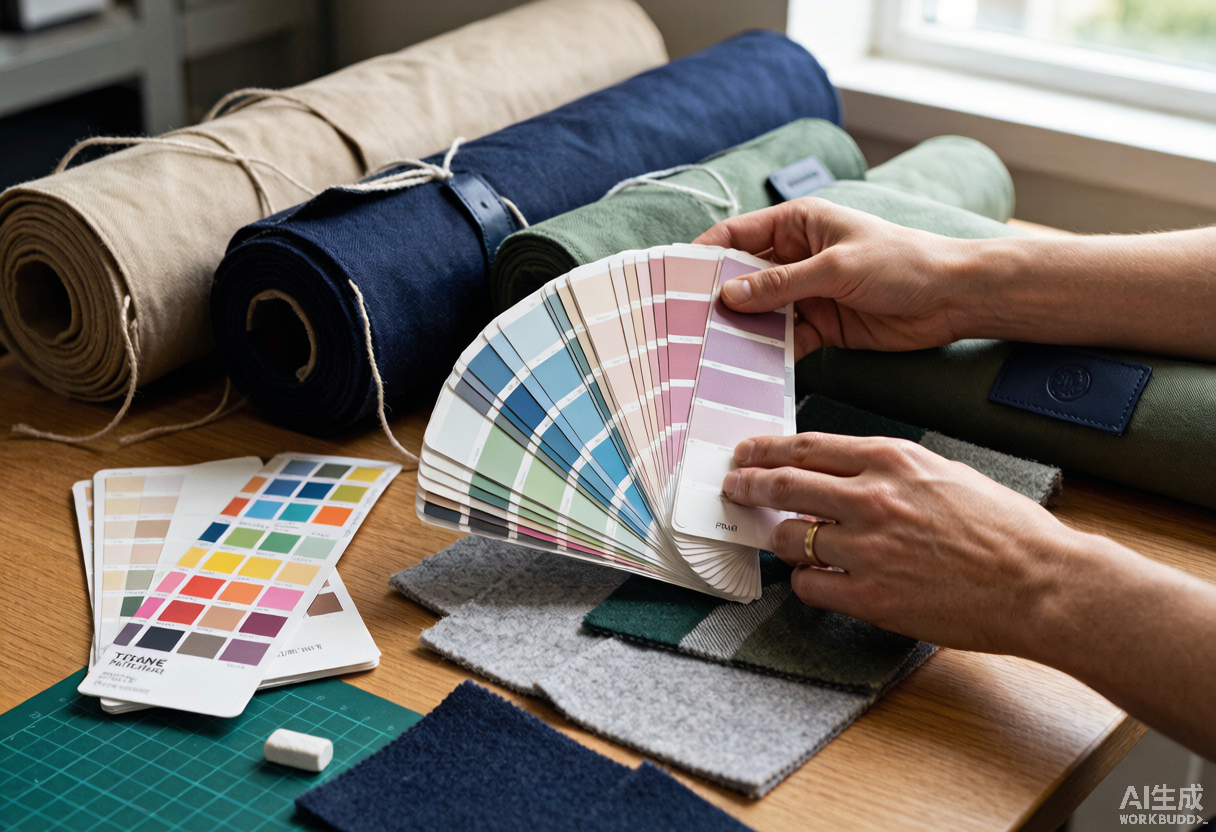
Two rules keep mixed suites coherent. First, one hero per panel: a panel with an embroidered crest does not also want a print — hierarchy collapses when techniques compete at the same focal distance. Second, repeat the thread palette in the print inks: crest thread, print ink and zipper tape sharing one Pantone family is what makes a USD 24 bag photograph like a USD 60 one. The color matching page covers how we hold that palette across thread, ink and fabric under D65 lighting.
A Worked Example: Branding a 1,000-Piece Retail Program
A private label brand specs its season-two stand bag: embroidered crest on the ball pocket (9,500 stitches, 4 thread colors), tonal two-color print on the side panel, woven damask main label, printed hangtag, transferred edition number inside the apparel pocket. At 1,000 pieces the suite prices as follows: crest embroidery USD 1.35, side print USD 0.55, woven label USD 0.32, hangtag USD 0.18, edition transfer USD 0.85 — USD 3.25 per bag, or USD 3,250 across the program, plus one-time setup of USD 45 digitizing and USD 40 for two screens.
The same suite specced lazily — crest and side graphic both embroidered — would land at USD 4.90 per bag and still photograph worse, because a 260 mm embroidered side graphic puckers on 600D and reads stiff at retail distance. Technique selection saved USD 1,650 and produced the better product: that is the whole argument for speccing position by position instead of habit. Reorder in season three reuses the digitizing and screens — setup cost vanishes, and the suite drops to pure per-unit pricing, which is where branding economics get genuinely attractive.
Artwork Requirements by Technique
Embroidery digitizing wants vector files — AI, EPS or PDF — with strokes expanded and no live effects; photographs and Photoshop files must be redrawn, and the redraw is where small text gets honestly assessed (below 4 mm it fills in, and we will tell you before you pay for the lesson). Screen print separations come from the same vector file, one layer per color, with fonts outlined. Heat transfer accepts high-resolution raster at 300 dpi at final size — the one technique where your Photoshop file is welcome as-is.
Universal requirements that save a revision round: Pantone references for every color (screen values drift between monitors; physical swatches do not), a dimensioned placement drawing if positions are specific, and a note on what must survive — if the sponsor logo must read at twenty meters, that constraint shapes technique and size before artwork is touched.
Common Branding Failures and How to Prevent Them
- Puckered embroidery on light fabrics. Cause: stitch density spec'd for heavy fabric. Prevention: sew-out approval on your actual bag fabric, density adjusted per material.
- Cracked print at flex points. Cause: under-cured plastisol. Prevention: batch stretch tests — 20 flexes at 180°, no cracking — written into the QC checkpoint.
- Transfer edges lifting in year two. Cause: placement on high-flex zones or under-pressed application. Prevention: low-flex panel placement, press time and temperature logged per batch.
- Colors that don't match the brand book. Cause: approving thread and ink from screen photos. Prevention: physical sew-outs and drawdowns approved against Pantone swatches under D65 light.
- Crooked placement across the run. Cause: no placement jig or template. Prevention: laser-cut placement templates per style, checked at IPQC.
Spec Your Branding Suite with Us
Send your logo (vector if you have it), your target chassis and quantity, and one sentence about what the bags must do — retail shelf, team season, tournament gift — and we return a technique-by-position spec with costs at your volume within 24 hours. If your logo has gradients, small text or color-critical brand requirements, we flag the constraints and the recommended technique in the same reply. MOQ 200 pieces per style, samples in 6–10 days with fees credited on first order, bulk production 35–50 days, every branding position inspected against the approved sew-out at AQL 2.5.
Frequently Asked Questions
Embroidery vs screen printing for golf bags: which is better?
Neither is universally better — they solve different jobs. Embroidery (USD 0.80–1.80 per position at 500 pcs) delivers premium texture and outlasts the bag; it is the default for crests, team logos and retail brands. Screen printing (USD 0.30–0.90 per color) delivers large bold graphics at the lowest volume cost; it is the default for tournament and promotional programs. Most retail bags use both, plus heat transfer for detail work.
How long does embroidered branding last on a golf bag?
Longer than the bag itself. Embroidery thread is solution-dyed and mechanically anchored through the fabric — there is no ink layer to crack and no film to peel. Individual stitches can be cut by severe abrasion, but wholesale failure essentially does not happen, which is why embroidery carries the premium positions on every retail-grade program.
What is the cheapest way to put a logo on golf bags?
Single-color screen printing: USD 0.30–0.90 per position at 500 pieces, with screens at USD 15–25 one-time. Below 50 pieces, heat transfer is cheaper because it carries almost no setup cost. For a complete program on a budget, one print position plus a woven label lands under USD 1.00 per bag.
Can you print full-color photos on golf bags?
Yes — via heat transfer, the only technique of the three that reproduces continuous-tone photographic detail. Transfers run USD 0.60–1.50 per position at 500 pieces and belong on low-flex panels (ball pocket, side panel) where edge lift is slowest. Embroidery and spot-color print cannot reproduce gradients at any price.
How many colors can an embroidered logo have?
Up to 12 thread colors per design on industrial machines, though most crests use 3–6. Each color change adds machine time, so cost rises modestly with color count — roughly USD 0.10–0.20 per additional color per position. Thread colors are matched to your Pantone references in Madeira or Robison-Anton systems.
What file do I need to supply for logo embroidery?
Vector artwork — AI, EPS or PDF with strokes expanded and fonts outlined. Raster files (JPG, PNG) must be redrawn before digitizing, and text under 4 mm cap-height will be flagged as unsewable. Digitizing the approved artwork costs USD 25–60 once per design and is reused on every reorder.
Does screen printing crack on golf bags?
Properly cured plastisol does not — it survives 50+ wash cycles and years of flex. Cracking is the signature of under-cured ink, which is why our QC includes a batch stretch test: printed panels flexed 180° twenty times with zero cracking before the lot passes. Ask any factory how they verify cure; the answer tells you whether your print survives season one.
Can I mix embroidery, print and transfer on one bag?
Yes — mixed suites are the retail norm. The proven formula: embroidered crest on the ball pocket, printed graphic on the side panel, transferred interior label or personalization. Two rules keep it coherent: one hero technique per panel, and thread, ink and fabric sharing one Pantone family so the whole bag reads as designed.
What branding technique is best for team rosters?
Heat transfer, decisively. Sixty unique names cost sixty transfers — no digitizing, no thread changes, USD 0.60–1.20 per bag. Embroidering sixty unique names means sixty embroidery programs and per-name setup that makes no economic sense. Crests get embroidery; rosters get transfer; that is the standard team architecture.
How is logo color matched to my brand?
Thread and ink are matched to your physical Pantone references under D65 daylight lighting — never to screen values, which drift between monitors. You approve a physical sew-out and ink drawdown before bulk production. Transfer printing is CMYK-based and approximates Pantones; for non-negotiable brand colors we steer the critical elements to embroidery or spot print.
What branding survives cart straps and abrasion best?
Embroidery, by design — thread is anchored through the fabric and abrasion takes stitches one at a time. Beyond technique, placement is the bigger lever: branding positioned away from strap paths and trunk-lid contact zones outlasts identical branding in the abrasion lane. The logo placement guide maps the safe zones by chassis.
How much does a full branding suite cost per bag?
At 500 pieces, a retail-grade suite — embroidered crest, printed side graphic, woven main and care labels, printed hangtag — runs USD 2.30–4.50 per bag all-in. Corporate and tournament programs can strip to a single print position under USD 1.00. The complete cost tables are in the MOQ and pricing guide on this site.
Can branding be matched exactly to my Pantone colors?
In thread and spot ink, yes — Madeira and Robison-Anton thread lines plus plastisol mixing systems cover the Pantone library, approved physically under D65 light against your swatch. In heat transfer, approximately: CMYK film printing gets close on most colors but cannot guarantee a critical brand red. If one color is non-negotiable, put it in embroidery or spot print and let transfer carry the rest.
Which branding technique photographs best for e-commerce?
Embroidery at close range and print at distance — which is why retail bags carry both. The crest delivers texture and shadow in macro product shots; the side-panel print delivers brand blocking in thumbnail and on-course imagery. Photograph the bag at both distances before finalizing the suite; a branding architecture that only works at one distance is doing half its job.
Do branding setup fees repeat on reorders?
No — digitizing files and print screens are retained and reused, so reorders run at pure per-unit branding cost with zero setup. This is one of the quiet economics of staying with one factory: season two's branding suite is immediately 5–8% cheaper than season one's for identical work, and the color approvals carry forward from file.