
Programs · Private Label
Private Label Golf Bag Programs
A private label golf bag program manufactures a retail line: chassis curated from our catalog or designed from your tech pack, a full branding suite — woven main label, care label, hangtag with your own GS1 barcodes, printed insert — retail packaging built to your 3PL's intake spec, and first-article photography so the product pages are live when the container lands. First lines run 500–2,000 pieces across two to three chassis and two to three colorways, priced to survive keystone margins after freight and duties. Sampling 6–10 days; bulk 35–50 days; AQL 2.5; reorders from files so season two matches season one. This page covers the suite, the packaging, the compliance layer and the margin math that decides whether a line is a business.
The Private Label Program in One Paragraph
A private label program is a retail line manufactured to your brand: curated or designed chassis, a complete branding suite from woven label to barcode hangtag, retail packaging, compliance labeling per market, first-article photography, and reorder files that keep season two identical — first lines at 500–2,000 pieces, engineered to hold margin at keystone pricing.
The difference between a custom bag and a private label line is everything around the bag. A custom program ships a product; a private label program ships a shelf-ready asset: the bag, the label system inside it, the hangtag that carries the barcode your retailer scans, the box your 3PL receives without a re-packing fee, and the photography that sells it before the container clears customs. This page covers that whole surface.
The other difference is economic. Private label buyers price from the shelf backwards — MSRP, wholesale, landed cost, FOB — and the spec conversation happens inside that chain, not in front of it. We quote to retail math, which changes what we recommend: sometimes the right answer is a better chassis at a higher FOB because the margin survives; sometimes the right answer is restraint. The section on margins below makes that trade explicit.
What Private Label Actually Includes
The suite is why private label starts at 500 pieces rather than 200: each label and packaging item carries its own production MOQ (1,000 pieces per label design, 500–1,000 per patch and box design), and the suite amortizes honestly only across a real retail quantity. Programs that try to run the suite at 200 pieces pay suite setup on half the volume it wants — the honest small-quantity path is the startup program structure and graduate into the suite at reorder.
What is deliberately absent from the table: anything the retailer's compliance sheet does not require and the brand story does not need. The suite has a minimum honest size and a maximum honest size; beyond barcode, labeling and a clean unboxing, every additional component should justify itself against margin, not against ambition.
| Suite item | What it does | Your decision |
|---|---|---|
| Woven main label | Brand identity inside the bag — name, origin, size | Logo lockup and placement (pocket seam or neck) |
| Care / content label | Legally required content and care graphics | Market set: FTC, EU multilingual, or both |
| Flag label | Secondary brand touch on outer pocket seam | Include or skip — a premium tell |
| Hangtag | Shelf selling: barcode, story, materials copy | Your GS1 numbers; EAN-13 or UPC-A by market |
| Printed insert card | Unboxing layer: story, warranty, social | Copy and art — often the brand's best real estate |
| Retail packaging | Poly with vent holes, or retail box | 3PL intake spec: carton marks, GS1-128, quantities |
Curated Chassis Versus Designed Chassis
Private label lines start from one of two chassis strategies, and the choice sets MOQ, cost and calendar. Curated: a catalog chassis — staff, cart, stand or Sunday — with your cosmetics: fabric, color, hardware finish, the full suite. MOQ 200–500 per style, sampling 6–10 days, first line in 90–120 days. Designed: a chassis from your tech pack — new pocket architecture, divider layouts, structure — with pattern engineering and prototyping. MOQ 500–1,000, sampling runs longer, first line in 150–210 days. The OEM/ODM page covers the designed path in depth.
Our honest guidance for first lines: curate. A first collection on a proven chassis carries zero structural risk to market and proves the brand's color, logo and shelf story; a first collection on a designed chassis proves engineering at the same time it proves the brand, doubling the ways to fail and the cost of each. The brands we watch win design their signature chassis in line two or three, when sell-through data says the line deserves it — that sequencing is not timidity; it is how the margin survives.
When curation is right, the selection conversation is ours to run: your retail price point, target margin and market tell us which of the chassis families fits — the bag types directory is organized exactly for this conversation.
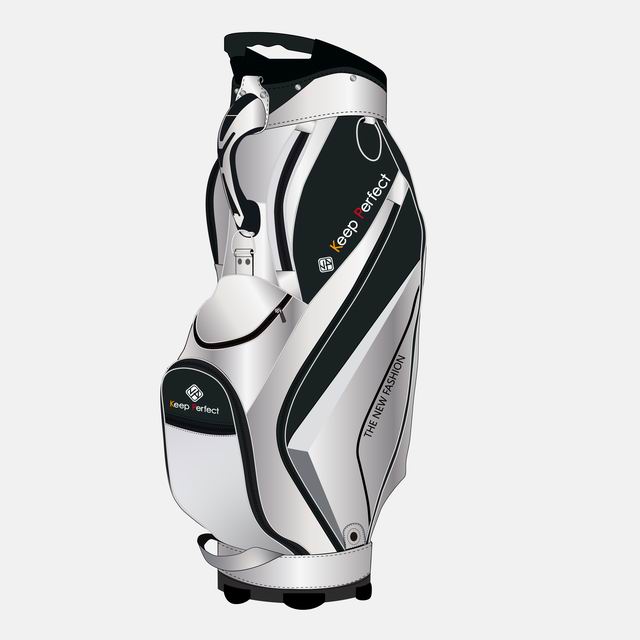
Retail-Ready Packaging and Barcodes
Retail packaging is a compliance surface before it is a presentation surface, and the barcode is where private label programs prove their professionalism. The numbers on your hangtag must come from your own GS1 company prefix — the barcode is the brand's identity in the retailer's system, and a factory-supplied or re-used number is a compliance failure that surfaces at the retailer's first scan test. We print your EAN-13 (EU and UK doors) or UPC-A (North America) numbers exactly as issued, and verify scannability on the printed sample before bulk.
Carton marks carry the 3PL and retail intake requirements: GS1-128 shipping labels, carton quantities matching the retailer's routing guide, country of origin, and PO references. Getting this right is a one-time conversation with your 3PL's intake sheet; getting it wrong is re-labeling fees per carton at the dock. The packaging and labeling guide covers the full retail-readiness checklist, including the per-market care-label copy that gates EU listings.
The box decision is a margin decision: poly bags carry the line at USD 0.20–0.35 per unit and suit direct-to-consumer and club channels; retail boxes at USD 1.20–2.50 suit brick-and-mortar doors where the box sells the shelf. Lines serving both channels run poly inside, boxed by retailer on request — the hybrid that keeps one SKU honest everywhere.
Pricing the Line for Real Margins
Read the table as the discipline of the program: FOB is the only number you negotiate, and it is the smallest lever in the chain — freight method, duty classification and channel mix move the margin more than a USD 1.50 FOB negotiation does. Lines that fail retail math usually failed at structure (MSRP set by wishfulness), not at factory price.
The quantity decision follows the same math: quantity tiers step down at 500 and 1,000 pieces, and the steps are real — the same chassis at 1,000 runs 10–14% under its 500-piece price. First lines that split the difference (800 pieces across two colorways rather than 500 in three) arrive cheaper per unit with better sell-through focus, which is one honest answer to the eternal two-or-three-colorway question.
| Step | USD | Notes |
|---|---|---|
| FOB Xiamen | 19.50 | 600D chassis, suite, one dye lot, branded |
| Freight (sea, allocated) | 2.10 | At 1,000 units per LCL-consolidated run |
| Duty (by market) | 1.55–2.35 | HS-classified; market-specific |
| Landed cost | ≈ 23.15–23.95 | What the line actually costs |
| Wholesale (50% of MSRP) | 45.00 | Keystone wholesale on a USD 90 MSRP |
| Gross margin at wholesale | ~48% | Before channel costs — the number that must live |
| Direct margin (DTC on MSRP) | ~74% | Before CAC — why DTC brands survive line one |
First-Article Photography Before the Container Lands
The launch sequence that works: photography happens against first-article samples — the same physical reference the container will match — while the bulk is on the water. Product pages, ads, lookbook and retail line sheets are built in the 35 days the vessel spends at sea, so the day goods arrive at the 3PL, the brand can sell. Lines that photograph after landing lose a season's head start to a three-week photo backlog; lines that photograph the sample before approval risk a PDP that mismatches the shipped product.
We support the sequence structurally: first-article samples ship by air at sample stage, carrying the production fabric, the full suite and the exact dye lot reference. Color-exact product photography has one rule that matters — shoot against a gray card, from the same first-article lot the container will match, and correct campaign graphics to the photography rather than to the dye reference (see color matching for why the bag and its photos are two different media).
The Compliance Layer
Private label carries legal labeling that teams and events never see. US: FTC textile rules — fiber content by percentage, country of origin, RN number or company name, care instructions in words and symbols. EU: multilingual fiber content and care per the destination set, plus importer details for lines sold through EU entities. Both live on the care label, are spec-fixed before cutting, and cost nothing when briefed at spec — and a re-labeled order when discovered late.
Test documentation is the second layer: retailers increasingly ask for colorfastness and physical-test reports on soft goods. Our dye lots carry per-lot test reporting on request (light fastness, crocking, wash — the quality page covers the standards), and the compliance file travels with the program so the reorder inherits it. Brands selling into chains with vendor-compliance portals should bring the portal's requirement list to the spec meeting; mapping our documentation to a retailer's form is a clerical task when it is early and a crisis when it is late.
Launch Quantities and Sell-Through Math
First-line quantities run on sell-through math, not on confidence. The structure that survives: one hero chassis in two colorways at 400–600 per colorway (800–1,200 total), one supporting chassis at 300–500, reorder reserve held as cash rather than inventory. At a healthy golf-bag sell-through of 40–60% per season, that structure sells out its hero in two seasons without markdowns and proves the line's colorway preferences for line two.
The three-SKU trap kills more first lines than any factory problem: three chassis × three colorways = nine SKUs of shallow inventory, each splitting the reorder signal, none reaching a reorder at all. The discipline of the successful first line is a depth-over-breadth bet — one chassis the brand becomes known for, in the two colorways the market actually buys, reordered twice before the second chassis joins. Every case study in our library that reached line three started exactly this narrow.
Protecting Season Two: Files and Formulas
The private label reorder is a different product from the first order: same bags, no re-development, 60–90 day calendar. What makes it true is the file: archived dye formula and approved lab dip, thread and ink shades, the digitized embroidery, separated print art, the tech pack with every component spec, and the label inventory (suite MOQs were built for exactly this). The mill pulls the formula; the floor pulls the patterns; the reorder runs as repetition rather than development — and the shelf never sees a "new, slightly different navy."
This is also the anti-churn argument: brands that switch factories between seasons re-pay development, re-approve every component, and still ship a visible delta in year-two product. The economics of private label reward the long relationship — the file compounds like the brand does. The reorder consistency article documents the file discipline item by item, including what we archive and what the brand should hold.
Worked Example: A 1,500-Piece Retail Line
A real first line, anonymized: a premium accessories brand entering golf — two chassis (a staff flagship and a Sunday entry), three colorways across the pair, 1,500 pieces total, suite-complete, launching at retail for a spring season. Timeline: tech pack and curation in October; sampling rounds (two — the second for a hardware finish change) through November; bulk December–January with CNY buffer; PSI at AQL 2.5 in late January; vessel February; first-article photography in January against air-shipped samples; retail on-shelf and DTC live March 1. Reorder placed in June on sell-through, delivered in 68 days without re-approval.
The full program — including the colorway decision (the third colorway was cut at spec stage and lived as a preorder) and the compliance-file mapping for a department-store vendor portal — is on the retail line case study page.
Five Failure Modes of First Retail Lines
The five ways first lines fail, from the programs that did: Packaging treated as an afterthought — label and box MOQs briefed late, holding a finished bulk order hostage to a hangtag reprint. Barcode errors — numbers issued from anything other than the brand's own GS1 prefix, failing the first retail scan test. The three-SKU trap — breadth splitting depth until nothing reorders. Photography after landing — the launch missing its own season to a photo backlog. Margin math without freight — a line priced at FOB-plus-wishfulness that loses money at every wholesale door.
Every one of the five is a sequencing failure rather than a money failure, which is the hopeful part: they are all prevented by the same spec meeting that prices the line correctly. Bring the retailer's compliance sheet, the 3PL's intake sheet and the target MSRP to the first conversation, and the five failure modes become five line items instead of five post-mortems.
Starting a Private Label Program
Send it to the quote form. The first reply is a priced structure: chassis options with landed-cost math per channel, the suite itemized, the compliance mapping, and a calendar that puts photography before the vessel and the reorder lane at 60–90 days. Private label is the most demanding program we run and the most rewarding to get right — this page is the honest map of both halves of that sentence.
- Retail price point and target margin — the shelf the line must survive on.
- Channel plan: DTC, wholesale or both; 3PL intake spec if one exists.
- Chassis instinct: flagship-plus-entry, or single hero — or "advise us" with the market.
- Brand assets: logo vector, palette by Pantone TCX, brand voice for label and insert copy.
- Compliance targets: which markets, which retailer portals, which test standards.
- The launch window, worked forwards from photography and backwards from on-shelf date.
Frequently Asked Questions
What is the minimum order for a private label line?
The suite is honest from 500 pieces per style; the floor of 200 applies technically, but label and packaging MOQs amortize poorly below 500. First lines that must start smaller run the startup structure and add the suite at reorder — the label inventory covers it either way.
Can we launch with a single SKU?
Yes — one hero chassis in two colorways is the highest-survival first-line structure we see. The single-SKU launch concentrates sampling, photography, inventory and reorder signal on the one product the brand must be known for.
Who owns the chassis design and the files?
Your brand assets are yours — logos, labels, packaging art, and any chassis you design. Catalog chassis you curated remain our engineering; you own the line you built on it. The reorder file exists to reproduce your line, not to transfer it: archives are the program's memory, not its property dispute.
How do barcodes work if we do not have GS1 numbers yet?
GS1 issues company prefixes directly — a subscription with per-market rules. We print your issued numbers verbatim; we never supply or re-use numbers, because the barcode is your identity inside the retailer's system. If GS1 is pending at spec time, the hangtag design reserves the field and prints in the second run.
Do you handle our retailer's vendor compliance requirements?
We map to them: FTC and EU labeling at the care label, per-lot test reports, carton marks to routing guides, and the documentation formats vendor portals ask for. Bring the portal's requirement list to the spec meeting and the mapping is clerical; arrive with it after cutting and it is a re-label program.
Can you produce first-article photography samples?
First articles ship by air at sample stage from the production lot — the exact reference the container will match — and are the correct photography subject. We produce the samples; photography itself is your studio's craft. The sequencing section above explains why shooting before landing is worth a season.
How long does a first private label line take?
120–150 days from tech pack to landed goods on a curated chassis — sampling 6–10 days per round, bulk 35–50, sea freight 24–32, plus compliance and packaging lead time. Designed chassis runs 150–210 days. The reorder lane is 60–90 days because the files exist.
Will the reorder really match season one?
Within the tolerances the file enforces: dye formula and approved dip archived (ΔE-checked at IQC), thread and ink shades on record, digitized embroidery and separated print art on file, patterns and hardware spec in the tech pack. The reorder consistency article documents what we hold and what the brand should keep copies of.
Can you handle EU compliance for our European launch?
Multilingual care labels, fiber content, importer details and per-lot test documentation are part of the tech pack for EU destinations — the market guides cover the per-country specifics. EU-bound lines should name their importer of record at spec stage; the label set depends on it.
Can smaller retail chains or single pro shops run private label?
Yes — the suite scales down to pro-shop lines at 300–500 pieces: same labels, hangtag with the shop's own barcodes, simpler box logic. Club lines and pro-shop branded merchandise are the smallest honest private label programs; the margin math section is the same at every size.
Can we white-label a chassis another brand already runs?
Catalog chassis are exactly that — shared engineering, exclusive cosmetics. Your colorway, suite and branding make the product yours at retail. Fully exclusive structure is a designed-chassis conversation (500–1,000 pieces); cosmetic exclusivity is standard practice.
What does the first conversation cost?
Nothing but the email. The quote, the landed-cost math, the suite itemization and the calendar are free and land within 24 hours; sampling is the first paid step and credits back at bulk. The sample policy covers what sampling buys and how the credit applies.
Ready to spec your custom golf bags?
Send your logo, bag type and target quantity — we reply with a quote, MOQ and timeline within 24 hours.