
Program Photos
Custom Golf Bag Gallery
A gallery of chassis and executions from real manufacturing programs: staff, stand, cart and Sunday bags, travel covers and accessories, photographed in client colorways and branding placements. For program details behind any image, request the matching case study.
Staff Bag Programs
Tour-grade chassis used for premium retail and corporate flagship programs. Full-length dividers, dual straps, heavier fabrics — see staff bags.
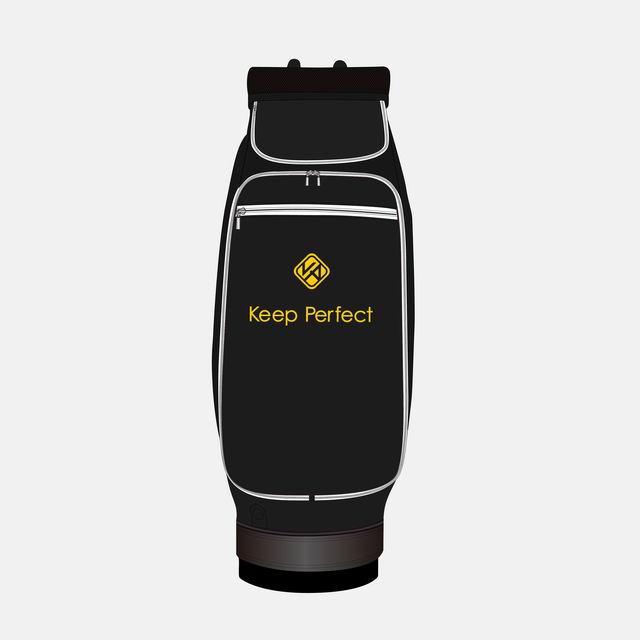
Stand Bag Programs
The volume chassis for teams, academies and retail lines. Lighter builds with full customization — see stand bags.
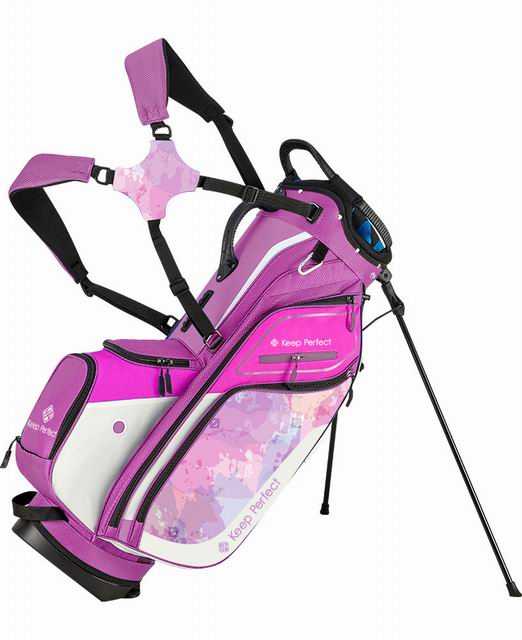
Cart & Sunday Programs
Cart chassis for pro shops and resort programs, and Sunday chassis for DTC brands and gifts. See cart bags and Sunday bags.
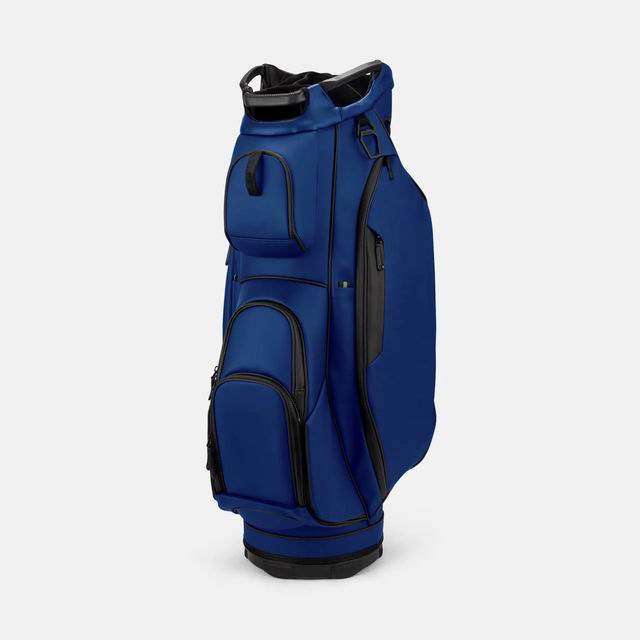
Aesthetic Lines
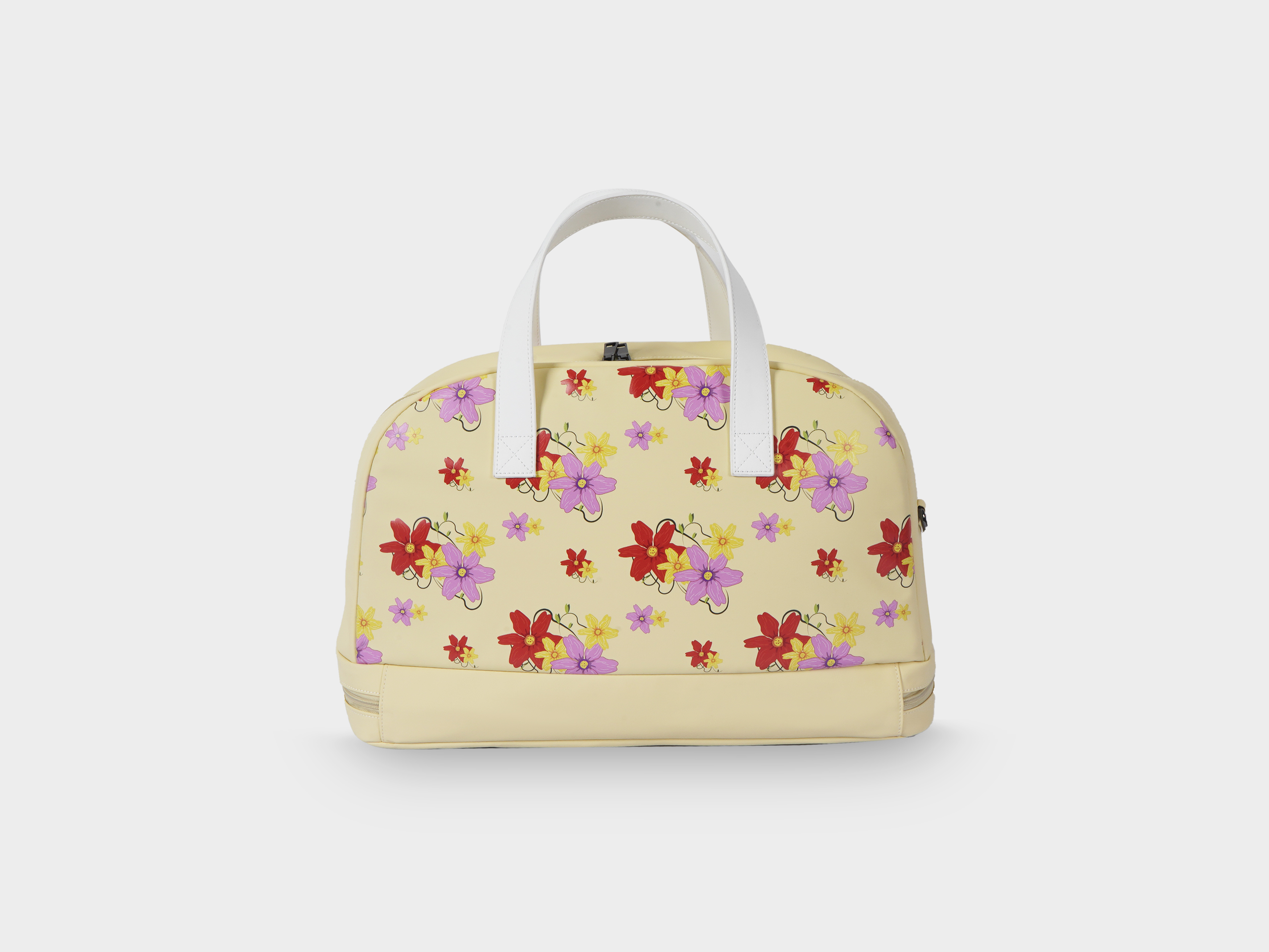
Floral, pastel and camo executions for the aesthetic segments — see cute & kawaii programs and camo programs.
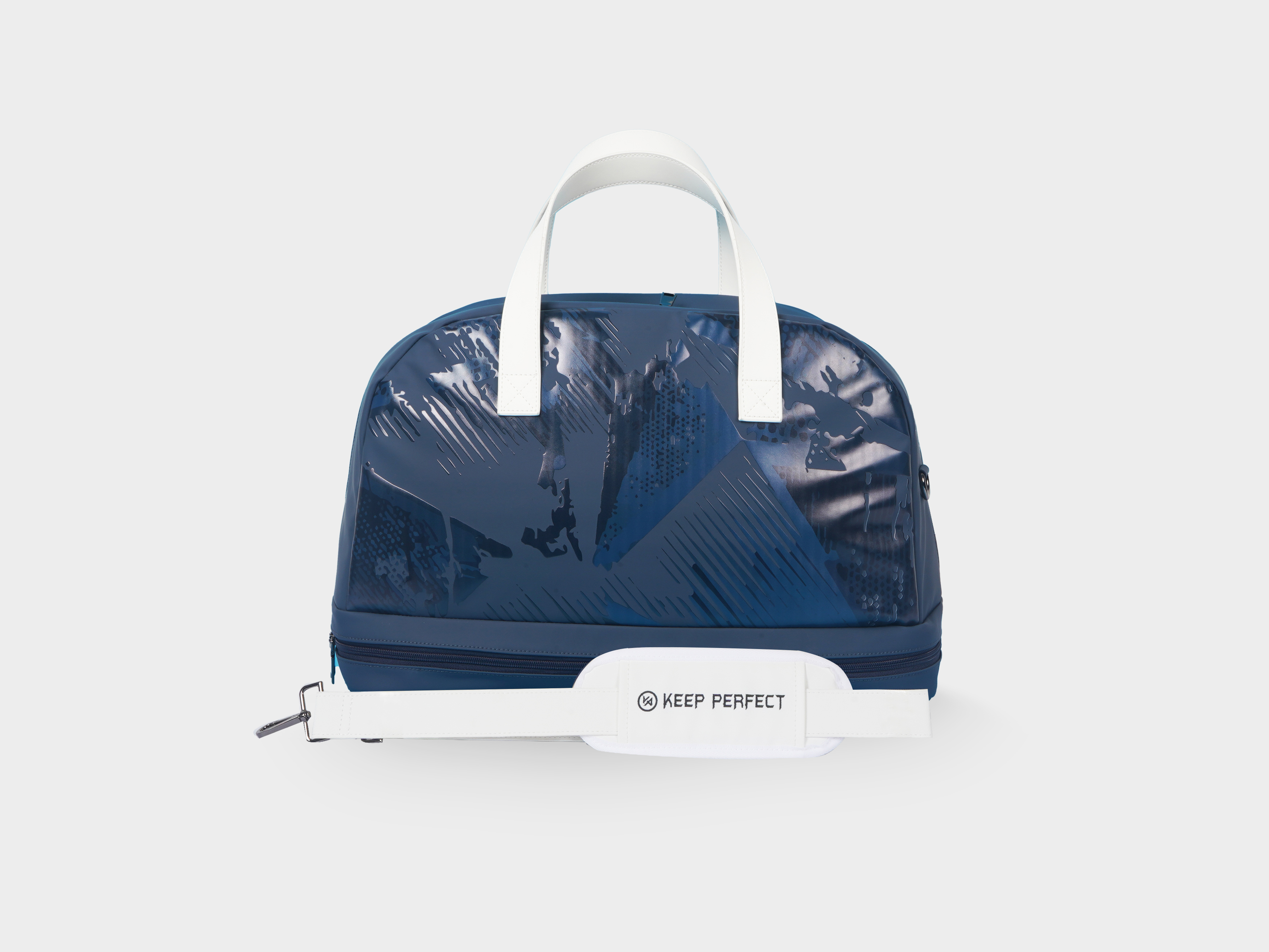
Travel & Accessories
Travel covers, pencil bags, pouches and head covers ride the same programs — see travel covers and accessories.
Production Goods: Bulk Output, Not Hero Samples
Every section above shows a chassis or an execution. This one shows the part buyers actually audit: goods in bulk. A hero sample proves a bag can be built once; a run proves it can be built two hundred times the same way. The floor photography below follows a run through its three visible stages — panels through sewing, units at final assembly, and finished bags drawn for pre-shipment inspection under the AQL 2.5 plan, which follows the ISO 2859-1 sampling tables published by ISO.
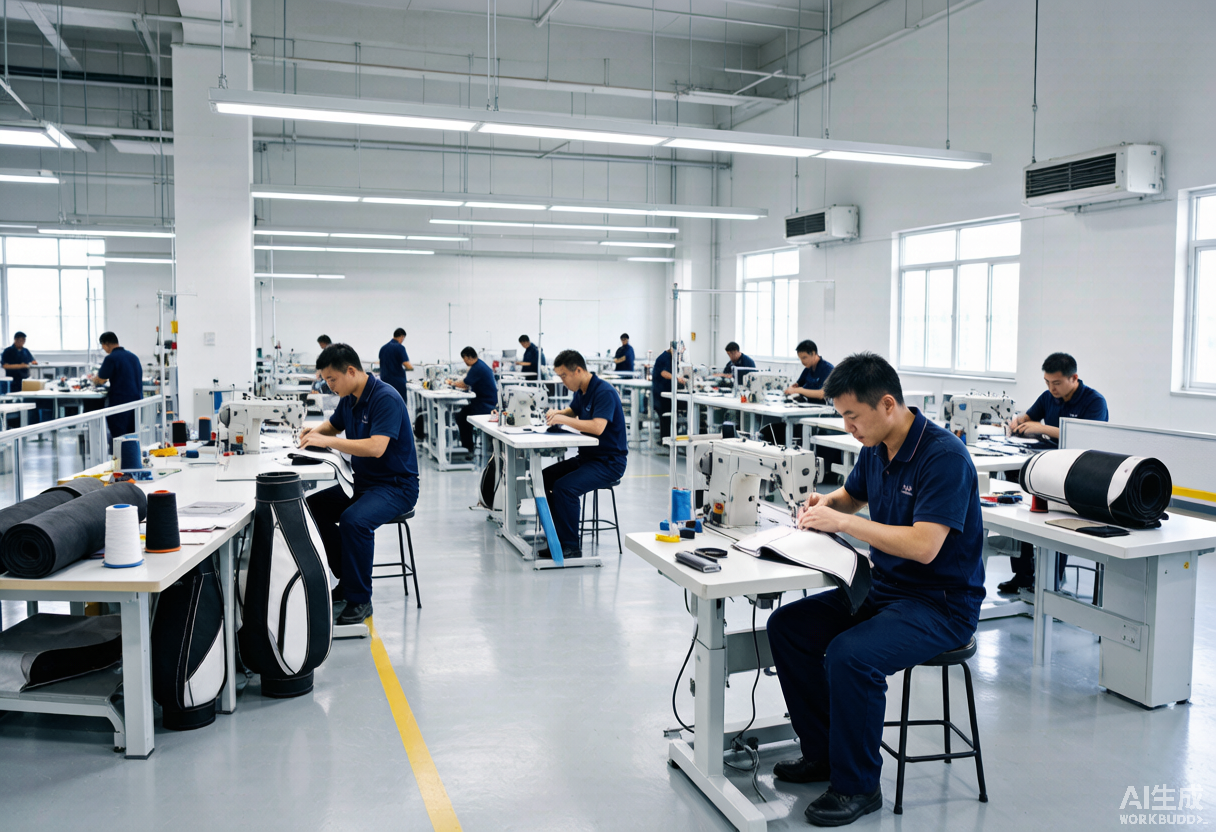
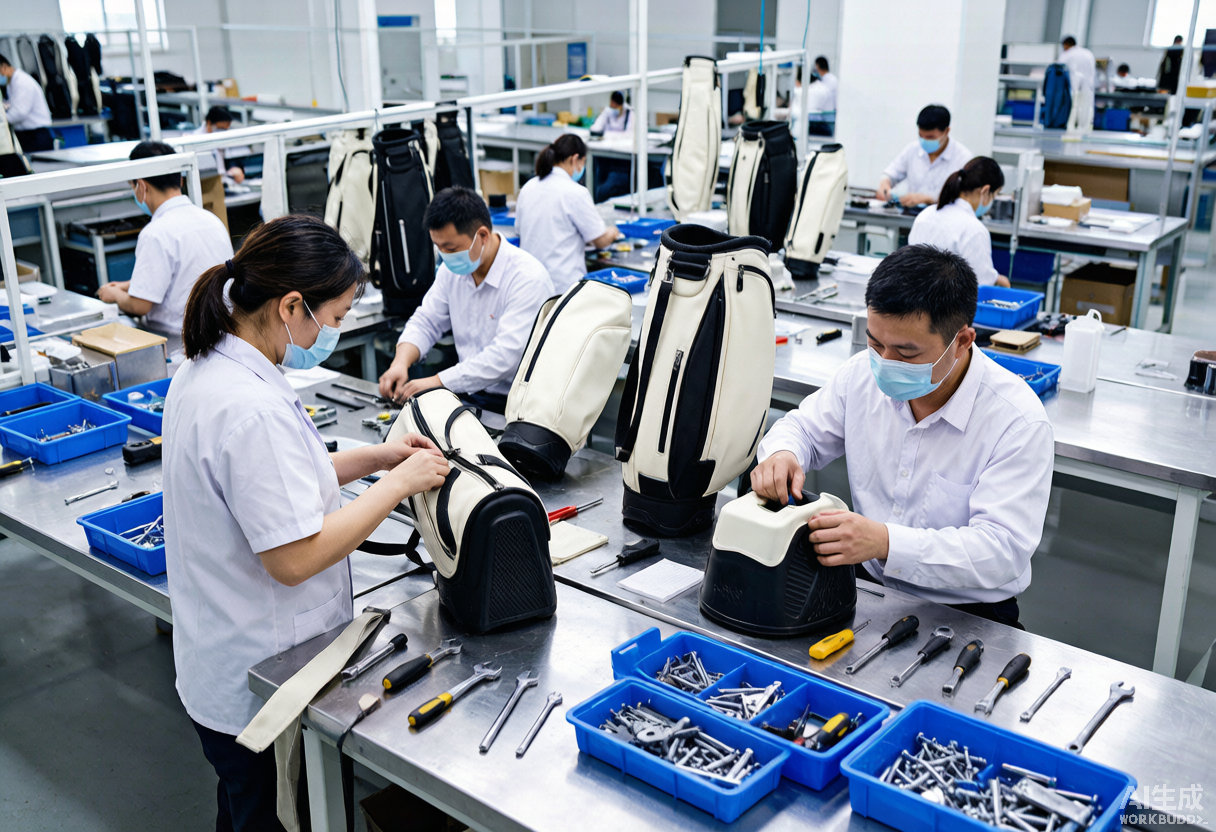
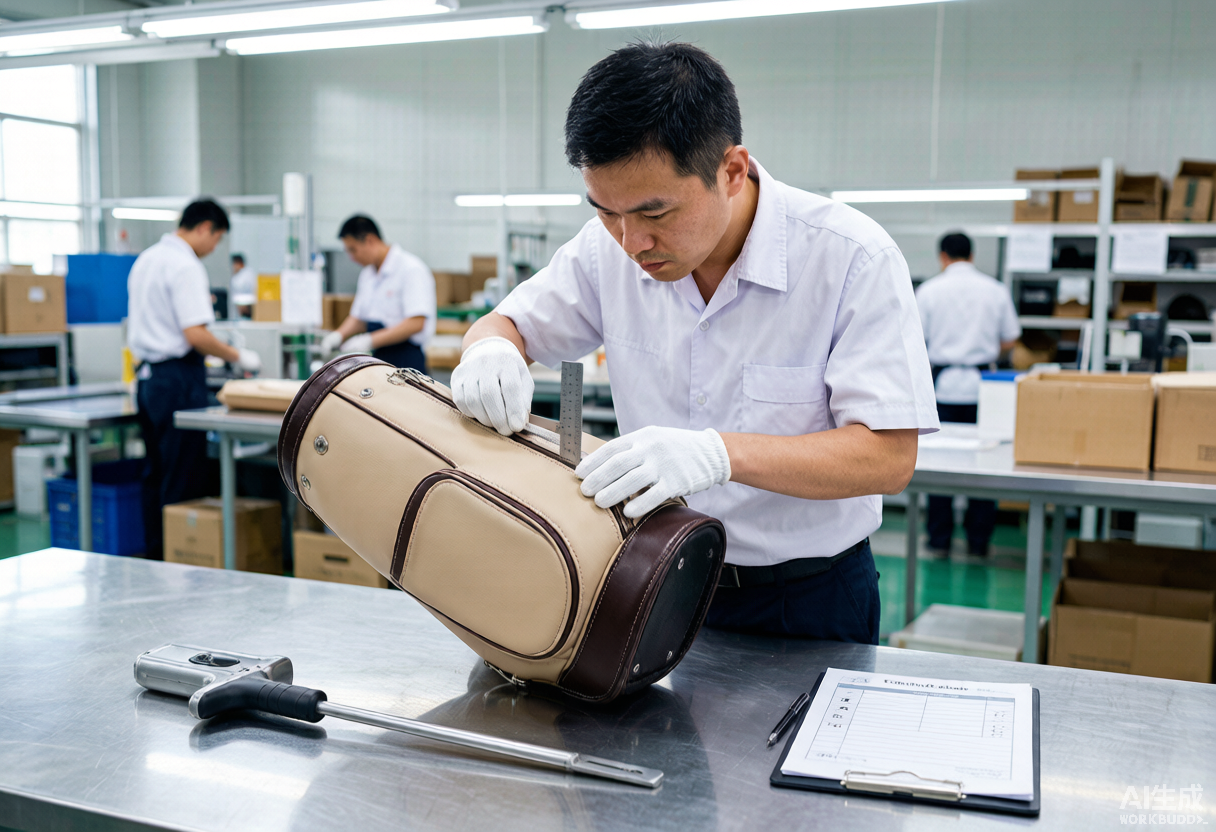
Bulk photos are worth reading for different reasons than sample photos: pattern alignment repeated across units rather than perfected on one hero bag, stitch density holding at the same SPI at the end of a shift as at the start, and hardware lots matching batch to batch. That gap between a sample room and a production program is where launch dates are lost — and it is why reorders cut on the same tech pack come back identical. Client cartons, hangtags and pallet marks are anonymised, so nothing here carries a client mark.
How to Read These Photos Like a Buyer
Program photos reward a trained eye. Five things to look at in any manufacturer's gallery, and what each one tells you. First, seam lines: straight, even stitching at consistent distance from the edge is machine discipline; wobbling lines are operator fatigue or poor maintenance. Stitch density is specified in stitches per inch and checked against the tech pack, and the fabric behind it is tested to ASTM methods before a run starts. Second, logo registration: embroidery should sit flat with no fabric puckering around the satin border; puckering means wrong backing or over-tight hooping. Third, color blocking alignment: where two fabrics meet at a seam, the join should land exactly on the design line — a 2 mm miss is visible and a 5 mm miss is a reject.
Fourth, hardware finish: zippers should run smooth and sit straight; pulls and buckles should match across the bag. Fifth, the base: the part every photographer hides and every buyer should ask about — feet aligned, base fabric taut, no glue shadows. Every visualization in this gallery is built from the same spec sheets a program runs on, and the base is where shortcuts live — so spec it explicitly. When you request a physical sample, these are the same five checks to run on your desk.
More From the Program Archive
A second pass through the archive, organized by execution rather than chassis — because most buyers shop techniques before they shop silhouettes.
- Embroidery programs — crests, monograms and sponsor marks at production scale. The embroidery page covers stitch counts, backing systems and thread cards.
- Print fabric programs — florals, camo and brand patterns from strike-off to bulk. See cute & kawaii and camo programs for the two big print families.
- Color-matched programs — Pantone-referenced colorways held across fabrics, webbing and hardware. The color matching page explains lab dips and strike-offs.
- Personalization programs — names, numbers and monograms per bag from roster files. Personalized golf bags maps the workflow.
- Event & gift programs — tiered tee gifts with kitting and venue delivery. Gift & tournament bags shows the budget structures.
Chassis Reference: What Each Type Is For
Every chassis in the table is a customization platform: the silhouette is proven, the colorway, branding and trims are yours. The bag types directory details each one; the customization hub maps what can change on any of them.
| Chassis | One-line purpose | Typical FOB (USD) | Best-fit buyer |
|---|---|---|---|
| Staff / tour | The flagship billboard bag | 38–62 | Premium retail, corporate flagship |
| Stand | The volume all-rounder | 19–34 | Teams, academies, retail lines |
| Cart | The organized rider's bag | 24–44 | Pro shops, resort programs |
| Sunday / pencil | The light minimalist | 8–22 | DTC brands, gifts, events |
| Travel cover | The airline protector | 14–28 | Retail add-on, tour programs |
| Shoe & accessories | The basket builders | 1.80–9 | Every program's attach rate |
From Photo to Program: the Next Step
Every image on this page started as someone's reference photo — a bag they admired, a colorway they sketched, a competitor's product they wanted to out-execute. The path from your reference to your program is shorter than it looks: send the reference with quantity and target price to the quote form, and the reply is a priced spec within 24 hours. Sampling takes 6–10 days; bulk 35–50; and the photo of your program joins this archive — anonymized if you prefer, credited if you do not.
For deeper dives than photos allow, the case studies walk through real programs end to end — budgets, calendars, mistakes and all — and the blog covers the buying knowledge behind every decision this gallery shows.
Usage Rights and Anonymization
A note on what this gallery shows and why. Chassis and execution images are a mix: spec-level design visualizations built from real tech packs, construction studies, production-floor photography from live runs, and reference photography from development work; client-branded final goods are anonymized under NDAs — logos shown are either our own program marks or used with written permission. When a prospective buyer asks "have you made something like this?", the honest answer is usually yes — and the NDA-safe way to prove it is the construction detail in these photos: seams, registration, colorwork and bases, the things that cannot be faked.
Sunday & Pencil Programs
Sunday and pencil silhouettes are where most first programs start: the lowest FOB in the line, the lightest freight per unit, and the silhouette the walking golfer actually uses. The customization surface is smaller than a staff bag but the positions are more visible — a front-pocket logo on a Sunday bag sits at chest height in every carry photo. See Sunday bags and pencil bags for the chassis specs.
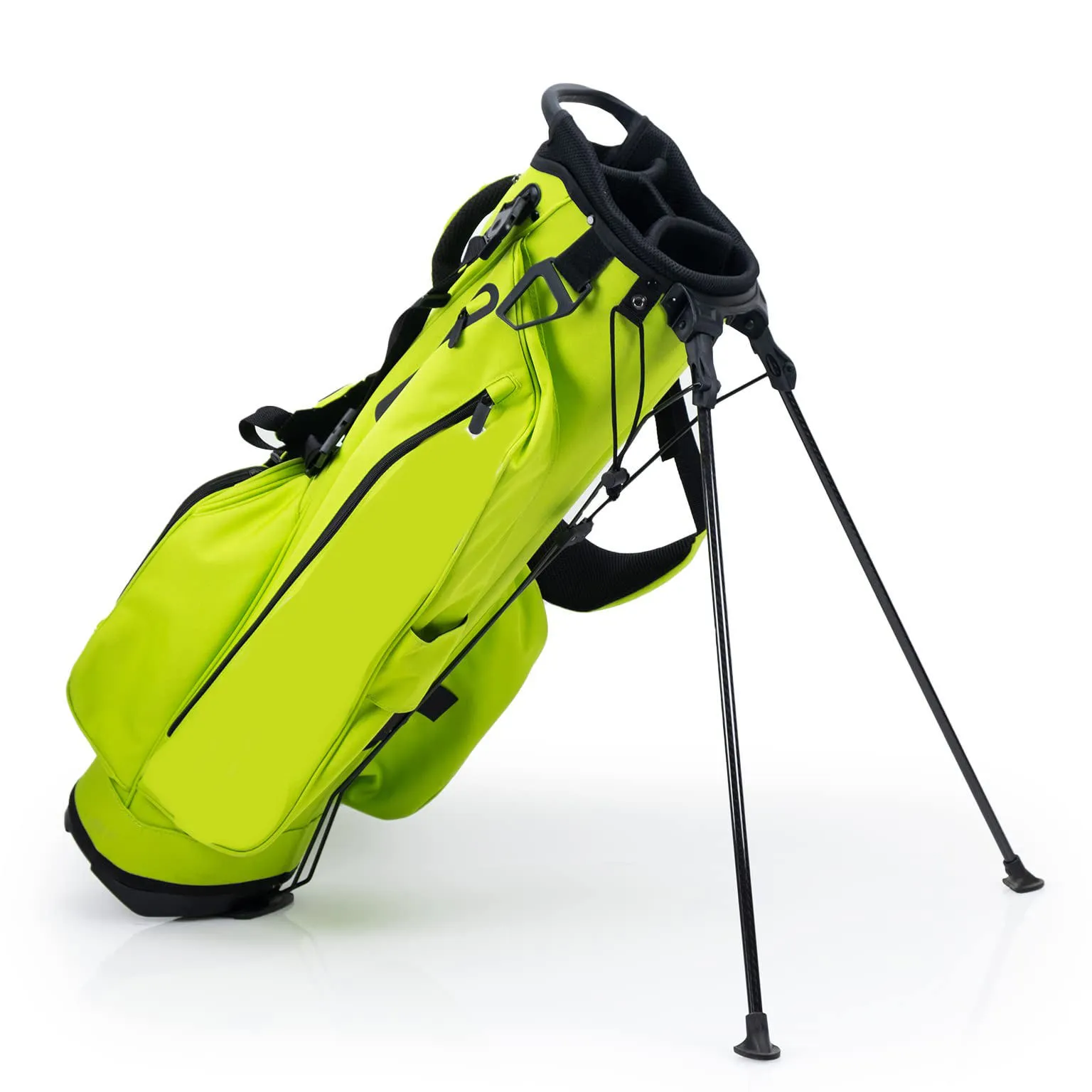
Team Crest Programs
The stand bag is the team standard for a reason: it carries a full set, stands on any range, and its ball-pocket panel takes a crest at billboard scale. Team programs pair the crest with roster personalization — names on side panels, numbers for varsity squads. The teams & academies page maps the season calendar these programs run on.
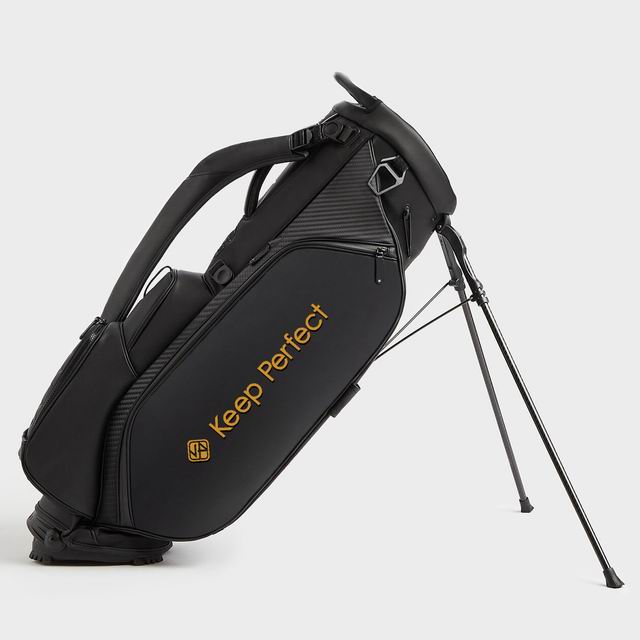
Corporate Colorway Programs
Corporate programs buy presence: a staff bag in exact brand colors with the company crest, photographed at the event and displayed in the lobby afterward. The color-matching discipline behind "exact brand colors" is its own craft — lab dips, strike-offs, bulk dye lots — documented on the color matching page.
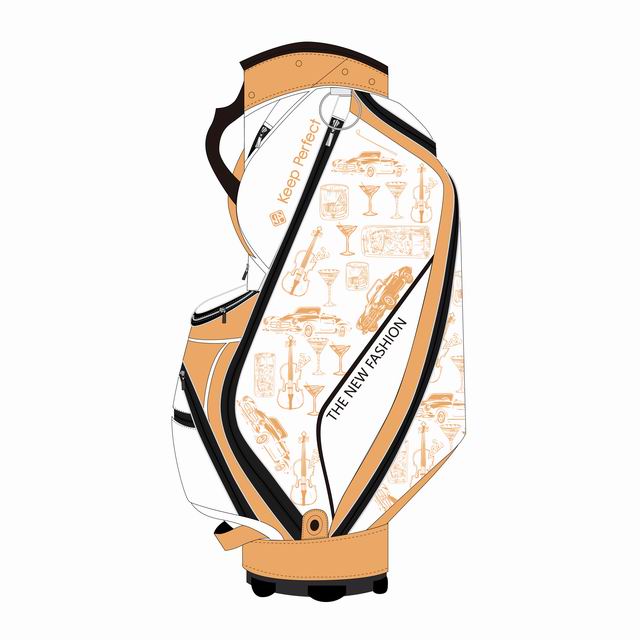
Print & Pattern Studies
Print programs live three lives before bulk: the artwork file, the strike-off, and the production run. What the photo shows is the third — pattern registration across curved panels, where repeat geometry either survives contact with a three-dimensional form or does not. The cute & kawaii and camo pages cover the two print families in manufacturing detail.
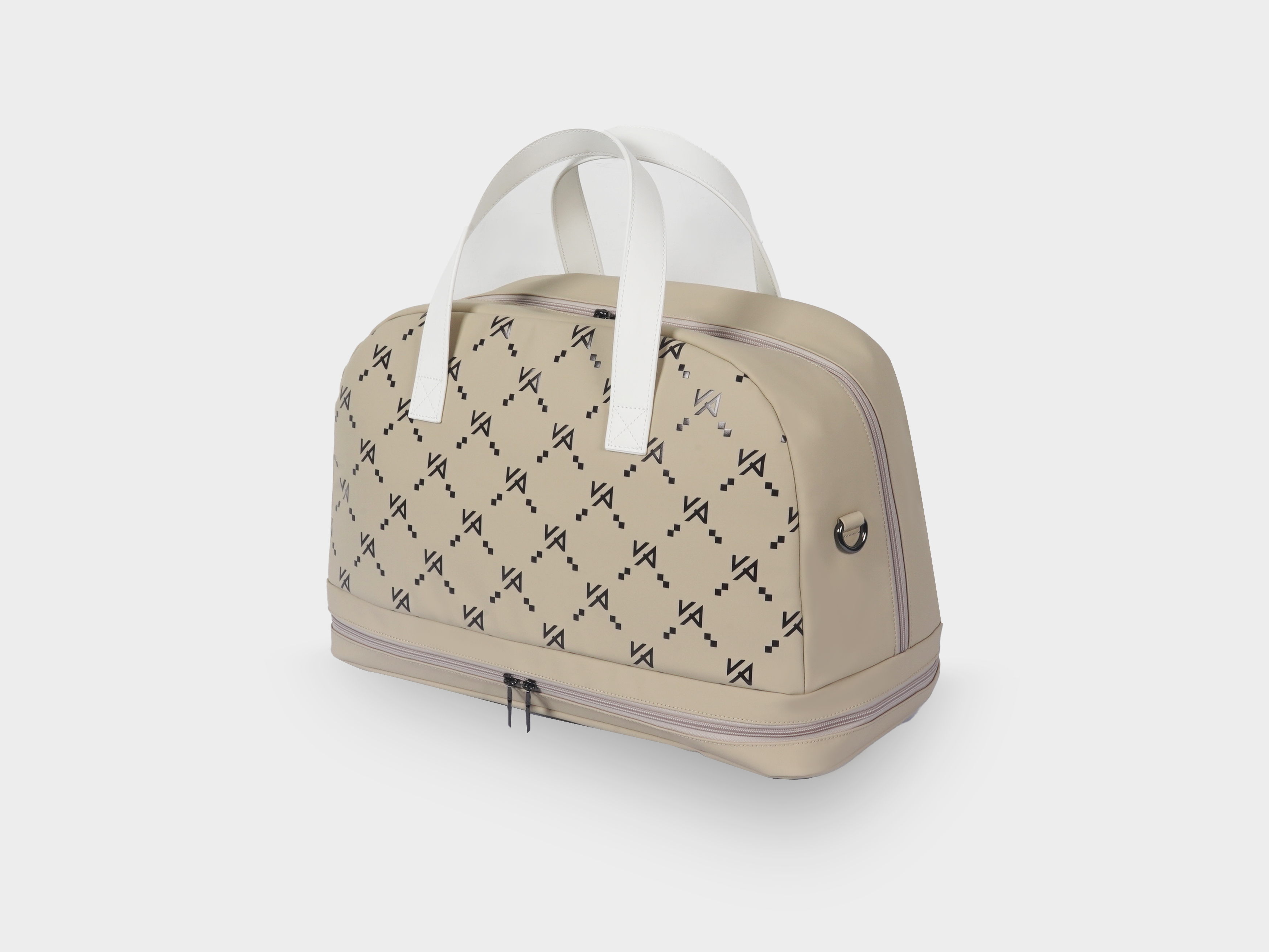
Colorway Studies
A collection photographs as a wall of color decisions: hero print, matching solids, trim colors pulled from inside the pattern, hardware plating that completes the story. Collections that merchandise this way outsell mixed assortments — the color story is the merchandising. The color matching page shows the lab-dip discipline that keeps every bag in the collection on-story.
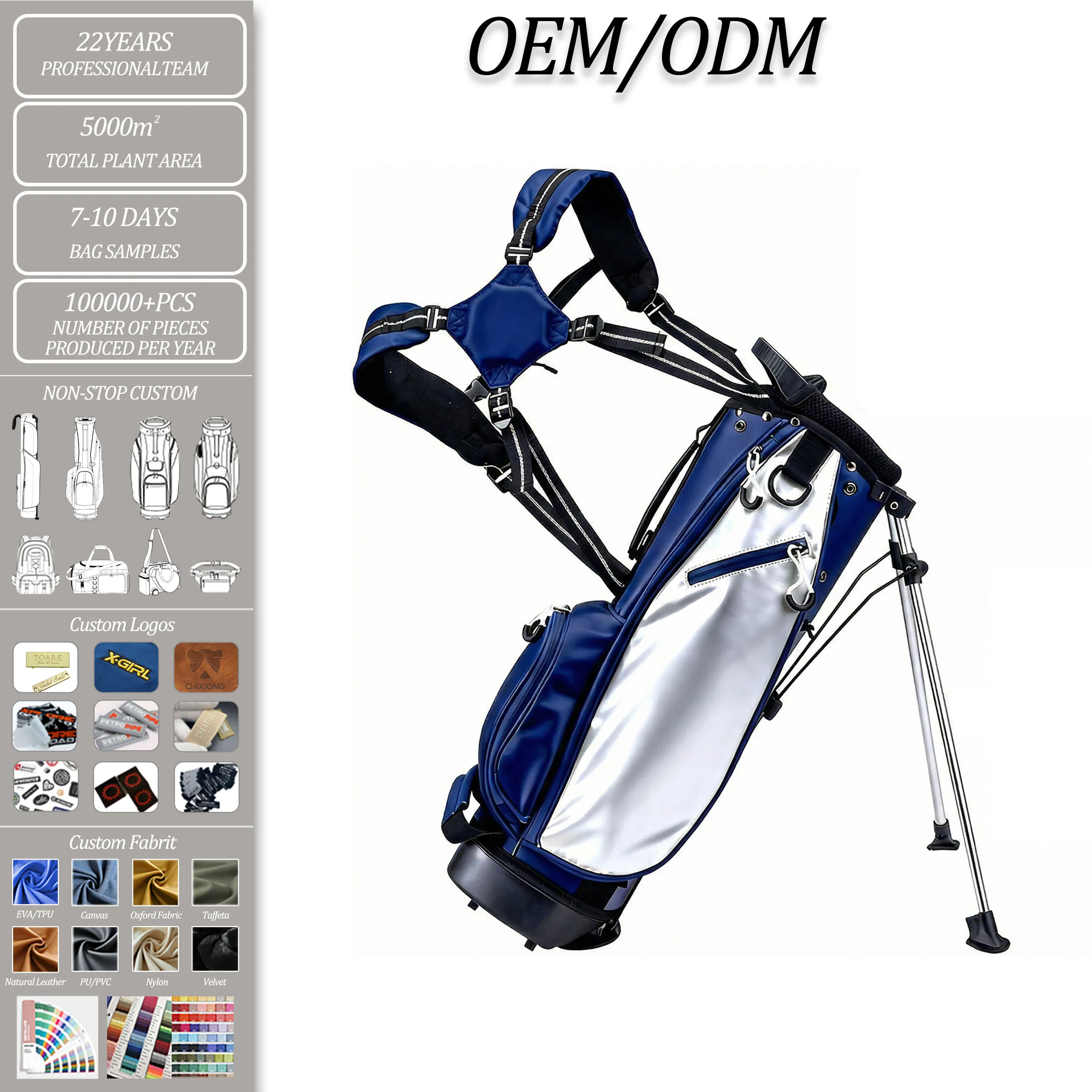
Hardware & Detail Studies
Experienced buyers photograph hardware first: zipper runs, pull finishes, foot alignment, webbing weave. These details cannot be retouched into existence — they are machine maintenance and operator discipline made visible. Our materials guide covers the hardware tier system (YKK and equivalents) that these details come from.
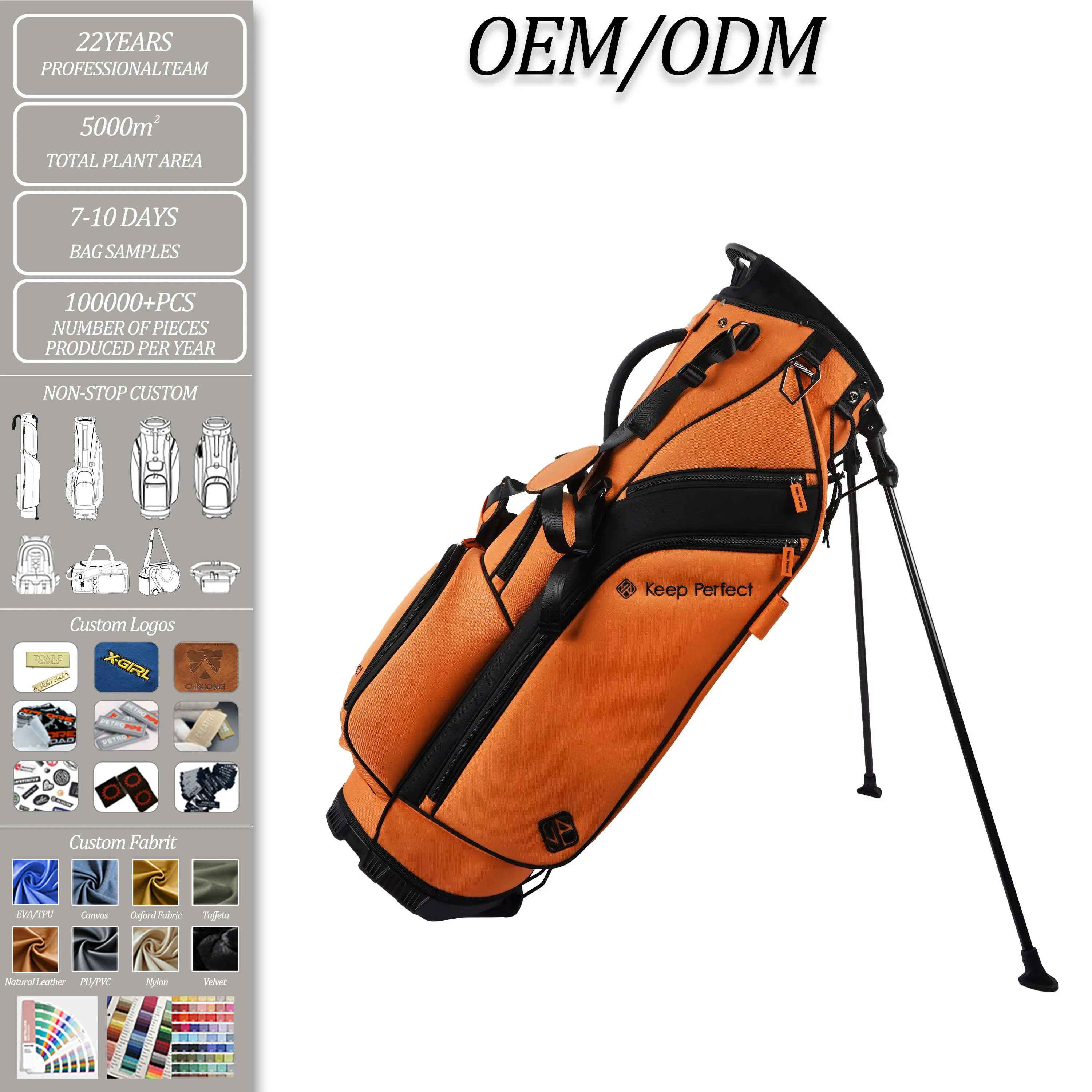
Travel & Protection Programs
Travel covers are engineering products disguised as soft goods: padding density, base reinforcement, wheel compatibility and handle placement decide whether clubs survive the airline system. The travel covers page details the construction options, and the travel guide covers the airline-damage reality that drives the spec.
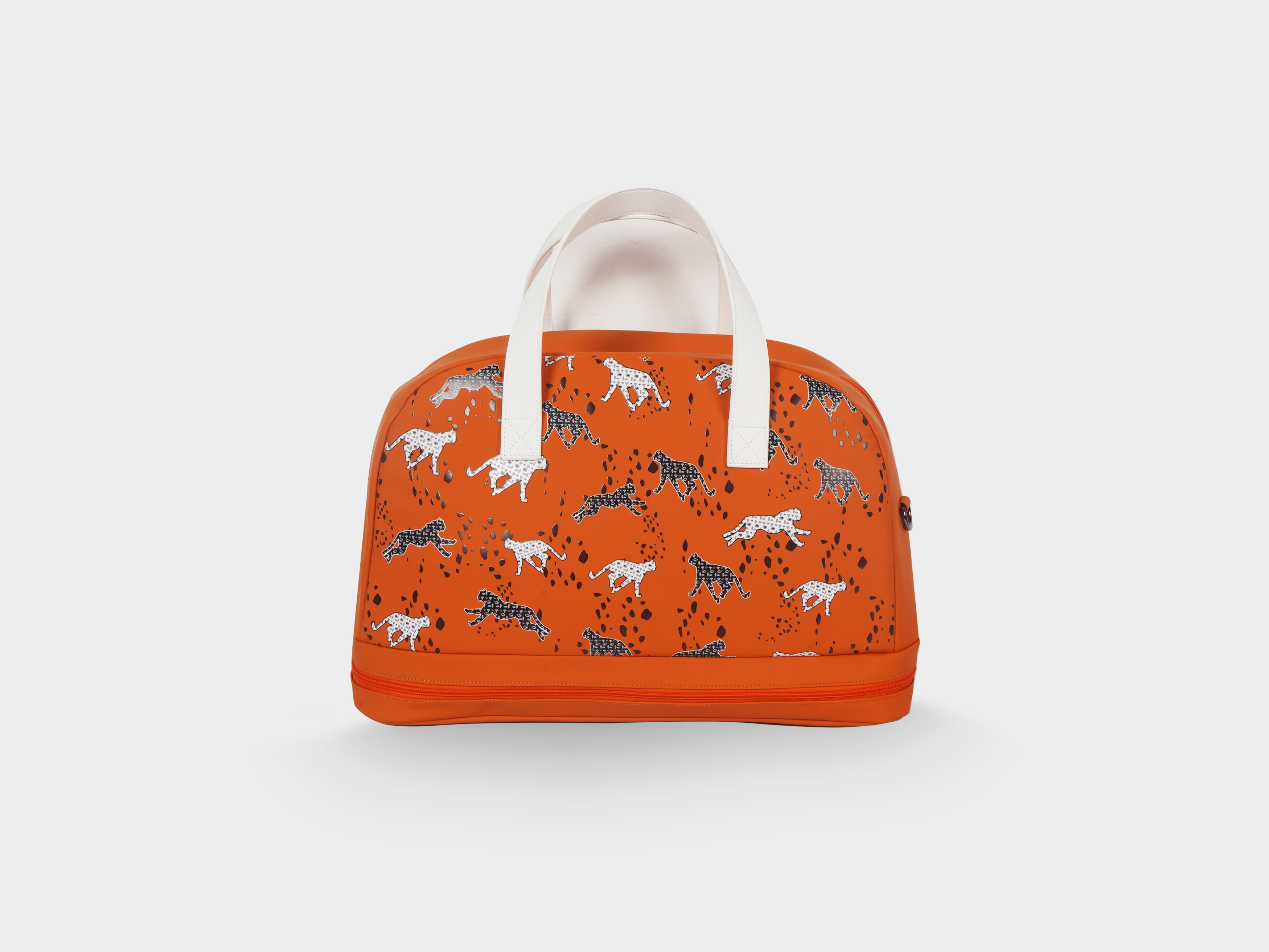
Junior & Academy Programs
Junior programs scale everything down except the branding: lighter chassis, shorter straps, smaller dividers — and a crest that still reads at range-tower distance. Academy volumes aggregate across schools to hit program pricing, a coordination our merchandisers run every season. The junior bags page covers the sizing system.
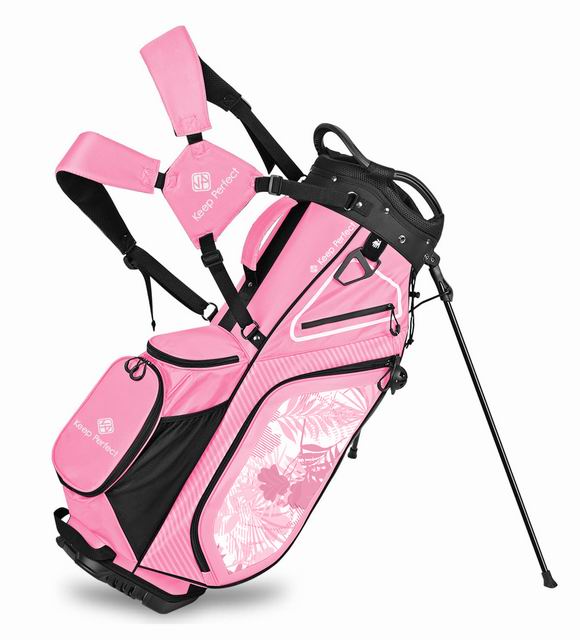
Frequently Asked Questions
Are these photos of bags from your programs?
The chassis photos are from programs we run and product renders we build to; client-branded final goods are anonymized for NDAs — case studies describe program structures without identifying clients.
Can I get a physical sample of my own design?
Yes — sampling is the core of every program: 6–10 days in your materials and colors. See the sample policy and request a quote.
Can you recreate a bag from a reference photo?
Yes — reference-photo development is how most programs start. Send the photo with quantity and target price; we translate it into a manufacturable spec on a proven chassis and quote within 24 hours. What we will not do is copy another brand's protected design elements — the spec captures the look and function, not the infringement.
Do you have more photos of a specific chassis or technique?
Yes — the archive holds far more than fits on one page. Ask via the contact form for the specific chassis, technique or colorway you are evaluating, and we will send the relevant program photos plus construction close-ups (seams, registration, base) that show the build quality honestly.
Who owns the photography of my program?
You receive full usage rights to the product photos we shoot of your program (white-background and detail sets are included with every bulk order). With your written permission, selected photos join this gallery; without it, they remain yours alone. Anonymized construction photos — no branding visible — may illustrate technique pages as noted above.
What photo sets come with an order?
Every bulk order includes a standard set: white-background hero shots of each SKU, six-angle coverage, and detail close-ups of branding, seams and hardware. Lifestyle and on-course photography is quoted as an add-on with our studio partners. Pre-shipment, you also receive the inspection photo set — the same checkpoints you approved during production.
Can I visit and photograph production myself?
Yes — scheduled visits during bulk production are welcome, and buyers photograph their own programs on the line routinely. Third-party inspectors (SGS, Bureau Veritas, your QC agent) audit at any checkpoint with the same openness. The about page covers who we are and how visits work.
What do production-goods photos show that a sample photo cannot?
Consistency rather than capability. A sample proves the construction is possible once; a bulk photo proves it repeats — pattern alignment holding at bag 150 as at bag 5, stitch density unchanged at the end of a shift, hardware lots matching batch to batch. That is what a reorder depends on.
When do I see photos of my own goods during a run?
At the in-line checkpoints and at final inspection: cutting and panel set, assembly with branding applied, and pre-shipment inspection at AQL 2.5, each with a photographic report. Third-party inspection booked through SGS or Bureau Veritas can run at the same checkpoints and adds its own report.
Are the bags in the production photos client-branded?
They are anonymised. Client marks, cartons and pallet labels are masked or shot out of frame under the NDA that covers every program, so photos can be published without exposing a brand that has not approved it. Your own program photos stay private unless you release them.
Ready to spec your custom golf bags?
Send your logo, bag type and target quantity — we reply with a quote, MOQ and timeline within 24 hours.