
Programs · Personalization
Personalized Golf Bags, Per Name
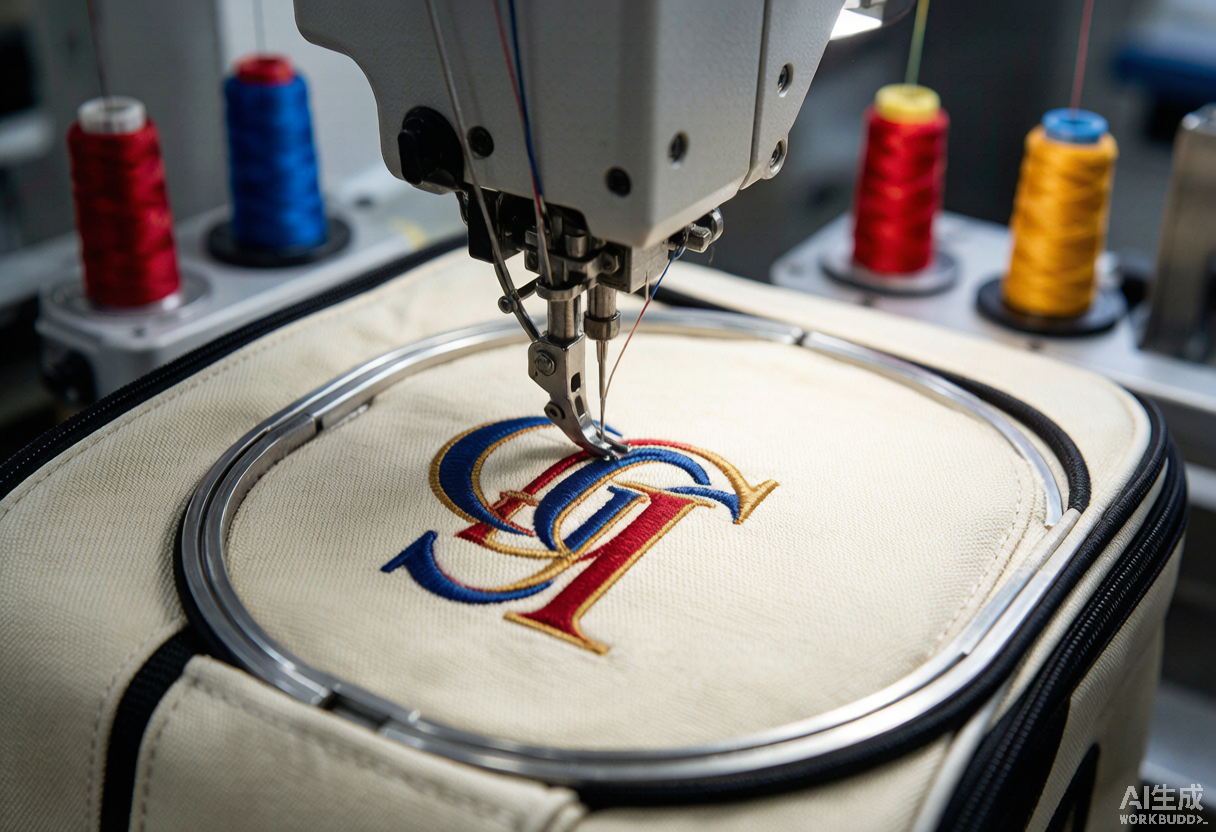
Personalized golf bags carry an individual's name, initials or monogram embroidered per bag — each piece in a 200+ program different. Name personalization costs USD 0.60–1.20 per bag in thread, driven by a roster spreadsheet rather than a single repeat logo; monogram styles run flat, script or chain-stitch. The programs that use it: member clubs, teams, gifting and retirement presentations.
Personalized vs Custom vs Private Label
The vocabulary matters because the programs differ. Custom means the bag is built to a brand's spec — one design, repeated. Personalized means each bag carries individual identity: names, numbers, initials or dates. Private label means your brand identity on retail product. A single order can be all three — a club's member bags are private label (club crest), custom (one chassis, one colorway) and personalized (member names) simultaneously.
| Personalization type | Cost per bag (USD) | Data you provide | Typical program |
|---|---|---|---|
| Surname, block font | 0.60–0.80 | Name list | Teams, member clubs |
| Initials / monogram, script | 0.70–1.00 | Initials list | Gifting, retail add-on |
| Name + number | 0.80–1.20 | Roster spreadsheet | School & academy teams |
| Name + date | 0.80–1.10 | Event list | Retirements, milestones |
How Roster-Driven Production Works
Personalization is a data workflow, not an embroidery variation. You send a spreadsheet — one row per bag, columns for name, number and size if the program includes them. We de-duplicate, confirm spelling round-trip (the single most valuable 20 minutes in a personalized program), then batch the embroidery: the crest runs as a bulk program while names run in sequence on the same panels.
The finished bags are labeled per name — a paper tag or embroidered size/position marker — so distribution to 30 players is a pick-by-name operation, not a search.
Monogram Styles That Photograph
Gifting and club programs live on presentation. Three monogram executions cover most needs: flat single-color (the safe classic), script with chain stitch (elegant, suits cream and pastel bags — see aesthetic lines), and 3D puff initial (bold, sporty, popular in junior programs). Thread is matched to the bag palette or contrasted deliberately — gold thread on navy is the classic club combination.
For retail personalized programs — where buyers personalize at checkout — the same production runs as split shipments against order lists. See private label programs for the retail workflow.
Gift Programs Beyond the Course
The gift economy around golf is bigger than the playing one: retirement presentations, Father's and Mother's Day, member milestones, tournament prizes. A personalized Sunday bag at USD 15–20 FOB gifts at a perceived value of 4–6× that; the name is what does it. The gift & tournament page covers the event side, and the gift bag guide the budget side.
The Roster File: Where Personalization Succeeds or Fails
Every personalized program runs on one spreadsheet, and the discipline around that spreadsheet is the difference between a smooth run and a week of apologies. The format we send at order confirmation: one row per bag, columns for surname (exactly as embroidered — including capitalization and diacritics), optional number, optional size variant, and a notes column for anything unusual. The two rules that save programs: names are typed by the client, never transcribed by us from handwriting, and the file goes through one confirmation round-trip where the client checks spelling against their own roster — because we embroider exactly what the file says.
Citable fact from our production records: roster files arrive with errors in roughly one program out of five — transposed letters, outdated spellings, duplicate rows — and the round-trip check catches all of them at the cost of one day. The check is not bureaucracy; it is the cheapest insurance in the entire program. Changes after embroidery starts are re-embroidery at cost, which is why the file freezes at bulk start and late additions run as a top-up batch at the same per-name rate.
Fonts, Threads and the Visual Vocabulary
Name embroidery has a visual vocabulary, and choosing from it deliberately is what separates a personalized bag that photographs beautifully from one that looks like an afterthought. The four font families we keep digitized and production-ready:
Thread colors are matched against Madeira and Robison-Anton rayon/polyester charts — the industry-standard embroidery thread references — with physical thread wraps sent for approval on request.
| Style | Character | Best on | Thread pairing |
|---|---|---|---|
| Block (varsity) | Athletic, legible at distance | Team bags, stand chassis | Contrast color, matte |
| Script | Elegant, gift-grade | Cream & pastel bags, Sunday chassis | Tone-on-tone or gold |
| Chain stitch | Vintage, hand-made feel | Heritage and retro programs | Single dark color |
| 3D puff initial | Bold, dimensional | Junior programs, caps & covers | Foam-backed contrast |
Where the Name Goes: a Position Map
Name placement follows function. The side ball pocket is the classic position — visible when the bag is carried, protected in transit, large enough for full surnames at 20–30 mm letter height. The top crown reads premium and suits initials and monograms; it is the first thing seen when the bag stands. The front pocket pairs a name with a crest above it — the team standard. And the strap, embroidery-friendly on padded models, puts the name in every carry photo — junior programs love it.
One engineering note: letter height has a floor. Below 12 mm, satin-stitch letters lose definition, and below 8 mm they fill in entirely — thread is a physical medium with a minimum feature size, like print has a minimum line width. Surnames longer than twelve characters scale down gracefully to about 14 mm; beyond that we recommend initials or a two-line stack. The placement guide covers the interplay with crest and sponsor positions across all chassis.
Personalization at Retail: the Checkout Model
The fastest-growing personalization program we run is retail-side: the brand sells a bag online, the buyer types a name at checkout, and the name is embroidered before dispatch. Operationally this is a split workflow: bulk bags arrive from our floor unpersonalized to the brand's 3PL, and personalization happens domestically — or, for programs where volume justifies it, we personalize to order at origin and ship direct, adding 5–7 days to dispatch but removing the domestic embroidery vendor entirely.
The economics decide: domestic personalization runs USD 4–9 per name at US labor rates; origin personalization runs USD 0.60–1.20. At 50+ personalized units per month, origin personalization usually wins on cost and loses on dispatch speed — which is why mature programs run both: origin personalization for standard delivery windows, domestic for expedited. The private label programs page covers the broader retail operations model.
Worked Example: Sixty Retirement Bags Done Right
Anonymized but real in structure: a corporate client honoring a retiring executive with sixty personalized Sunday bags for the executive's regular foursomes, family and club friends. Brief December 4: cream Sunday bags, script surnames in navy thread, small company crest on the front pocket, gift boxed, delivery to the club by January 15 for the farewell round.
Roster file received December 6 with 60 names; round-trip check caught two spelling corrections on December 7. Font stitch-out approved December 10. Bulk ran December 11 to January 6 (embroidery sequenced: crests first as a bulk run, then names alphabetically by roster row). PSI passed January 8; DDP to the club January 13 — two days of buffer. Per-bag economics: USD 16.80 chassis + USD 0.90 name + USD 2.40 gift box + USD 3.10 freight-and-duty share = USD 23.20 all-in, against a perceived gift value the client estimated at "well over a hundred." The reorder came in March: twelve more, for the board.
Pricing the Personalization Line Honestly
Personalization pricing has three components, and quoting them separately keeps programs honest. The digitizing component: a one-time USD 15–30 fee per font style if we digitize a custom lettering style — waived for our four house fonts. The stitch component: USD 0.60–1.20 per name depending on stitch count (script fonts stitch denser than block), which is the real per-unit cost. The handling component: sorting, tagging and matching personalized bags to roster rows — USD 0.20–0.35 per bag, the line most quotes hide and most programs need.
Citable rule of thumb for budgeting: personalization adds 4–8% to a bag program's FOB cost and routinely doubles its perceived value in gifting contexts — the highest leverage line item in the entire budget. Where personalization does not pay: anonymous mass giveaways, where no recipient relationship exists. Spend that budget on a better towel instead.
The Failure Modes, Named
- The un-proofed font. Script fonts with swashes collide on certain letter pairs (double-f, rn-sequences). A stitch-out of the actual longest surname in the roster catches this before bulk.
- The alphabet soup problem. Mixing font styles inside one roster without a rule — some bags script, some block, chosen randomly — reads as inconsistency, not variety. If tiers differ, the split must be deliberate and listed in the file.
- Late roster churn. "One more name" after embroidery starts is a mini-production-run of one. Top-up batches exist (same rates, 5–7 days), but the freeze date is the freeze date.
- Thread color by screen. Gold thread on cream reads as brown on some monitors and as mustard on others. Approve thread from a physical wrap or stitch-out, never from a JPEG.
- Forgetting the label. Sixty identical cream bags differ only by the name inside the embroidery — distribution needs the per-name tag we sew or tie at packing. Unlabeled personalized stock is a sorting session nobody enjoys.
Corporate Gifting at Scale
The largest personalized programs we run are corporate gifting cycles: year-end client gifts, sales-team recognition, dealer incentives. The shape differs from club gifting in three ways. Volume is bigger — 300 to 1,200 units against a single roster file. The roster is messier — corporate CRM exports arrive with title-case inconsistencies, missing diacritics and the occasional "TBD" row, so the round-trip check is longer and more valuable. And branding is dual: the corporate logo on the front pocket, the recipient's name on the side — two embroidery programs sequenced on the same panels, crest first in bulk, names second by roster row.
Budget architecture for corporate programs, stated as a planning rule: USD 25–45 all-in per recipient is the band where a personalized bag beats every alternative gift on perceived value per dollar — below it, you are competing with gift cards; above it, with electronics. The December peak books its production slots in September; corporate programs confirmed after mid-October move to airfreight economics or accept January delivery. The corporate programs page covers the full calendar and the venue-delivery logistics.
Seasonal Peaks and Capacity Planning
The counter-peak strategy worth knowing: personalization programs confirmed in the troughs (January–February, July) occasionally access off-peak embroidery pricing and always get the fastest sampling queues. Annual programs — clubs that gift every spring — increasingly confirm the next year's order at this year's delivery, locking capacity and price in one decision.
| Peak | Order window | Delivery window | Late-booking reality |
|---|---|---|---|
| Spring tournaments | December–February | March–May | Airfreight or simplified specs |
| Retirement & graduation | February–April | May–June | Roster flexibility absorbs most delays |
| Autumn tournaments | June–August | September–November | The most forgiving peak |
| Corporate gifting | August–October | November–December | Hard ceiling: mid-October for sea |
The Mathematics of Monogram Proportion
Monograms fail on proportion more than on any other variable, and proportion is mathematics before it is taste. The working rules our digitizers apply: a monogram's height should sit between 55% and 70% of its panel's printable height — below that it reads as a label, above it as a billboard. Letter weight (stroke thickness) should run 12–18% of letter height for satin-stitch legibility; thinner strokes fill in, thicker ones blob. Inter-letter spacing in three-letter monograms follows the 15% rule — gap width at 15% of center-letter width — because monograms read as a single glyph, not three letters.
Script monograms add one more variable: slant. A 10–14° slant reads elegant; beyond 18° the letters' exit strokes collide at embroidery densities. These numbers ship in every monogram stitch-out we send for approval, so your decision is informed rather than hopeful — and the approved proportions become the program's permanent spec, versioned in the tech pack for every reorder.
Frequently Asked Questions
Can each golf bag have a different name?
Yes — that is exactly what personalization means here. Send a roster spreadsheet; each bag is embroidered with its own name. MOQ applies to the program (200 pieces), not to each name.
What font options are available for names?
Block, script, varsity and chain-stitch styles; a roster can mix them if the split is provided in the spreadsheet. We send a stitch-out of your chosen font before the run.
Where do names go on the bag?
Side panel is standard (visible when carried), top crown is the premium alternative. Name placement pairs with a front-pocket crest — the team pattern. The placement guide maps every zone.
Is personalization available on any bag type?
Yes — any chassis, any fabric that takes embroidery. The bag types directory lists the chassis; all of them carry personalization.
What is the minimum letter size for embroidered names?
12 mm letter height for clean satin-stitch definition; 8 mm is the absolute floor and only for simple block capitals. Long surnames scale to fit the panel — twelve-plus characters typically run at 14–16 mm — and we flag any name in your roster that needs the two-line treatment before sampling.
Can you personalize bags that are already manufactured?
For programs we manufactured, yes — unpersonalized stock can return to the line for a top-up embroidery run. For bags from other sources, no: personalization is engineered into our panel construction (backing access, hoop clearance), and retrofits on unknown constructions produce unreliable quality we will not sign.
How are personalized bags sorted for distribution?
Each bag is tagged with its roster name at final inspection — a removable paper tie as standard, or an embroidered size/name label inside the pocket for retail programs. Cartons pack alphabetically or by your groupings (team, flight, table), so distribution is pick-by-name rather than search-and-hope.
What data format does the roster file need?
Excel or CSV, one row per bag: surname exactly as to be embroidered (capitalization and diacritics included), optional number, optional size, optional notes. The file is typed by you, checked in one round-trip, and frozen at bulk start. Diacritics — accents, umlauts, tildes — embroider cleanly in our house fonts; logograms and non-Latin scripts are quoted as custom digitizing.
Does personalization slow down the production calendar?
Minimally. Name embroidery runs in parallel with final assembly on a sequenced schedule, adding 2–4 days to a standard 35–50 day bulk run — far less than buyers expect. The calendar risk sits in roster approval, not embroidery: every day the roster file sits unconfirmed is a day added at the start, not the end.
Ready to spec your custom golf bags?
Send your logo, bag type and target quantity — we reply with a quote, MOQ and timeline within 24 hours.