
The Market Behind the 28 Percent
Women are about 28% of US golfers (NGF), junior participation growth is led by girls, and women drive a disproportionate share of golf gifting — a large, growing, and consistently under-served equipment market.
The demand numbers are stable across sources: the National Golf Foundation counts women at roughly a quarter to 28 percent of the US golfer base depending on the participation definition, and the category's growth is concentrated in women and younger cohorts — the same demographics driving the kawaii and character trend and the pastel wave in the color stories guide. The commercial asymmetry is the point: equipment lines, shelf layouts and program calendars were built when the base skews were different, and the shelf has not caught up. A buyer walking a major golf retail floor in 2026 still sees womens assortments that are a fraction of the mens wall, heavy on three colors, light on engineering stories.
For B2B buyers the asymmetry is an opportunity structure with three doors. Retail: a differentiated womens line faces less competition per linear foot of shelf. Programs: corporate and resort buyers increasingly ask for womens-spec options in event and gift orders. And private label: the brands winning this lane are new brands built womens-first, not mens brands with a womens SKU. The rest of this guide is the manufacturing brief for entering through any of the three doors.
What Women Golfers Actually Report Wanting
The survey literature and the review corpora agree on a short list, and it is not a fashion list. Weight: repeatedly the first spec named — carried comfort over feature count. Straps: the most common hardware complaint in the category (strap width, padding geometry, and the harness's fit on narrower shoulders). Pocket logic: valuables protection, insulated pockets that actually hold a large bottle, and full-length apparel pockets planned for the round women play. Color: choice and system, not stereotype — the buyers choosing pastels want whole-bag commitment (the pastel playbook covers the discipline), and a large cohort chooses classic navy and neutral tones like everyone else.
The engineering translation is where most lines fail: they treat these as marketing requests instead of a spec sheet. Weight is a materials and structure decision (see the weight class section below). Straps are a harness engineering decision, not a padding upgrade. Pocket logic is a pattern decision made before any fabric is cut. And color is a colorway management decision across the whole product, not a panel accent. A brand that assigns each request an owner in the spec process ships a different bag than one that answers them with a mood board.
The Shrink-and-Pink Trap and Its Data
The industry's original sin in the category: take the mens chassis, downsize it 5–10%, produce it in pink and lavender, call it a womens line. The market's verdict is visible in three numbers. Review language: 'cute but flimsy' recurs in this category's reviews at rates the mens lines do not see — the downsized build often inherits mens panel weights without the mens structural analysis, and the result reads as lighter in the wrong sense. Return and clearance patterns: past-season womens colorways clearance at steeper discounts than mens classics, because stereotype palettes date in one season while a well-designed color system carries for years. And loyalty: the brands that built womens-first lines — engineering the weight class and harness from the ground up — dominate the repeat-purchase conversation that shrink-and-pink lines never enter.
The trap costs three ways at once: development (you paid for a downsized pattern and got a weaker product), marketing (you bought a dated palette and discounted it), and brand (your line taught the customer that your womens program is an afterthought). The exit is symmetrical: spec the weight class honestly, engineer the harness for the customer, build the color as a system — and price the result on the quality tier it is, not a down-tier of the mens line. The manufacturing cost difference between a condescending product and a serious one is usually USD 2–4 per unit at program volumes; the market reads the difference immediately.
Weight Class: the First Spec Decision
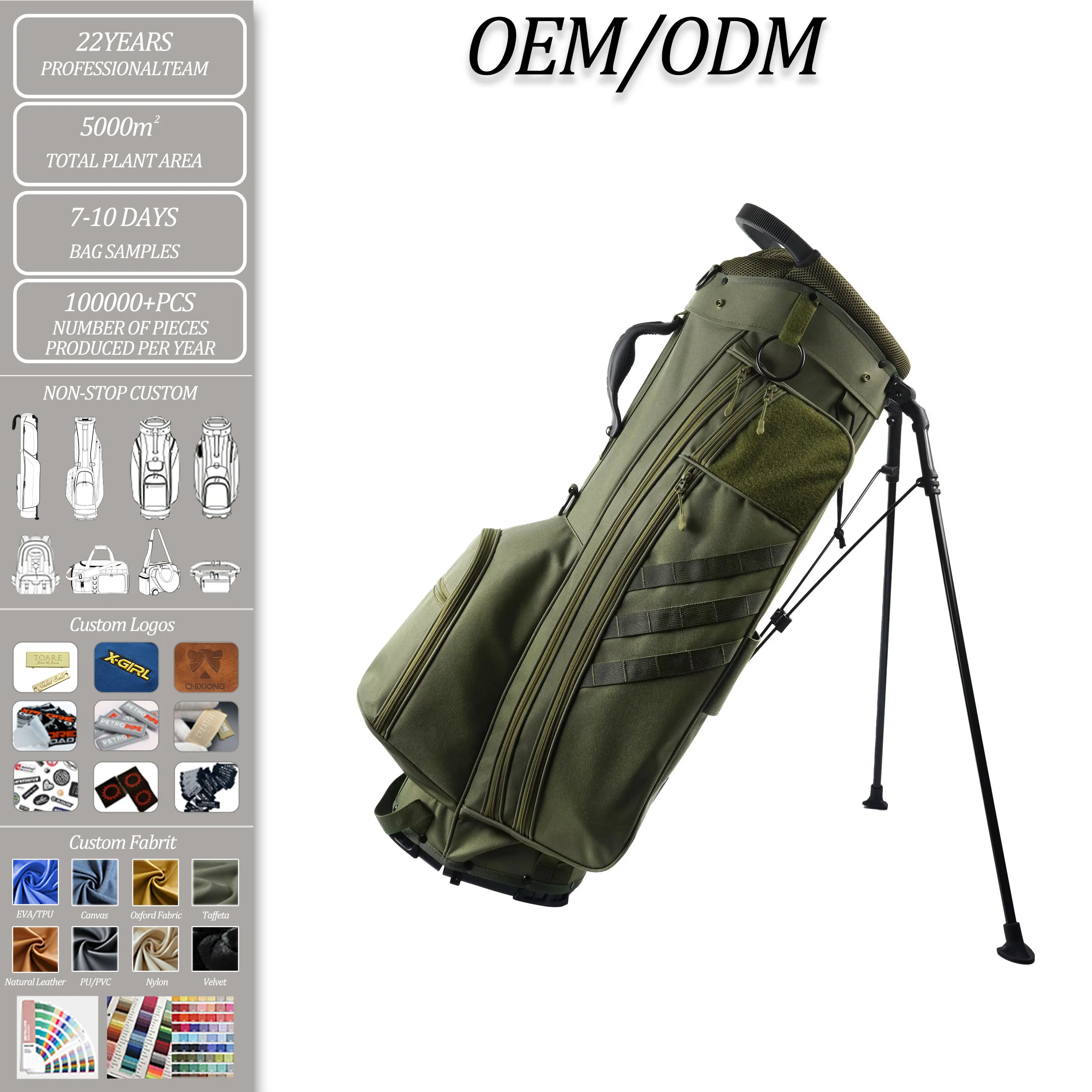
Weight is the category's governing spec, and the honest engineering ladder for carry-class bags runs: 1.65–1.9 kg (the premium light class, using lighter denier composites and stripped structure — spectacular but costly and less feature-rich), 2.0–2.4 kg (the serious everyday class — full divider protection, real pocket architecture, materials chosen for the weight budget), and 2.5–3.0 kg (the value class, where weight buys durability and price). The decision is not 'as light as possible' — it is which weight the customer can carry for her actual round at the quality tier she will respect. A walking 9-hole player and a riding 18-hole player are different programs, and the spec honors the difference.
Where the grams actually come from: fabric (600D double-PVC instead of 1680D saves 200–300 g with honest durability — the materials guide has the trade tables), frame geometry (perimeter frames vs full cages), divider materials (molded EVA vs full-length structural dividers — see the divider note in the stand-bag guide), and hardware (nylon-coil zips with alloy-look pulls instead of full metal heads). Weight engineering is a sum of 40-gram decisions, and the spec sheet that tracks them ships a 2.1 kg bag; the one that tracks only the marketing sentence ships a 2.8 kg bag with a light tag on it.
The Color System Beyond Stereotype
The palette evidence, stated plainly: pastels sell when they are committed systems, not when they are accents — the whole-bag color story (body, trim, pulls, legs, lining matched under one lab-dip discipline, per the matching protocol) is the version that reorders. Neutrals and deep tones (navy, forest, black, greige, oxblood) sell continuously to a large cohort of women buyers exactly as they do to men — a serious line carries both. And the fastest-growing register is the considered middle: muted tones with one considered accent, tone-on-tone executions, the quiet-premium direction from the design ideas guide — the customer who wants her bag to be beautiful without being loud.
The system decision for a brand is range architecture, not SKU count: a 3-SKU opening line (one committed pastel story, one classic neutral, one considered-middle flagship) covers the category's actual demand in a way a 6-SKU stereotype line does not. Manage the colorways as a season system (the pastel story rotates spring tones annually; the neutral never rotates) and the line reads as designed rather than themed — the difference between a brand and a promotion.
Pocket Architecture for the Real Round
The pocket spec that the surveys and the field agree on: a velour-lined valuables pocket sized for a phone (not the token pouch that fits a scorecard and nothing since 2015); an insulated pocket that holds a 700–950 ml bottle — the diameter constraint drives the panel width, and the insulated spec needs the welded-seam option from the cooler discipline; a full-length apparel pocket on the walking silhouettes (rain jacket, a layer); a range-finder pocket with magnetic or zip closure; and ball-and-tee storage that does not require unpacking the bag. The accessories guide extends the pocket logic to pouches and valuables bags; here the point is the pattern decision: pockets are architecture, and their widths and depths are decided at pattern stage, before any fabric exists.
The common failure is inherited pocket logic: downsized bags inherit downsized pockets that hold the mens round's inventory at womens scale — smaller, not differently planned. The correct process inverts it: define the round (what she carries: phone, wallet, keys, bottle, jacket, sunscreen, balls, tees, gloves — the actual inventory differs from the mens list), then size the architecture to it, then let the silhouette follow. Programs run this way produce the review language that sells the next season without ad spend.
Strap and Harness Engineering
The harness is the most-reported hardware complaint in the category, and the engineering answer is geometry and width, not padding volume. The spec elements: strap width 55–70 mm (wider spreads load on narrower shoulders — the instinct to slim the straps for a slimmer bag is backwards), a dual-strap harness with rotating comfort-flex panels (the legs of the harness articulate instead of folding), padding that is perforated EVA rather than slab foam (breathability in heat), and adjustability ranges that actually span the customer population — torso adjust from 35–48 cm rather than a decorative ladder. The X-frame geometry from the stand chassis guide applies; the womens spec tunes the pivot spacing and the strap curvature.
Two field tests decide a harness honestly: the 9-hole walk test (no pressure points at the shoulders after 90 minutes of carrying, measured, not remembered) and the single-strap carry (many rounds start as one-shoulder carries to the first tee — a harness that only works in dual mode fails the first 400 meters of the round). Both tests are cheap, repeatable, and the difference between a 4.8-star harness review average and the returns that show up in season two.
Sizing Without Condescension
Sizing is where the category's history of assumption concentrates, and the honest spec is measurement-based: the average 14-club inventory for the walking player this line serves (many womens programs are built as 12–14-club capacity rather than oversized 14-way monoliths), divider top geometry that reads clubs at the golfer's eye (the cart-bag lesson about the top reading toward the user applies to stand silhouettes too), and overall proportions that respect that the difference is in carrying geometry, not in a universal need for 'smaller.' Some of the category's best-selling womens silhouettes are full-sized — their womens-ness is in the harness, the weight, the pockets and the color system, not the cubic centimeters.
The manufacturing translation: sizing decisions belong in the pattern draft with named measurements (top opening, base depth, collar height), not in a global scale factor applied to the mens pattern. The downscaled-everything approach produces the shrink-and-pink failures documented above; the measurement-based approach produces the bags that win the category's repeat purchases. The difference is one conversation at the pattern bench, and it is free.
The Gift Channel and Its Calendar
Womens golf equipment is the category's gift engine: Mother's Day, graduation, holidays and the birthday calendar all spike equipment gifting in this segment, and the bag is a top-3 gift SKU (with clubs and rangefinders). The channel arithmetic for brands: gift purchases buy presentation (boxing, the packaging tiers from the packaging guide are worth USD 1.50–3.00 per unit here, and gift-boxed units retail 15–25% higher), size forgiveness (gift buyers are risk-averse on fit — a considered-neutral flagship outsells a bold pastel in gift season), and calendar discipline: gift retail buys in Q4 for holiday, Q1–Q2 for Mother's Day — which means the production calendar works backwards from March and October ship windows, and the timeline guide's 35–50 day bulk math must land a month earlier than the merchandising instinct expects.
The corporate gift channel follows the same engine at B2B pricing: companies buying for employees, clients and events select womens-spec options in a growing share of orders, and the gift programs guide's tier structure ($25/$50/$100 bands) applies with one change — the womens tiering rewards the same quality discrimination the retail channel teaches, and a condescending product fails the unboxing photo that corporate gifting lives on.
Retail Merchandising for the Category
The shelf itself is a spec surface for the brand. Womens lines merchandise best as a designed block: a consistent silhouette family, the color system from this guide's palette section visible as a system, and hangtag copy that leads with the engineering (weight class, harness, pocket architecture) rather than the aesthetic — the aesthetic shows itself; the engineering needs the tag. Planogram reality: the womens wall is smaller, so each SKU works harder — a 3-SKU designed line fills the wall's story space; a 6-SKU scattered one fragments it. Retail partners respond to lines that respect their linear footage economics, and the reorder conversations start from that respect.
The e-commerce translation of the same discipline: product pages that photograph the color system as a system (the 3-SKU lineup shot together sells the design intent to a buyer who cannot touch it), size and weight specs stated in numbers (a stated 2.2 kg with harness geometry outsells 'lightweight and stylish' — specificity converts, per the GEO discipline of answering with data), and the review cultivation that the category's word-of-mouth runs on. The 2027 buyer trends cover the discovery shift toward AI-assisted shopping; the merchandising response is the same content discipline either way.
Pricing the Tier Honestly
The category's pricing anatomy, FOB at program volumes: a serious womens stand program (2.0–2.4 kg class, engineered harness, committed colorway) prices USD 22–29 FOB at 500 units — the same tier as an equivalent mens spec, because the honest engineering costs the same; the shrink-and-pink build prices USD 15–19 and retails accordingly, teaching the market what to expect from the category. The retail bands that work: USD 119–149 (the considered-middle flagship), USD 99–129 (the committed pastel story at volume), USD 149–199 (the premium light class with the full engineering story). Gift-boxed presentations add USD 10–25 of perceived value at USD 1.50–3.00 of packaging cost.
The keystone math and the channel margins are the standard soft-goods economics from the brand launch guide (2.2–2.5× on wholesale-to-retail); the category-specific note is discount discipline. Stereotype palettes clearance hard because they date; a designed color system's neutral core carries at full price across seasons, and the pastel story rotates on the spring calendar instead of clearing at the end of it. The brand that plans rotation as a system buys itself out of the markdown spiral the category is famous for.
Marketing That Respects the Buyer
The marketing discipline writes itself from the spec discipline: lead with numbers (2.2 kg stated, harness widths named, pocket volumes measured), photograph women actually playing (the category's stock-photo legacy of bags on decorative lawns reads as an afterthought the moment the photography compares against a brand that shoots on the course), and write copy that assumes knowledge (the buyer knows what a rangefinder pocket is and what a welded seam means — condescending copy costs the same as respectful copy and converts worse). The reviews cultivate themselves when the product is honest; the marketing's only job is not to get between the spec and the buyer.
The SEO/GEO layer follows the same honesty: the category's search demand runs through practical queries (lightweight womens stand bags, womens golf bags with cooler pockets, pastel golf bags for women) and the content that wins answers with specifics — which is what this site's guides are structured to do, per the direct-answer discipline throughout. The buyer who finds an honest spec page through an AI answer or a search snippet arrives pre-qualified, and that arrival is the least expensive customer acquisition in the category.
Program Case: a 500-Unit Womens Line
The worked example: a boutique brand launching womens-first with three SKUs — the committed pastel story (2.1 kg, sakura system, USD 23.50 FOB), the considered-neutral flagship (2.3 kg, greige with oxblood accent, engineered harness, USD 26.00 FOB), and the premium light (1.8 kg class, USD 31.00 FOB) — 500 units split 200/200/100. Development: one shared chassis with three colorway executions (the hybrid pattern discipline from the models guide keeps development at USD 400 instead of three separate programs), sampling 6–10 days per colorway, bulk 40 days, AQL 2.5 with the harness and strap-anchor checkpoints added.
The landed math at the DDP tier for a first program: roughly USD 34,000 landed for the 500 units across the three SKUs (the cost guide's model), retailing at USD 129/139/179 across the line — a first-season sell-through of 70% clears the inventory cost and the reorder conversation starts with a designed line's momentum. The season-one case that repeats is the one where the engineering story holds: the reviews that say 'finally a bag built for how I play' are the asset that compounds.
The Kawaii Crossover
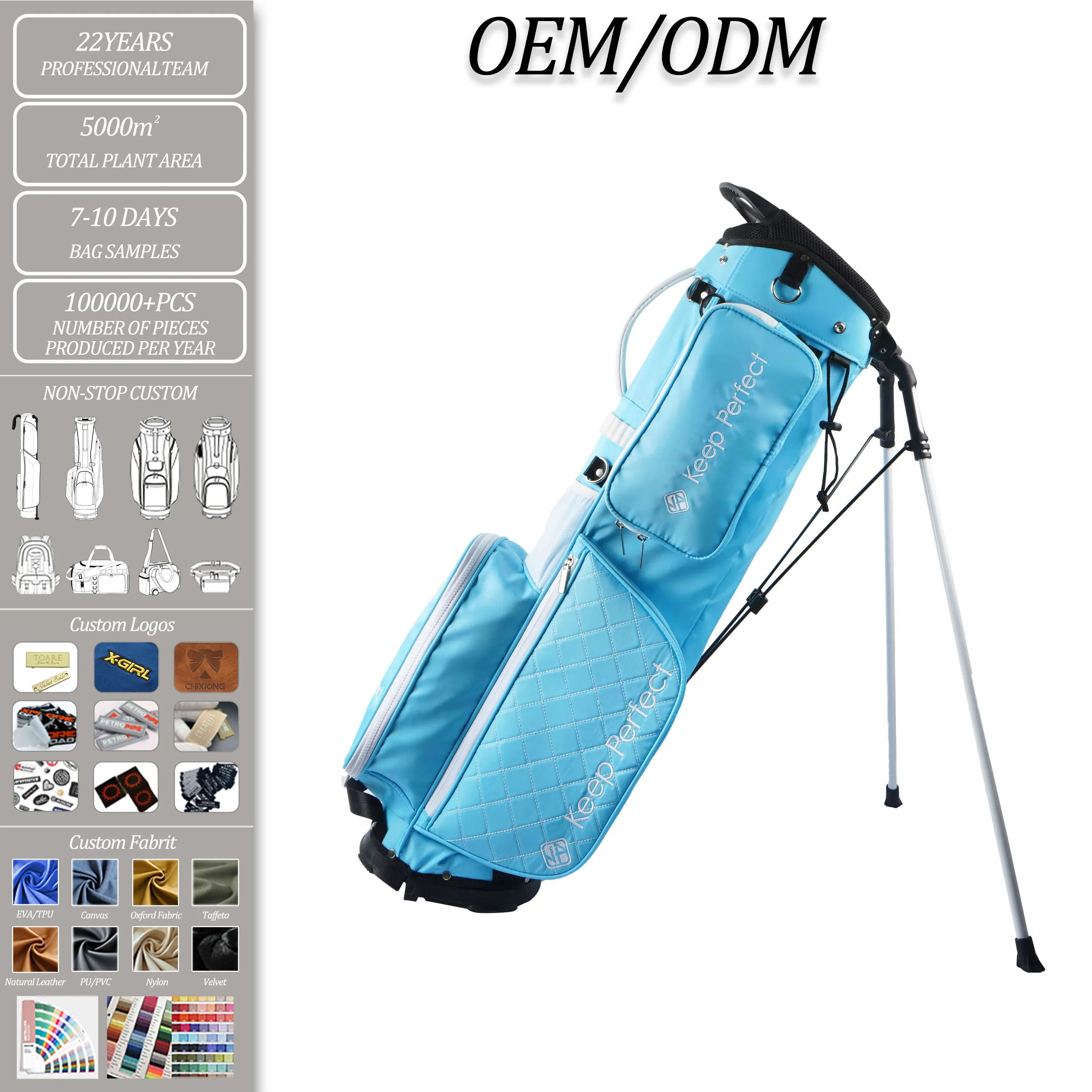
The adjacent demand documented in the kawaii analysis belongs in this guide as a program option, not a footnote: the same demographic cohorts driving the womens category's growth overlap heavily with the character-and-cute demand (original mascots, plush companion covers, candy palettes), and the strongest programs treat the crossover as a designed tier rather than a novelty. A pastel-story stand bag with an original character appliqué and a matching plush driver cover (the plush guide's construction and QC protocols apply, including needle detection) is a cohesive product story that photographs, gifts and reorders as a unit.
The discipline that keeps the crossover premium instead of cheap: original characters (ownable, no royalty, no approval cycles — the licensing math from the camo and anime guides applies), plush QC budgets written into the PO (needle-detection checkpoints are a cost line and a non-negotiable one), and the same engineering underneath — a character bag on the serious weight class and harness outsells a character bag on the shrink-and-pink chassis, because the customer is buying both the story and the equipment. The crossover rewards programs that do both halves properly.
Starting a Womens Program
Four decisions price the program: weight class and silhouette, color system (committed pastel, neutral core, or considered middle), branding architecture, and quantity with season calendar.
The brief that quotes cleanly: the weight class (1.65–2.4 kg target stated as a number), the colorway direction (a named family from this guide or a brand guide reference — the matching protocol takes it from palette to spec), the branding plan (technique and positions from the placement guide), and the quantity with its season window (gift calendars ship earlier — the channel section above). The quotation returns itemized by tier with the harness engineering and pocket architecture spec'd; samples in 6–10 working days per colorway; bulk 35–50 days at program volumes.
Junyuan has manufactured womens golf programs for export since 2014 — the weight engineering, harness geometry and whole-bag color systems in this article are production practice. Four sentences through the quote form (weight class, colorway, branding, quantity and window) start the process; the sample bench and the color lab do the rest in sequence.
Frequently Asked Questions
What percentage of golfers are women?
Roughly a quarter to 28 percent of US golfers depending on the National Golf Foundation's participation definition, and the category's growth is concentrated in women and under-35 cohorts. The commercial asymmetry matters more than the headline: retail shelf space and program calendars were built for a different mix, so a serious womens line faces less competition per linear foot and a larger gift channel than the mens side of the same shelf.
Are womens golf bags actually different from mens?
Honestly engineered ones are: the differences are weight class (a stated 2.0–2.4 kg everyday class instead of feature-heavy builds), harness geometry (55–70 mm straps with comfort-flex pivots tuned for narrower shoulders), pocket architecture (valuables, insulated bottle, full-length apparel — planned for the round women actually play), and color as a committed system. The failed version — a downsized mens chassis in pink — is the shrink-and-pink trap this guide documents, and the market's reviews punish it.
How much does a custom womens golf bag program cost?
At 500 units: USD 22–29 FOB for a serious everyday-class spec, USD 15–19 for the condescending build the market rejects, and USD 30+ for the premium light class. Add the standard landed-cost stack (freight, duty at HTS 4202.92 17.6%, inland — the cost guide works full examples) and gift-boxing at USD 1.50–3.00 where the channel calls for it. Three SKUs on one shared chassis keep development at roughly USD 400 instead of three separate programs.
What colors sell best in womens golf bags?
Two systems outsell the stereotype palettes: committed pastel stories (one color executed across every surface under a single lab-dip discipline — the pastel playbook's method) and the considered middle (muted tones, greige, oxblood, tone-on-tone). A large cohort buys navy, black and forest exactly like the mens wall. The retail pattern that matters: stereotype pinks clearance hard after one season; designed neutrals carry at full price, and the pastel story rotates on the spring calendar by design rather than discounting its way out.
How light should a womens golf bag be?
Stated honestly by class: 1.65–1.9 kg is the premium light tier (composites, stripped structure, premium price), 2.0–2.4 kg is the serious everyday class (full dividers, real pockets, materials chosen for the weight budget) — and 2.5–3.0 kg is the value tier where weight buys durability. The decision is which weight the customer can carry for her actual round at a quality tier she respects, not 'as light as possible' — a 9-hole walker and an 18-hole rider are different programs.
What makes a golf bag harness comfortable for women?
Geometry and width, not padding volume: 55–70 mm straps (wider spreads load on narrower shoulders), dual straps with rotating comfort-flex panels that articulate instead of folding, perforated EVA padding for breathability, and torso adjustment that actually spans the population (35–48 cm, not a decorative ladder). Two field tests decide it honestly: the 9-hole walk test for pressure points, and the single-shoulder carry to the first tee — a harness that only works in dual mode fails the first 400 meters of the round.
Is the womens golf category good for a new brand?
It is the strongest growth lane in golf soft goods precisely because it is underserved: a growing demographic (the 28 percent and the cohorts behind it), lazy competition on the shelf, an enormous gift channel (Mother's Day, graduation, holiday), and reorder evidence already written by the brands that entered womens-first. The entry structure from the models guide applies: ODM chassis with your color and harness configuration to start, hybrid modifications where your design opinion lives, and the flagship conversion when volume justifies it.
When should womens golf bag programs ship for gift season?
Gift retail buys Q4 for holiday and Q1–Q2 for Mother's Day, which pulls the production calendar backwards: holiday merchandise must be at retail by October, so bulk must complete by early September — and with 35–50 days of production plus freight, artwork approval lands in July. Mother's Day mirrors it a quarter later. The timeline guide's milestones work backwards from any event date; the category-specific note is simply that gift calendars are a month earlier than the merchandising instinct expects.
Should a womens line be separate from the main brand?
Against a separate brand: almost always no — a womens-first line under one brand inherits your equity and the crossover customer buys both walls. What deserves separation is the spec process: the weight class, harness and pocket architecture decisions need owners and numbers, not a committee note on the mens pattern. Brands that ship serious womens lines treat the spec sheet as the separation and keep the brand, the retail relationship and the color system unified.
How do I add a pastel colorway without dating the line?
Rotate the story, not the collection: the neutral core (navy, greige, black) carries across seasons at full price, and the pastel story rotates on the spring calendar as a designed system — one color executed whole-bag under the matching protocol, retired and replaced deliberately rather than clearanced. The brands that escape the markdown spiral plan rotation at the range-architecture stage: a 3-SKU line (pastel story, neutral, considered middle) covers the category's demand with rotation built into one SKU instead of the whole line.
Do womens golf bags need different quality inspection?
The AQL 2.5 standard (ISO 2859-1) applies identically — the customer cannot tell which line built the bag. What changes is the checkpoint list: add harness pull tests at the anchor, strap width verification, weight-class verification on a calibrated scale (the spec is a number, so the inspection verifies the number), and the color-system checks from the matching protocol across every surface. The AQL guide's structure stays; the checklist is where the category's engineering story gets enforced.
What is the biggest mistake in womens golf bag programs?
Shrink-and-pink: downsizing the mens chassis, tinting it, and calling it a line. It fails three ways at once — the build inherits panel weights without the structural analysis (reviews say 'cute but flimsy'), the stereotype palette dates in one season and clearances hard, and the brand teaches the customer the program is an afterthought. The manufacturing cost of the serious alternative is USD 2–4 per unit at program volumes; the market reads the difference immediately and reorders accordingly.
How do I start a womens golf bag program?
Four sentences through the quote form on this site: weight class stated as a number, colorway direction (named family or brand-guide reference), branding plan, and quantity with the season window. The itemized quotation returns inside two working days with harness and pocket architecture spec'd; samples in 6–10 days per colorway, bulk in 35–50 days at program volumes with AQL 2.5 inspection. Junyuan has manufactured womens golf programs for export since 2014.