
The Short Answer for Buyers
Cute golf products are a demand-driven category, not a novelty bet: the customer base (women, juniors, 18–34 lifestyle golfers, the entire East Asian market) is the fastest-growing segment in the sport, and the shelf space dedicated to it is still small relative to its share of participants.
The National Golf Foundation counts roughly 26.6 million on-course golfers in the US, with women at about 28% of that base and juniors near 3 million — both figures at or near all-time highs. Off-course participation (ranges, simulators, entertainment venues like Topgolf) skews even younger and more female. These are the buyers who treat a golf bag as personal expression, the same way they treat a phone case or a backpack. The product they want exists in volume in Tokyo and Seoul; in most Western pro shops it barely exists at all.
That gap — demand growing faster than shelf supply — is the B2B opportunity. It is not theoretical: buyers who moved early into cute head covers and pastel bag colorways report sell-through measured in weeks, and the case studies on this site include a character-cover program that became a standalone six-figure product line for a regional retailer.
Three Forces Behind the Demand Curve
None of these forces is cyclical. Demographics rotate in one direction; the East Asian market shows the end-state; and social distribution rewards distinctiveness more every season. A trend with three independent structural drivers is not a fad — it is a category forming.
- Demographic rotation. The fastest-growing participant cohorts — women, juniors, under-35 lifestyle players — buy gear as identity, not just equipment. NGF data shows these cohorts growing while the traditional 50+ male core stays flat.
- The East Asian proof of concept. Japan and Korea have run character-driven golf retail for three decades: licensed characters on tour bags, pastel staff bags as fashion items, plush covers as collectibles. The category's retail playbook is already written and tested.
- Social media merchandising. A pastel stand bag with a plush character cover photographs itself. Golf content on Instagram and TikTok disproportionately features distinctive gear — free distribution that conservative navy bags never generate.
What Kawaii Means in Golf Product Terms
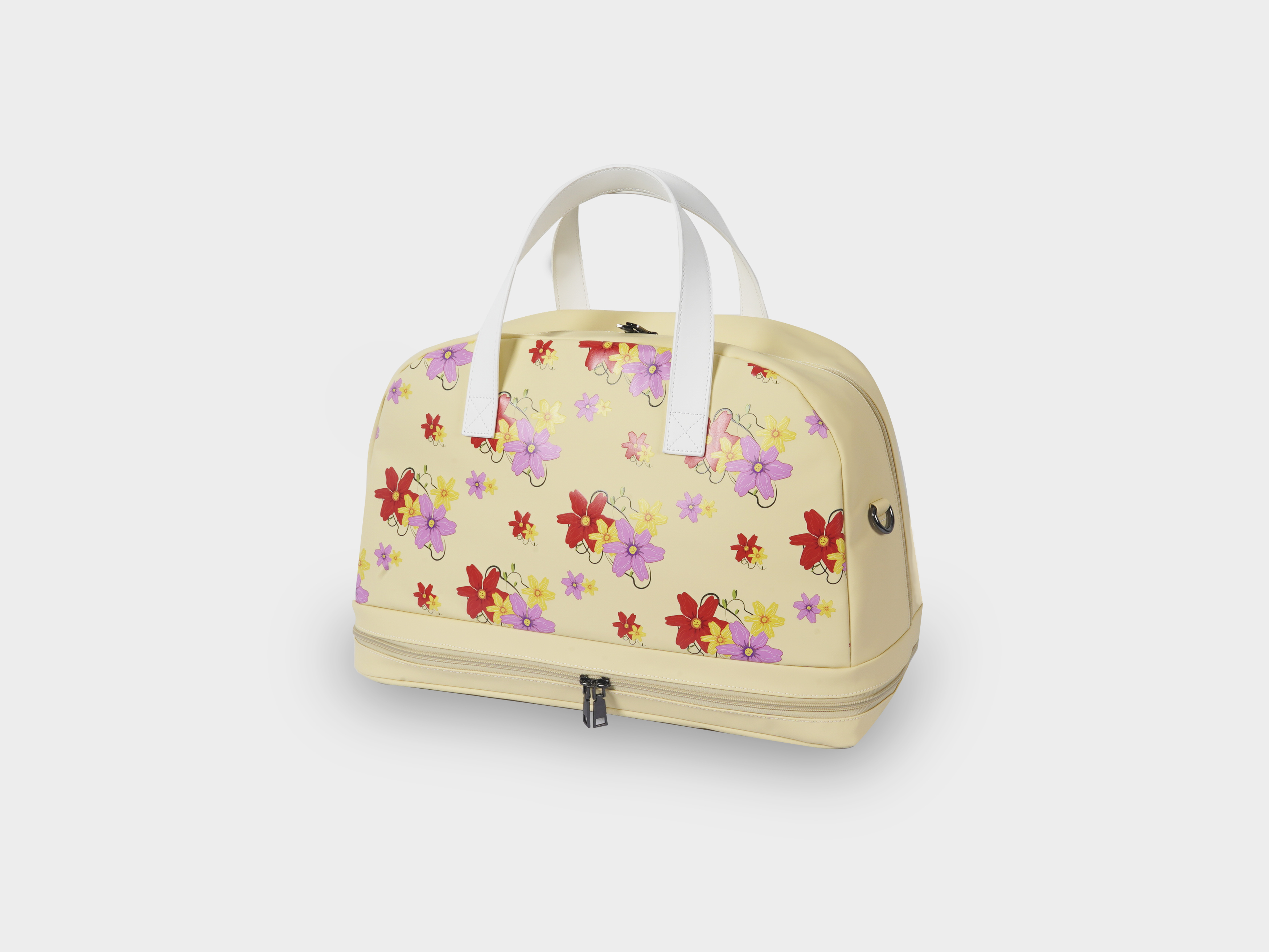
Kawaii in golf is not "put a cartoon on a navy bag." It is a coherent design language with four elements, and products that get all four right outsell products that get one right. First, color story: pastels and candy tones (sakura pink, mint, lavender, cream) executed across the whole bag, not as accents on black. Second, character: an original mascot or licensed IP with a face, a name and a personality — the character is what converts a bag into a collectible. Third, proportion play: oversized pockets, chunky zippers, rounded silhouettes — the product reads soft before it reads technical. Fourth, texture: plush, sherpa, quilted and corduroy panels that make the bag tactile.
The cute and kawaii golf bags page walks the design language in sourcing detail — print fabric supply chains, color stories by market, and the worked economics of a 200-piece first run.
The Three Product Families Worth Buying
The classic entry sequence is covers first, accessories second, bags third — because covers are the lowest-risk proof of demand: small ticket, high giftability, no sizing, and they photograph for social media better than any other golf product. A retailer who sells through 200 character covers in a season has de-risked the bag order that follows. The plush covers page details materials, safety compliance and the character development process.
| Family | Hero products | MOQ | Margin profile | Risk level |
|---|---|---|---|---|
| Plush head covers | Driver, fairway, putter characters | 200 pcs | Highest — 3–4× keystone common | Low — small, light, giftable |
| Bags in cute colorways | Stand bags, Sunday bags, cart bags | 200 pcs | High — 15–30% above conservative equivalents | Medium — inventory depth needed |
| Character accessories | Pouches, den caddies, towel clips, ball markers | 200–500 pcs | High at low ticket — basket builders | Low — add-on inventory |
Who Actually Buys: the Channel Map
Five channels move cute golf product in volume, and they buy differently. Pro shops at resort and public courses buy covers and accessories as impulse items near the counter. Online golf boutiques (the fastest-growing channel) buy full color-story collections and merchandise them as drops. General sporting goods chains in Asia buy licensed character programs at container scale. Gift and lifestyle retailers — museum shops, airport stores, kawaii specialty chains — buy covers and den caddies as gifts for golfers rather than gear for golfers. Corporate and tournament buyers buy cute-adjacent product (pastel colorways, floral prints) for women's events and charity days, a segment the gift and tournament page covers from the event side.
The channel determines the spec: pro shops want counter-ready hangtags; boutiques want drop packaging and photography support; chains want compliance documentation and planogram consistency; gift channels want the story card that explains the character. Same factory, same line — four different finishing specs.
The Margin Math Buyers Quote Back to Us
A plush driver cover lands at roughly USD 6–9 at 200–500 pieces depending on complexity, and retails at USD 28–45 — a 3–4× multiple versus the 2–2.5× that hardgoods typically carry. A pastel stand bag lands at USD 38–55 and retails at USD 129–189, versus USD 99–139 for the same chassis in navy. The premium is not the materials — pastel PU costs what navy PU costs — it is the design coherence and the scarcity of well-executed supply. That scarcity is the buyer's moat: cute product done badly is worse than none, so retailers who find a factory that executes the design language correctly tend to lock it up with seasonal exclusives.
Currency for the margin claim: these are the ranges our quotes actually produce, and they hold because the cost drivers (materials, labor, decoration) are identical to conservative product — the retail delta is pure positioning.
Original Character vs Licensed IP
Two roads. Licensed IP (anime, Sanrio-style characters, sports mascots) brings instant recognition and instant constraints: license fees of 8–15% of wholesale, approval cycles of 4–8 weeks per product, territory and term limits, and style guides that dictate stitch colors. Original characters take longer to build but belong to you forever — the anime and cartoon covers page maps the licensing route in detail, including approval-cycle planning.
The B2B trend data points one way: the fastest-growing cute golf brands run original characters, because the character becomes a brand asset that appreciates. A retailer's own mascot on a driver cover in year one is a plush line, a bag print and a social media identity by year three — with no royalty line on the P&L. Our design team develops original characters from a one-page brief; the development economics are covered in the plush covers page.
Production Realities That Decide Success
- Plush is a different supply chain. Cover bodies are plush toy construction — pile fabrics, PP cotton fill, safety eyes — and the QC regime is toy-standard: 70N pull tests on appendages, needle detection, law labels for US retail. A bag factory without plush experience will learn on your order; ask for plush production evidence before committing.
- Pastel color matching is unforgiving. Navy hides a half-tone drift; sakura pink does not. Insist on lab dips approved under D65 light and bulk fabric from a single dye lot — the color matching page explains the lab-dip protocol.
- Embroidery density changes on plush and pastel. Fine facial details need 3D puff or appliqué rather than flat stitching; thread colors must be matched to the artwork, not to a stock chart.
- Photography is part of the product. Cute product sells on imagery; budget the photo set (or use the factory's sample-stage photography) before the listing goes live, not after.
Quality Control for Plush and Pastel
The inspection standard does not change — AQL 2.5 pre-shipment under ISO 2859-1 — but the defect list does. Plush covers add toy-category checks: seam strength on appendages (the 70N pull), small-parts security for button or safety eyes, fill consistency by weight, and needle detection on the finished goods. Pastel bags add cosmetic scrutiny: dye-lot consistency panel to panel, print registration on light grounds, and scuff control in packing because light colors show handling marks that dark colors forgive.
Every one of these checks is documented in the photographic PSI report before the balance payment is due — the same checkpoint discipline described in the manufacturer selection checklist, applied to a product category where cosmetic defects are commercial defects.
The Seasonal Calendar for Cute Programs
Cute golf retail runs on four peaks: spring season openers (March–April), Mother's Day and graduation gifting (May–June), the summer lifestyle peak (July–August) and the holiday gift season (November–December). Working backward with a 60–80 day private label calendar means POs land in January, March, May and September respectively. Buyers new to the category should start with the holiday season — it has the deepest gift demand and the longest sell window — which means a September PO, a July brief, and sampling in the summer.
Japan and Korea add a fifth peak: the spring cherry-blossom season, which moves sakura-themed product at volumes that justify its own color story. If your market includes Asian tourist retail, the Japan market page covers the compliance and calendar specifics.
A Worked Example: 200 Covers, One Character, Ninety Days
A two-store golf boutique briefs an original corgi character driver cover in May. Week one: character sketch approved from three options. Week two: plush sample with embroidered face, 3D ears, custom hangtag. Week three: sample approved after one revision (ear proportion), 30% deposit wired, PO placed for 200 pieces at USD 7.40 landed FOB. Bulk runs 32 days; AQL 2.5 inspection passes with zero majors; goods ship mid-July, arrive mid-August. Priced at USD 34.90 with a counter display and an Instagram reel of the sample unboxing, the first 120 sell in five weeks; the reorder — 400 pieces, no sampling, 30–45 days — lands in October for holiday. Gross margin on the season: approximately USD 9,800 on a USD 1,480 first commitment.
That sequence — character brief, one revision, 200-piece proof, reorder at scale — is the canonical cute-category play, and it works because every step was de-risked before money moved: the sample proved the character, the first run proved the demand, and the reorder captured the margin.
Where Cute Programs Fail
- Half-committed design. A navy bag with one pink zipper is not kawaii — it is a navy bag. The color story must run across body, trim, zipper pulls and lining, or the customer reads it as indecision.
- Skipping the plush QC regime. A detached button eye on a plush cover is a safety recall, not a return. Toy-standard testing is non-negotiable for anything with appendages or small parts.
- Buying the character without the story. A mascot without a name, a hangtag and three sentences of personality is clip art. The story card is what converts a USD 7 cover into a USD 35 gift.
- One dye lot short. Reordering pastel product from a different dye lot creates visible shelf inconsistency; secure fabric for the reorder at the first PO.
Merchandising Cute Product: the Retail Execution Layer
Cute product underperforms when it is merchandised like equipment. The retailers who sell through treat it as a gift and lifestyle category: counter displays near the register for covers and accessories (the impulse zone, not the back wall), drop-style releases for new characters rather than permanent SKUs (scarcity is the marketing), and price ladders that let a customer enter at a USD 15 accessory and climb to the USD 160 bag. The hangtag is doing real work in this channel — character name, three sentences of story, care instructions — because the gift buyer is buying the story as much as the object.
Online, the merchandising layer is photography and cadence: the character unboxing reel, the flat-lay of the full color story, the on-course shot that proves the product works as equipment and not just as a toy. We supply sample-stage photography for exactly this purpose — the assets exist months before your inventory lands, so the drop campaign is ready when the cartons are. Retailers who launch the campaign at goods-received lose the two best selling weeks; retailers who launch it from sample assets sell the first carton off the ship.
How to Test the Trend with MOQ 200
The entry protocol is deliberately boring: pick one character or color story, order 200 of the lowest-risk item (a plush cover or an accessory), merchandise it properly, and let sell-through decide the expansion. Sampling takes 6–10 days, bulk 35–50, and the sample fee credits back on the first order. Junyuan has produced cute-category programs since 2014 from Quanzhou — original character development, plush toy-standard QC, pastel lab dips under D65 — with production through an affiliated SGS-audited factory network. The quote form takes a one-paragraph brief; a spec-level quotation comes back within 24 hours.
Frequently Asked Questions
Are cute and kawaii golf products a real B2B trend?
Yes — a structural one. Women are roughly 28% of US on-course golfers (NGF), under-35 participation has grown every year since 2019, and Japan and Korea have run character-driven golf retail for three decades. Three independent structural drivers make this a category forming, not a fad passing.
What are the best-selling cute golf products?
Plush character head covers first (driver, fairway, putter), then pastel-colorway stand and Sunday bags, then character accessories — pouches, den caddies, towel clips and ball markers. Covers are the classic entry product: low ticket, high giftability, no sizing, and the best social media photography in the category.
What is the MOQ for custom cute golf products?
200 pieces per style and colorway for bags and plush covers, with 6–10 day sampling and 35–50 day bulk production. Accessories like pouches and den caddies run 200–500 depending on construction. The 200-piece entry exists specifically so retailers can prove demand before committing depth.
How much margin do cute golf products carry?
Plush covers land at USD 6–9 and retail at USD 28–45 (3–4× keystone); pastel stand bags land at USD 38–55 and retail at USD 129–189, roughly 15–30% above the same chassis in conservative colors. The premium is positioning and scarcity of well-executed supply, not material cost.
Should I license a character or create an original one?
Licensed IP brings recognition plus 8–15% royalties, 4–8 week approval cycles and term limits; original characters take longer to launch but become your asset with no royalty line. The fastest-growing cute golf brands run original characters for exactly that reason — the mascot appreciates into a brand.
What safety standards apply to plush golf covers?
Toy-standard: 70N pull tests on appendages, small-parts security on eyes and buttons, fill consistency by weight, needle detection, and US law labels where applicable. Any factory producing plush covers should evidence this regime before you commit — a detached button eye is a recall, not a return.
How is color matching handled on pastel products?
Lab dips — small swatches dyed to your Pantone — approved physically under D65 daylight lamps before bulk, with the full run cut from a single dye lot. Pastel tones show a half-tone drift that dark colors hide, which is why the lab-dip discipline matters more in this category than any other.
How long does a cute golf product order take?
60–80 days end to end for private label: 6–10 days sampling, written approval plus 30% deposit, 35–50 days bulk, AQL 2.5 inspection, then 14–35 days freight depending on destination. Holiday-season programs should place POs by early September.
Which retail channels sell cute golf products best?
Online golf boutiques (fastest-growing), pro shops as counter impulse items, Asian sporting goods chains at container scale, gift and lifestyle retailers selling to gift-buyers rather than golfers, and corporate or tournament buyers for women's events and charity days.
Can I get samples before committing to 200 pieces?
Yes — a physical sample in 6–10 days at USD 80–150 depending on complexity, with the fee credited back on your first bulk order. Approve the physical object, never photographs: plush hand, embroidery density and color accuracy only exist in person.
What makes a kawaii golf bag design work commercially?
Four elements executed together: a full-product pastel color story, a character with a name and personality, proportion play (rounded silhouettes, chunky hardware), and tactile texture (plush, quilted or corduroy panels). Products that execute one element and skip the rest read as indecision and sell accordingly.
Do cute golf products sell outside Asia?
Increasingly yes — the US growth cohorts (women, juniors, under-35 lifestyle players) are the same customers who made the category dominant in Japan and Korea. Western shelf supply lags demand, which is precisely the B2B opportunity: early movers report sell-through measured in weeks on well-executed product.
What price points work for cute golf products at retail?
The ladder that sells: USD 12–18 accessories (pouches, markers, clips) as basket builders, USD 28–45 plush covers as the gift hero, USD 99–139 Sunday and junior bags as the entry equipment, USD 149–189 stand bags as the color-story flagship. The spread matters more than any single price — customers enter at the accessory and climb, which is why the collection should be bought as a ladder, not as isolated items.
How do I start a cute golf product line with your factory?
Send one paragraph — the character or color story, the hero product, target quantity and destination — through the quote form on this site. You get a spec-level quotation in 24 hours, character sketches if needed, a physical sample inside two weeks, and bulk at MOQ 200 with toy-standard QC where plush is involved.