
Two Three-Letter Words That Decide Who Owns What
OEM (original equipment manufacturing) = your design, the factory's line. ODM (original design manufacturing) = the factory's design, your brand. White label = the factory's design, the factory's stock, your logo applied — the fastest, least exclusive path.
The confusion is structural: all three models describe the same factory doing the same physical work — cutting, sewing, branding, inspecting, packing golf bags. What differs is where the design originated and therefore who can sell the result next season. In OEM the design file, the pattern set and the specification revision are yours; the factory cannot lawfully sell your stand bag to anyone else, and your PO references your spec revision. In ODM the base pattern lives in the factory's catalog; you configure it (colorway, materials tier, logo, trims) and hold exclusivity only if you negotiate it in writing — otherwise the same chassis ships next quarter for a competitor with different embroidery.
The third model, white label, is ODM's stripped-down cousin: near-stock product with your logo applied, minimal or zero configuration, no exclusivity, priced at the lowest setup the factory offers. It is a legitimate market-entry tool and a legitimate ceiling — you are renting a product, not building one. The OEM and private label guide covers the entry mechanics; this article is about choosing the model itself, because that choice is the first architecture decision of a bag brand and the hardest one to reverse.
The OEM Path: Your Design, Our Line
OEM starts with your document — a tech pack, a reference sample, a sketch with dimensions — and converts it into a production pattern. The stages: feasibility review (does the design sew? does the divider geometry work? does the hardware exist?), pattern and sample engineering (2–3 rounds typical, each 6–10 working days), specification freeze at the approved sample, then bulk. Your costs are development (pattern work, digitizing, sample rounds — typically USD 300–1,200 accumulated before the first PO) and calendar (2–4 weeks longer than ODM for a comparable program). Your rewards: the pattern is yours, the product is differentiable, and the factory relationship is manufacturing-deep — the conversations are about stitch density and foam density, not catalog pages.
OEM suits three situations, and only these: your design has genuine novelty (a pocket architecture, a silhouette, a mechanism the catalog does not have); your brand's differentiation depends on product, not just marketing; and you can fund development plus a longer calendar. A first-time brand with a strong sketch and a 12-month runway is the classic OEM customer. The discipline that makes OEM succeed is the spec freeze — the design process guide walks the stages; the commercial rule is simpler: OEM without a frozen spec is the most expensive way to produce an argument.
The ODM Path: the Catalog Start
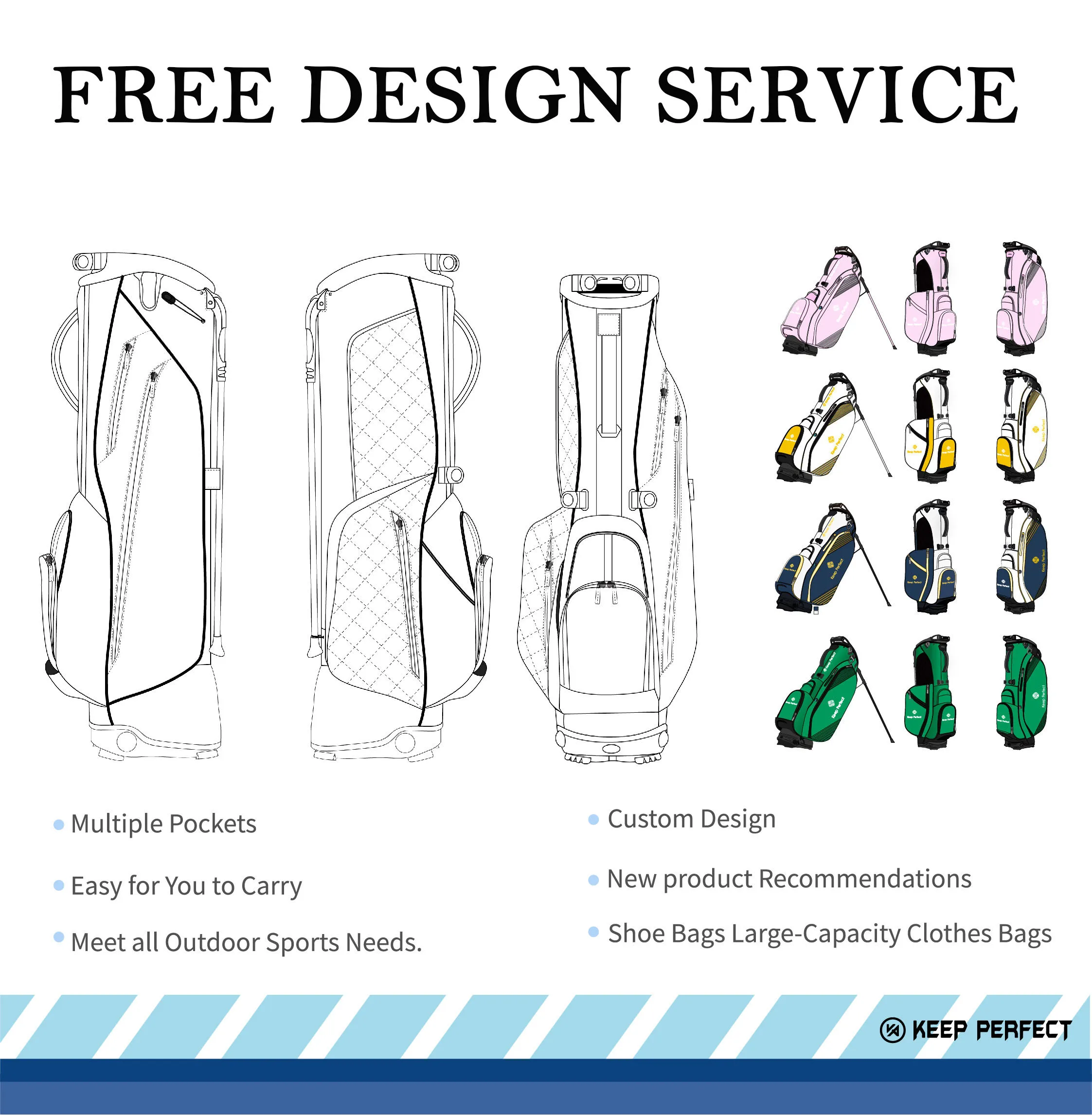
ODM starts with a proven chassis — a stand bag with 4-way dividers and a tested strap geometry that has shipped ten thousand units; a cart bag whose pocket architecture your market already recognizes. Your work is configuration: choose the colorway (the matching protocol applies), the material tier, the branding technique and positions (the placement guide), and the trims. Sampling runs 6–10 working days because the pattern exists; development cost is limited to your customizations — a lab dip, an embroidery digitizing, a print screen — typically USD 80–400. The factory's risk was spent years ago; you are buying the dividend.
ODM suits the brand whose differentiation lives outside the sewing line: a community brand whose value is its audience, a corporate program whose product must simply be excellent and on time, a retailer testing a category before committing to design infrastructure. The honest ceiling: your competitor can configure the same chassis, so your moat is branding, distribution and service — which is exactly where those brands' moats already live. What ODM must never become is the pretense of OEM: a catalog bag with one moved pocket marketed as proprietary. Customers find out, and the finding out is the brand damage.
White Label: the Third Option Nobody Names Properly
White label is inventory with your logo on it — near-stock colorways, standard specification, decoration applied to finished or near-finished goods. Its economics are the category's fastest: lowest development (often zero beyond a digitizing fee), lowest MOQ flexibility (factories can pool white-label runs across brands in ways full customization cannot), shortest calendar (decoration on stocked goods runs days, not weeks). Its terms are the harshest: no exclusivity, no pattern ownership, and a product identical to every other brand buying from the same shelf — differentiation is 100% marketing.
Used honestly — market testing, event merchandising, starter SKUs while the OEM design is in development — white label is excellent. Used as a strategy it is a treadmill: every season's advantage is one reorder cycle away from replication, and the only exit is the exit you postponed (real design). The three-model ladder is a sequence, not a menu: white label to test, ODM to grow, OEM to own. Brands that treat it as a sequence build equity; brands that treat it as a menu build inventory.
| Dimension | White Label | ODM | OEM |
|---|---|---|---|
| Design origin | Factory stock | Factory catalog + your config | Your document |
| Development cost | USD 0–80 | USD 80–400 | USD 300–1,200 |
| First sample | 3–7 days | 6–10 days | 2–3 rounds × 6–10 days |
| Exclusivity | None | Negotiated, in writing | Full (your pattern) |
| MOQ posture | Most flexible | Standard (200) | Standard (200) |
Who Owns the Pattern: IP Basics Across the Models
The ownership map, stated plainly. OEM: you commissioned and paid for the pattern work against your design — the pattern set, the spec revision and the design itself are yours; a professional factory will sign an IP acknowledgment saying so, and a professional buyer will attach the design file to the PO as an exhibit. ODM: the base pattern is factory property; your configuration (colorway, logo application, the specific bill of materials you chose) can be protected by a written exclusivity clause — typically time-boxed (12–24 months), territory-boxed (your market), and volume-boxed (a minimum annual commitment that justifies the factory benching the design for others). White label: nothing is yours except the logo and the customer list.
Two clauses do most of the protecting, and both are standard practice. The OEM IP acknowledgment: 'patterns, samples and specifications developed under this order are the property of the buyer; the supplier may not reproduce them for third parties.' The ODM exclusivity rider: 'the supplier will not supply configuration X in territory Y for Z months, provided the buyer purchases N units in the period.' Neither clause costs anything at signing and both are expensive to add later — exclusivity is a closing argument, not a follow-up email. The brand launch guide shows where these clauses sit in a first-season PO.
Cost Differences: Development, Unit Price and Time
The honest ledger has three columns. Development: white label near zero; ODM USD 80–400 (digitizing, dips, screens for your customizations); OEM USD 300–1,200 (pattern engineering, 2–3 sample rounds, spec documentation — amortized across the first order at 200 units this is USD 1.50–6.00 per bag, at 2,000 units it vanishes). Unit price: at equal specification, the models converge — the same chassis sewn from your pattern or the factory's costs the same labor and materials; OEM sometimes prices 1–3% higher for pattern-changeover overhead on small runs, invisible at volume. Time: white label fastest, ODM 6–10 day sampling, OEM 2–3 weeks longer through development.
The decision math most buyers miss: development amortization. A USD 900 OEM development spread over a 200-unit first order is USD 4.50 per bag — real money on a USD 28 FOB. Spread over the four reorders the program actually runs (800 units lifetime), it is USD 1.13 — noise. OEM is not expensive; first-orders are expensive. The cost guide works the full arithmetic; the model choice simply decides which line the development sits on.
Sample Cycles: How Each Model Samples
Sampling is where the models feel different on a Tuesday. White label: send the logo, receive a decorated sample photo in 48 hours and the physical item in a week — the product already exists. ODM: 6–10 working days for a sample in your colorway with your branding, one revision loop typical for dip approval, and the sample's purpose is confirming configuration choices, not discovering problems. OEM: the first sample is a hypothesis test — does the pattern express the design? The second confirms corrections. The third freezes the spec. Each round is 6–10 days plus courier, and the discipline that keeps rounds to two is a written correction list after each sample, not a phone call.
The sample process guide covers the mechanics all three models share — fees, credits, the 12-point evaluation. The model difference is stakes: an ODM sample round costs a week; an OEM round costs a week plus the risk of discovering the design needs surgery. That is why OEM buyers should budget three rounds honestly (two is luck, three is normal) and why factories quote OEM sampling with the same patience the process deserves — the sample room is where manufacturing earns the right to the production order.
Quality Control Across the Models
The AQL 2.5 (ISO 2859-1) inspection standard applies identically to all three models — sampling tables, defect classification, the 40-point checklist for this category — because the customer holding the bag cannot tell which model produced it. What differs is where quality is won. White label: quality was won before you arrived; your inspection confirms the stock meets the standard, and your only lever is the supplier you chose. ODM: quality is 80% inherited with the pattern and 20% your configuration — your material tier, your decoration placement; the inspection checklist adds your customization checkpoints to the base. OEM: quality is won in development — a pattern with seam allowances engineered for the fabric, tested strap anchors, foam specified by density not by adjective — and the inspection verifies decisions you made, which is why OEM spec freezes read like quality plans.
The buyer's move in all three: write the standard into the PO (the AQL guide provides the clause language), inspect before balance payment, and treat third-party inspection rights as non-negotiable. The model changes where quality is built; it never changes who pays for its absence — the brand on the label, which is yours.
MOQ Realities by Model
The 200-unit floor is a full-customization floor: your pattern or your deep configuration, your dedicated cutting, your production slot. White label runs below it because decoration on stocked goods pools — 50–100 units is common for logo-applied programs. ODM sits at the floor with flexibility on the edges: a factory can sometimes stretch to 150 on a catalog chassis whose materials are in stock, because the pattern work amortized years ago; it cannot stretch on a custom-dyed body fabric, where the dye lot is the constraint regardless of model. OEM holds the floor firmly: your pattern requires your cutting layout and your line changeover, and no program structure changes that physics.
The path for sub-200 buyers is honest and documented in the low-MOQ guide: pooled production (sharing materials and slots with compatible runs), staged orders (100 now as white-label or light-ODM, 200+ at the next cycle when the pattern converts to OEM), or event pooling (several buyers of one company's brands sharing a chassis). The model choice and the quantity reality are the same decision seen from two sides — choose the model your volume can honestly fund.
Choosing by Company Stage
Testing the category: white label. Building a brand on proven product: ODM. Differentiating on product itself: OEM. Most durable brands run the sequence, not a single model.
Stage one, market test: you have an audience and a hypothesis, and the hypothesis is about demand, not design. White label a quality chassis, brand it well, sell it, and let the reorder data tell you whether the category deserves development money. Stage two, brand build: demand is proven and your differentiation is community, content and service — ODM gives you a product you can trust with your logo at a pace your marketing can use, with exclusivity negotiated where it matters. Stage three, product company: your customers now ask what is new in the line, and the honest answer requires design — OEM, funded by the margins stages one and two built.
The misfit cases are instructive. A stage-one company buying OEM buys risk it cannot price (development on unproven demand). A stage-three company still running white label rents its core product while competitors own theirs — the treadmill again. And the hybrid case is legitimate and common: an ODM chassis where your brand lives, plus one OEM flagship per season where your design reputation lives. The design ideas guide feeds the flagship; the catalog carries the volume. That portfolio is how most durable bag brands actually run.
Hybrid Programs: OEM Chassis With ODM Speed
The most practical structure in real programs: take an ODM chassis — proven stand-bag frame, tested divider geometry, known cost — and modify it in the zones your brand actually differentiates: a unique top opening, a signature pocket architecture, a distinctive strap treatment. The factory holds the engineering risk low by keeping the load-bearing skeleton from its catalog; you get genuine, ownable design in the visible layer. Sampling runs faster than pure OEM (one pattern modification instead of a full build), development costs land at USD 150–600, and the exclusivity conversation is easier because the base is shared while your modification is specific.
This is also how factories actually develop their own catalogs, which is the quiet endorsement: the ODM chassis you configure today was an OEM program for some brand two years ago whose modifications proved out. The commercial advice is symmetric — put your design effort where the customer's hand goes (top, straps, pockets, branding surfaces), borrow what is invisible (frame geometry, base engineering, divider mechanics), and write the ownership of your modification layer into the PO with the same two clauses from the IP section. Hybrid is not a compromise between the models; it is how both are used well.
The Contract Clause Checklist for Each Model
White label PO: product by factory stock reference number (not by description — stock numbers survive description drift); decoration spec by position and size; the AQL clause; and a delivery-date commitment with the penalty structure stated. ODM PO: the chassis reference plus your configuration sheet as an exhibit; the exclusivity rider if negotiated (configuration, territory, months, minimum volume — all four named); material continuity commitment (the factory confirms the BOM will hold for the exclusivity period, or the exclusivity is decoration-only). OEM PO: the IP acknowledgment as a named clause; the design file and spec revision as exhibits; the change-control procedure (post-freeze revisions priced in writing before work); tooling and pattern ownership restated at delivery.
Across all three, four clauses are identical because they protect the relationship, not the model: inspection rights before balance (AQL 2.5, third-party option), payment structure (T/T 30/70 is the category standard), adjustment clauses (cotton index, tariff — the negotiation guide details them), and the reorder pricing mechanism. A first-season PO with these exhibits is a program with a spine; the model choice determines which spine.
Common Failures of Each Model
White label fails by success: the product sells, the reorders grow, and at some volume the brand discovers its best seller is one competitor's phone call away from being someone else's best seller — the failure mode is strategic, arriving exactly when it is most expensive. ODM fails by pretense: the brand markets configuration as design, the market eventually compares, and the comparison is fatal because the differentiation was never in the product. ODM also fails by drift: without an exclusivity rider, the 'our bag' in your marketing quietly becomes a chassis your competitor buys with different embroidery next season.
OEM fails by calendar and by spec: development rounds stretch (because correction lists were verbal, not written), the season misses, and the pattern shelf gains an unfinished asset; or the spec never freezes, production starts anyway, and the shipped bags are an argument settled in the customer's hands. Every one of these failures has a written, boring prevention — the sequence discipline (white label to ODM to OEM), the rider, the freeze — and every prevention costs less than one failed season's inventory. The reorder guide covers the drift that follows the first success; this section is the drift that follows the first PO.
Switching Models Between Seasons
Model transitions are one-way doors in one direction and revolving in the other. White label to ODM is a natural promotion: the same chassis, deeper configuration, your colorway and materials replacing stock choices — the factory conversation is short because nothing about the pattern changes. ODM to OEM is the graduation: your configuration history becomes the brief, and the factory's pattern bench converts 'what we shipped you' into 'what you now own' — with the development math from the cost section and the honest calendar from the sampling section. The transition that deserves caution is OEM backward — abandoning a pattern you own to return to catalog product — which is sometimes right (the design did not prove out) and should be decided as deliberately as the original OEM decision was.
The between-seasons mechanics are the same for any transition: keep the spec revision chain unbroken (your ODM configuration sheet is the input document to the OEM design brief), re-run the sample loop at the new level, and re-issue the PO exhibits at the new model's clause checklist. Six weeks of calendar covers the longest transition (ODM to OEM with one modified zone); two weeks covers the shortest (white label to ODM on the same chassis). Brands that plan the transition in the season before it is needed never pay the rush premium; the timeline guide gives the full calendar either way.
Starting an OEM or ODM Program
Bring your stage honestly: test (white label), build (ODM with exclusivity rider), or differentiate (OEM with IP clauses). The quotation returns inside two working days either way.
The brief differs by model, and saying which model you are buying is itself the brief. ODM: name the chassis reference (or describe the use and let the quotation propose two), your colorway and material tier, branding plan, quantity and date. OEM: send the design document — tech pack, reference sample photos, or a sketch with dimensions — and receive a feasibility review with the development quotation: rounds, calendar, cost to freeze. Hybrid: name the chassis and the zones you want to modify; the quotation prices the modification layer separately from the base.
Junyuan has run all three models for export programs since 2014 — the ODM chassis in this site's catalog pages, the OEM pattern bench behind the gallery's one-off executions, and the white-label pool for the test-and-event buyers. Four sentences through the quote form (model, product, quantity, deadline) start the process; the sample bench is where the model stops being an acronym and starts being your bag.
Frequently Asked Questions
What is the difference between OEM and ODM golf bags?
OEM: you bring the design, the factory manufactures it under your specification — the pattern and spec are yours and no one else can buy that product. ODM: the factory supplies a proven catalog design you configure with your colorway, materials and logo — faster and cheaper to start, with exclusivity available only as a negotiated written clause. Same factory, same sewing lines; the difference is who owns the design and who can sell it next season.
Does OEM cost more than ODM?
Unit price: no — at equal specification the labor and materials are identical. Development: yes — OEM adds USD 300–1,200 in pattern engineering and 2–3 sample rounds, versus ODM's USD 80–400 for configuration work on an existing pattern. Amortized over a program's lifetime the difference shrinks (USD 900 over 800 lifetime units is USD 1.13 per bag), which is why OEM is described honestly as expensive only on small first orders.
Can I get exclusivity on an ODM golf bag?
Yes, but only as a written rider and only in exchange for something: the configuration, your territory, a time window (typically 12–24 months), and a minimum volume commitment that justifies the factory benching that chassis for others. Verbal exclusivity does not exist in this industry. Without the rider, the same chassis can ship for a competitor with different embroidery next season — the rider is the only sentence that prevents it.
Is white label the same as private label?
In this category, private label usually means your brand on product manufactured to your specification — a broad term that covers ODM and some OEM. White label is narrower: near-stock factory product with your logo applied, minimal configuration, no exclusivity. When a supplier offers 'private label,' ask which of the three models from this article they mean — the answer decides what you own and what they can sell to your competitor.
Who owns the design when I work with a golf bag factory?
OEM: you do — the PO's IP acknowledgment states that patterns and specifications developed under the order are yours, and the design file attached to the PO is the proof. ODM: the factory owns the base pattern; you own your configuration and any negotiated exclusivity. White label: you own your logo and nothing else. All three answers are contract clauses, not customs — get them in writing at the PO, when they are free.
How long does OEM development take compared to ODM?
ODM samples in 6–10 working days because the pattern exists. OEM runs 2–3 sample rounds of 6–10 days each plus correction loops — roughly 2–4 weeks longer to a frozen spec for a comparable product. The discipline that keeps OEM honest: a written correction list after every sample round, and a spec freeze before bulk. Verbal corrections are how OEM calendars double.
Can I start with white label and move to my own design later?
That is the recommended sequence for most brands: white label tests demand with near-zero development, ODM builds the brand on a proven chassis, OEM converts what you learned into owned design. Each transition reuses the previous season's documents — your configuration sheet becomes the OEM brief. The only error is skipping the test or never graduating: renting your core product forever is a treadmill every reorder makes harder to leave.
What documents do I need for an OEM golf bag program?
A design document in any of three forms: a tech pack (the professional standard — measurements, materials, construction notes), a reference sample with photos and dimensions, or a clean sketch with key measurements annotated. The factory's feasibility review converts whichever you bring into pattern work. Attach the final design file to the PO as an exhibit — it is the evidence behind the IP acknowledgment clause.
Does the manufacturing model change quality?
The AQL 2.5 inspection standard (ISO 2859-1) applies identically — the customer cannot tell which model built the bag. What changes is where quality is earned: white label inherited it with the stock, ODM earns 20% through your configuration choices, OEM earns it in pattern engineering before bulk. In all three models the buyer's protection is the same: the AQL clause and third-party inspection written into the PO.
Why do factories push back on low-MOQ OEM orders?
Because OEM physics do not scale below the floor: your pattern requires your cutting layout, your line changeover and your inspection plan regardless of whether the order is 50 or 500 units. White label pools, ODM amortizes — OEM cannot. The honest paths below 200 units are pooled production, staged orders, or starting at ODM and converting to OEM when volume justifies it — the low-MOQ guide works the math.
Can I mix OEM and ODM products in one brand?
Yes — it is how most durable bag brands actually run: ODM chassis where the brand's job is reliability and margin, one or two OEM flagships where the design reputation lives. The catalog carries the volume; the flagship earns the story. Keep the branding language consistent across both (the branding comparison helps) so the customer experiences one brand, not two procurement models.
How do I protect my golf bag design from being copied?
Three layers, in order of cost: the PO's IP acknowledgment clause (free, and the industry's main protection — factories honor it because their business is repeat orders), design registration in your key markets where the design qualifies (jurisdiction-dependent, worth the fee for genuine novelty), and the practical layer — a factory whose incentives are aligned, because a partner holding your reorders profits more from your exclusivity than from one leaked design. The OEM guide details the clause language.
How do I start an OEM or ODM golf bag program?
Name the model in your first message — it is the brief. ODM: chassis reference or use case, colorway, branding, quantity, date. OEM: your design document attached, and the feasibility review returns with development cost and calendar. Quotation inside two working days either way, samples in 6–10 days at ODM speed, 2–3 rounds at OEM pace. Junyuan has run all three models for export programs since 2014.