
The Nine Steps in One View
Brief → Quote → Engineering → Sampling → Approval → Bulk production → Inspection → Freight → Reorder. Private label programs run steps 1–8 in 60–80 days; the ninth step is where the margin lives.
Notice how few steps ask you to do anything: buyers shape the outcome at exactly three moments — the brief, the sample approval, and the inspection report. Everything else is the factory executing what those three decisions locked in. Programs fail when one of those three moments is treated as a formality.
| Step | What happens | You sign off | Typical days |
|---|---|---|---|
| 1. Brief | Chassis, quantity, branding, destination captured | The spec sheet | 1–2 |
| 2. Quote | Unit price, inclusions, timeline issued | The quotation | 1–3 |
| 3. Engineering | Patterns, digitizing, lab dips prepared | Nothing yet — review only | 3–7 |
| 4. Sampling | Physical sample built to spec | Courier address | 6–10 |
| 5. Approval | Sample checked against spec | Written approval + 30% deposit | 3–7 |
| 6. Bulk production | Fabric cutting through final assembly | Nothing — monitoring only | 35–50 |
| 7. Inspection | AQL 2.5 PSI with photo report | The inspection report | 2–3 |
| 8. Freight | Booking, customs, transit | Shipping documents + 70% balance | 14–35 |
| 9. Reorder | Same spec, lower cost, faster line | The reorder PO | 30–45 |
Private Label vs OEM: the Same Nine Steps, Two Calendars
The nine steps are identical in name across the two paths; what changes is where the time and the money sit. Private label compresses steps 3–5 because the engineering already exists — you are approving branding execution on a proven chassis. OEM stretches the same steps because you are buying the engineering itself: patterns drafted, graded, prototyped, revised. The comparison below is the honest calendar difference, and it is why we steer first-time programs toward private label even when the buyer arrives asking for OEM.
| Phase | Private label | Full OEM |
|---|---|---|
| Engineering (step 3) | 3–7 days, branding only | 2–4 weeks, patterns + tooling |
| Sample rounds | 1 typical | 2 typical |
| Sampling window | 6–10 days | 10–15 days per round |
| Upfront cost beyond samples | None | USD 2,000–8,000 tooling |
| End-to-end calendar | 60–80 days | 90–120 days |
| What you own at the end | Your branding suite | The design, patterns and tooling |
Step One: the Brief That Determines Everything
A production-ready brief has five elements: target chassis (stand, cart, staff, Sunday — or "recommend one" and we will), quantity range, branding assets (vector logo, Pantone references), destination market, and the job the bag must do (retail shelf, team season, tournament gift). With those five, any competent factory returns a comparable quote in 24 hours. Missing any one, you get a number that will change later — and it will change upward.
The brief's hidden sixth element is honesty about volume. A factory planning around "200 pieces now, 2,000 at reorder" specs fabric sourcing and line time differently than for a one-off 200 — and prices accordingly. Buyers who understate volume to seem low-pressure, or overstate it to seem important, both end up paying for the confusion. The design process page maps how the brief flows into engineering, and the quote form structures all five elements for you.
Step Two: the Quotation You Actually Read
A real quotation states the spec (chassis, fabric denier, branding positions and techniques, packaging level), the inclusions (digitizing, screens, labels, cartons, documentation), the Incoterm (FOB Xiamen, CIF or DDP), the timeline (sample days, bulk days), and the payment structure (T/T 30/70 against bill of lading copy). Read it against the seven price drivers in the MOQ and pricing guide — every number on the quote should trace to one of them.
This is also the moment to lock what kills programs later: the reorder clause. Ask for the reorder price and validity window now, in writing, while you have leverage. Factories quote reorders cheerfully before the first order; after it, the conversation is different.
Step Three: Engineering You Never See
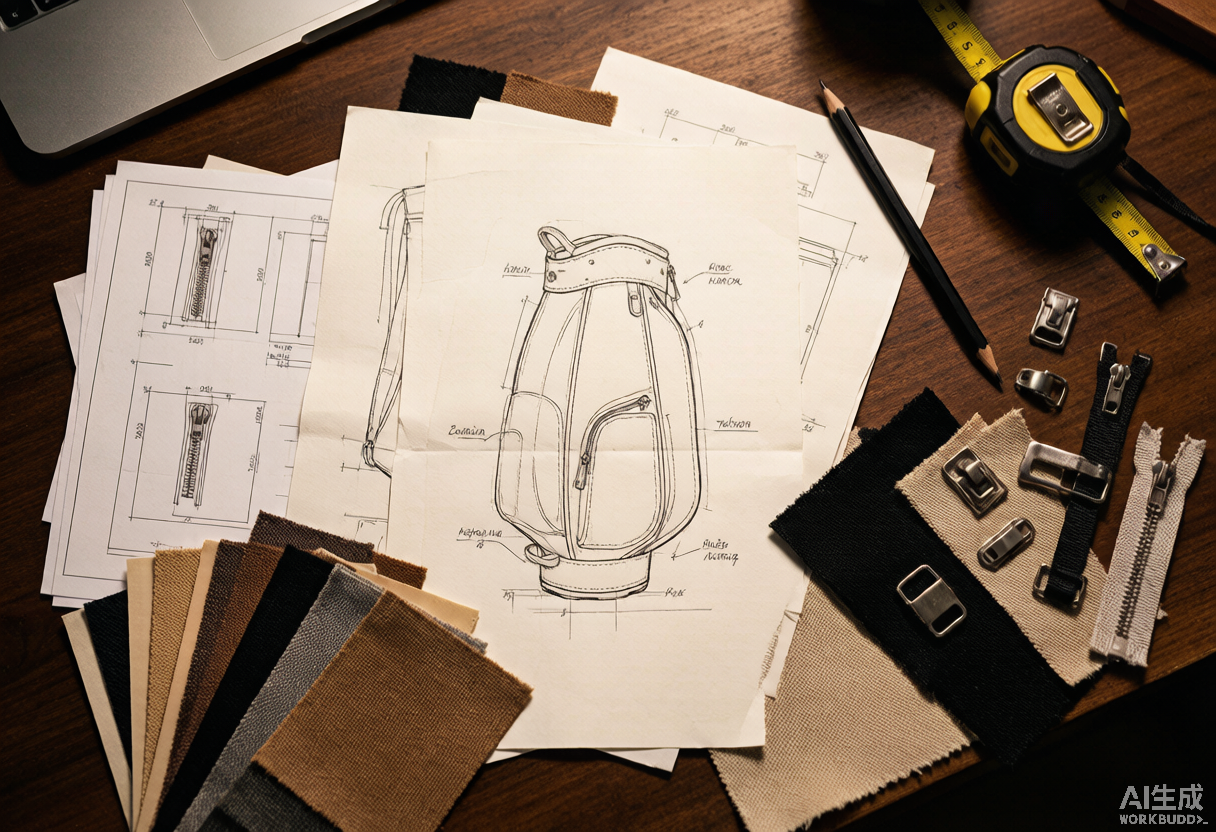
Between your deposit and your sample, invisible work determines whether the sample is right. Patterns are pulled or adjusted for your chassis; your logo is digitized into a stitch program and test-sewn; lab dips — small swatches of your body fabric dyed to your Pantone — go back and forth until the color matches under D65 light; print separations are made and screens burned. For private label this takes 3–7 days and you see none of it, which is exactly the point: a chassis that has made 40,000 bags only needs your branding engineered, not its structure.
Full OEM inverts this step: patterns are drafted from your tech pack, graded across sizes, prototyped in paper or cheap fabric before real material is cut, and the step stretches to 2–4 weeks across one or two structural sample rounds. This is the honest reason OEM costs more and takes longer — you are buying engineering that private label gets free from the chassis library.
Step Four: the Sample Is the Contract
In 6–10 days the sample exists — your chassis, your fabric, your branding, your colorway, one physical bag. Pay the courier (USD 40–80) and approve the object, never photographs of the object. Photos hide zipper action, strap padding density, fabric hand, stitch tension — precisely the things your customers will judge. The sample fee (USD 80–150 for private label work) credits back on the first bulk order, so the bag in your hands costs you the courier and nothing else in any program that proceeds.
Check the sample against the spec sheet line by line, not against your memory of the idea. Measure the logo dimensions. Count the pockets. Flex the stand mechanism fifty times. Zip and unzip every pocket. If anything deviates, the revision round is cheap now — a revised sample re-runs at 40–60% of the first fee — and unaffordable later. Full sampling terms are on the sample policy page.
Step Five: Approval Means Approval
Written sample approval plus the 30% deposit converts the sample into the production standard. From this moment, bulk is manufactured against that approved bag — and inspected against it at the end. This is why step five is the point of no return: a logo 8 mm too small that you approved is not a defect; it is the spec.
Two disciplines protect you here. First, approve in writing with the sample's photo set attached to the approval email — this document is what PSI references later. Second, keep the approved sample physically with you, not at the factory: when questions arise mid-production, both sides should be looking at the same bag, and factories keep their own sealed reference sample for exactly this purpose.
Step Six: Thirty-Five to Fifty Days of Bulk
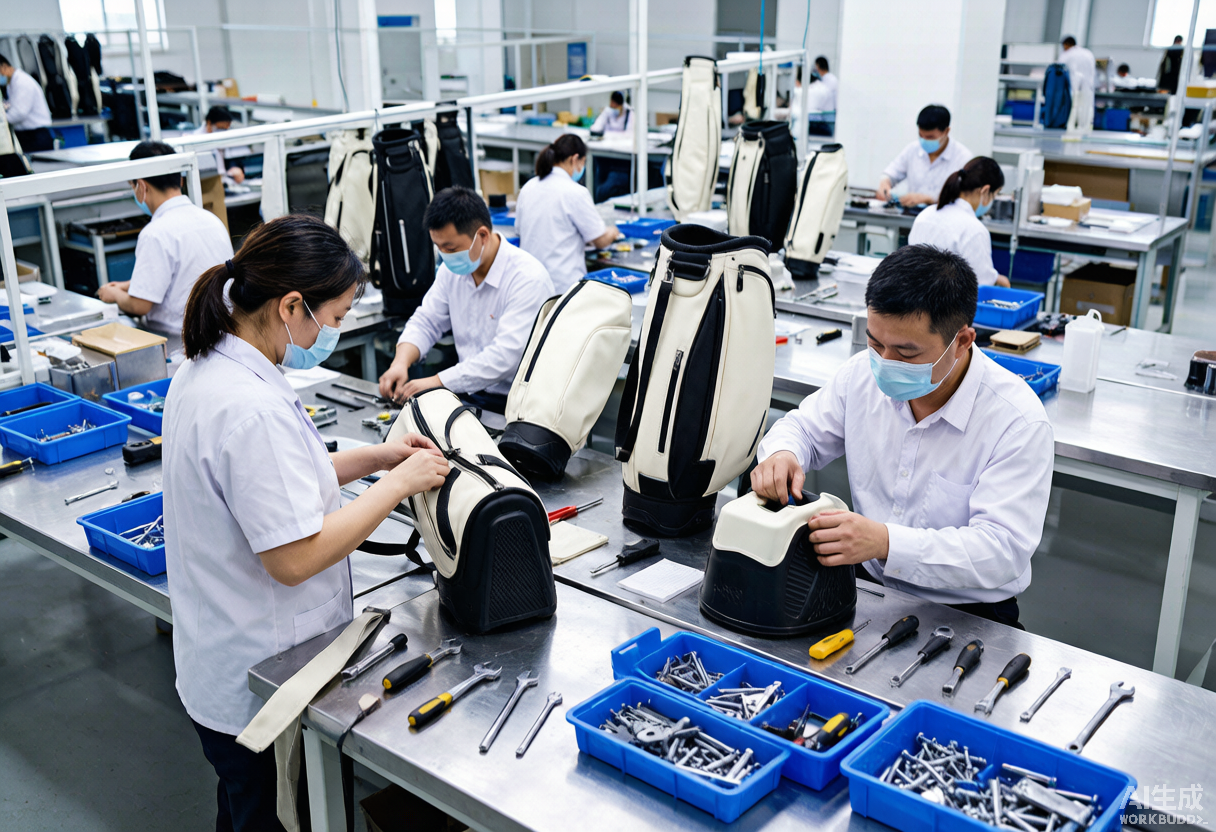
Bulk production runs cutting → embroidery and printing → panel prep → assembly → finishing, and your job during it is nothing — which unnerves first-time buyers into unhelpful daily check-ins. The useful monitoring rhythm is three touches: fabric arrival confirmation (with lab-dip photos if custom-dyed), a mid-production photo set around day 20, and the completion notice that triggers inspection. Our capabilities page describes the line structure these weeks run on.
What can go wrong mid-production, in order of frequency: fabric shade variance between mill lots (caught at IQC), branding placement drift (caught at IPQC against the placement template), and schedule compression from upstream delays (managed by re-sequencing, communicated honestly or not at all — which is why the mid-production photo set exists).
Step Seven: Inspection You Should Read Carefully
Pre-shipment inspection samples your finished bulk to AQL 2.5 under ISO 2859-1 — 50 bags pulled at random from a 500-piece lot, passing with at most 3 major defects — and delivers a photographic report: carton counts, branding close-ups, measurement checks, defect documentation if any exist. Read it before paying the 70% balance, because this report is the last moment a problem is the factory's problem.
Third-party inspection (SGS, QIMA — USD 150–300) is welcome on any program and worth commissioning on first orders above 1,000 pieces or whenever you cannot afford a surprise. The quality page documents the full IQC/IPQC/PSI checkpoint system, defect classes and rework rules.
Step Eight: Freight, Documents and Delivery
With inspection passed and the balance paid against the bill of lading copy, logistics takes over: booking (1–7 days to vessel depending on route), ocean transit (14–18 days to the US West Coast, 22–32 to the East Coast, 28–40 to North Europe), customs clearance (2–5 days with correct documents), and final delivery. The document set — commercial invoice, packing list, bill of lading, and certificates your market requires — travels with the cargo; errors here, not at sea, are what delay arrivals.
FOB Xiamen means you or your broker manage everything after the vessel loads; CIF adds freight and insurance to your port; DDP delivers to your door with duty handled. First-time importers should price DDP — the premium converts customs risk into a line item. Destination-specific duty rates and compliance notes live on the market pages, from the USA to Japan.
Step Nine: the Reorder Is the Business Model
Everything about a first order is expensive education; everything about a reorder is return on it. Digitizing and screens exist, lab dips are approved from file, the line knows your bag, and the calendar compresses to 30–45 days with no sampling loop at all. Unit costs drop 5–12% from setup amortization alone. Brands running seasonal programs effectively pay tuition once and collect for years.
Protect the reorder economics at step nine by reconfirming two things in writing: fabric continuity (same mill lot quality or approved equivalent) and the reorder price from your original quotation. The brands that get surprised at reorder are the ones that treated the first PO's terms as perpetual.
What the Process Looks Like from Inside the Factory
From the production floor, your order is a traveler — a document packet that follows the physical work: tech sheet, approved swatch card, branding placement template, QC checkpoints pre-printed. The line leader signs the traveler at each station; IPQC initials it at each check; PSI photographs it at the end. When you ask "where is my order?" the honest answer is a station name on that traveler, not a percentage — and factories that can answer in traveler terms are the ones actually managing production.
This is also why the mid-production photo set matters more than any status email: bags at the assembly station, with your branding visible, prove physical progress that no spreadsheet can fake. Ask for it around day 20 of any 35–50 day run. Factories running real production send it within a day; factories that brokered your order to someone else need a week — which tells you something worth knowing before the balance payment is due.
Where Timelines Actually Slip
- Sample approval indecision (the #1 cause). The sample sits on a desk for two weeks while stakeholders orbit. Fix: one named approver, a 5-business-day approval window, scheduled before the sample ships.
- Late artwork. The logo arrives as a 400-pixel JPEG in week two. Fix: vector artwork and Pantone references in the brief, not after the quote.
- Mid-production spec changes. "Can we make the pocket bigger?" at day 25 costs the pattern change, the remade WIP, and usually two weeks. Fix: changes freeze at sample approval — full stop.
- Vessel booking in peak season. August–October sailings to the US book out 2–3 weeks ahead. Fix: freight booked at production start, not at completion.
- Customs document errors. Wrong HTS line, missing certificate, consignee mismatch. Fix: documents reviewed before the vessel sails, not after it arrives.
Briefing Well: the Five-Minute Version
If this guide has a compressed form, it is this: send your chassis (or ask us to recommend one), your quantity, your vector logo with Pantone references, your destination, and one sentence about the job the bags must do. You will have a comparable quotation in 24 hours, a physical sample inside two weeks, and bulk in 35–50 days after approval — inspected at AQL 2.5, documented at every checkpoint, and reordered at lower cost when the first run sells through. Junyuan has run this loop since 2014 from Quanzhou, with production through an affiliated SGS-verified factory and partner network; the about page carries the entity details and the quote form starts step one.
Frequently Asked Questions
What is the custom golf bag design process?
Nine steps: brief, quotation, engineering, sampling, approval, bulk production, inspection, freight, reorder. Private label programs run 60–80 days end to end using a proven factory chassis; full OEM runs 90–120 days because patterns and tooling are engineered from your tech pack. The buyer's critical moments are the brief, the sample approval and the inspection report.
How long does it take to design a custom golf bag?
Private label (your branding on a factory chassis): the design work is branding engineering — 3–7 days of digitizing, lab dips and print separations inside a 6–10 day sampling window. Full OEM (a new bag from your tech pack): 2–4 weeks of pattern development plus one or two structural sample rounds before the same sampling loop.
Do I need a tech pack to order custom golf bags?
For private label, no — your logo artwork, Pantone references and placement notes are enough, because the chassis engineering already exists. For full OEM, yes: dimensioned drawings, material callouts and hardware references. If you have a concept but no tech pack, our pattern engineers can develop one from your brief as a paid engineering step.
How many sample rounds should I expect?
One for private label — the chassis is proven, so the sample confirms branding execution, and 8 of 10 programs approve the first sample with at most minor notes. Two rounds for full OEM: the first tests structure, the second refines it. Revision samples after minor tweaks re-run at 40–60% of the initial fee.
What happens if the sample is wrong?
You document the deviations against the spec sheet and a corrected sample is produced — minor revisions at 40–60% of the original fee, factory errors at no charge. Nothing proceeds to bulk until you approve in writing. The sample loop exists precisely so this conversation happens over a USD 100 sample instead of a USD 10,000 production run.
Can I change the spec after production starts?
Technically possible, economically painful: a spec change at day 25 of bulk costs the rework, the wasted WIP and typically two weeks of schedule. The industry norm — and our rule — is that specs freeze at written sample approval. Changes after that point are quoted as a change order with honest cost and schedule impact.
Who owns the approved sample?
You do — it is your product, and you should keep it physically. The factory retains a sealed duplicate reference sample, and bulk production plus the AQL 2.5 pre-shipment inspection are both measured against that sealed reference. When a dispute arises, both sides compare against the same object, not against memories.
What documents come with the shipment?
Commercial invoice, packing list, bill of lading, and market-specific certificates as required — plus the photographic PSI report from inspection. Document errors delay more arrivals than weather does, which is why the set is reviewed before the vessel sails. DDP programs handle customs documentation end to end.
How do reorders work?
Send the PO referencing the original program: digitizing, screens, lab dips and patterns all exist, so reorders skip sampling entirely and run 30–45 days at 5–12% lower unit cost from setup amortization. Reconfirm fabric continuity and the reorder price in writing — those two clauses are what keep season three identical to season one.
What is the biggest cause of delays in custom bag programs?
Buyer-side approval indecision — samples sitting unapproved for weeks — followed by late artwork, mid-production spec changes, peak-season vessel booking and customs document errors. All five are preventable with one named approver, artwork in the brief, a spec freeze at approval, freight booked at production start, and documents reviewed pre-sailing.
Should I visit the factory during production?
Not necessary for standard programs: the three-touch monitoring rhythm (fabric arrival confirmation, mid-production photo set, completion notice) plus the photographic PSI report covers what a visit shows. Commission third-party inspection (USD 150–300) instead for first orders above 1,000 pieces, and save site visits for multi-year partnerships.
How do I start the design process with your factory?
Send five things — target chassis, quantity, vector logo with Pantone references, destination market, and the job the bags must do — through the quote form on this site. A spec-level quotation returns within 24 hours; sampling starts on approval and takes 6–10 days; bulk runs 35–50 days after your written sample approval.
Can the process run faster than 60 days?
Yes, within limits: stock-fabric private label programs (no custom dyeing) with print-only branding have shipped in 45–50 days end to end. What cannot compress safely is the approval loop — physical sample in your hands, written approval, AQL inspection before balance. Any factory offering to skip those steps to save a week is proposing you insure their schedule with your season.
What should I prepare before contacting a factory?
Five things: your target chassis or a request for recommendation, a quantity range, vector logo artwork with Pantone references, your destination market, and one sentence on the job the bags must do. With those five, the entire process above starts within 24 hours — without them, the first week is spent assembling what could have taken an afternoon.