
What an Incoterm Actually Decides
An Incoterm sets three boundaries in one sentence: where delivery happens (risk transfers), who arranges each transport leg, and who pays each cost. It does not decide payment terms, inspection rights or IP — those live in the PO.
Every commercial confusion about freight resolves once the three boundaries are named. Risk transfer: the physical point at which the goods are the buyer's problem — a container on the vessel at Xiamen port under FOB, your warehouse dock under DDP. Arrangement: who books the carrier, who files export and import declarations, who handles the courier at each handoff. Cost: which invoices land on whose desk — freight, insurance, terminal charges, duty. One three-letter word moves all three boundaries simultaneously; that is why the term appears at the top of the quotation next to the unit price, and why 'FOB Xiamen' and 'DDP Los Angeles' are genuinely different products at the same factory.
The companion rules are the ones Incoterms do not set, and this is where buyers lose money politely: payment terms (the T/T 30/70 structure is a PO clause, not an Incoterm), inspection rights (AQL before balance payment — same), and IP (the model guide covers it). A PO that specifies all of them — term, payment, inspection, IP — is complete; a quotation that specifies only the term and the price is half a conversation. This guide handles the freight half; the negotiation guide handles the rest.
EXW and the False Economy of Self-Pickup
EXW (ex works) means the factory's quotation is 'goods at our loading dock, you collect' — the buyer arranges export customs, inland trucking in the origin country, port charges and everything onward. It looks like the cheapest term on paper because the factory's number is the smallest. In practice it is usually the most expensive term for any buyer without a freight forwarder embedded in China: the buyer's forwarder pays the factory's export agent to handle declarations, pays trucking, pays terminal fees — each with a coordination margin on top — and the total lands 3–8% above what the same factory would have charged under FOB, with the buyer holding all the paperwork risk.
EXW is right in exactly one case: the buyer's logistics company has its own China presence and wants physical control from the dock. For everyone else the practical floor is FOB — the term where the factory's local competence becomes part of the product. A quotation offering only EXW from a China factory is either a company that has never exported (a different problem) or one pricing a paper discount that the logistics invoices will collect later.
FOB: the Category's Center of Gravity
FOB (free on board) named port — for our programs, FOB Xiamen — means the factory delivers the goods loaded on the vessel you or your forwarder nominated, export cleared, with the risk passing when the container crosses the ship's rail in practice and the load is confirmed on board. The factory's quotation includes goods, export packaging, inland delivery to port and export customs; the buyer's side is ocean freight, insurance, destination duty and inland. It is the category standard for three solid reasons: the buyer controls the freight spend (where consolidation and forwarder relationships save 10–20%), the inspection sequencing protects both sides (goods inspected at the factory under AQL 2.5 before the balance payment, per the AQL guide), and the price is comparable across suppliers — every serious factory quotes FOB daily.
The buyer's obligations start earlier than most first-timers expect: the vessel booking. Under FOB the buyer nominates the vessel — practically, your forwarder sends the factory a booking number and the factory loads against it. The classic first-order failure is a buyer with no forwarder assuming 'the factory ships it'; the factory is waiting for a booking number that does not exist, and the calendar quietly loses two weeks. Line up the forwarder before the production balance is due, not after; the calendar guide below shows where the booking sits in the 35–50 day production window.
CIF: Freight and Insurance Bundled
CIF (cost, insurance and freight) to your named destination port means the factory adds ocean freight and insurance to the FOB number and delivers the goods to the destination port — risk still transferring at the origin vessel, despite the longer paid journey. The buyer pays duty and destination inland, clears import, and collects at the port. CIF suits the buyer who wants one factory-side number and has no forwarder relationship: the factory's freight desk books the vessel, buys the minimum insurance (ICC-C terms by default — see the insurance section for what that actually covers), and the buyer's cost is one invoice plus duty plus local trucking.
The honest trade-off: convenience versus control and margin. CIF freight pricing includes the factory's arrangement margin (typically 100–300 USD per LCL shipment — modest, but real), and CIF insurance defaults to the minimum cover the term requires (110% of invoice value under ICC-C, which excludes some handling and warehouse risks). Buyers with volume consolidate better than factories do — at two containers a year, your forwarder's FOB ocean rate will usually undercut the factory's CIF add-on; at one LCL pallet a season, CIF's convenience is worth every dollar of its small margin. The choice is a logistics-maturity question, not a morality test.
DDP: the Door-Delivery Premium
DDP (delivered duty paid) to your named address is the maximum transfer: the factory quotes a single number that lands the goods at your door, import cleared, duty paid, final mile included. The buyer wires one payment and receives cartons. For first-time importers, event-driven programs with hard deadlines, and buyers under 200 units, DDP removes an entire discipline from the project — no forwarder, no customs broker, no duty math — and the premium prices that removal honestly: typically 4–7% over FOB landed cost at LCL volumes, narrowing to 2–4% at full-container volumes where the factory's logistics desk consolidates efficiently.
The two clauses that make DDP professional: the duty-rate assumption written into the quotation (the US HTS 4202.92 line at 17.6% as of 2026 — the factory prices the duty it expects, and the tariff-adjustment clause says who pays if the rate moves before shipment) and the delivery-confirmation evidence (signed POD or courier tracking archived at closeout). Without the first, a mid-stream tariff change becomes a renegotiation; without the second, 'delivered' is a contested word. Our DDP quotations carry both, and the cost guide's three worked examples all state their tariff assumptions for exactly this reason.
| Element | FOB Xiamen | CIF LA | DDP Los Angeles |
|---|---|---|---|
| Goods + export | Factory | Factory | Factory |
| Ocean freight | Buyer | Factory (+) | Factory (+) |
| Insurance | Buyer | Factory (min.) | Factory (full) |
| US duty 17.6% | Buyer | Buyer | Factory |
| Import clearance | Buyer | Buyer | Factory |
| Final mile | Buyer | Buyer | Factory |
| Risk transfers | On vessel | On vessel | At your door |
Landed Cost Worked: a 200-Unit Stand Bag Example
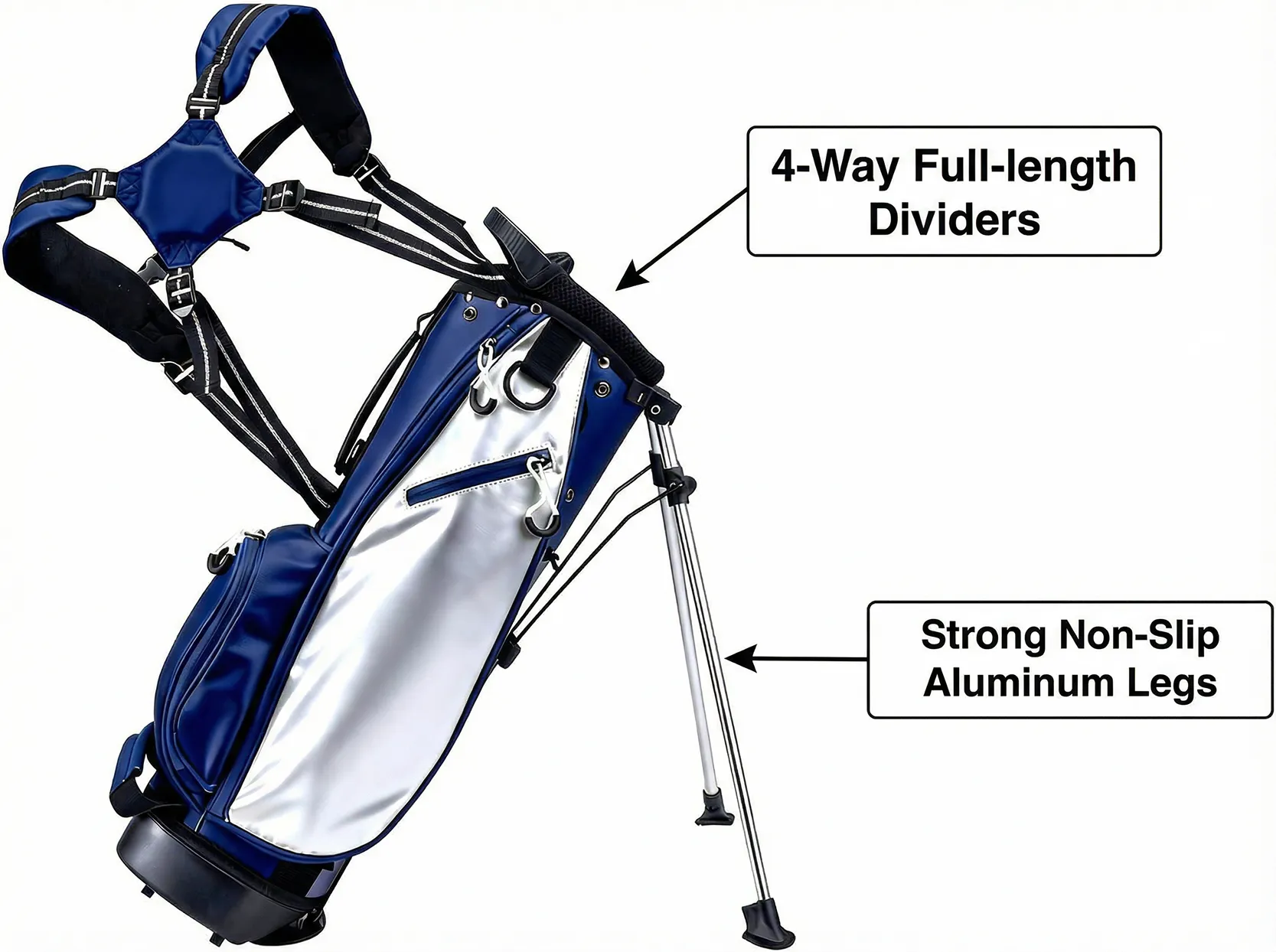
One program, three terms — FOB lands at USD 5,914 (USD 29.57/unit), CIF at USD 6,090 (30.45), DDP at USD 6,410 (32.05). The gaps are real but smaller than folklore; the right term is the one your logistics maturity can operate.
The common setup: 200 custom stand bags at USD 27.50 FOB (5,500), packed 6 per carton — 34 cartons, 5.1 CBM — an LCL shipment Xiamen to Los Angeles, goods value declared at invoice. The FOB column: goods 5,500; LCL ocean plus destination charges at roughly 780 (LCL is priced partly by volume, partly by the destination's fee stack); entry filing and customs bond share 120; duty at 17.6% of 5,500 = 968; inland trucking port to warehouse 145; insurance 2% — or self-insured by many buyers at this scale. Total landed 5,914. Wait — check that duty basis: duty computes on the FOB value, so 968 is correct. Per unit: 29.57.
CIF: the factory's ocean-plus-insurance add-on comes to roughly 1,150 versus your 780 + self-insurance — landed 6,090, per unit 30.45. DDP: the factory bundles freight, clearance, duty and final mile — 1,450 over goods, landed 6,410, per unit 32.05. The spreads are 3% and 8% over FOB — the price of not operating a freight lane. At full-container scale (a 40' HC holds roughly 1,800–2,400 stand bags, and the wholesale guide works the FCL math) those spreads compress toward 2–4%, which is why volume buyers almost universally run FOB with their own forwarder and small buyers sensibly run DDP.
Ocean Freight Mechanics: FCL vs LCL
Two containers matter for bag programs: the 20' (about 28 CBM usable, 800–1,000 stand bags) and the 40' high-cube (about 67 CBM, 1,800–2,400 bags cartoned at 6 per box). FCL (full container load) prices as one lane: Xiamen–LA market rates have run roughly USD 1,800–3,200 for a 40' HC across recent cycles, plus origin and destination fixed charges — the per-unit freight at 2,000 units is USD 1.00–1.80. LCL (less than container) prices by cubic meter plus a fee stack both ends: at 5 CBM the destination fee stack (THC, documentation, devanning, port security) can exceed the ocean linehaul itself, which is why the example above shows 780 for 5.1 CBM — the per-unit freight at 200 units is USD 3.90.
The crossover rule: LCL's per-CBM economics beat FCL only below roughly 8–12 CBM depending on the lane's fee stack; above that, buying a whole container is cheaper per unit even half-empty, and at 15+ CBM it is dramatically so. Programs between 300 and 900 units sit in the awkward middle — the practical moves are palletized LCL (cleaner handling, fewer destination fees) or pooling with the factory's other export cargo when timing allows. Ask for both quotes at the PO stage; the CBM math takes a spreadsheet minute and the savings are per-order.
Air Freight: When It Beats the Ocean
Ocean Xiamen–LA runs 14–20 days port to port plus a week of edges; air runs 3–5 days door to door. The price ratio is roughly 8–12×: air freight on 200 kg of bags (sample batches, a 40-cover rush, an event shortfall) prices USD 4.50–7.00 per kg on consolidations versus the ocean's fraction of a dollar. Air therefore wins on three jobs only: samples and pre-production approvals (always air — the sample guide's timelines assume it), rush top-ups before an event (the ordering guide's rush chapter prices the trade), and launch quantities where a market window is worth more than the freight spread.
What air never wins: bulk. A 2,000-unit program by air prices USD 18,000–28,000 against USD 2,500–4,500 by ocean — the landed-cost arithmetic ends the conversation. The hybrid that experienced buyers run is the bridge shipment: 100–200 units air-freighted to open the season or cover the event, the balance on the ocean behind it. The bridge prices honestly (100 units by air adds roughly USD 4–6 per bag) and buys the calendar that production compression cannot — the timeline guide shows where a bridge slots into the 35–50 day window.
Insurance: What ICC(A) Actually Covers
Cargo insurance comes in three Institute Cargo Clauses; the differences are where claims go to die. ICC(A) is all-risks in practice: covers theft, water, rough handling, non-delivery, general average — the standard a buyer should specify. ICC(B) names the perils it covers (fire, collision, seawater, washing overboard) — mid-grade. ICC(C) covers only catastrophic events (fire, explosion, vessel sinking, collision) — and CIF's legal default. A CIF shipment that sinks is covered; the same shipment crushed in handling, soaked by container rain (real, and recurring on trans-Pacific lanes), or short at devanning is not, and the claim letter returns with a clause citation.
The buyer's moves are three: under FOB, buy ICC(A) through your forwarder at roughly 0.15–0.30% of insured value (100–300 USD on the example program — noise); under CIF, instruct the factory in writing to upgrade the cover from the C default (cost to the factory: the same fraction, typically passed on or absorbed as a relationship courtesy — ask at quotation, not at claim); and always insure at 110% of invoice value, the Incoterms convention that covers the buyer's transaction costs, not just the goods. Container 'rain' from condensation is the category's quiet claim driver — the packaging guide's moisture-paper and VCI-carton specs are the prevention side of the same risk.
Documents That Move With the Goods
Five documents carry a golf bag program across borders, and each protects a different sentence of the deal. The commercial invoice (declares value for duty — the basis of the 17.6% computation). The packing list (carton-by-carton: quantities, weights, dimensions, marks — what your warehouse receives against and what the AQL inspection reconciles). The bill of lading (three functions in one paper: receipt, contract of carriage, and document of title — original bills must be presented to release the goods, which is why wirefraud attempts always chase the original B/L; release cargo against telex or e-B/L releases only through channels you verified). The certificate of origin (usually a China council chamber document — qualifies the shipment for duty treatment and some trade-program rates). And the customs entry at destination (your broker's filing — duty is paid here).
Two program-specific extras appear in real bag POs. The inspection report (third-party or in-house AQL 2.5 result, referenced in the payment clause — the AQL guide explains its role in the 70% balance release). And for retail-bound programs, the compliance file: fiber-content labels (the FTC's Textile Act in the US, care symbols under ISO 3758), and country-of-origin marking — the labeling guide maps which markets require what. Ask the factory for the document set as PDFs at the balance-payment moment, not at arrival — corrections are a message before the vessel and a hold after it.
Tariff Lines: HTS 4202.92 and How Duty Is Computed
The US tariff line for golf bags is HTS 4202.92 (travel, sports and similar bags, outer surface of textile materials) — 17.6% as of 2026, applied ad valorem on the FOB value the commercial invoice declares. The mechanics: 200 bags at 27.50 = 5,500 declared; duty = 968, paid at entry by your broker, recovered in your landed-cost model. The declaration is the invoice — not a wish, not a discount structure — and 'under-invoicing' is customs fraud on both sides of the deal, which is why professional factories price DDP with the tariff assumption written in and professional buyers never ask for creative paperwork.
Two practical notes belong in every bag program's finance model. First, duty draws on the FOB value, so the incoterm does not change the duty — FOB and CIF and DDP shipments of the same goods pay the same duty, just through different hands. Second, tariff rates move by policy, not by contract: the adjustment clause in your PO (the negotiation guide's currency-and-tariff section) is the only sentence that says who absorbs a change between quotation and shipment. Models for other markets differ (EU antidumping profiles, GCC and ASEAN structures) — the principle is portable: name the tariff line in the quotation so both sides priced the same policy.
Payment Terms and Incoterms: the Safety Pairing
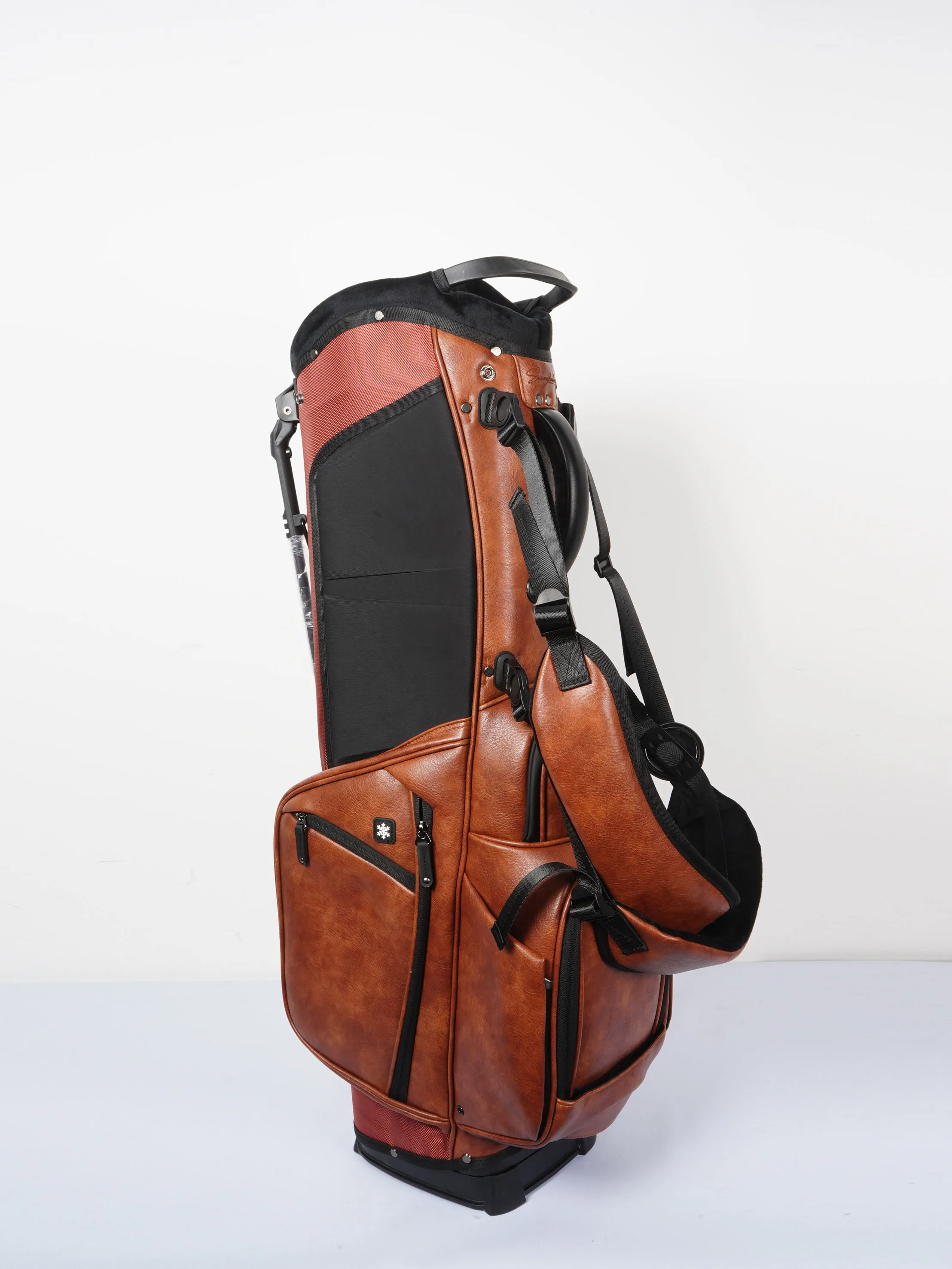
The two decisions lock together into one safety architecture. T/T 30/70 pairs with FOB by design: deposit starts production against your spec; the 70% balance releases when the AQL inspection passes and the documents (invoice, packing list, the shipped-on-board B/L) are in your inbox — you have paid in full only when the goods are inspected, on the water, and evidenced. DDP shifts the sequence: the balance often falls due at delivery confirmation, which trades a week of buyer protection for the factory having carried the duty and freight — the POD clause from the DDP section is what makes that trade sound. L/C at sight pairs with any term at volume: banks pay against documents, and the document set from the previous section becomes the letter's exhibit list.
The pairing that never works is the one first-timers invent: paying in full at production start 'for a discount' under any term. The discount prices nothing except the absence of your leverage — inspection rights, document evidence and balance timing are the only teeth a buyer has, and wiring them away to save 2% is the most expensive sentence in this article. The negotiation guide's payment section prices each structure honestly; the logistics version of the same advice is one line: the incoterm moves the risk boundary, the payment clause decides which side of it you have paid for.
Common Incoterm Mistakes Golf Programs Make
Six mistakes cover most of the category's freight losses. Buying EXW without a China forwarder (paying 3–8% extra for the privilege of paperwork risk). Assuming the factory ships under FOB (the buyer books the vessel; the booking-number failure costs two weeks). Accepting CIF's default insurance on high-value cargo (ICC-C covers sinkings, not handling — the section above has the fix). Computing landed cost without the destination fee stack (LCL's local charges can double the ocean linehaul at destination). Budgeting duty on CIF value instead of FOB value (the rates apply to the declared FOB invoice — the same duty either way, but a model that gets the basis wrong surprises finance). And leaving the tariff-rate risk unassigned in a DDP deal (the 17.6% is a policy number that moves; the adjustment clause assigns it).
Every one of these has the same shape: a boundary that the term set, misunderstood as a courtesy. The prevention is a one-page landed-cost model per program — goods, freight by mode, fee stack, insurance, duty at the correct basis, inland — with the incoterm's boundaries written at the top. The three worked examples in the cost section are that model; a buyer who can rebuild them in a spreadsheet does not make any of the six mistakes, because each mistake is a cell left blank.
Choosing by Program Size and Market
Under 200 units or first import: DDP. 200–900 units, one or two orders a year: FOB with a forwarder, or CIF for convenience. Container scale and multi-market programs: FOB always, with your own broker network.
The honest ladder. First import, event deadline, small program: DDP — one number, one wire, cartons at the door; the premium is tuition that buys calendar certainty. The growing middle (200–900 units, repeat seasons): FOB with a forwarder you choose once and keep — the freight savings fund the relationship, and your document fluency compounds. Container scale and multi-market distribution: FOB plus your own brokers per market, freight consolidated by lane, and the landed-cost model run per destination because duty lines and fee stacks differ by market even when the factory and the goods do not.
The market half of the ladder matters as much as the size half: US-bound programs price one duty line and one fee stack; EU-bound adds CE-adjacent labeling and different broker structures; other markets have their own stacks — but the incoterm logic ports unchanged, which is why this guide's math is taught on one lane. Choose the term for the operation you actually have, upgrade when the volumes justify, and let the factory's quotation name its assumptions either way — the term on the quote is a promise about invoices, and promises are how programs run.
Starting With the Right Incoterm
State your program in four lines — product, quantity, market and deadline — and the quotation returns FOB, CIF and DDP side by side inside two working days.
The practical brief asks for the comparison, not the term: 'quote 200 stand bags to Los Angeles, FOB, CIF and DDP side by side, with the DDP tariff assumption stated.' The quotation then shows its own anatomy — unit price by tier, freight by mode, the duty line at the current rate with the adjustment clause — and your choice becomes a spreadsheet decision instead of a vocabulary decision. From there the sequence is standard: spec and sample (6–10 days), production (35–50 days at 200–1,000 units), inspection at AQL 2.5, balance against documents, vessel, arrival.
Junyuan has quoted and shipped under all three terms for export programs since 2014 — FOB daily, CIF for convenience buyers, DDP for first-season and event programs with the tariff clause written in. Four sentences through the quote form (product, quantity, market, deadline) start the process; the landed-cost examples in this article are the model your quotation will be priced against.
Frequently Asked Questions
What does FOB mean when buying golf bags from China?
Free on board, named port — typically FOB Xiamen for our programs. The factory's price includes the goods, export packaging, inland delivery to port and export clearance; risk and cost transfer to the buyer when the goods are loaded on the vessel you nominated. You then own ocean freight, insurance, US duty (HTS 4202.92, 17.6% as of 2026) and inland delivery. It is the category's standard term and the basis of every comparable quotation.
Is DDP more expensive than FOB?
Yes, and honestly so: typically 4–7% over FOB landed cost at LCL volumes, 2–4% at container scale. The premium buys the removal of an entire discipline — no forwarder, no broker, no duty math, one wire, cartons at your door. For first imports, small programs and hard event deadlines the premium is usually the cheapest thing in the deal; at container scale with a freight lane of your own, FOB wins on cost.
What is the difference between CIF and DDP?
CIF delivers to your destination port with freight and minimum insurance included — you still clear customs, pay duty and handle the final mile, and risk transferred back at the origin vessel despite the longer paid journey. DDP delivers to your door, duty paid, fully cleared. CIF is for buyers who want the factory to manage the ocean but keep import control; DDP is for buyers who want one number to the dock.
How is US import duty computed on golf bags?
HTS 4202.92 (17.6% as of 2026) applies ad valorem to the declared FOB value on the commercial invoice: 200 bags at USD 27.50 = 5,500 declared; duty = 968, paid at entry. The basis is the FOB invoice regardless of incoterm — FOB, CIF and DDP shipments of the same goods pay the same duty through different hands. The declared value is a legal document; the adjustment clause in your PO is the only sentence that assigns tariff-rate risk between quotation and shipment.
How much does it cost to ship 200 golf bags by ocean?
A 200-unit stand-bag program is roughly 34 cartons, 5.1 CBM — an LCL (shared container) shipment. Xiamen to Los Angeles: ocean plus the destination fee stack runs about USD 780, i.e. USD 3.90 per unit; add entry filing, duty at 17.6%, inland trucking and the landed cost is USD 29.57 per unit against USD 27.50 FOB. Full-container economics start beating LCL above roughly 8–12 CBM — the worked examples in this article show both.
When should I air freight golf bags?
Three jobs only: samples and pre-production approvals (always), rush top-ups before an event (100–200 units by air adds USD 4–6 per bag and buys the calendar), and launch quantities where a market window is worth the 8–12× freight spread. Bulk never flies — 2,000 units by air prices USD 18,000–28,000 against USD 2,500–4,500 by ocean. The hybrid 'bridge shipment' — air the opener, ocean the balance — is the experienced program's move.
Does CIF include insurance?
Legally, minimum insurance: ICC(C) clauses at 110% of invoice value — catastrophic events (fire, sinking, collision) only, not handling damage or container condensation, which are the category's actual claim drivers. Ask in writing at quotation for an upgrade to ICC(A) all-risks; the cost difference is 0.1–0.2% of value and factories arrange it routinely. Under FOB you buy your own — roughly 0.15–0.30% through a forwarder.
What documents do I need to import golf bags?
Five, plus two program extras: commercial invoice (declares the duty basis), packing list (carton-by-carton, what your warehouse receives against), bill of lading (receipt, contract and document of title — guard the originals; release cargo only through verified channels), certificate of origin, and your broker's customs entry. Program extras: the AQL inspection report referenced in your payment clause, and the retail compliance file — fiber-content labels, care symbols under ISO 3758, country-of-origin marking — if the goods are retail-bound.
Who books the vessel under FOB terms?
The buyer — practically, your freight forwarder sends the factory a booking number and the factory loads against it. The classic first-order failure is assuming 'the factory ships it'; the factory is waiting for a booking number that does not exist and the calendar silently loses two weeks. Line up the forwarder before the production balance is due, not after — the timeline chapter in this article shows where the booking sits in the 35–50 day window.
Is LCL or FCL better for my order quantity?
LCL (shared container) wins below roughly 8–12 CBM — about 200–400 cartoned stand bags depending on the lane's destination fee stack. FCL wins above it, even half-empty: a 40' high-cube runs USD 1,800–3,200 on the Xiamen–LA lane plus fixed charges, i.e. USD 1.00–1.80 per unit at 2,000 bags against LCL's USD 3.90 at 200. Ask for both quotes at PO stage — the CBM math is a spreadsheet minute and the savings repeat every order.
What does "risk transfers" mean on the water?
It means the insurance question is answered by the incoterm: under FOB and CIF, the buyer's insurance covers the ocean leg even though CIF's factory paid the freight — the delivery point (risk boundary) and the paid-journey can be different places, which is CIF's famous trap. Under DDP the factory's cover extends to your door. The practical move: whichever term you choose, name the cover — ICC(A) all-risks at 110% of invoice — and the sentence is closed.
Can I change incoterms between reorders?
Yes, and programs often graduate: DDP for season one while you learn the lane, FOB with your own forwarder from season two when the volumes justify a freight relationship. The factory's quotation adapts in a day — the terms are pricing structures, not identities. Keep the landed-cost model current as you switch: the comparison the negotiation guide and this article teach is the same spreadsheet at any scale.
How do I start a golf bag import program?
Four sentences through the quote form on this site: product, quantity, market and deadline — and ask for FOB, CIF and DDP quoted side by side with the tariff assumption stated. The comparison returns inside two working days; samples follow in 6–10 days; bulk runs 35–50 days at these volumes with AQL 2.5 inspection before balance against documents. Junyuan has shipped under all three terms for export programs since 2014.