
What a Sunday Bag Is — and What It Is Not
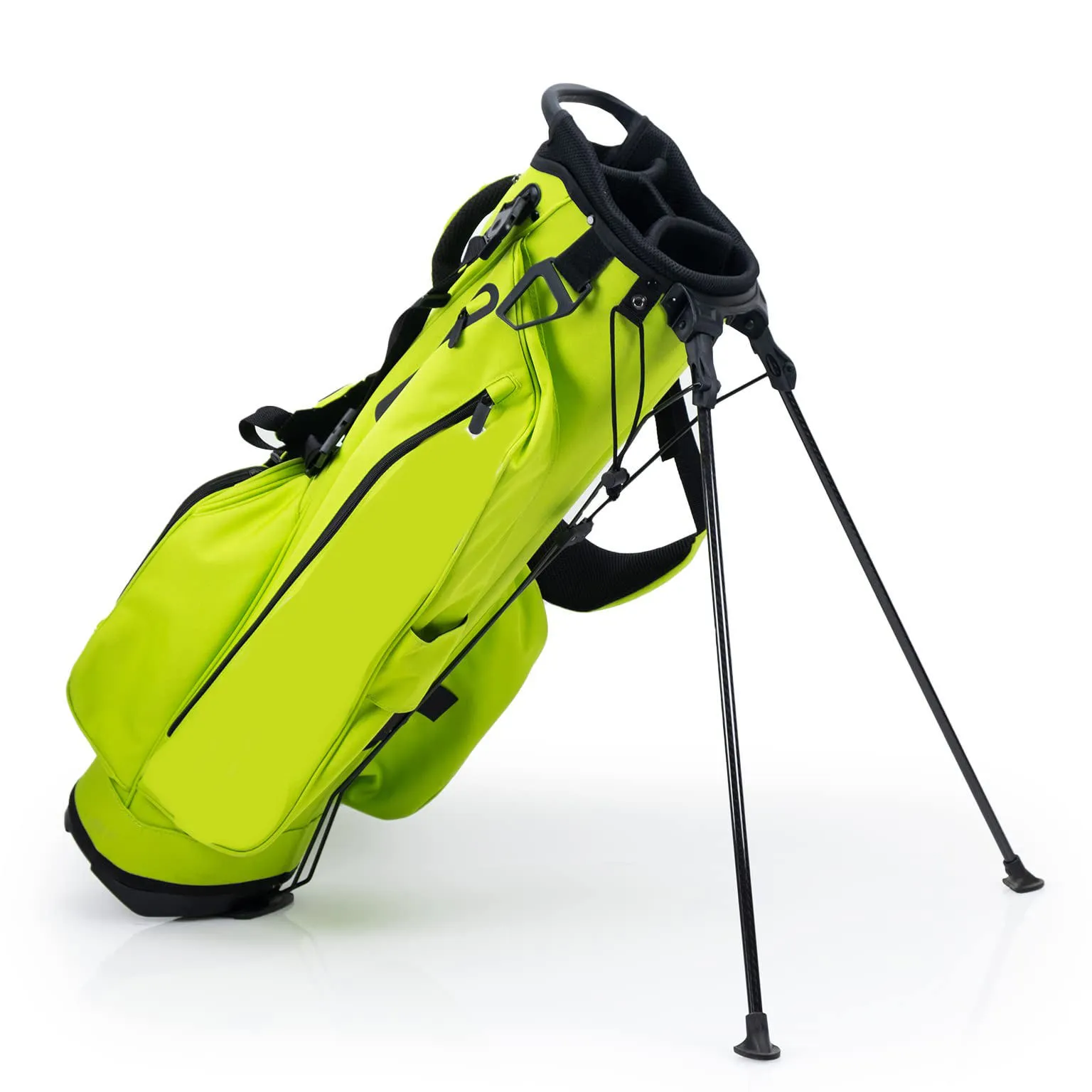
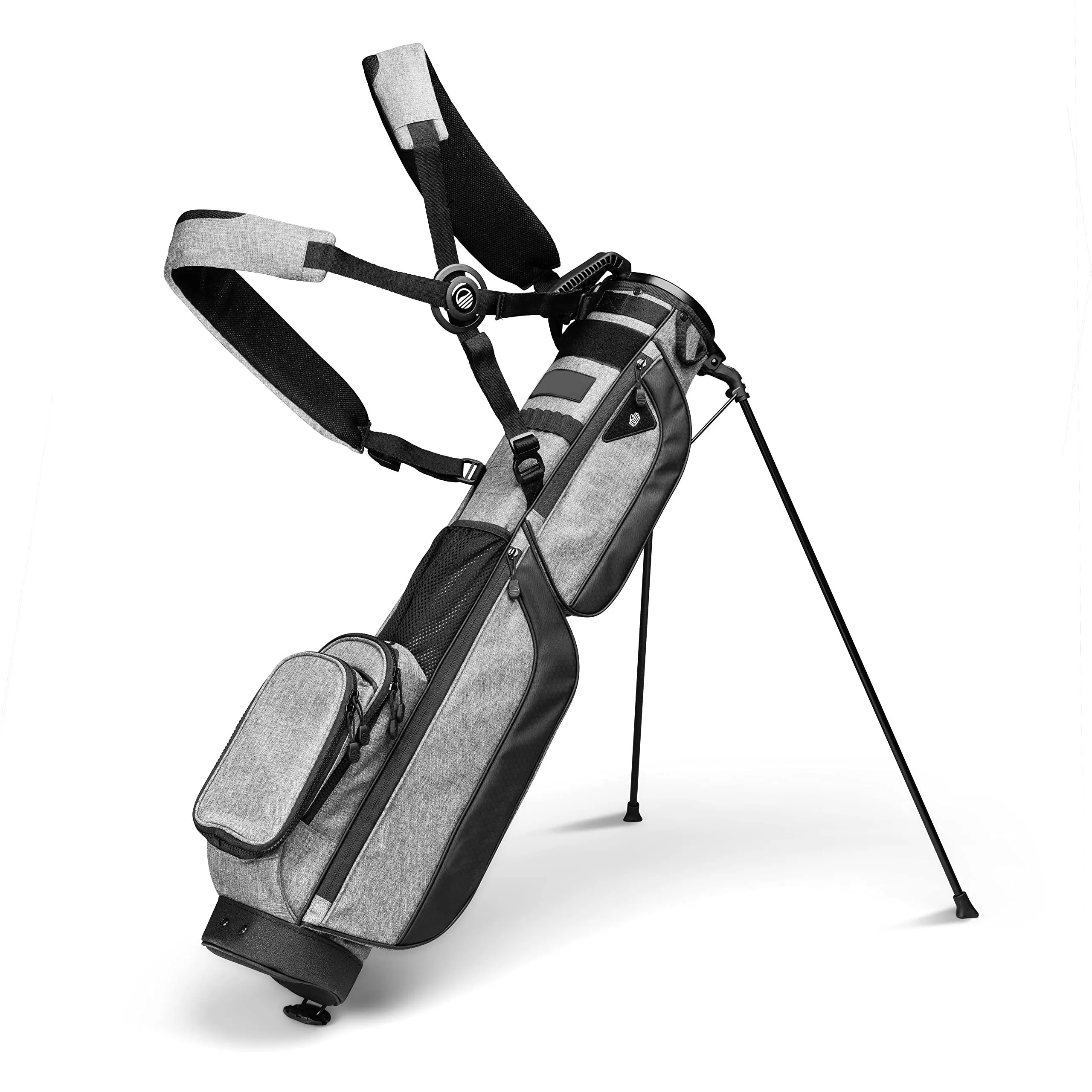
A Sunday bag is a minimalist carry bag — 0.9–1.4 kg, 6–8 clubs, one to three pockets, no stand mechanism (or a minimalist one) — built for walking rounds where the full bag is overkill. It is not a cheap stand bag: it is a different product philosophy, engineered by subtraction rather than feature addition.
The name comes from the relaxed weekend round, but the modern use-cases run wider: nine holes after work, par-3 and executive courses, range sessions, junior and senior golfers, travel rounds where a full bag stays home, and the growing walk-and-carry fitness segment. The buyer error to avoid is speccing the Sunday bag as a stand bag with features removed — the result is a product that apologizes for itself. Specced as its own philosophy (every gram justified, every pocket earning its place), the Sunday bag is the chassis customers describe as "thoughtful" — the highest compliment in the category.
The Sunday chassis page shows the constructions; this guide is the engineering and program logic behind them.
The Walking Renaissance Behind the Growth
The demand engine is documented: walking rounds grew steadily through the 2020s (NGF participation data tracks the shift), par-3 and short-course openings accelerated, and the compact-silhouette design trend (covered in the 2027 design directions) made minimalism aspirational rather than budget. The Sunday bag is where all three currents land — and its retail price points (USD 39–89) put it in impulse-purchase territory that stand bags (USD 129+) never reach.
The program evidence from our order book: Sunday chassis orders grew from giveaway-dominated volume to a three-segment mix — giveaways still anchor units, but lifestyle/heritage executions and collection-companion orders compound faster. Buyers who added a Sunday as their collection's entry tier report the same pattern: it introduces customers to the brand at USD 49–69 and converts them upward, the acquisition-engine role described in the accessories economics.
Construction Anatomy: Engineering by Subtraction
Every component choice is a weight decision. The top cuff: 2-way divider standard (full-length dividers add 80–120 g but prevent grip tangle — worth it in premium tiers). The stand question splits the category: pure pencil bags lean against anything (lightest, most packable, zero mechanism to fail); mini-leg executions add 150–250 g for stand-alone convenience. The base: reinforced fabric folds flat for travel; a molded rubber foot adds standing stability and trunk-survival at +60–90 g. The discipline is choosing per use-case, not accumulating all three.
| Component | Standard spec | Premium spec |
|---|---|---|
| Weight | 1.1–1.4 kg | 0.9–1.1 kg (ripstop) |
| Capacity | 6–8 clubs, 2-way top | Same, full-length dividers |
| Pockets | 1 apparel + 1 valuables | 3 total, fleece-lined valuables |
| Stand | None (lean design) or mini-legs | Mini-legs standard |
| Carry | Single padded strap | Double-strap convertible |
| Base | Reinforced fabric | Molded rubber foot |
| Factory price (MOQ 200) | USD 6–8.50 | USD 8.50–11 |
Carry Engineering: the Two-Hour Comfort Test
A Sunday bag is carried, full stop — which makes the strap system the product. The physics: 6–8 clubs plus bag runs 4–6 kg, carried on one shoulder for two-plus hours. The strap must be wide (65–75 mm spreads load), padded where it sits (closed-cell foam, not the cheap open-cell that compresses flat by month three), and attached at balance points that keep the bag horizontal-ish in motion (a bag that tips club-heads-down while walking is the category's most common failure).
The premium move is the convertible double strap: backpack-style carry for long walks, single-strap for quick rounds. It adds USD 0.80–1.20 and transforms the product for the fitness-walking segment. Whichever system, the QC test that matters is the loaded carry cycle — 4 kg load, strap flexed through 5,000 cycles on the tester, anchors inspected after. The AQL guide covers how these tests sit inside the inspection protocol.
Materials: Three Tiers, Three Stories
Ripstop polyester (the ultralight tier): 0.9–1.1 kg total, packable to near-flat, USD 6–8 — the travel and giveaway champion, and the material behind the sub-1 kg marketing claim. 600–900D polyester (the value workhorse): structure and print-friendliness at USD 6.50–9 — the volume tier for events and retail entry. Waxed canvas with leather trim (the heritage tier): USD 9–11, weight 1.3–1.5 kg, and the execution that photographs like fashion — the materials guide details the canvas spec and its patina story.
Material choice sets the brand story more in Sunday bags than any other chassis because there is so little else to the product. A ripstop Sunday says utility; canvas says romance; a full-color pastel print says the cute category has arrived in minimalist carry. Programs should spec the material as the message — the chassis is too honest to hide behind features.
Branding on a Slim Canvas
The Sunday bag's branding surfaces are the body panel (the long flat face, 200–300 mm of vertical canvas — the largest uninterrupted print area per dollar in the bag range) and the pocket faces. The slim silhouette rewards vertical compositions: stacked wordmarks, vertical crests, running patterns. Screen print owns the giveaway tier (bold one-to-three color graphics at USD 0.30–0.60); embroidery owns the heritage tier (a small chest-height crest, 60–80 mm, scaled to the bag's restraint); full-panel prints own the lifestyle tier.
The discipline from the placement guide applies with a twist: on a chassis this minimal, the branding is the design. Programs that treat the Sunday's body panel as a poster surface — one strong composition, generously scaled — produce the executions that photograph and sell. Programs that shrink a stand-bag branding suite onto the slim body produce clutter on a canvas that forgives nothing.
The Three Program Types
Mass giveaways (the volume anchor): the lightest, cheapest logo vehicle in golf — USD 6–7.50 at 500+ pieces, freight-friendly (50+ per carton, nestable), and genuinely useful to every recipient who plays. The promotional ordering guide covers the chassis selection logic for events. Lifestyle and heritage lines (the margin tier): canvas and pastel executions at USD 39–89 retail, the Sunday as fashion object — the fastest-compounding segment in our order book. Collection entry tiers (the strategic play): the USD 49–69 door into a bag line, acquiring customers who upgrade to stand and cart — the role the launch guide builds into the three-SKU ladder.
One chassis, three business models — and the spec conversation differs completely across them: giveaways optimize cost and packability; lifestyle optimizes materials and photography; collections optimize color-story consistency with the parent line. Brief the program type first and the spec follows.
MOQ Economics and Freight Advantages
Sunday economics at MOQ 200: USD 6–11 depending on tier, total commitment USD 1,200–2,200 — the lowest entry point in the bag range. The quantity curve rewards volume steeply (500 pieces saves 15–20%) because the construction is simple enough that line learning compounds fast. Print development for full-panel artwork adds USD 150–400 one-time; embroidery digitizing is standard.
The freight advantage is structural: Sunday bags nest (each bag inside the next's silhouette), pack 50–70 per carton against a stand bag's 6–8, and ship at a fraction of the per-unit freight — USD 0.60–1.10 per unit in consolidated containers against USD 2.40–3.50 for full-size bags at LCL. For giveaway programs where freight can exceed product cost, this math is the difference between a program that works and one that does not. The wholesale logistics guide details container economics.
Quality Control for Ultralight Soft Goods
Ultralight construction concentrates stress: fewer panels and lighter fabrics mean every seam and anchor carries more. The Sunday QC checklist: strap anchor pull tests (the single most common field failure — a strap tearing loose mid-round is a brand disaster at the lowest price point), loaded carry cycles (4 kg, 5,000 flexes), mini-leg mechanism cycles where fitted (2,000 open-close cycles), fabric tear-strength verification on ripstop lots (the ultralight tier's trade-off is tear propagation — bar-tack reinforcement at stress points is the engineering answer), and base abrasion testing for trunk-survival.
Inspection runs standard AQL 2.5 (ISO 2859-1) against the sealed sample — 32 units from a 200-piece lot. The Sunday-specific caution: at USD 6–8 price points, buyers sometimes skip third-party inspection to protect margin. The smarter economy is speccing the stress-point reinforcements correctly at sample stage — the 12-point protocol in the sample guide catches construction weakness when it costs a revision, not a recall.
A Worked Program: Municipal Course Retail
A municipal golf network's 2026 retail program: 600 Sunday bags across four course colorways (600D, screen-printed course crest vertical on the body panel, mini-legs, single strap), retailed at USD 49 in the pro shops against a USD 7.90 landed cost. The insight that drove the program: their customer is exactly the nine-holes-after-work golfer the chassis was built for — and the shops had nothing between a USD 12 towel and a USD 180 stand bag.
Season reporting: 71% sell-through by September, strongest in the two courses with active twilight leagues; the bags appeared constantly in the courses' own social content (vertical crest photographs beautifully); and the network added a canvas heritage edition at USD 79 for 2027, aimed at gift buyers. The program's lesson is the chassis's retail superpower: it fills the price gap every pro shop has, with a product its exact customer already wants.
Common Sunday Program Mistakes
Five recurring errors. Speccing by subtraction: a stand bag stripped of features reads as a cheap stand bag; the Sunday must be designed as its own philosophy. Underspec straps: the strap is the product — thin webbing with open-cell foam fails the two-hour test and the three-month test. Skipping bar-tacks on ripstop: ultralight fabric propagates tears from any un-reinforced stress point. Shrinking branding suites: the slim canvas rewards one strong vertical composition, not a miniaturized six-position layout. Over-pocketing: every pocket is weight and cost; the chassis's promise is lightness, and three pockets is the ceiling before the promise breaks.
The meta-mistake: treating the cheapest chassis as the easiest. The Sunday bag has nowhere to hide — no features to distract from weak straps, thin fabric or lazy branding. That honesty is exactly why customers love good ones and why bad ones generate the only complaints in a program.
Sunday vs Pencil vs Carry: Naming the Variants
The category's naming confuses first-time buyers, so the working definitions we quote against: Sunday bag — the standard minimalist chassis (1.1–1.4 kg, 2-way top, one to three pockets, mini-legs optional); the default spec for retail and lifestyle programs. Pencil bag — the slimmest expression (0.9–1.1 kg, single cavity or minimal divider, often no legs, packable to near-flat); the travel and giveaway specialist, and the chassis behind "fits in a suitcase" marketing. Carry bag — the market's loose umbrella term that can mean either; in quotations we always pin the construction to one of the first two definitions so nobody prices the wrong product.
The variant decision belongs in the brief alongside program type: giveaways and travel lines skew pencil (packability is the feature); retail and lifestyle skew Sunday-with-legs (the standing silhouette merchandises better on a shop floor and photographs more product-like). Both variants run on the same lines at the same MOQ — the choice is merchandising, not manufacturing. When in doubt, sample both: at 6–10 working days per prototype, the comparison costs a week and settles the question with physical evidence.
Starting a Sunday Program
The brief: program type (giveaway, lifestyle, collection entry), material tier, stand or no-stand, quantity and date. Through the quote form, the quotation returns with construction specs and branding architecture at your volume — samples in 6–10 working days, production in 30–40 days (the simplest chassis runs the fastest calendar in the range).
For collections, the Sunday's role is settled: the entry tier that acquires customers upward, at the lowest program cost in the catalog. Junyuan has manufactured minimalist carry for export programs since 2014 — and the walking renaissance keeps proving the chassis right.
Frequently Asked Questions
What is a Sunday golf bag?
A minimalist carry bag — 0.9–1.4 kg, holding 6–8 clubs with one to three pockets and no (or a minimalist) stand — built for walking rounds, par-3 courses, range sessions and travel. It is a design philosophy of justified subtraction, not a stripped stand bag: every gram and every pocket must earn its place.
How much do custom Sunday golf bags cost?
At MOQ 200, FOB Xiamen: ripstop ultralight USD 6–8, 600–900D value tier USD 6.50–9, waxed canvas heritage tier USD 9–11. Volume pricing at 500+ saves 15–20%. Retail runs USD 39–89 — the chassis fills the pro-shop price gap between accessories and stand bags.
What is the minimum order for custom Sunday bags?
200 pieces per design — USD 1,200–2,200 total, the lowest entry point in the bag range. Full-panel print development adds USD 150–400 one-time. Sunday bags added to a larger order nest into container space at USD 0.60–1.10 per unit freight.
How many clubs does a Sunday bag hold?
6–8 comfortably through a 2-way top cuff — a half-set plus putter, which is exactly the walking-round load the chassis is designed for. Forcing 14 clubs defeats the product: weight balance, carry comfort and the minimalist silhouette all degrade. Golfers needing full sets need stand bags; the Sunday serves the rounds where less is the point.
Should a Sunday bag have stand legs?
It splits the category by use-case: pure pencil (no legs) is lightest, packs near-flat and never has a mechanism to fail — the travel and giveaway choice. Mini-legs add 150–250 g for stand-alone convenience — the retail and range choice. The decision belongs in the brief, driven by where the bag will actually be used.
What is the best strap setup for a Sunday bag?
Wide (65–75 mm) padded single strap with closed-cell foam as standard, attached at balance points that keep the bag level in motion. The premium move is the convertible double strap (+USD 0.80–1.20) for backpack-style carry — transformative for the fitness-walking segment. QC validates with 4 kg loaded carry cycles and anchor pull tests.
What materials work for custom Sunday bags?
Three tiers with three stories: ripstop polyester (0.9–1.1 kg, packable — utility and travel), 600–900D polyester (structure and print-friendliness — the value volume tier), waxed canvas with leather trim (heritage romance — the fashion tier). On a chassis this minimal, the material is the brand message.
What branding works on a Sunday bag?
The long body panel (200–300 mm vertical canvas) rewards one strong vertical composition: stacked wordmarks, vertical crests, running patterns. Screen print for giveaways (USD 0.30–0.60), small embroidered crests for heritage, full-panel prints for lifestyle. Shrinking a stand-bag branding suite onto the slim body produces clutter — the canvas forgives nothing.
Who buys custom Sunday bag programs?
Three program types: mass giveaways (lightest logo vehicle in golf, USD 6–7.50 at volume), lifestyle and heritage lines (USD 39–89 retail, the fastest-compounding segment), and collection entry tiers (the USD 49–69 door into a bag line that converts customers upward to stand and cart).
How are Sunday bags quality-tested?
AQL 2.5 inspection (ISO 2859-1) plus ultralight-specific checkpoints: strap anchor pull tests, 4 kg loaded carry cycles, mini-leg mechanism cycles (2,000 actuations), ripstop tear-strength verification with bar-tack reinforcement at stress points, and base abrasion testing. Ultralight construction concentrates stress — every seam carries more.
How long does custom Sunday bag production take?
Samples in 6–10 working days; bulk production in 30–40 days after approval — the simplest chassis runs the fastest calendar in the range. Ocean freight adds 14–35 days by destination, with nesting packability (50–70 per carton) keeping per-unit freight at USD 0.60–1.10 consolidated.
Can Sunday bags match my bag collection?
Yes — same fabric lots, prints and color stories as the parent line, scheduled at production planning. The collection role is the entry tier: acquires customers at USD 49–69 retail and converts them upward. Color-story consistency with the stand and cart line is what makes the ladder read as one brand.
How do I start a custom Sunday bag program?
Four details through the quote form on this site: program type (giveaway, lifestyle, collection), material tier, stand preference, quantity and date. The quotation returns with construction specs and branding architecture; samples inside two weeks — Junyuan has manufactured minimalist carry for export programs since 2014.
What is the difference between a Sunday bag and a pencil bag?
Sunday is the standard minimalist chassis (1.1–1.4 kg, 2-way top, one to three pockets, optional mini-legs) for retail and lifestyle; pencil is the slimmest expression (0.9–1.1 kg, often legless, packable near-flat) for travel and giveaways. Both run at MOQ 200 on the same lines — sampling both costs a week and settles the choice with physical evidence.