
The Program in One Paragraph
Pooled factory production at 40–120 pieces cuts bag cost roughly in half versus decorated retail blanks, sponsor branding offsets 30–100% of what remains, and a team store or tournament fundraiser can make the whole program revenue-positive — all on the academic calendar with roster personalization built in.
School golf programs face a distinctive sourcing problem: real equipment needs (a team bag is identity infrastructure — it builds program pride, recruits players, and signals seriousness at every match), constrained budgets (golf rarely tops the AD's allocation list), and institutional continuity risk (coaches change; the program must outlast them). The factory-direct model solves all three at once, and this playbook is written from the programs we have shipped to schools and academies since 2014.
The Budget Math: Pooled vs Retail Blanks
A 60-player program (varsity plus JV across two schools sharing an order, or a three-year supply) prices at roughly USD 1,400 pooled versus USD 3,000 decorated-blank — the difference funds the entire supporting cast (covers, pouches, travel bags for the varsity twelve). The pooled mechanics — shared runs on core chassis, your branding in the decoration stage — are detailed in the low-MOQ guide; the teams page shows the current pool schedule.
| Path | Cost per bag | What you get |
|---|---|---|
| Retail blanks + local embroidery (40 bags) | USD 45–60 | Someone else’s bag, one logo position |
| Pooled factory production (40–120 bags) | USD 17–28 | Factory chassis, full branding suite, your colorway |
| Dedicated 200-piece run (districts, academies) | USD 15–22 | Everything plus custom fabric options |
Roster Personalization: Names Done Right
Team bags carry two branding layers: the program identity (school crest embroidered, conference colors, mascot) applied to all units in production, and the individual layer (player names, sometimes numbers) applied by heat transfer post-production from your roster spreadsheet. The mechanics are proven across hundreds of school programs: freeze the roster at a stated date, proof it twice (a misspelled senior's name is the only detail anyone remembers), and position names on the apparel panel or beneath the crest — USD 1.50–3.00 per name, one added production week.
Multi-year reality: rosters churn annually while bags last four-plus seasons. The architectures that handle this: names on the strap (replaceable panel) for programs re-issuing bags yearly, or names on graduating seniors' bags only as a senior-gift tradition, or no names at all with numbered bag tags — each defensible, each with different continuity economics. We spec the architecture at quotation against how your program actually cycles players.
Sponsor Underwriting: the Offset Engine
Local businesses sponsor school golf for community credit, and the bag is the best inventory the program owns: it appears at every match, every range session, every team photo for four-plus years. The standard package: a local business logo (embroidered or printed) on the apparel-side panel — the face visible when bags are carried — at USD 500–1,500 per season depending on market size. One sponsor at USD 750 offsets roughly half a 60-bag pooled order; two sponsors make the program free.
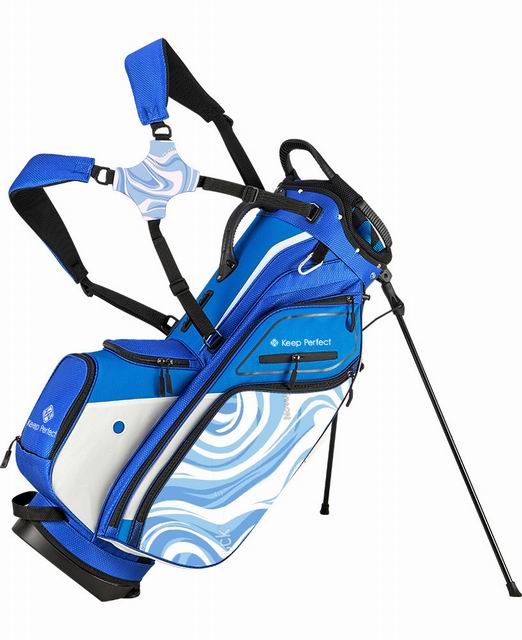
The mechanics that keep it clean: sponsor branding goes on the secondary panel (the school crest owns the primary), one sponsor per bag maximum (clutter kills the value for everyone), and the sponsorship letter includes the bag photo render — we supply sample renders for exactly this purpose, because a sponsor who sees the bag signs faster than a sponsor who imagines it. Programs report the render doubles close rates on first-time sponsors.
Fundraiser Model One: the Team Store
The simplest engine: branded accessories sold to parents, alumni and supporters. Pouches at USD 3.50 cost sell at USD 15; head covers at USD 5.40 sell at USD 25; den caddies at USD 11 sell at USD 40 — team-store margins fund the bag subsidy directly. A 60-family program selling 80 items at an average USD 18 margin clears USD 1,400 — the pooled bag order paid for by the community wearing it.
The operational trick: sell against samples, not inventory. Order the bags and a display set of accessories; take pre-orders for accessories with a two-week window; place the accessory order against actual demand. Zero inventory risk, full margin capture, and the sample set doubles as the sponsor-meeting prop kit. The accessories guide prices the full store inventory.
Fundraiser Model Two: the Program Tournament
The bigger engine: an annual fundraising scramble — parents, alumni, local foursomes at USD 100–150 per player. A modest 72-player event grosses USD 7,200–10,800; costs (course, food, prizes) run 50–60%; the net funds the program year including bags. The tournament's own swag comes from the same factory relationship — a Sunday bag or cooler hero at USD 8–12 cost reads as a USD 40 gift and makes the entry fee feel like value received.
The flywheel: the tournament showcases the team (players as spotters and ball spotters on course), the sponsors (hole signage plus the swag branding zones from the tournament guide), and the bags themselves (the team photo in matching bags is next year's sponsorship deck). Year two's event is easier to sell than year one's, and the program's budget becomes self-sustaining infrastructure rather than an annual request.
Fundraiser Model Three: the Bag Sponsorship Tiers
The targeted engine: direct bag sponsorship — "sponsor a player" at USD 150–250 per bag. Sponsors (grandparents, alumni, local businesses) fund a specific player's bag, get named in the program and at the banquet, and receive a photo of the player with the bag. Twelve sponsored bags at USD 200 covers the varsity team's equipment entirely. The model works because it is personal: the donor funds a kid, not a line item.
Execution details that matter: the sponsorship letter with the bag render and the player's name pre-filled, a delivery moment (bags presented at the season kickoff with sponsors invited), and the thank-you artifact (the photo, framed, costs USD 4 and is the reason sponsors renew). Programs running this model report 70%+ sponsor renewal — the highest-retention fundraiser in school sports because the relationship is the product.
The Academic Ordering Calendar
The calendar's traps are institutional, not industrial: school budget cycles (PO approval through district purchasing adds 2–4 weeks — start the paperwork before the quote), coach transitions (orders die in handoffs unless the AD's office owns the spec file), and summer communication gaps (a sample arriving in July needs a named approver who is not on vacation). Build all three into the timeline and the 60–80 day production cycle fits any season comfortably.
| Season | PO window | Sampling | Delivery target |
|---|---|---|---|
| Fall season (Aug–Oct) | June–early July | May–June | Mid-August |
| Spring season (Feb–May) | November–early December | October–November | Late January |
| Summer camps / academies | March–April | February–March | Late May |
Multi-Year Continuity: Outlasting Coaching Tenures
The average high school golf coach tenure is short; the bag program must be institutional property. The system: the spec file lives with the AD's office (chassis, colorway, branding suite, spec version — documented, not remembered), pooled fabric is held for the program (next year's intake matches this year's issue), replacement bags come from program stock (pooled unbranded units personalized on demand — the mid-season transfer student's bag ships in days), and reorders reference the program code, not the coach.
This is the reorder consistency system applied to institutions: sealed reference, retained standards, archived assets, versioned spec. When the new coach asks "where do our bags come from," the answer is a file, not a memory — and the freshman's bag matches the senior's across the tenure change.
Worked Example: a District Program, Full Cycle
A suburban district runs boys' and girls' golf across two high schools: 64 bags needed. Pooled production at USD 21.50 (stand bag, district navy, crest embroidered, apparel panel reserved for sponsor) — USD 1,376. Two local sponsors at USD 800 each (apparel panel, alternating seasons) — USD 1,600 in. Team store pre-order (pouches and covers to 60 families) nets USD 900. Player names heat-transferred from the roster file at USD 2 each — USD 128.
Net position: the program received 64 fully branded, personalized factory bags and banked USD 996 — before the spring fundraiser tournament that funds travel. Year three now: the fabric lot is held, the spec file lives with the AD, and the second coach in the program's history reordered by email in June. The athletic director's summary to the board: "the equipment line is no longer a line."
Booster Club Mechanics
Most school golf fundraising runs through booster clubs, and the procurement mechanics matter: the booster club (not the school) can contract directly with the factory, which simplifies purchasing rules and lets the program move at volunteer speed. Payment terms adapt to institutional reality (PO through the district, or 30/70 T/T through the booster club's account), and documentation supports either path — quotes formatted for board approval, invoices itemized for audit.
The governance tip that prevents the classic failure: two officers own the program file (spec, program code, factory contact), so a single volunteer's departure cannot orphan the program. Booster churn is the norm; the file is the continuity.
Where School Programs Go Wrong
- Decorating retail blanks. Paying USD 50 for someone else's bag with one logo when pooled factory production delivers full branding at USD 21.
- The coach-owned spec. Coach leaves, knowledge leaves, program restarts from zero. The file belongs to the AD's office.
- Roster procrastination. Names finalized in week nine of a ten-week calendar. Freeze the spreadsheet at order stage.
- Sponsor clutter. Three logos on one bag is worth less than one. Zone the panels; the school crest owns the primary.
- Inventory fundraisers. Ordering accessories to guess demand instead of pre-selling against samples. Sell first, order second.
- District paperwork discovered in July. Purchasing approval adds 2–4 weeks; start it before the quote, not after.
Compliance and Safety Notes for School Programs
School procurement carries its own paperwork expectations, all routine at the factory: product liability documentation on request, CPSIA-aware materials for programs serving younger players (middle-school teams and camps should state the age range at spec stage so materials and small parts are specified accordingly), and invoices itemized for district audit. Insurance certificates and vendor registration forms — the documents district purchasing departments ask for — are standard responses, turned around in days.
One age-related spec note worth stating plainly: for programs with players under twelve, specify embroidered (not plastic) eyes on any plush items and confirm drawstring-free designs — junior product standards exist for good reasons, and the spec sheet is where they are honored. The bags themselves carry no age-sensitive components; it is the plush accessories where the junior spec matters.
Starting the School Bag Program
The brief: school and program size, target quantity (include next year's intake — pooled economics improve with volume), colors and crest artwork, season start date, and whether sponsor panels are in play. The quotation returns in 24 hours with pooled or dedicated pricing, the roster-personalization mechanics, sample renders for sponsor meetings, and the academic-calendar timeline. Junyuan has equipped school and academy programs since 2014 — the quote form reaches the team-program desk directly.
Frequently Asked Questions
How much do custom school golf team bags cost?
Pooled factory production at 40–120 pieces: USD 17–28 per bag with full branding — versus USD 45–60 for decorated retail blanks. Dedicated 200-piece runs (districts, academies): USD 15–22. A 60-bag pooled order runs about USD 1,400 before sponsor offsets, which typically cover 30–100% of the total.
What is the minimum order for school team golf bags?
40–120 pieces through pooled production (shared factory runs on core chassis with your branding) — sized for single schools. Districts and academies at 200+ pieces get dedicated runs with custom fabric options. Multi-school programs can combine orders to reach better price tiers.
How do schools pay for team golf bags?
Three proven engines: sponsor underwriting (a local business logo on the apparel panel at USD 500–1,500 per season covers 30–100%), the team store (pouches and covers pre-sold to families at 3–4× markup), and the annual fundraising tournament (72 players at USD 100–150 nets USD 3,000–4,500). Many programs run all three and bank the surplus.
Can player names go on each team bag?
Yes — heat transfer from your roster spreadsheet at USD 1.50–3.00 per name plus one production week. Freeze the roster at order stage and proof it twice. For multi-year programs, choose the architecture deliberately: names on straps (replaceable), senior-only names (gift tradition), or numbered bag tags (zero personalization cost).
When should schools order for the fall golf season?
PO by early July at the latest — sampling in May–June, production through summer, delivery mid-August. The institutional traps: district purchasing approval adds 2–4 weeks (start paperwork before the quote), and summer communication gaps need a named sample approver who is not on vacation.
How does bag sponsorship work for school golf?
A local business's logo embroidered or printed on the apparel-side panel (visible when carried) at USD 500–1,500 per season; the school crest keeps the primary panel. One sponsor per bag maximum. Sample renders from the factory roughly double sponsor close rates — a sponsor who sees the bag signs faster than one who imagines it.
What is a team store and how much can it raise?
Branded accessories (pouches at USD 3.50 cost selling at USD 15, covers at USD 5.40 selling at USD 25) pre-sold to families and alumni. A 60-family program selling 80 items at USD 18 average margin clears USD 1,400 — typically the full pooled bag order. Pre-sell against samples with a two-week window: zero inventory risk, full margin.
How do programs survive coaching changes?
The spec file lives with the athletic director's office — chassis, colorway, branding suite, spec version, program code — documented, not remembered. Pooled fabric is held for future intakes, replacements come from program stock, and reorders reference the program code rather than any individual. The new coach inherits a file, not a mystery.
Can replacement bags be ordered mid-season?
Yes, from program stock: pooled programs hold unbranded units in the team colorway, personalized by heat transfer and shipped in days — the mid-season transfer student's bag without the MOQ problem. This pool structure is specified when the program is set up, not improvised when the need arrives.
Should the school or the booster club place the order?
Either works: the booster club contracts directly with the factory (simpler rules, volunteer speed, 30/70 T/T payment), or the district issues a PO (institutional terms, board-approval-formatted quotes). Both are routine — choose by how your program is governed, and have two officers own the program file regardless.
What branding goes on a school team bag?
The school crest embroidered on the primary ball-pocket panel, conference or school colors as the colorway, optionally a mascot print, and the apparel panel reserved for either player names or a sponsor logo. The full suite — crest, print, woven labels — is included in pooled pricing; the architecture is spec'd at quotation.
How long do team bags last?
Four-plus seasons in school use: 1680D ballistic polyester construction, bar-tacked stress points, and zippers rated for daily range abuse. Most programs run a rolling cycle — varsity gets new issue every three to four years, graduated bags cascade to JV — which the pooled replacement structure supports natively.
Can two schools share one order for better pricing?
Yes — combined orders are common among district programs: shared chassis and colorway structure with school-specific crests, so a 30-bag school and a 34-bag school order as one 64-unit program at the better price tier. Branding setups stay school-specific (two digitizing files, two crest positions); only the production run is shared. The quotation itemizes per school for separate budgets.
What artwork does the school need to supply?
Vector crest artwork (AI, EPS or PDF) with Pantone references — the athletic department usually has this from uniform suppliers, and we can redraw from a clean JPEG for USD 20–50 if not. Sponsor logos follow the same rule, collected by the program at sponsorship signing. Late artwork is the #1 school-program delay; the roster spreadsheet and the crest file are the two documents to chase first.
Is there a discount for registered schools or nonprofits?
The honest answer is that pooled production is the discount — the 40–120 piece pricing already reflects education-scale economics, and sponsor offsets typically cover more than any discount would. What we add for schools specifically: sample renders for sponsor meetings at no charge, board-approval quote formatting, and the program file structure that outlasts coaching tenures.
How long does the whole school order take from first contact?
With paperwork running in parallel: quotation in 24 hours, district or booster approval in parallel with sampling (6–10 days), PO and deposit, 35–50 day bulk, AQL 2.5 inspection, delivery — 60–80 days end to end. The calendar fits either season when the purchasing paperwork starts with the quote rather than after it; that single habit is the difference between August delivery and October apologies.
How do we start a school team bag program with your factory?
Send school and program size, target quantity (include next year's intake), colors and crest artwork, season start date, and sponsor plans through the quote form on this site. The quotation returns in 24 hours with pooled pricing, personalization mechanics, sponsor-meeting renders, and the academic-calendar timeline.