
The Architecture in One Paragraph
One hero item, three to five supporting items, sponsor logos zoned by package tier, factory-kitting into sealed registration-ready units — budgeted per player by event format and ordered 90 days before the first tee time.
Tournament swag differs from corporate gifting in one decisive way: the event has sponsors, and sponsors have expectations. The swag bag is simultaneously a player gift, a sponsor deliverable and an event-brand artifact — three jobs that pull in different directions. Organizers who treat it as "stuff in a bag" satisfy none of them; organizers who architect it — hero item first, sponsor zones second, logistics third — routinely deliver bags that players photograph, sponsors renew for, and the event is remembered by.
Composition by Event Format
The budget ladder tracks field exclusivity, not organizer generosity: a 288-player charity field at USD 20 delivers a considered gift within a USD 6,000 line item, while a 48-player invitational can carry USD 100 per player for less total money. Both work; what fails is mismatching the architecture to the format — trinket bags at a premium invitational, or a budget-breaking hero at a mass charity event where the cause should keep the money. The gift and tournament page structures these programs from the factory side.
| Format | Per-player budget | Hero item | Supporting cast | Personalization |
|---|---|---|---|---|
| Charity scramble (100–300 players) | USD 15–30 | Valuables pouch or shoe bag | Towel, tees, markers, ball sleeve | Event logo only |
| Member-guest (60–120 players) | USD 40–80 | Den caddie or cooler bag | Pouch, towel, divot tool, premium balls | Names on hero optional |
| Corporate invitational (40–100) | USD 60–120 | Cooler bag or Sunday bag | Full supporting set, premium packaging | Names standard |
| Pro-am / club championship | USD 75–150 | Sunday or stand bag | Premium set plus apparel voucher | Names + event year on label |
The Hero Decision: What Each Format Keeps
Charity fields are mixed-ability and many players are not regular golfers — the hero must be useful beyond the course: shoe bags and valuables pouches win because non-golfers use them for travel and gym. Member-guest players are club regulars — den caddies win because they already own the basics and desk furniture with the club crest is a membership artifact. Corporate invitationals are relationship events — cooler bags and Sunday bags win on perceived value per dollar. Pro-ams are prestige events — the bag itself becomes the trophy, and participants expect it.
The kept-rate logic from the corporate giveaways playbook applies here with one tournament-specific addition: the hero competes with the memory of the day itself. A gift tied to a great round — crest matching the event identity, hangtag naming the day — rides the memory for years. Generic heroes get generic fates.
Sponsor Zoning: the Negotiation Made Structural
Multi-sponsor tournaments face the same conversation every year: title sponsor, presenting sponsor, six hole sponsors, all expecting visibility in the bag. Zoning converts the negotiation into a price list. Title sponsor: the hero item's main panel — the only position that lives in players' offices for years. Presenting sponsor: the secondary item (pouch or towel) plus the hangtag's top position. Hole sponsors: their tee gift at their hole — a sleeve of balls, a marker set — not space in the shared bag. The event itself: the hangtag and woven label, carrying the full roster.
The zoning discipline protects sponsors from each other: six logos on one pouch is worth less to each of them than one logo on the hero. Organizers who sell zones rather than inclusion routinely raise sponsorship revenue 20–40%, because they are selling positions with known kept-rates instead of crowded ambiguity. We supply sample photography for sponsor proposals before the order exists — a render of the hero item with the title logo closes sponsorships better than any rate card.
Contest Prizes: the Other Half of the Budget
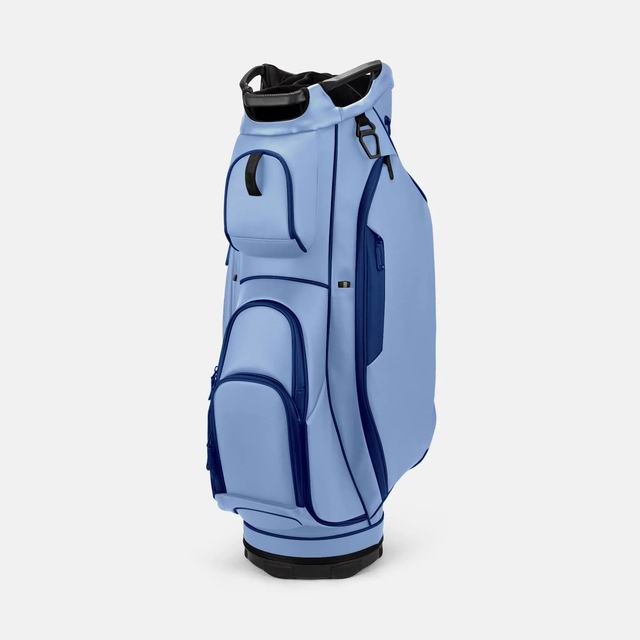
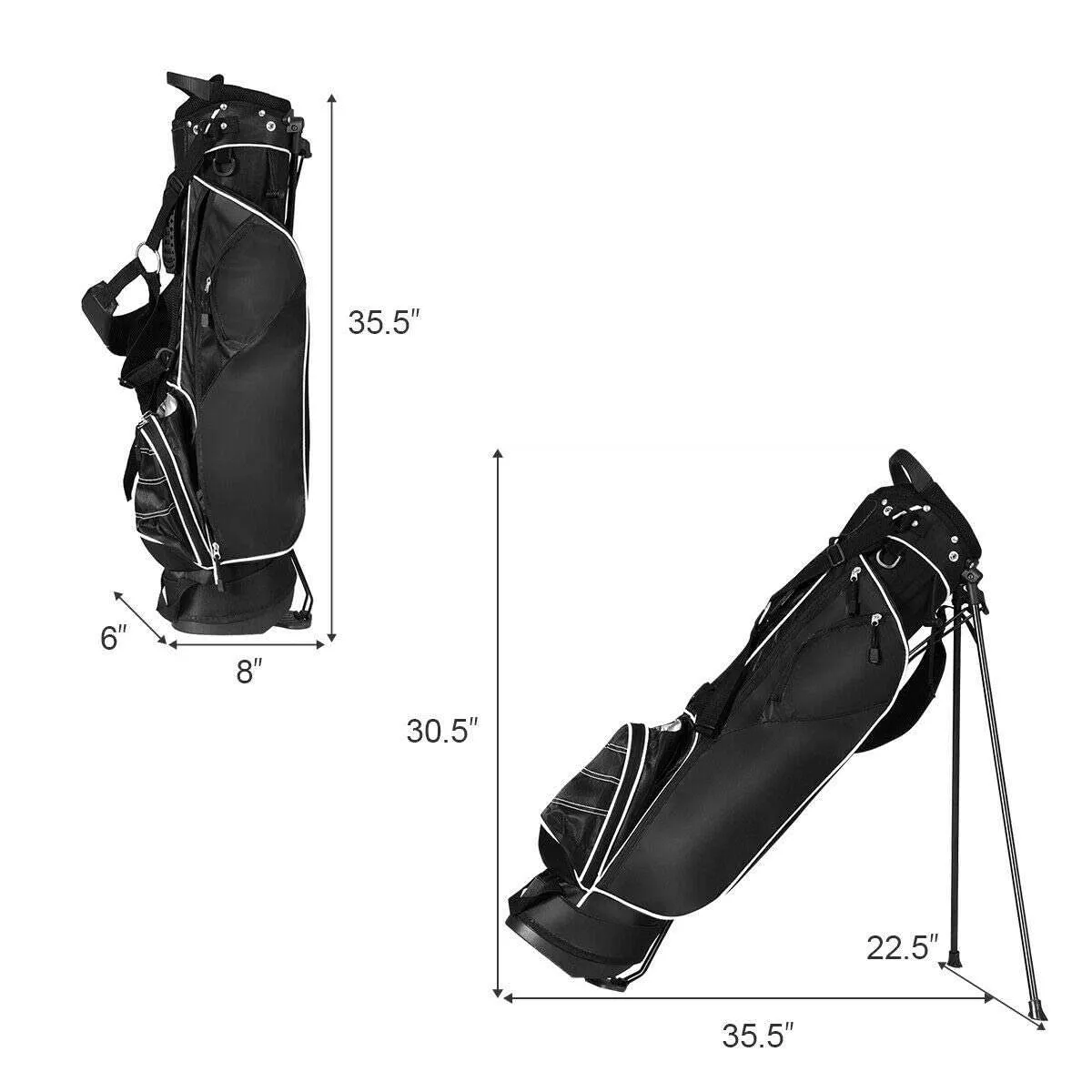
Swag bags greet; prizes motivate. The prize table needs its own architecture: team prizes (first through third, plus a mid-field "lucky draw" placing so the back half of the leaderboard stays engaged), skill prizes (longest drive, closest to pin, straightest drive — one premium item each), and raffle stock (the mid-tier items that fill the charity auction). Factory-direct pricing transforms the prize table: a stand bag at USD 15–22 cost reads as a USD 150 prize; a staff bag at USD 30–40 anchors the raffle as a USD 300 headline.
The professional touch is prize differentiation: contest winners should receive items visibly better than the swag hero, or the competition loses meaning. If the field gets cooler bags, the winners get Sunday bags; if the field gets pouches, the winners get den caddies. One production order can carry both tiers — mixed quantities per item are routine at event scale, and the promotional ordering guide covers the multi-item PO mechanics.
The 90-Day Tournament Calendar
The calendar's fixed physics: sampling 6–10 days, bulk 35–50 days, ocean freight 14–35 days. What compresses is your approval window — schedule it before the sample ships. The timeline guide details each phase; the tournament-specific discipline is that the date is absolute, so every buffer belongs at the destination end, between arrival and tee time.
| Days out | Milestone |
|---|---|
| 90 | Architecture locked: hero, supporters, sponsor zones, quantities by tier |
| 85 | Quotation confirmed at final quantities; samples ordered |
| 75 | Physical samples approved (48-hour window, one named approver) |
| 70 | PO placed, 30% deposit, production starts |
| 30 | Production complete, AQL 2.5 inspection, kitting begins |
| 21 | Ocean freight departs (air for late programs) |
| 10 | Delivery to venue; carton audit against registration list |
| 2 | Registration table staging: bags sorted by flight or alphabet |
| 0 | First tee time |
Kitting and the Registration Table
A 200-player tournament swag bag run is roughly 1,600 items that must become 200 identical sealed units, sorted for handout. Factory kitting does this at USD 0.80–1.50 per bag: contents assembled per your list, hangtags attached, personalization applied from your spreadsheet, units polybagged or boxed, cartons labeled by flight, alphabet or tee time per your registration system. The alternative — volunteer labor the night before — produces the annual tradition of the 11 p.m. phone call about the missing markers.
Specify the handout system at order stage, not delivery day: alphabetical for walk-up registration, flight-sorted for shotgun starts, staged cartons for multi-tee formats. Carton labels should carry the sort key and the count ("Flight A–D, bags 1–52"), so venue staff who have never seen your event can stage it correctly. The box check on delivery day — carton count, condition, two units against the approved sample — takes twenty minutes and is the last cheap checkpoint before the field arrives.
Personalization at Tournament Scale
Names transform tournament gifting and complicate it in equal measure. The mechanics: names are applied by heat transfer post-production from your registration spreadsheet, at USD 1.50–3.00 per bag and one added production week. The disciplines: freeze the spreadsheet at a stated date (late registrants get the standard bag, gracefully), proof it like a legal document (a misspelled club president outlives any prize), and decide the name position at sampling — ball pocket beneath the crest is the standard, strap is the premium option.
For member-guest and invitational formats, add the guest pairing: "Member — Guest" on one line is the artifact players keep. For charity formats, skip names entirely — the logistics cost buys more hero at that scale, and the field does not expect it.
Weather, Storage and Venue Realities
- Venue receiving windows. Clubs accept deliveries on their schedule, not the carrier's — confirm the window, the receiving contact and the storage location before the freight books.
- Storage conditions. Bags in cartons tolerate weeks of storage; bags staged overnight outdoors do not. If the venue stages early, specify covered storage.
- The weather contingency. Rain delays move registration tables; sealed polybagged units survive being moved twice, loose kitting does not.
- No-show math. Order 3–5% over the confirmed field for VIP no-shows-turned-arrivals and the inevitable committee member who was not counted.
- Leftover strategy. Unclaimed bags become next year's volunteer gifts or pro shop stock — heroes without event dates on panels retain value; dated ones do not (dates belong on hangtags).
Worked Example: a 144-Player Charity Classic
A hospital foundation runs its annual classic: 144 players confirmed, USD 22 per player swag budget, four sponsors. Architecture: hero valuables pouch in tournament navy with the foundation crest (USD 4.20), microfiber towel with title sponsor print (USD 2.10), tee pack, two markers and a ball sleeve (USD 1.80 combined), hangtag with the full sponsor roster, factory kitting into the pouch itself (USD 1.20). Landed DDP: USD 11.90 per player — USD 1,714 against a USD 3,168 budget, the balance funding the prize table: three stand bags as team prizes, a staff bag as the raffle headline (USD 160 total at factory cost, USD 900 perceived value).
Timeline: brief in May for a September event, samples approved in June, PO July 1, delivery September 8, tournament September 19. Sponsor renewal the following year: all four, with the title sponsor upgrading to the hero panel. The pouch photograph in the event album — 144 of them lined on the registration table — became the next year's sponsorship deck cover.
Charity-Specific Mechanics
Charity events carry procurement sensitivities commercial events do not: donated-goods optics (a lavish bag at a charity event draws the wrong comment), sponsor underwriting (position the swag as sponsor-funded so donor money visibly goes to the cause — the hangtag line "Player gifts courtesy of [sponsor]" is standard and effective), and tax-letter documentation (your factory invoice itemizes cleanly for the event's books). The architecture guidance shifts accordingly: modest, useful, sponsor-branded heroes; the cause's own branding on the hangtag and woven label rather than the main panel.
The factory-direct economics matter more here than anywhere: every dollar saved on sourcing is a dollar the cause keeps. A charity field sourcing factory-direct versus promo-catalog typically redirects USD 1,500–3,000 per event from procurement to mission — a sentence worth saying in the annual report.
Multi-Day and Multi-Course Formats
Regional circuits and two-day member-guests add logistics layers: swag distributed once at opening registration (never split across days — day-two handouts read as an afterthought), prize tiers per day plus an overall table, and cartons staged per course if the event spans venues. For circuits, standardize the hero across events and vary the colorway per stop — one production run, multiple identities, and a collectible logic that regulars respond to ("the blue one was Pinehurst").
The production implication of standardize-and-vary: one chassis, one branding suite, two to three fabric colorways — which shares setup and prices far better than separate designs per stop. This is the same one-chassis-multiple-colorways economics from the low-MOQ guide, applied to a circuit calendar.
Where Tournament Swag Fails
- Sponsor pile-up. Six logos on the hero item devalues every sponsor and reads as a trade-show booth. Zone by tier or lose renewals.
- The trinket bag at a premium event. The invitation promised an experience; the bag is part of keeping it.
- Approval drift. The sample orbiting a committee while the date holds still — one named approver, a 48-hour window.
- Volunteer kitting optimism. Sixteen hundred items do not assemble themselves; factory kitting at a dollar a bag is the cheapest labor in the budget.
- Panel-dated heroes. "2026 Classic" embroidered on the main panel ends the gift's life in December. Dates go on hangtags.
- No overage. The uncounted committee member and the late VIP are certainties; 3–5% over the field is the fix.
Starting the Tournament Order
The brief is six lines: event date, format and field size, per-player budget, hero preference (or "recommend"), sponsor structure, and logo assets. The quotation returns in 24 hours with per-tier pricing, the 90-day calendar, and sample photography usable in sponsor proposals. MOQ for tournament programs runs 100–200 pieces per item, sampling 6–10 days with fees credited, kitting and personalization specified at order. Junyuan has supplied tournament programs since 2014 — from 60-player club events to 500-player corporate circuits — through the quote form.
Frequently Asked Questions
What should go in a golf tournament swag bag?
One hero item matched to the format (valuables pouch or shoe bag for charity fields, den caddie or cooler bag for member-guest, Sunday or stand bag for invitationals), three to five supporting items (towel, tees, markers, divot tool, ball sleeve), sponsor branding zoned by package tier, and a hangtag carrying the full roster — factory-kitted into sealed units.
How much should a tournament spend per player on swag?
By format: charity scrambles USD 15–30, member-guest USD 40–80, corporate invitationals USD 60–120, pro-ams and championships USD 75–150. The hero item should take roughly half; spend on the hero and economize on the cast is the reliable rule at every tier.
How do sponsors get visibility in tournament swag bags?
By zoning: the title sponsor takes the hero item's main panel, the presenting sponsor takes the secondary item, hole sponsors take tee gifts at their holes, and the full roster goes on the hangtag. Zoned positions with known kept-rates sell for more than shared clutter — organizers typically raise sponsorship revenue 20–40% by selling zones.
What is the minimum order for tournament swag bags?
100–200 pieces per item depending on construction — 200 for sewn heroes, lower for some accessories. Mixed tiers (field swag plus premium prizes) combine in one order; sampling runs 6–10 days with fees credited, and factory kitting delivers registration-ready sealed units.
How far in advance should tournament swag be ordered?
90 days before the first tee: architecture and quote by day 90, sample approval by day 75, PO by day 70, production and inspection by day 30, delivery with ten days of buffer. The date is absolute, so all slack belongs at the destination end of the calendar.
Should every sponsor logo go on the swag items?
No — sponsor pile-up devalues every logo and reads as clutter. The title sponsor gets the hero panel, one presenting sponsor gets a secondary position, hole sponsors get their tee gifts, and everyone appears on the hangtag. Each sponsor pays for a position with a known kept-rate, which is worth more to them than shared ambiguity.
Can player names be printed on tournament gifts?
Yes — names are heat-transferred post-production from your registration spreadsheet at USD 1.50–3.00 per bag plus one production week. Freeze the spreadsheet at a stated date, proof it obsessively, and position names beneath the crest on the ball pocket. Charity formats should skip names; member-guest and invitational formats should not.
What makes good golf tournament prizes?
Items visibly better than the swag hero: if the field gets cooler bags, winners get Sunday bags; the raffle headline should be a staff bag, which at factory cost (USD 30–40) reads as a USD 300 prize. Team prizes for first through third plus a mid-field lucky-draw placing keep the whole leaderboard engaged.
How are the bags delivered and staged for the event?
DDP to the venue within its receiving window, cartons labeled by your handout system — alphabetical for walk-up registration, flight-sorted for shotgun starts — with counts on each label so venue staff can stage correctly. Confirm storage and the receiving contact before freight books, and run the 20-minute box check on arrival.
What happens to leftover tournament swag?
Order 3–5% over the confirmed field deliberately: overage covers late VIPs and uncounted committee members, and unclaimed heroes become volunteer gifts or pro shop stock. Heroes without event dates on the main panel retain value for next year — which is why dates belong on hangtags and woven labels, never on panels.
Can one order cover both swag and prizes?
Yes, and it should: one production visit carrying the field tier (heroes at 144 pieces) and the prize tier (stand bags at six, a staff bag at one) prices better than separate orders and arrives on one shipment with one inspection report. Per-item minimums still apply to sewn goods, but prize quantities at accessory scale fit easily.
How do charity tournaments handle swag optics?
Modest, useful, sponsor-underwritten: the hero branded with the title sponsor, the cause's identity on the hangtag with the line "Player gifts courtesy of [sponsor]," and factory-direct sourcing that redirects USD 1,500–3,000 per event from procurement to the mission. The invoice itemizes cleanly for the event's books.
Can swag bags ship to multiple courses for a circuit?
Yes — circuit programs kit once and split the shipment: cartons labeled per venue with counts per stop, delivered DDP to each course on the circuit calendar. Standardize the hero across stops and vary the colorway per venue for the collectible logic regulars love; one production run, multiple identities, and far better setup economics than separate designs per stop.
What is the best swag item for a charity golf scramble?
The valuables pouch: universally useful to a mixed-ability field (many charity players are not regular golfers), inexpensive at USD 3.50–5.00 landed, large enough for a respectable sponsor logo, and small enough to kit 300 of them without a logistics incident. Pair it with a towel, tees and markers and the charity field gets a considered bag at USD 12–15 per player.
How do we handle swag for a tournament with an unknown final field size?
Order against the confirmed-plus-overage number (registration history plus 3–5%), not the cap: factory production cannot add 40 units in week nine, but unclaimed bags from a modest overage become volunteer gifts and pro shop stock. If late registration genuinely surges past the order, the graceful fix is a premium draw prize for the overflow rather than a visibly thinner bag for late arrivals.
How do we start ordering for our tournament?
Six lines through the quote form on this site: event date, format and field size, per-player budget, hero preference (or "recommend"), sponsor structure, and logo assets. The quotation returns in 24 hours with per-tier pricing, the 90-day calendar, and sample photography for your sponsor proposals.