
Three Buyers, One Playbook
School teams buy identity (colors, crest, roster names), academies buy durability at budget (bags that survive four seasons of daily range use), and corporate buyers buy impression (a bag the recipient keeps, not swag they discard). All three run the same production playbook: Pantone-locked colors, embroidered crest, transferred personalization, 200-piece minimums, samples in 6–10 days, bulk in 35–50 days.
What differs is who signs, who pays and who carries. A high school coach signs with a booster club's money and fourteen players carry the result; an academy director signs with an operating budget and a hundred students rotate through the fleet; a marketing VP signs with an events budget and the bag ends up in a client's trunk for a decade. Every recommendation in this guide traces back to which of those three signatures is on the purchase order — and the program pages for teams and academies and corporate buyers carry the tier-by-tier specs for each.
Team Programs: Colors, Crests and Rosters
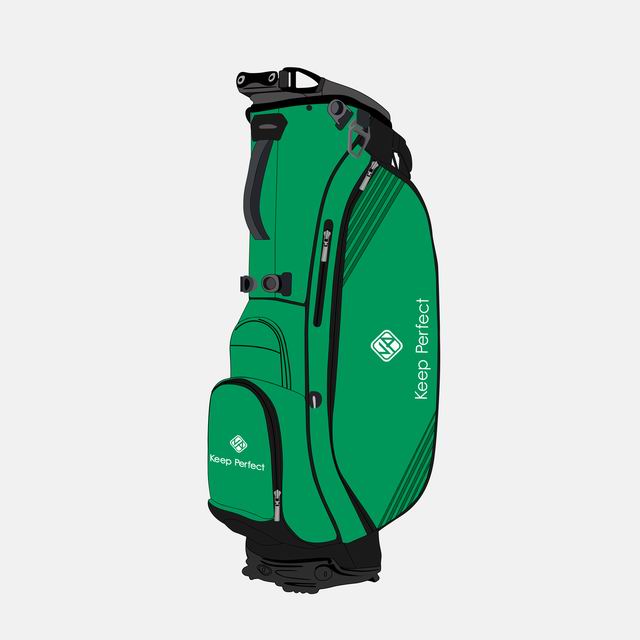
The team bag is a uniform, and uniform logic applies: exact school colors (Pantone-locked, approved on a physical lab dip — never from a screen), the crest embroidered where it photographs in team pictures, and each player's name transferred on the ball pocket or side panel. The stand bag is the default chassis because high school and college golf walks; cart bags appear where programs ride; staff bags are reserved for the coach and for senior-gift budgets.
Roster reality shapes the order quantity: a 14-player varsity roster plus coaches and spares lands at 18–20 bags, well under the 200-piece MOQ. The standard solution is the program pool — order 200 in the school colorway, hold the unbranded balance at the factory or in school storage, and personalize each season's roster from the pool. Per-player cost drops from an impossible number to USD 22–28, and next season's roster change costs a transfer run instead of a new production order. The teams and academies page details the pool structure.
Roster Personalization at Scale
Personalization economics split cleanly by technique. Embroidering unique names costs USD 1.20–2.40 per bag in digitizing and machine time — viable for a 12-bag coaching staff, ruinous for a 60-person academy intake that changes annually. Heat transfer delivers the same names at USD 0.60–1.20 per bag with zero setup per name, which is why every roster program we run transfers names and embroiders crests: permanence where identity lives, economy where change lives.
Operational detail that saves programs every season: the roster file. Send names as a spreadsheet (exact spelling, jersey number if used) at sample-approval time, not at production start — personalization is scheduled as a sub-batch within the run, and late roster files are the single most common cause of team-program delays. Font and thread/film color libraries are standardized (block, athletic script, serif; matched to the crest palette), so season two's eleven new names match season one's forty without a redesign.
Academy Programs: Durability Is the Budget
Academy fleets live a different life than team bags: daily range sessions, shared carts, travel to tournaments fifty weekends a year, and students who have not yet learned that bags are equipment rather than furniture. The specification that survives this is 840D ballistic nylon in high-wear zones, double-stitched strap anchors with 42-bartack reinforcement, replaceable rain hoods, and stand mechanisms rated for tens of thousands of cycles — the durability package that turns a USD 24 bag into a four-season asset instead of a two-season consumable.
The budget math that convinces academy directors: a USD 26 durable build at four seasons costs USD 6.50 per season per student; a USD 19 standard build replaced every two seasons costs USD 9.50 — and that ignores the administrative cost of mid-contract replacements. Fleet programs also spec one unisex colorway with interchangeable name transfers, because fleets outlive any individual student's enrollment.
Corporate Programs: the Bag as Hospitality
Corporate golf bags fail in one direction only: they read as swag. The fix is counterintuitive — brand smaller, not bigger. A tonal embroidered mark on the ball pocket, the event logo transferred inside the apparel pocket, and the bag itself in a colorway someone would actually buy: that bag goes home, gets used for a decade, and delivers the brand impression every single round. The bag covered in event logos delivers one photograph and a lifetime in a garage.
Tiering by recipient is the professional structure: staff bags (USD 44–65) for the twenty names that matter most — key clients, board members, the pro; premium stand or cart bags (USD 26–38) for the field; and accessories (shoe bags, pouches, head covers at USD 4–12) for the welcome table. One production run, three impression levels, and the budget lands where relationships live. The corporate programs page prices all three tiers, and the tournament gifting page covers the swag-bag accessories that fill the table.
Fundraising Economics for School Golf
The working model: sell the bag to sponsors before you buy it. A local business sponsors a bag at USD 75–150 (their logo transferred on the side panel beside the school crest), 20–30 sponsors fund the entire 200-bag pool, and the team receives its bags free — with the program often banking surplus for travel. The bag becomes a fundraising asset instead of a budget line.
The arithmetic at working scale: 200-bag pool at USD 24 average = USD 4,800. Twenty-five sponsors at USD 125 = USD 3,125; a title sponsor on the ball pocket of all 200 bags = USD 2,000; the remaining USD 325 gap closes with one parent-booster dinner. Sponsors renew annually because their branding rides to every away match — visible community advertising at a fraction of a banner's cost — and the renewal rate is what turns a one-season scramble into a funded program.
Execution notes from programs that run this well: sponsor logos transfer (not embroider) so next year's sponsor change doesn't require new bags; the sponsorship deck photographs the actual sample bag (samples run 6–10 days — order it before the fundraising season opens); and the pool's unbranded balance protects against sponsor churn, because the bags exist regardless of how this year's sales go.
Sizing the Order: Quantity Planning That Works
Institutional quantity planning has three inputs: current roster (or headcount), attrition rate, and the MOQ's arithmetic. A varsity program with 20 annual users and 30% roster churn needs 26 bags a year — meaning one 200-bag pool covers seven-plus seasons at full personalization, or three seasons if the school also bags JV and the middle-school feeder. Academies plan fleet turns: a 100-student academy cycling 25% annually runs a 200-bag fleet with a 50-bag annual refresh, all from two pooled production runs.
Corporate quantity planning works backward from the guest list: field size plus 10% (no-shows whose bags get gifted onward, VIP upgrades, next year's early commits). The mistake to avoid is ordering to the exact headcount — the marginal cost of 10% extra is trivial at production scale, and the cost of being two bags short when the CEO brings a guest is not.
| Program | Typical size | Pool coverage |
|---|---|---|
| High school varsity + JV | 200 bags | 4–7 seasons with annual roster transfers |
| Academy fleet (100 students) | 200 bags + 50/year refresh | Rolling four-season fleet |
| Corporate golf day (120 players) | 130–140 bags | One event + VIP buffer |
| Corporate multi-year hospitality | 200–300 bags | 2–3 annual events from one run |
Timelines Around Seasons and Events
Institutional dates never move: the season starts, the tournament tees off, the fiscal year ends. Backward planning from the date is therefore not optional. US high school fall seasons need cartons by mid-August — brief in late April, approve samples in May, produce June–July. College spring seasons land in February — brief the prior October. Corporate events in the September–November corridor should brief by early July, and December holiday gifting by mid-August. The full backward-planning method with worked dates is in the timeline guide.
The institutional delay pattern differs from retail: approvals route through athletic directors, procurement offices and marketing committees, each adding a week the calendar didn't have. The countermeasure is the same one that works everywhere — one named approver, a pre-agreed 5-day approval window — plus one institution-specific move: get the purchase order process started at quotation, not at sample approval, because institutional PO cycles routinely outrun production ones.
Branding Architecture for Institutions
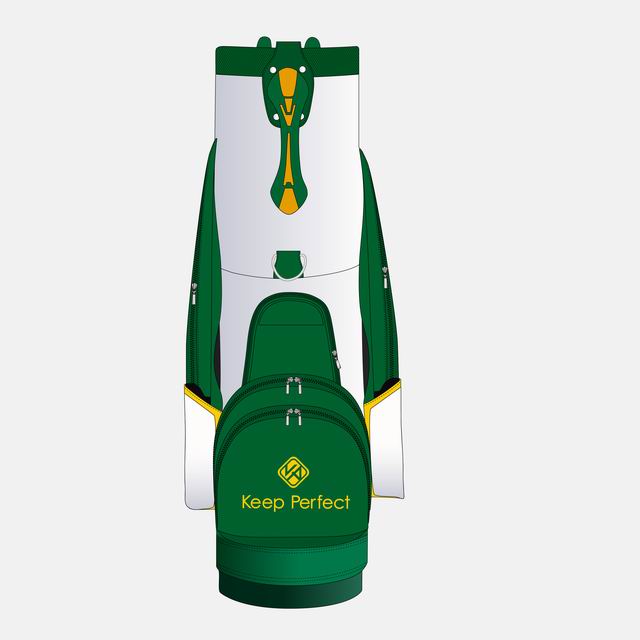
Institutional branding answers to committees, which means the architecture must be defensible in a meeting, not just attractive on the bag. The structure that survives committee review: primary identity (school crest or corporate logo) embroidered on the ball pocket — the prestige position, and the one that photographs; secondary marks (conference logo, event year, sponsor) transferred on side or lower panels — present but hierarchically subordinate; personalization (player names, recipient initials) transferred where it adds ownership without competing with the crest.
Color discipline carries institutional weight too: the school's Pantone 286 blue is not "royal blue," and getting it exactly right on the bag is what separates a uniform from merchandise. We hold institutional palettes on file — thread, ink, fabric and webbing all referenced to the same Pantone numbers — so year three's order matches year one's exactly, a consistency athletic departments notice and factories that improvise colors cannot deliver. The color matching page documents the lab-dip discipline.
A Season in the Life of a Team Program
A Texas 5A program runs the model end to end. February: the coach briefs 200 bags in school colors — navy and gold, Pantone 289C and 123C — with the eagle crest on the ball pocket. The sample arrives in nine days; the athletic director signs off in four. March: the sponsorship deck, built around photographs of the actual sample, closes twenty-three local sponsors at USD 125 and one title sponsor at USD 2,000 — USD 4,875 against a USD 4,900 pool cost. April: production runs 38 days. June: the pool lands in school storage, 200 bags, eighteen of them transferred with the fall varsity roster in July.
August: the team photo runs in the district paper with fourteen matching bags. October: two JV call-ups get names transferred from the pool for USD 1.10 each. The following August: eleven graduating seniors' bags retire with them, eleven new names come off the pool, and the program's second season costs the school the transfer run and nothing else. Year three adds the middle-school feeder program to the same colorway — and the booster club's only recurring line item is personalization.
The Director's Checklist Before You Sign
- Colors locked to Pantone, approved on a physical lab dip. Committee-approved colors from a screen are the #1 cause of institutional re-orders.
- Pool size justified in writing. Roster math on one page: current users, churn rate, seasons of coverage. It answers the finance question before finance asks it.
- Personalization plan confirmed. Transfer for rosters (they change), embroidery for crests (they don't). Font and color standards documented so future seasons match.
- Timeline backward-planned from the date. Brief date, approval window, production window, delivery window — on the quotation, not in an email.
- PO process started at quotation. Institutional procurement routinely outruns production timelines; start it first.
- One named approver with a 5-day window. The single cheapest schedule protection available to any institution.
Budget Tiers: What Each Level Buys
Every tier runs the same production standards — AQL 2.5 inspection, Pantone-locked colors, samples approved physically before bulk. The tiers differ in chassis and suite, not in whether the bags are built properly; a USD 19 fundraising bag is inspected to the same standard as a USD 65 board gift. Budget conversations should therefore happen inside the tiers (what does this level buy?) rather than across factories (who is cheapest?), because the pricing guide's inclusion math shows that cross-factory price gaps usually reflect spec gaps.
| Tier | Per bag | What it buys | Best for |
|---|---|---|---|
| Essential | USD 19–24 | 600D stand or Sunday chassis, embroidered crest, bulk pack | Fundraising programs, large academy fleets |
| Program | USD 24–34 | 840D reinforcement, crest + roster names, rain hood included | Varsity teams, multi-season fleets |
| Premium | USD 34–48 | Cart or premium stand, full branding suite, retail packaging | Corporate field gifts, senior recognition |
| Flagship | USD 48–65 | Staff chassis, PU trim, complete suite, gift box | Board-level hospitality, championship awards |
Fit for Younger and Smaller Players
Institutional programs serve bodies that adult spec sheets ignore: a 13-year-old carrying a 2.5 kg bag with adult strap geometry finishes the season with sore shoulders and a grudge against the sport. Junior-fit specification is real and costs little: bag weight at 1.8–2.2 kg, strap pads positioned 4–6 cm closer together, hip pad geometry that meets a smaller frame, and stand mechanisms that deploy at lower kick angles. The junior chassis exists precisely for middle-school and development programs, and mixing junior and adult chassis within one colorway is a standard fleet move.
Girls' and women's programs deserve the same deliberate fit — strap geometry and bag weight matter more than pink accent panels, and programs that spec fit-first report noticeably better retention among younger players. Colors stay institutional (the school colorway is the point of the uniform); the engineering underneath quietly fits the athletes actually carrying it.
Mistakes That Sink Institutional Programs
- Ordering to the exact roster. One transfer, one injury, one new assistant coach — and the program is a bag short with no economical way to add one. The pool exists for this.
- Approving colors from a screen. The committee sees "blue," the factory sees Pantone 286, the bags arrive in whatever the monitor showed. Physical lab dips, signed, are the only approval that counts.
- Embroidering sponsor logos. Sponsors churn annually; embroidery is forever. Transferred sponsor marks update with the season.
- Late roster files. Personalization is a scheduled sub-batch; a roster file that arrives after production starts delays the whole order.
- Committee-designed bags. Five stakeholders, nine accent colors, four logos — the bag that pleases every meeting photograph impresses no golfer. One owner of the design decision, advised by the committee.
- Starting the PO at sample approval. Institutional procurement routinely takes 3–6 weeks; start it at quotation and it finishes before production needs it.
Start Your Team, Academy or Corporate Program
The starting package is three things: your colors and crest (vector artwork with Pantone references if you have them), your program shape (roster size, fleet size or guest list), and your date. We return a tiered quotation — essential through flagship — with the pool structure, personalization plan and backward-planned calendar within 24 hours. Samples run 6–10 days, bulk 35–50 days, and every bag passes AQL 2.5 inspection before it ships. Junyuan has outfitted school, academy and corporate programs across the US, UK, Japan, Korea and Australia since 2014 from Quanzhou — the about page carries the entity details, and the quote form starts the calendar.
Frequently Asked Questions
How do I order custom golf bags for a school team?
Five steps: send your school colors (Pantone references), crest artwork, roster size and season date; approve a tiered quotation; approve a physical sample (6–10 days); the factory produces your 200-bag pool (35–50 days); each season's roster is personalized by heat transfer from the pool. The pool structure solves the MOQ — you never need 200 players, just one production run.
What is the minimum order for team golf bags?
200 pieces per style — far above any single roster, which is why team programs use the pool model: produce 200 bags in the school colorway once, personalize 18–30 per season by transfer, and the pool covers four to seven seasons. Per-player cost lands at USD 22–28 including crest embroidery and name personalization.
How much do custom team golf bags cost?
By tier: USD 19–24 essential (600D stand chassis, embroidered crest), USD 24–34 program (840D reinforcement, crest plus roster names, rain hood), USD 34–48 premium (cart or premium stand, full suite, retail packaging), USD 48–65 flagship (staff chassis, gift presentation). Fundraising sponsorship routinely reduces the school's net cost to zero.
Can each player's name go on their bag?
Yes — heat transfer is the roster technique: USD 0.60–1.20 per bag, zero setup per name, and fonts and colors standardized to the crest so season three's newcomers match season one's seniors. Embroidery is reserved for crests and for small stable groups like coaching staffs. Send the roster as a spreadsheet at sample-approval time.
How do school golf bag fundraisers work?
Sell sponsorships before buying bags: local businesses sponsor bags at USD 75–150 with their logo transferred beside the school crest, a title sponsor takes the ball-pocket position across the fleet, and 25–30 sponsors fully fund a 200-bag pool — often with surplus for travel. Sponsor marks transfer rather than embroider so they update annually without new bags.
What golf bag is best for a high school team?
A stand bag in the 2.0–2.5 kg range: high school golf walks, and the stand chassis carries the crest-and-roster branding architecture best. Spec 600D minimum with 840D reinforcement in strap and base zones, and skip premium materials that don't survive freshman handling. The program tier (USD 24–34) is the working standard for varsity fleets.
How far in advance should a team order bags?
Backward from your season: fall seasons starting mid-August should brief in late April; spring college seasons in February should brief the prior October. The full timeline is 60–80 days plus your approval loop — and institutional procurement (PO cycles, committee sign-offs) typically adds three to six weeks on top. Start the PO at quotation, not at sample approval.
What makes a good corporate golf day gift bag?
Understated branding on a chassis worth keeping: a tonal embroidered mark on the ball pocket, event branding inside the apparel pocket, a colorway someone would actually buy. Tier the field — staff bags for the top twenty relationships, premium stand or cart bags for players, accessories for the welcome table — and the budget lands where the relationships live.
Can academy fleets mix bag types in one order?
Yes — mixed programs are standard: stand bags for the competition squad, cart bags for the development groups, staff bags for the coaching team, all in one colorway from one production run. MOQ applies per style (200 each), so fleet programs typically build the mix across two pooled runs rather than forcing one giant order.
How do we keep bag colors consistent across multiple seasons?
Pantone references held on file across all four materials — thread, ink, fabric, webbing — with lab dips re-approved against the original swatch each production run, never against memory or screens. Institutional programs reorder for years; the color file is what makes year three indistinguishable from year one on the team photo.
Do team bags come with rain hoods?
Program tier and above include matched rain hoods (USD 1.10–1.90 value) — essential for school golf in the UK, Pacific Northwest and any spring-season climate. Essential-tier programs can add hoods at cost. Matching hood fabric to bag colorway is standard; a hood in a different shade is the detail that makes a uniform look borrowed.
Who handles customs and shipping for international team orders?
We ship worldwide with FOB Xiamen as baseline and CIF or DDP available; DDP is the recommended structure for schools and first-time importing institutions because duty, customs and final delivery arrive as one per-unit number with no broker to hire. US duty on golf bags runs 17.6% of FOB value under HTS 4202.92 — priced into DDP quotes transparently.
Can we reorder just a few replacement bags mid-season?
From your pool, yes — that is what the pool is for: unbranded bags in your colorway held ready, personalized by transfer and shipped in days. Without a pool, single replacement bags are uneconomic to manufacture (the MOQ math in the pricing guide explains why), which is why we structure every institutional program around the pooled run from day one.
Do corporate programs work for non-golf companies?
Yes — the recipient's clients golf even when the sponsor doesn't. Financial services, real estate, automotive and insurance firms are the four biggest non-golf corporate buyers, because their relationship events happen on courses. The bag is hospitality, not equipment: spec it for the recipient's taste, not the sponsor's industry.