
How Retail Price Bands Divide the Market
Four bands hold the golf bag market: entry (USD 49–79 retail), core mid (USD 99–149), premium (USD 179–249) and halo (USD 299+) — and between them sit component deltas, not just price tags.
The bands exist because the components stack: a retail price is the visible tip of a construction decision tree — fabric class, divider architecture, hardware grade, strap system, base material, and the decoration allowance — each of which has a cost line in the cost breakdown and a price consequence on the shelf. The bands persist because consumers have learned to read them: entry bags promise durability without ceremony, mid bags promise the full feature set done honestly, premium bags promise materials and refinement, and the halo tier promises identity — the staff bag logic of the flagship. A buyer who specs against the band's promise rather than against a feature list lands products whose price their construction supports.
Two disciplines keep this guide honest about bands: first, the bands are retail-side — the wholesale and FOB structures behind them are the MOQ and pricing guide's territory, and the wholesale channel programs decide where the margin lands on the way to the shelf; second, the bands are market-relative — the same construction sits a half-band differently in the US, the EU, Australia and Japan (the regional section prices the shifts). What follows is the component-by-component anatomy of what each band buys, the margins each supports, and the channel logic that should drive the choice — the buyer-facing mirror of the manufacturer-facing cost stack.
The Entry Retail Band: What USD 49–79 Delivers
The entry band buys the honest workhorse: a coated polyester shell in the 420D–600D class (the materials guide's workhorse tier — abrasion-competent, colorfast enough, priced for the band), a two- or four-way top with shared cavities rather than full-length dividers, a basic strap system (padded dual straps on the better executions, a single webbing strap on the floor of the band), a stitched or lightly reinforced PVC base, and hardware that works without ceremony — plated zippers, molded poly legs on the stand executions. What the band does not carry: full-length dividers, premium fabric classes, engineered strap ergonomics, or the branding allowance of the upper bands — decoration at this level is a single-position logo, not a full coverage program.
Where the band works commercially: the price-sensitive retail channel (big-box sporting goods, the promotional aisle), the school and academy programs where budget volume beats refinement, the first-season program proving demand cheaply (the low-MOQ structures usually land here first), and the corporate event channel where the bag is a branded vehicle rather than a product review. The entry band's honesty test: it should never pretend upward — an entry construction with halo marketing is the rush guide's lesson generalized: physics that are not paid for surface eventually, and at this band the surface is a season, not a shipment.
The Core Mid Band: USD 99–149
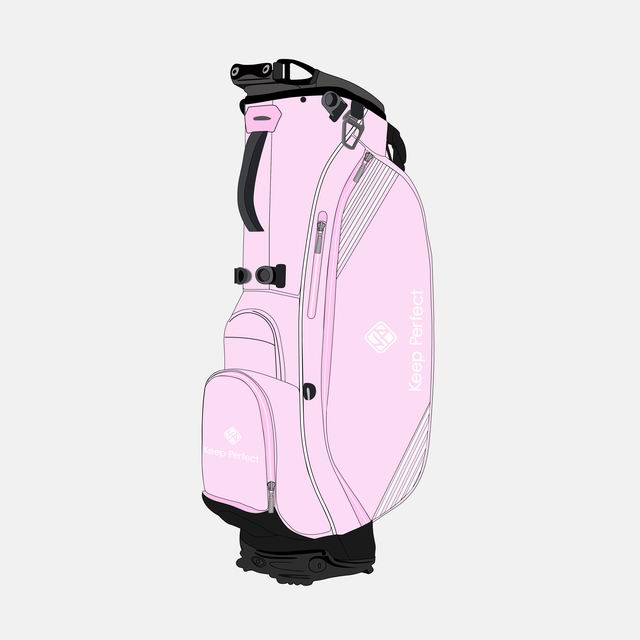
The mid band is where the market's volume lives and where the value engineering is hardest: the shell moves to 600D–840D polyesters with better coatings or to entry nylons (the delta from the materials guide's tier structure), the top opens to a four- or five-way with two or three full-length dividers, the strap system becomes a genuine ergonomic element (padded, articulated, sometimes moisture-managing), the base upgrades to a molded or heavily reinforced structure, and the hardware arrives plated and smooth-running. The mid band also buys the first real waterproofing gestures — taped seams on the valuables pocket, a rain hood as standard — and a branding allowance that supports two- to four-position logo programs and a full retail packaging tier.
The commercial logic of the mid band: it is the channel default — the pro shop's serious shelf, the resort programs volume tier, the club and academy channel's workhorse order, and the DTC brand's core product (the launch guide's hero SKU almost always lands mid-band). The margin shape works because the band's component costs rise slower than its retail price from entry — the cost stack's line items scale sub-linearly — which is why the mid band is also where the over-spec trap (below) catches the most buyers: it is close enough to premium to invite premium features at prices the band cannot carry.
The Premium Band: USD 179–249
The premium band buys materials and refinement: solution-dyed nylons or technical weaves (the fabric classes that hold color and hand through seasons — the color discipline starts to matter at this band), a 14-way or well-organized six-way full-length divider architecture, an engineered strap system with articulated hardware, a molded TPR or multi-material base, smooth-running branded hardware, and the finish gestures — rubberized zipper pulls, magnetic pocket closures, a molded grab handle, a lined valuables pocket. The premium band is also where decoration techniques graduate from print to embroidery density, woven labels and hardware anodizing — the branding allowance is a real line item, and the trend directions that justify premium pricing are visible here first.
The commercial logic: the premium band serves the enthusiast retail channel, the considered-purchase segments where the bag is chosen rather than acquired, the corporate gifting tier below the flagship (the corporate guide's better gift), and the brand that has proven mid-band demand and is moving up (the ladder strategy below). The premium band's honesty test mirrors the entry band's: the refinement must be real, because this is the band where consumers open the pockets before they buy and where the AQL discipline shows at retail — a skipped inspection line at entry is a bad review; the same skip at premium is a brand event.
The Halo Band: USD 299 and Beyond
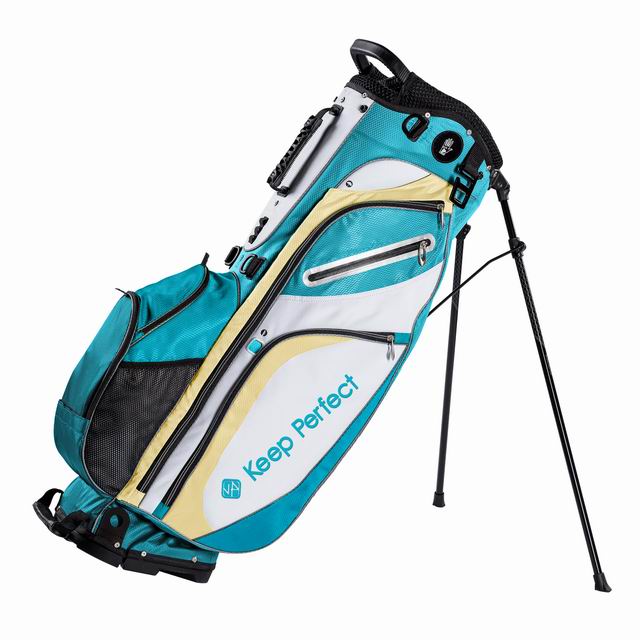
The halo band buys identity: the staff bag constructions (or the premium leather and waxed-canvas executions of the heritage material stories), where the bag is a statement piece first and a carrier second — full leather or premium synthetic shells, full 14-way full-length divider runs, anodized or bespoke hardware, monogram-grade personalization, and the construction time to match (the 35–50 day production window at its full length, with the sample process running its most engineered iterations). At this band the branding allowance is effectively unlimited — the product is the branding — and the packaging tier runs to the retail-set standard with the numbered drop structures when scarcity is part of the statement.
The commercial logic is the staff guide's argument in band terms: the halo band does not carry the volume, it carries the price architecture — the flagship that makes the mid band look reasonable (the anchor effect the retail channel prices deliberately), the corporate gift at the top of the ladder (the gift programs' summit), and the brand's public proof of quality claims. The halo band's failure mode is also identity-shaped: a halo product with mid-band construction is found out by exactly the customers who buy halo — the segment that reads construction fluently and tells the internet what it read.
The Component Deltas Band by Band
The honest comparison table, held to the components that actually move: the fabric class, the top architecture, the divider run, the strap system, the base, the hardware grade, and the branding allowance — the seven lines that price the gaps between bands and that a spec sheet should name explicitly per band (the cost breakdown holds the FOB consequences of each line; this table holds the retail-band consequences). The discipline the table enforces: every band's component column should be internally coherent — an 840D shell with plated-floor hardware is a confused product, and confused products discount at retail faster than honest entry products do.
How to use the table as an audit instrument: read it vertically when programming a tier (does every component sit honestly in the band?), and horizontally when pricing a decision (which single delta moves a product between bands, and what does that delta cost at FOB per the cost breakdown — usually the divider run and the fabric class together, which is why those two lines are where over-spec bites first). The table is also the negotiation map: the negotiation guide's levers operate component by component, and a buyer who can name the deltas can defend a price or challenge one in the same sentence.
| Component | Entry 49–79 | Mid 99–149 | Premium 179–249 | Halo 299+ |
|---|---|---|---|---|
| Shell fabric | 420–600D coated poly | 600–840D poly or entry nylon | Solution-dyed nylon, tech weaves | Full leather, waxed canvas, premium synthetics |
| Top architecture | 2–4 way, shared cavities | 4–5 way, partial full-length | 6–14 way, full-length run | 14-way full-length, putter well engineered |
| Strap system | Basic webbing or padded dual | Padded ergonomic dual | Articulated engineered system | Bespoke harness, monogram options |
| Base | Stitched PVC | Reinforced or molded | Molded TPR, multi-material | Bespoke molded, leather-wrapped |
| Hardware | Functional plated | Smooth plated | Branded, anodized | Bespoke finishes per program |
| Waterproofing | Rain hood only | Taped valuables pocket | Full seam treatment options | Systematic weather architecture |
| Branding allowance | Single position | 2–4 positions | Full program with premium techniques | Product IS the branding; unlimited |
The Specs That Never Drop
The bands divide components; they do not divide discipline. Three lines never drop regardless of band: the structural seams (the strap anchors, the top rim, the base attachment — the AQL guide's critical classes apply at USD 49 with exactly the mathematics they apply at USD 399, because a failed strap anchor is a failed product at any price), the material compliance (the European stack's REACH panels and the US-side equivalents price the same at every band — chemistry is not a tiered feature), and the labeling integrity (the fiber composition and care information the consumer needs at entry exactly as at halo — the labeling guide's content blocks are band-invariant).
Why the never-drop lines are commercially load-bearing and not merely ethical: the entry band's consumers write the volume reviews, the mid band's write the comparison reviews, and the review ecosystems do not segment by band — an entry-tier seam failure surfaces in the same search results as a halo-tier one, attached to the same brand. The reorder guide's audit exists for exactly this: the program that holds the never-drop lines at every band builds the review base that lets its upper bands price honestly. The cheapest place to cut is never the place that holds the brand's weight — the cost breakdown's critical-path lines are the never-drop lines wearing a spreadsheet costume.
Margin Shape by Retail Band
The margin arithmetic, in honest outlines: the entry band runs the thinnest percentage margins (the retail price caps the markup, and the component floor sits close beneath it — entry products live on volume and turnover, the MOQ ladders that make entry programs viable), the mid band runs the market's most livable margin shape (component costs scale slower than retail between the bands, so the mid band's gross holds both the channel's fees and the brand's program economics — the wholesale structures breathe best here), the premium band's margins widen on the material and refinement deltas (the component gaps the table above maps are priced at more than their cost consequence — value perception runs ahead of component cost through this band), and the halo band runs the widest percentage and the thinnest volume.
The two structural cautions the shapes teach: first, margin percentage is not margin health — the entry band's 30% on volume can out-earn the halo band's 55% on a hundred units, and the channel's velocity (the warehousing guide's reorder math) decides which shape actually funds the program; second, the band boundaries are where the temptation lives — the product that straddles bands (premium components at a mid price, or worse, mid components at a premium price) is mispriced in one direction and under-built in the other, and the market resolves both straddles the same way: slowly, then all at once, in the review section.
Channel Preferences Across the Bands
The channel map, band by band: the big-box and price-led retail channel reads entry and mid (its shelf economics price on velocity and the distributor programs that feed it live on the same velocity); the pro shop channel reads mid and premium (the serious-shelf logic — the shop's brand halo comes from what it carries, and the mid-premium pair is what it carries); the corporate and event channels read entry through premium depending on the occasion (the tournament tiers and the gift calendars price the ladder); the resort channel reads mid with premium accents (the resort guide's souvenir psychology — mid band volume with a premium corner); and the DTC brand channel reads whichever band its identity supports, graduating as the launch guide's ladder ascends.
The matching discipline the map enforces: the channel chooses the band before the buyer does — a premium construction in a price-led channel is a slow-moving asset wearing a good product's costume, and an entry construction in a halo-led channel is a review problem with a shelf position. The band decision is therefore a channel decision first: the buyer who knows where the bag will sell (the question the channel guide trains) has already narrowed the bands this guide compares, and the remaining question is the honest one — which component deltas the channel's customers will actually pay to receive.
One Platform, Three Retail Bands
The platform strategy that mature programs run: one engineered chassis family, three band executions — the OEM discipline applied to tiering, where the platform's pattern architecture, fit points and quality system stay constant while the band deltas (fabric class, divider run, hardware grade, finish) produce the entry, mid and premium versions. The economics: the development cost amortizes across all three bands (one pattern set, one sample process, one anchor discipline), the production floor runs the family efficiently (shared cut files, shared jigs, band-specific BOMs), and the reorder cadence synchronizes because the platform's components share suppliers.
The platform's marketing logic is the ladder made physical: the entry product introduces the brand's construction language (the never-drop lines at an accessible price), the mid product carries the volume and the identity, and the premium product anchors the family's price architecture — and the consumer who trusts the entry product's seams carries that trust upward when the upgrade moment arrives. The cautions: the platform needs honest band separation (the premium execution must deliver the deltas the table names, not a color change — the over-spec trap runs in reverse here), and the platform needs a versioning discipline at reorder (the anchor system extended to the band BOMs, because a silent component substitution at the mid band is a platform-wide betrayal wearing a cost saving's costume).
The Ladder Strategy: Entry to Premium Upgrade Paths
The upgrade ladder, as commercial engineering: the entry product is the recruiting engine (the low-MOQ entry for the consumer, the volume base for the program), the mid product is the default destination (the upgrade the entry customer makes when the seams held and the brand kept its promises), and the premium product is the identity purchase (the upgrade the mid customer makes when the occasion, the gift, or the identity moment calls — the gift calendar's price tiers map onto the same psychology). The ladder works because trust compounds up the bands — the maintenance guide's care card is the quiet ladder mechanic, keeping each rung's product alive long enough to sell the next.
The ladder's structural requirements: consistent construction identity across the bands (the platform strategy above supplies it — the entry product's seam architecture visibly related to the premium one's), an honest entry rung (the never-drop lines again — the ladder's first step is the only step some customers ever buy, and it is the step that decides whether there is a ladder at all), and a migration calendar (the seasonal refreshes and the drop structures that give customers an occasion to move up rather than a reason to). The ladder's metric is the mix shift over seasons: the program that tracks its band mix — entry share, mid share, premium share, and the upgrade rate between them — is reading its own future revenue in three numbers.
The Over-Spec Trap
The trap: paying premium component prices for a band whose retail ceiling cannot return them — an 840D shell on a USD 69 shelf, a 14-way top in a price-led channel. Over-spec is not generosity; it is margin donated to a band that will discount it anyway.
The over-spec trap catches the best-intentioned buyers: the program that specs premium components into an entry-band product because quality matters — and it does, at the never-drop lines — and finds that the shelf cannot pay for the delta the spec added. The arithmetic: a component delta that adds USD 4–6 at FOB adds USD 12–18 at retail (the cost stack's multipliers), and an entry band's consumer will not pay it — the product discounts to clear, and the program learns that generosity toward a band's ceiling is indistinguishable from a loss with extra steps. The premium feature the entry channel cannot price is not quality; it is waste wearing quality's name.
The trap's inverse shape is the rarer and worse one: under-spec at premium bands (mid components at a premium price — the failure the premium section names, found by the customers who read construction fluently). The discipline that avoids both shapes is the same: spec to the band's promise, hold the never-drop lines everywhere, and put the aspiration into the ladder (the platform strategy) rather than into any single rung. The manufacturer checklist's spec-sheet review runs exactly this audit — every component line against its band's honest column in the table above, with any straddler either re-specced or re-priced before the sample stage.
Price Bands and the Reorder Question
The band choice echoes through the reorder economics: entry-band programs reorder at velocity (the fast turn the warehousing guide's reorder-point math prices — high weekly demand, shallow stock, frequent releases), mid-band programs reorder at season cadence (the retail calendar's refreshes, the resort seasons, the club channel's cycles), and premium and halo programs reorder at program cadence (the launch calendar, the drop structures — slow turns, deep margins, and the consistency discipline at its most critical because the reorder customer at premium bands is buying the same product twice, on purpose, with expectations intact).
The reorder economics also set the band's inventory shape: entry wants buffer stock (velocity outpaces the 35–50 day window quickly), mid wants seasonal depth timed to the retail calendar (the launch guide's staging), premium wants precision (smaller runs, tighter calendars, the annual-commitment structures that hold the program's economics across cycles), and halo wants exclusivity discipline (the drop guide's honest-scarcity rules — the halo band's reorder is a brand event, not a logistics one). The one-sentence summary: choose the band for the channel, and the reorder mathematics, the inventory structure and the negotiation posture all follow — the band decision is the program's first and most consequential structural choice.
Regional Band Shifts
The same construction sits differently across markets, and the shifts are price-architecture facts rather than exchange artifacts: the North American market runs the widest bands (the big-box entry floor is low, the halo ceiling is high — the trend coverage's premium directions price most easily here), the European market compresses the middle upward (the value-retail channel is thinner, the mid-premium pro-shop channel is stronger, and the compliance stack of the European guide adds a documentation cost that pushes honest entry products half a band upward), and the Asia-Pacific markets run their own geometries (the Japanese market's quality expectations push constructions a full band upward against the same component set — the considered-purchase psychology at its most rigorous — while the Australian market's cart dominance reshapes which products even apply).
The programming discipline the shifts demand: a multi-region program does not re-price one product across markets; it re-bands the platform per market (the platform strategy's band executions mapped to regional columns — the same mid-band product may ship as a value tier to one market and a premium tier to another, with the cost stack and the negotiation guide's annual structures sized accordingly). The regional band map is also the expansion question's first answer: the brand entering a second market chooses its entry band for that market's channel structure, not its home market's — and the platform family that supports three bands at home supports the right one abroad.
A Club Channel Tier Decision, Worked
The worked decision: a 300-unit club program (a semi-private club refreshing its branded bag program for members and guests — the club channel's classic order) choosing between a mid-band execution at USD 118 retail-equivalent or a premium execution at USD 189. The mid case: the club's shop sells the bag to members at a friendly markup, the mid band's component set (600D shell, five-way top with partial full-length, ergonomic dual straps) matches the member's expectation of club gear, and the program's USD 34–38 FOB per the cost stack leaves the shop its margin and the club its identity. The premium case: the bag as part of the membership story (the gift and identity psychology), the 14-way and solution-dyed shell visible in the locker room, and the USD 46–52 FOB that the member price must carry.
The decision framework this guide supplies, applied: the channel reads which band (the club shop is a pro-shop-adjacent channel — mid to premium, both viable), the mix question decides (members buy one bag each, but the club's guests and the gifting calendar support a premium corner — the platform answer: 240 units mid, 60 units premium as the identity piece), and the reorder shape follows (the mid volume at season cadence, the premium corner at program cadence). The lesson generalizes: band decisions are rarely either-or at the program level — they are mix decisions, and the platform strategy is what makes the mix one program instead of two.
Frequently Asked Questions
What is the difference between entry and premium golf bags?
Component deltas, not slogans: the shell fabric class (420–600D coated polyester versus solution-dyed nylon or technical weaves), the top architecture (shared cavities versus full-length 14-way runs), the strap system (functional versus engineered), the base (stitched PVC versus molded TPR), and the hardware grade (plated versus branded anodized). The specs that never drop between them: structural seams, material compliance and labeling integrity — the AQL mathematics are band-invariant.
Which golf bag price tier sells best?
The core mid band (USD 99–149 retail) is the market's volume center — the channel default for pro shops, resorts, clubs and DTC brands, with the margin shape that supports the channel fees and the program economics simultaneously. Entry wins on unit volume in price-led channels; premium and halo win on percentage margin and brand architecture; the mid band wins on the combination, which is why it is the default destination of the upgrade ladder.
Are expensive golf bags worth it?
The honest test is component-based: a premium price is worth it when the deltas it buys are deltas you value — full-length dividers protecting graphite shafts, engineered straps for walking rounds, technical fabric holding color and hand through seasons. It is not worth it when the premium is a color change or a logo story over mid-band components — the over-spec trap in reverse, found quickly by the customers who read construction fluently.
How much does a good custom golf bag cost at FOB?
By band, in 2026 terms: entry executions at roughly USD 22–32 FOB, mid at USD 34–44, premium at USD 46–58, and halo constructions from USD 60 upward — the full anatomy is the cost breakdown's stack (materials, decoration, packaging, the volume ladder). A retail band runs roughly 2.5–3.5x its FOB through the channel math, which is how the bands on the shelf map to the bands in the factory.
Should my first custom program be entry or mid band?
Match the band to the channel you are actually selling through: a price-led channel or a demand-proof first season argues for entry (the low-MOQ structures usually land there), a pro shop, club or DTC identity channel argues for mid (the launch guide's hero SKU lands mid-band almost universally). The mistake to avoid is aspirational banding — premium components at a channel that cannot price them, which is margin donated to a discount.
Can one bag platform cover multiple price tiers?
Yes — it is the mature structure: one engineered chassis family with band-specific bills of materials (fabric class, divider run, hardware grade, finish), sharing the pattern architecture, the quality system and the reorder anchor discipline. The development cost amortizes across bands, the floor runs the family efficiently, and the ladder from entry to premium becomes a product line rather than a reinvention.
What components matter most when moving up a price band?
In price-consequence order: the divider architecture (shared cavities to full-length is the single most visible delta), the shell fabric class (the fabric tier structures of the materials guide), the base construction, and the hardware grade. The strap system matters most for walking-heavy channels. Branding allowance is the quiet line — upper bands carry the decoration programs that make a bag feel like a brand rather than a product.
Do entry-tier golf bags last?
Honest entry constructions — the ones holding the never-drop lines (structural seams, honest AQL classes) — deliver seasons of service in their intended channels. What does not last is the confused construction: entry components pretending upward or premium components under-built for their price. The maintenance guide's care protocols extend any band's life; the care card ships at every band for exactly that reason.
How do margins compare across golf bag price tiers?
Percentage margins widen up the bands (entry runs the thinnest, halo the widest) while volume runs the opposite direction — the entry band's thin percentage on fast turnover can out-earn the halo band's wide percentage on slow turns. The healthy program reads both: the band mix and the velocity shape (the warehousing guide's reorder math) decide which margin shape actually funds the program.
Which channels buy premium golf bags?
The identity channels: the pro shop's serious shelf, the corporate gifting summit below the flagship, the considered-purchase DTC segments, and the resort or club programs with a premium corner as the identity piece. The price-led channels — big-box retail and the promotional aisle — read entry and mid almost exclusively, which is why the band decision is a channel decision first.
What is the over-spec trap in golf bag programming?
Paying premium component prices for a band whose retail ceiling cannot return them — the 840D shell on a USD 69 shelf, the 14-way top in a price-led channel. The delta discounts away at retail because the band's consumer will not pay for it. Over-spec is not generosity; it is margin donated to a discount, and the ladder strategy is the honest way to deliver premium aspirations.
How do price bands shift between the US and other markets?
The same construction re-bands regionally: the European market compresses the middle upward (thinner value retail, stronger pro-shop channels, a compliance stack adding documentation cost), the Japanese market's quality expectations push constructions a band upward against the same components, and the Australian market's cart dominance reshapes which products apply at all. Multi-region programs re-band the platform per market rather than re-pricing one product across them.
How many price tiers should a custom golf bag brand offer?
Two to four, channel-shaped: a platform family with an entry recruiting rung, a mid-band volume core, and a premium identity piece is the standard architecture; a halo flagship joins when the brand's identity economics support it (the staff-bag logic). Fewer than two loses the ladder's recruiting engine; more than four fragments the reorder economics without adding channel coverage.
Does the price band affect the reorder discipline?
It sets the reorder shape: entry programs reorder at velocity against the 35–50 day window, mid programs at the season calendar, premium programs at program cadence with the consistency discipline at its most critical (the premium reorder customer is buying the same product twice, on purpose), and halo programs through the drop structures' honest-scarcity rules. Same anchor system, different clocks — the band decision is the first reorder decision.