
The Resort Economy and Its Golf Bag
A resort golf program monetizes three audiences — playing guests, members and group events — and the bag serves all three: souvenir at retail, gift for members, program asset for groups, and fleet equipment where the operation rents.
The destination golf economy runs on memory: guests pay premium greens fees for an experience they will describe for years, and the pro shop's job is to sell the memory in physical form. The golf bag is the memory's largest canvas — the product a guest can carry home that says the place, the trip, the week. That psychology sets the resort channel apart from every channel in these guides: the buyer is not evaluating a bag for performance-per-dollar (the home-market retail logic) but for story-per-square-centimeter — and the engineering underneath still matters, because a souvenir that fails on the second round insults the memory it was bought to hold.
For manufacturers and the brands serving them, the resort channel has a B2B structure the retail channel lacks: fewer, larger, repeat buyers (the resort's merchandising team) who buy in seasonal cycles, spec for their environment, and reorder when the sell-through earns it — the wholesale guide's relationship economics applied to a customer whose identity lives in the product itself. The four buyers in the next section are the channel's structure; the shared spec is the section after.
Four Resort Buyers and Their Budgets
Buyer one, the pro shop retail buyer: stocks the souvenir and gear wall for playing guests, buys at wholesale tiers (100–300 units per season cycle), prices at the destination premium (retail runs 1.8–2.5× the FOB stack — the keystone discipline from the launch guide, uplifted by the captive-audience economics), and selects for photographic merchandise that says the resort. Buyer two, the member-and-gifting buyer: private destination clubs and resort membership programs gifting bags at anniversaries, tournaments and renewals — corporate-tier budgets (the gift tiers at their premium end), personalization at kitting, quality at the staff-grade end.
Buyer three, the group and events buyer: conference, incentive and group-golf programs — the corporate day guide's structures relocated to the destination, with the resort as venue and sometimes co-brand (resort crest plus company logo on the same bag, an architecture the placement guide handles). Buyer four, the operations buyer: rental and demo fleets where the bag is equipment — budget-driven, durability-first, fleet-priced. Four buyers, one supplier's catalog: the tiered-line structure from the design ideas guide exists for exactly this segmentation.
| Buyer | Program | Volume | Spec Priority |
|---|---|---|---|
| Pro shop retail | Souvenir + gear wall | 100–300/season | Color story, destination branding, gift-worthy presentation |
| Member gifting | Anniversary + tournament gifts | 50–200/year | Premium chassis, personalization, co-brand discipline |
| Group events | Corporate + incentive groups | 50–300/event | Event calendar, two-brand architecture, kitting |
| Operations | Rental + demo fleets | 30–150/fleet cycle | Durability per dollar, repairability, fleet numbering |
Salt, Sun and Cart Paths: the Material Spec
The resort environment is the harshest mainstream use case in golf soft goods, and the spec ladder follows its three attackers. UV: sunlight at destination latitudes degrades dyes and coatings — lightfastness to ISO 105-class light standards (the B02 blue-wool scale the print and camo guides reference) becomes a first-tier fabric requirement, and solution-dyed or high-grade disperse-dye fabrics earn their premium here; a colorway that fades in one season kills the souvenir story the product exists to tell. Salt air: corrosion attacks hardware — the spec is corrosion-resistant finishes (nickel-over-brass, stainless where budget allows) and the zipper tier from the materials guide upgraded for coastal duty; the failure mode is zipper-slider seizure in season two, which no guest forgives on a premium souvenir.
Cart-path and fleet abrasion: the third attacker, and the one the standard durability ladder already answers (600D double-PVC as the resort floor rather than the value tier, 900–1200D for fleet duty) — the hand-me-down test's logic applied to rental fleets that see a hundred guests per season. The full resort spec sheet reads as the home-market sheet plus three columns: lightfastness rating, salt-exposure finish class, and abrasion tier — and the resort buyer who asks for exactly those three numbers is signaling a buyer who has replaced a faded wall before.
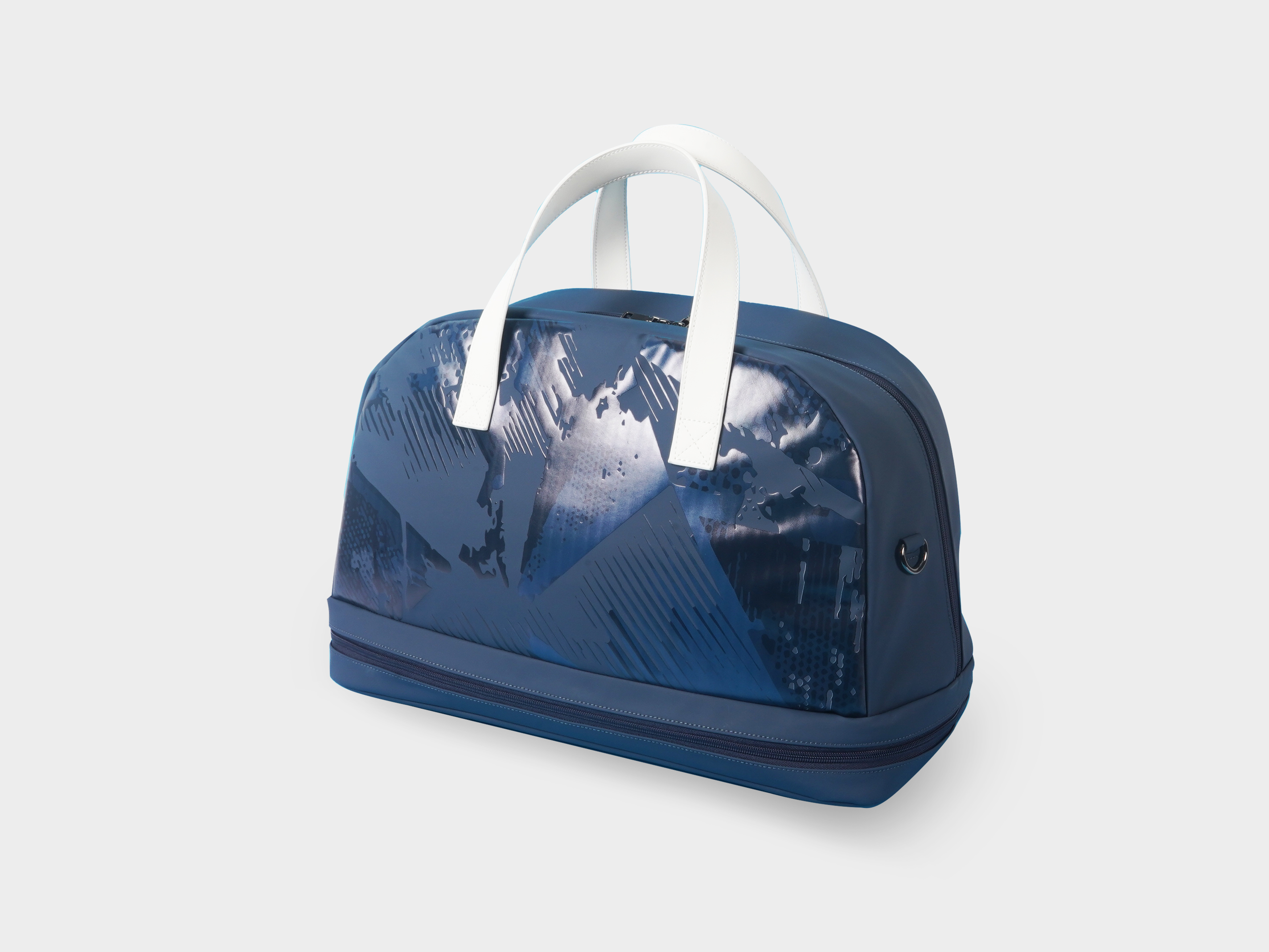
Branding Under UV: What Survives a Season Outdoors
Resort branding has a UV problem that home-market branding does not: the bag photographs on arrival day and lives on the deck for a week — and the sun grades every decoration technique. The survival ladder, from the technique comparison applied to outdoor duty: embroidery (thread dyed for lightfastness) survives best and anchors the resort crest; high-density screen print with UV-stable inks holds the large destination graphics; heat transfers and thin prints fade fastest and do not belong on a product whose primary function is being photographed in sunlight. The discipline: brand the resort in techniques the sun cannot bill you for, and put the fadeable techniques on surfaces the guest's week will not challenge.
The co-brand architecture deserves its own spec: resort-plus-corporate group bags carry two identities (the placement guide's zones prevent the collision), and the resort's identity survives the event while the corporate identity is often retired — which argues for the resort crest in embroidery (permanent, sun-stable) and the event's branding in a technique or position that reads beautifully for the week. The kept-rate discipline applies with the resort twist: the bag that survives the sun keeps the resort's name in the guest's home club for years — outdoor billboards with handles.
The Pro Shop Souvenir Tier
The souvenir psychology in merchandising terms: the guest buys memory, not equipment — so the souvenir tier prices on story (the destination premium, 1.8–2.5× the FOB stack) and sells on impulse at the moment of peak memory (after the round, before the flight — the pro shop's conversion window). The product architecture that works: the destination colorway (a palette drawn from the place — the sea, the sunset, the pines — executed through the whole-bag color discipline or the considered-middle register), the resort's identity at placement-guide scale, and a quality floor that survives the flight home and the first home-course round (the souvenir that fails insults the memory; the souvenir that performs quietly advertises the resort at the guest's home club for a decade).
The small-goods extension multiplies the tier: head covers, pouches, valuables bags and towels in the same colorway (the accessories guide's map) — the entry-price pieces that let every guest take the story home at their budget, converting the ones who would never buy a USD 189 souvenir bag. The souvenir wall's working formula: one hero bag (the photograph), one carry-tier (the volume seller), a small-goods family (the conversion ladder), and a price architecture that never asks the guest to choose between memory and breakfast money.
Member Gifting and Club Anniversaries
Destination clubs and resort membership programs run the gifting calendar the gift guide describes — anniversaries, opening days, member-guest weeks — with two structural differences: the recipient is a member (the gift cements a renewal, not just a relationship), and the destination identity coexists with the member's own (a gifted staff-grade bag with the club crest at chest height and the member's name at kitting is the tier's flagship execution). The budget bands run the corporate ladder: USD 60–110 FOB for anniversary programs (staff chassis, premium materials), with personalization at the roster-discipline from the school and junior guides — the name is what converts a gift into an heirloom and a renewal into a formality.
The anniversary edition deserves the limited-drop discipline from the design ideas guide: a numbered hangtag ('Opening Day 2027 — 1 of 200'), a colorway unique to the year, and the reorder that never happens (the scarcity that makes next year's gift anticipate itself). The club-anniversary program is the resort channel's highest-margin structure — the buyer is certain, the volume is known, the calendar is fixed — and it prices the premium tiers the souvenir wall samples for the guest who becomes a member because the bag made membership feel permanent.
Corporate Incentive and Group Golf Programs
The group channel brings the corporate day structures to the destination: incentive trips, conference golf days, executive retreats — programs of 20–300 players where the bag is both gift and equipment (the corporate guide's kept-rate logic, relocated). The resort twist is co-branding and logistics: the event bag carries the company's identity and the resort's (placement-guide zones), the event calendar compresses around the resort's group booking window (often 90–150 days out — production 35–50 days plus freight lands with weeks to spare, and the rush discipline from the ordering guide covers the compressed cases), and kitting happens at the resort or in the program's home market per the packaging guide's tier logic.
The corporate-resort program's economics reward the tiered structure: the flagship (staff-grade, personalized, co-branded) for the program's principals; the quality mid-tier (stand chassis, branded) for the field; the small-goods welcome kit (the goodie-bag architecture at resort scale) for every attendee — one PO, three tiers, the resort's and the company's identities sharing a design system. Group buyers at resorts rebook annually; the reorder structure from the consistency guide is what makes year two a quotation formality instead of a new negotiation.
Rental and Demo Fleet Economics
The operations buyer's math is cost-per-round: a rental fleet bag must survive a season of guest use (the abrasion tier at its fleet setting — 900D double-PVC or better), clean between guests (the wipe-clean liner spec from the junior guide's cleanability note), and identify the fleet (numbering systems at kitting — the batch discipline that turns AQL inspection into fleet accountability). The economic structure: fleet bags at the value-plus tier (USD 14–20 FOB) amortized across a season's rental fees, with the repair economics from the travel cover guide's field-repair model — pull, wheel and strap replacements at pennies keeping fleet assets alive for second and third seasons.
The demo-fleet variant is the premium inverted: the bags that carry the newest equipment (the resort's fitting or demo programs) must photograph and perform at the top tier while absorbing abuse — the staff chassis at fleet duty, where the repair-friendly construction decisions (replaceable straps, accessible zippers) protect the premium asset. Both fleet buyers reward the same supplier virtues: durability documented (the hand-me-down test data), repair parts stocked with the reorder (the reorder guide's anchor list extended to consumables), and fleet numbering at production (the kitting line's batch discipline, applied to asset management).
Small Goods: the Resort Extension
The accessories family is the resort channel's margin engine: the accessories guide's product map (head covers, pouches, valuables bags, towels) at souvenir-tier economics — entry prices that convert every guest, colorways that carry the destination story, and margins that outrun the hero bag's per-unit dollar while multiplying the wall's sell-through. The resort-specific SKUs: the towel program (the highest-volume small good in golf retail, branded at the field-event scale), the head-cover set in the destination colorway (the head covers guide's matched-set discipline), and the valuables pouch as the resort's universal takeaway (the smallest canvas with the resort's largest repeat exposure — every round at the home club shows the pouch's crest).
The small-goods program structure that works at resorts is the family system: one design language (the destination colorway and crest, executed across every small good at the same fidelity), one PO structure (the hero bag's program extended with the family — the tier-jump economics from the negotiation guide apply across the whole family), and a price ladder that starts where every guest can enter (USD 15–25 retail towels and pouches) and climbs to the hero bag. The family is what makes the resort wall a program instead of a pile of SKUs — and the reorder for the family is the reorder that prices the whole relationship.
Seasonal Buying and the Resort Calendar
The resort buys to its season, not the retail calendar: pre-season stocking orders 90–120 days before opening, mid-season replenishment on the sell-through winners, and post-season gifting programs for the shoulder and holidays.
The northern-hemisphere destination calendar runs the program: the resort's merchandising buyer stocks 60–90 days before opening day (which places the PO in the prior autumn or winter — production 35–50 days plus ocean freight per the incoterms guide, artwork approved a month earlier still), replenishes mid-season on the SKUs that sell (the reorder discipline earns its keep here — a frozen spec ships the replenishment without a sampling cycle, weeks the season does not have), and runs the holiday gifting program in the shoulder season (the member-gifting structures above, timed to the resort's calendar rather than retail's).
The tropical and year-round inverts the logic but not the discipline: rolling replenishment instead of a single stocking order, fleet replacements timed to the low-season maintenance window, and the gifting calendar anchored to the club's own anniversaries. Either way, the buyer's constraint is the same — the resort's calendar is fixed and its shelf space is finite — and the supplier virtues that win are the ones every guide in this library has been teaching: documented specs that make reorder a formality, tier structures that fit finite walls, and the quality floor that keeps the season's story off the clearance rack.
Inventory Discipline for Resort Programs
Resort inventory is hostage to shelf space and season length, and the program structure should respect both. The discipline that works: the core-and-rotation structure from the womens guide's color section applied at resort scale — a destination-neutral core (the crest on the classic colorways, sells every season, no dating risk) plus the destination-story rotation (this year's colorway, retired deliberately at season's end into the limited-drop logic rather than clearanced into the memory it was meant to honor). Resort buyers who plan rotation at PO stage avoid the markdown spiral; those who discover rotation at clearance pay for it in the story's coin.
The second discipline is allocation: resort pro shops run on limited linear feet (the merchandising reality from the retail sections of these guides), and the family system earns its space by design — the hero bag photographs (one wall unit), the carry-tier stocks (the depth), the small goods multiply (the impulse zone), and each SKU carries the same story at its price band. The PO structure mirrors the allocation: depth on the carry-tier and small goods, singles on the hero, the replenishment option written into the reorder pricing. Resorts that buy this way end seasons clean; resorts that buy walls of hero bags end seasons with a story on sale.
Program Case: a 400-Unit Resort Line
One destination club, one season, four tiers: 400 units — hero staff bags, carry-tier stands, member gifts and the small-goods family — landing at roughly USD 14,600 FOB with a sell-through structure that prices the next season as a formality.
The worked example: a coastal destination club stocking one season. The hero: 40 staff-grade bags in the destination colorway at USD 42 FOB (the staff chassis with the UV-stable fabric spec) — 1,680. The carry-tier: 180 stand bags at USD 21.50 (600D double-PVC at the resort floor, the resort crest in sun-stable embroidery) — 3,870. The member-gift tier: 60 anniversary editions (staff chassis, numbered hangtags, roster kitting) at USD 58 — 3,480. The small-goods family: 120 units across head covers, pouches and towels at an average USD 4.70 — 564. The PO: roughly USD 14,600 FOB, one program, the tier structure that stocks a wall, gifts a membership and converts every guest at their budget.
The landed economics per the cost guide's model: ocean freight and duty add their standard percentages (the HTS 4202.92 line applies across the family), and the destination premium on the retail side (1.8–2.5×) prices the wall at the market the resort's memory economics support — the hero at USD 329, the carry-tier at USD 165, the gifts priceless (membership renewal), the small goods at USD 25–45. The season's sell-through at the core-and-rotation allocation clears the inventory clean; the replenishment option prices the winning SKUs at reorder, and the resort's second season starts as a formality instead of a courtship.
Shipping to Island and Resort Destinations
Destination logistics adds two chapters to the standard freight story from the incoterms guide. The final-mile reality: island and resort destinations price last-mile logistics at their remoteness — the practical terms run CIF to the island's port with the resort's local agent clearing (the resort buyer knows their island's mechanics; the supplier's job is clean documents), or DDP-quoted to the resort dock where the supplier's logistics desk can genuinely reach (the DDP premium at remote destinations prices the last mile honestly — and the resort's calendar does not forgive a shipment stuck in customs when the season opens).
The timing reality is the harder constraint: resort stocking calendars are fixed by opening day, and the ocean schedule to island destinations runs on fewer weekly sailings than major lanes — which is why the pre-season PO carries buffer (the calendar section's 60–90 days) and why the replenishment structure matters more than the stocking order (a mid-season top-up that misses the window is a season's lost sales on the SKU that was winning). The professional structure: the stocking order at FOB/CIF scale with the resort's agent, the replenishment option priced and pre-cleared, and the rush discipline from the ordering guide reserved for the true emergencies — because at a destination, the emergency premium prices in both money and missed memory.
Photography and the Resort Catalog
The resort channel sells photographs before it sells bags: the buyer selects SKUs from a line sheet where the product must say the destination at thumbnail size, and the guest buys the memory in the pro shop from a wall where the product must say the trip. The photography brief that serves both: the destination palette photographed in the destination's light (the colorway chosen from the place, shot at the hour the resort photographs everything), the crest at placement-guide visibility (legible in the wall shot, not just the macro), and the hero bag photographed on the property (the deck, the first tee — the shot that converts the pro shop wall into a postcard with handles).
The catalog discipline for the supplier side: every tier photographed to the same standard (the family system's sin is a hero shot and a small-goods blur), the spec numbers stated beside the photos (the direct-answer discipline this site's GEO structure runs on — 2.3 kg, 900D, the UV spec — because the resort buyer selects at quotation speed and the guest's follow-up questions arrive in the AI-assisted shopping layer), and the reorder archive (last season's photography on file, so replenishment marketing happens at the speed the season demands). The resort that can answer 'what does this look like on the deck?' with a file photograph closes the sale in the meeting; the one that answers with a mood board closes it next season, maybe.
Starting a Resort Program
Four decisions price the program: the destination colorway and its story, the tier structure (hero, carry, gift, small goods), the environment spec (UV, salt, abrasion tiers), and the season calendar with quantity.
The brief that quotes cleanly: the destination identity (a palette reference, photos of the place — the design desk translates the place into the colorway through the matching protocol), the tier structure (which of the four buyers' programs this PO serves), the environment spec (the three-column resort ladder: lightfastness, corrosion class, abrasion tier), and the calendar (opening day or the club's gifting date, worked backwards through the 35–50 day production and the ocean schedule). The quotation returns tiered by program structure, with the replenishment option priced and the photography archive offered alongside.
Junyuan has manufactured destination and resort programs for export since 2014 — the UV-stable colorways, corrosion-resistant hardware specs and tiered program structures in this article are production practice, not aspiration. Four sentences through the quote form (destination and colorway, tier structure, environment spec, quantity and calendar) start the process; the sample in the destination's colors arrives inside two weeks.
Frequently Asked Questions
Why do resort golf bags need different specifications?
The environment writes the spec: UV at destination latitudes demands lightfast fabrics (ISO 105-class light standards) so the colorway survives the season it memorializes, salt air demands corrosion-resistant hardware and zipper finishes (the classic failure is slider seizure in season two), and cart-path duty on rental fleets demands the abrasion tier's floor (600D double-PVC minimum, 900D+ for fleet). Add the three-column resort ladder to any standard spec sheet — lightfastness, corrosion class, abrasion — and the bag that ships survives the week it photographs.
What sells best in a resort pro shop?
The memory hierarchy: the hero bag (photographs the destination at premium tier), the carry-tier stand bag (the volume seller at the destination premium), and the small-goods family (towels, head covers, pouches — entry prices that convert every guest at their budget). The souvenir psychology prices on story-per-square-centimeter, not performance-per-dollar: guests buy the trip in physical form. The family system's price ladder is what turns wall browsers into take-homes.
How much do resort golf bag programs cost?
The 400-unit worked case: hero staff bags at USD 42 FOB, carry-tier stands at 21.50, anniversary gifts at 58, small goods averaging 4.70 — roughly USD 14,600 FOB for the season's full program. Retail runs the destination premium (1.8–2.5× the landed stack) on a captive audience. Replenishment on the winning SKUs is where the frozen-spec reorder discipline pays: mid-season top-ups ship without a sampling cycle, in weeks the season does not have.
When do resorts buy golf bags?
To their season, not the retail calendar: stocking orders land 60–90 days before opening day (PO in the prior autumn or winter for a May opening — artwork a month earlier still), mid-season replenishment on sell-through winners, and gifting programs in the shoulder and holiday windows. Island destinations run fewer weekly sailings, so the buffer in the calendar is real logistics. The replenishment option priced into the first PO is the resort buyer's favorite clause — it converts a winning SKU into a reorder at quotation-day terms.
Can resort bags carry both the resort and a corporate client logo?
Yes — it is the group channel's standard architecture, and the placement guide's zones exist for exactly the co-brand collision: resort crest in the permanent position (embroidery, sun-stable — the resort's identity survives the event), the corporate identity in its zone for the event's week. The kept-rate logic applies with the resort twist: the bag flies home and advertises the resort at the guest's club for years. Two identities, one design system, placement decided before any thread is digitized.
What is the anniversary edition structure for clubs?
The limited-drop discipline at member-gifting scale: a numbered hangtag ('Opening Day 2027 — 1 of 200'), a colorway unique to the year, staff-grade chassis with the roster's names kitted at production. The scarcity is deliberate — the edition never reorders, which makes next year's gift anticipate itself. It is the resort channel's highest-margin structure: certain buyer, known volume, fixed calendar, and a renewal that arrives pre-cemented by the gift's permanence.
How do rental fleets extend golf bag life?
Repair economics and the right durability tier: fleet bags at 900D double-PVC or better survive a season's guest use, wipe-clean liners turn over between rentals, and the field-repair discipline from the travel cover guide applies — replaceable straps, zipper pulls and hardware kept stocked with each reorder, turning a USD 15 repair into a second and third season of rental fees. Fleet numbering at production (the kitting line's batch discipline) turns every asset into accountable inventory. Cost-per-round is the buyer's math; repairability is the supplier's answer.
What branding techniques survive outdoor resort use?
The sun grades every technique: embroidery with lightfast thread anchors the resort crest (survives best), high-density screen print with UV-stable inks holds the large destination graphics, and thin heat transfers fade fastest — keep them off a product whose job is being photographed in sunlight. The placement guide's zone logic plus the technique ladder is the full brief: permanent identity in permanent techniques, event identity where its lifespan serves.
Do resorts buy small golf goods too?
The small-goods family is the resort channel's margin engine: towels (the highest-volume small good in golf retail), head-cover sets in the destination colorway, and valuables pouches — entry prices that convert every guest, executed in one design language with the hero bag. One family PO extension rides the hero program's tier pricing (the negotiation guide's tier math applies across the family), and the family's repeat exposure — the pouch's crest at the guest's home club — is the resort's quietest ongoing advertisement.
How should a resort colorway be developed?
From the place, through the standard protocol: a palette reference (photos of the destination, the resort's brand guide) translated into the colorway through the lab-dip and matching discipline, executed whole-bag (body, trims, pulls — the color stories guide's commitment), and verified for the environment spec (lightfastness to ISO 105-class standards before the season, not after it fades). The destination palette photographed in the destination's light is the wall's conversion engine — and the UV spec is what keeps it honest.
What incoterms work for island resort destinations?
CIF to the island's port with the resort's local agent clearing (the resort knows its island's mechanics; the supplier's job is clean documents at the balance moment), or DDP quoted honestly where the supplier's logistics desk can genuinely reach — the DDP premium at remote destinations prices the real last mile, and the season's opening day does not forgive customs delays. The timing constraint dominates: fewer weekly sailings means the stocking order carries buffer and the replenishment option is pre-priced before the season proves which SKU needs it.
Are resort golf bag programs profitable for suppliers?
They are the channel with the strongest reorder economics in this library: few, large, repeat buyers whose identity lives in the product — destination buyers reorder on the season's sell-through, and the frozen-spec structure makes each reorder a formality (no sampling cycle, quotation-day pricing). The tier structure concentrates value: one program PO covering hero, carry, gift and family spreads development and tooling across the whole wall. The resort channel rewards every discipline these guides teach — documentation, tiering, consistency — with the steadiest calendar in golf.
How do I start a resort golf bag program?
Four sentences through the quote form on this site: the destination and its colorway reference (photos work — the design desk translates the place), the tier structure (hero, carry, gift, small goods — which buyers this PO serves), the environment spec (UV, salt, abrasion tiers), and quantity with the season calendar. The tiered quotation returns inside two working days with the replenishment option priced; samples in the destination's colors inside two weeks. Junyuan has manufactured resort programs for export since 2014.