
What the Staff Bag Actually Is For
The staff bag is golf's ceremonial flagship: the 10-inch tour-style bag (4.5–6 kg, full premium construction, six branding positions) whose jobs are photography, credibility and ceremony — defining what a brand looks like at its best, gifting the names that matter most, and anchoring the visual identity every other product inherits.
First-time buyers sometimes evaluate the staff bag as a retail product and find the math confusing: low volume, high cost, heavy to ship. The correct frame is marketing infrastructure. The staff bag is the image every collection photograph anchors on; the product buyers photograph at trade shows; the gift that closes principal relationships; the physical proof that a brand's quality claims are real (anyone can claim premium — a credible staff bag demonstrates it). Programs that spec it as infrastructure get full value; programs that spec it as a volume SKU misprice everything. The staff chassis page shows the constructions; this guide is the strategy and execution.
Construction Anatomy of the Top Tier
The staff bag inverts the Sunday bag's discipline: here, nothing is subtracted. Structure over lightness (the bag must stand imperiously and hold its silhouette for years of photography), materials at the top of every tier (PU showcase panels are the baseline, not the upgrade), and hardware that rewards close inspection — because the staff bag is examined closely, in showrooms and photographs, more than any other product. Weight is not a defect here: the staff bag's heft reads as substance in the hand, and its natural habitats (tour ranges, pro-shop floors, office corners, photo shoots) involve carts and caddies, not shoulders.
| Component | Standard spec | Tour-grade spec |
|---|---|---|
| Top | 10-inch, 6-way divider | 10-inch, full-length velour-lined dividers |
| Weight | 4.5–5.5 kg | 5–6 kg (structure over lightness) |
| Materials | PU showcase + ballistic body | Full PU or premium hybrid |
| Pockets | 6–8, fleece-lined valuables | 8–10, magnetic closures |
| Hardware | Branded zips, metal fittings | Custom-molded pulls, gunmetal finishes |
| Base | Reinforced, cart-stable | Molded, tour-strap ready |
| Factory price (MOQ 200) | USD 28–38 | USD 38–48 |
The Six-Position Branding Architecture
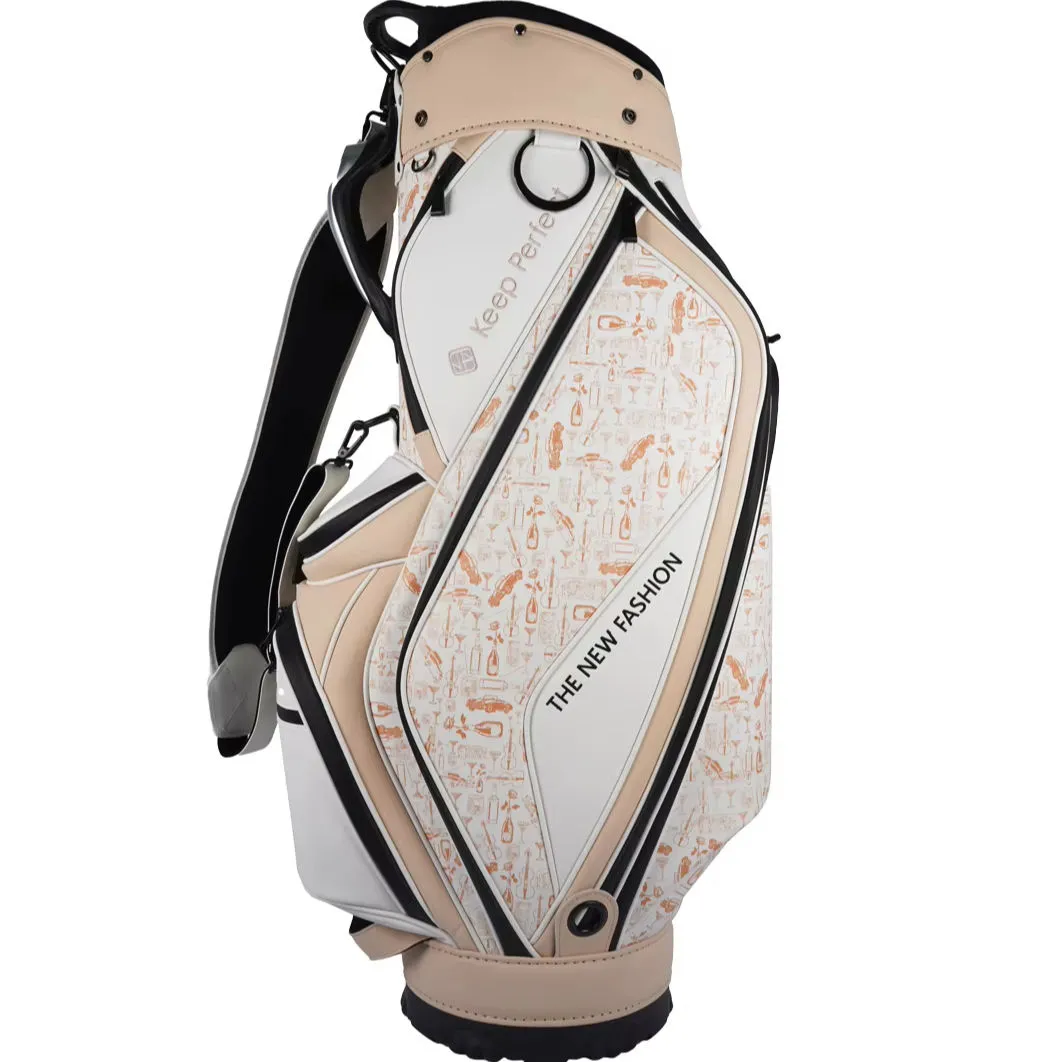
The staff bag is where the full branding suite lives: ball pocket (the primary, 250–350 mm — the most photographed panel in golf), both side panels, the spine, the valuables pocket, the hip pad area, and the rain hood. The placement guide's 55–70% sizing rule was written for this chassis: one dominant mark, supporting marks at 60–70%, and a hierarchy the eye reads in one pass. The staff bag is also where multi-technique executions belong — embroidery on the ball pocket, deboss on PU side panels, woven labels on pockets — because it has the surfaces to carry them.
The discipline that separates tour-grade from cluttered: restraint within abundance. Six positions does not mean six different messages — it means one identity executed at six scales. Tour bags carry the brand, the model line and perhaps one sponsor; programs that add dealers, websites, slogans and hashtags produce a bag that photographs as noise. Design the photography first (what does this bag say in one frame?) and the positions follow.
Materials and Hardware at the Top of the Range
Material selection cascades downward from the staff bag — whatever the flagship wears defines the collection's premium vocabulary. Full-PU constructions (USD 40–48) deliver the leather-goods read that photographs richest; premium hybrids (PU showcase panels on ballistic bodies, USD 32–40) deliver 90% of the visual with better abrasion behavior on work surfaces — the construction the materials guide recommends for most flagship programs. Heritage executions in waxed canvas with leather trim exist and are spectacular for the right brand (club-heritage programs, whiskey-adjacent aesthetics).
Hardware is where tour-grade is won at close range: custom-molded zipper pulls with the brand mark (USD 0.20–0.45 per pull at volume — the cheapest jewelry in the product), gunmetal and matte-black finishes over bright nickel, magnetic pocket closures over velcro, and metal logo plates as an option for the ball pocket (USD 1.50–3.00 — the single detail that most reliably reads "tour" to buyers). These details cost little individually; collectively they are the difference between a flagship and a big bag.
The Photography Dividend
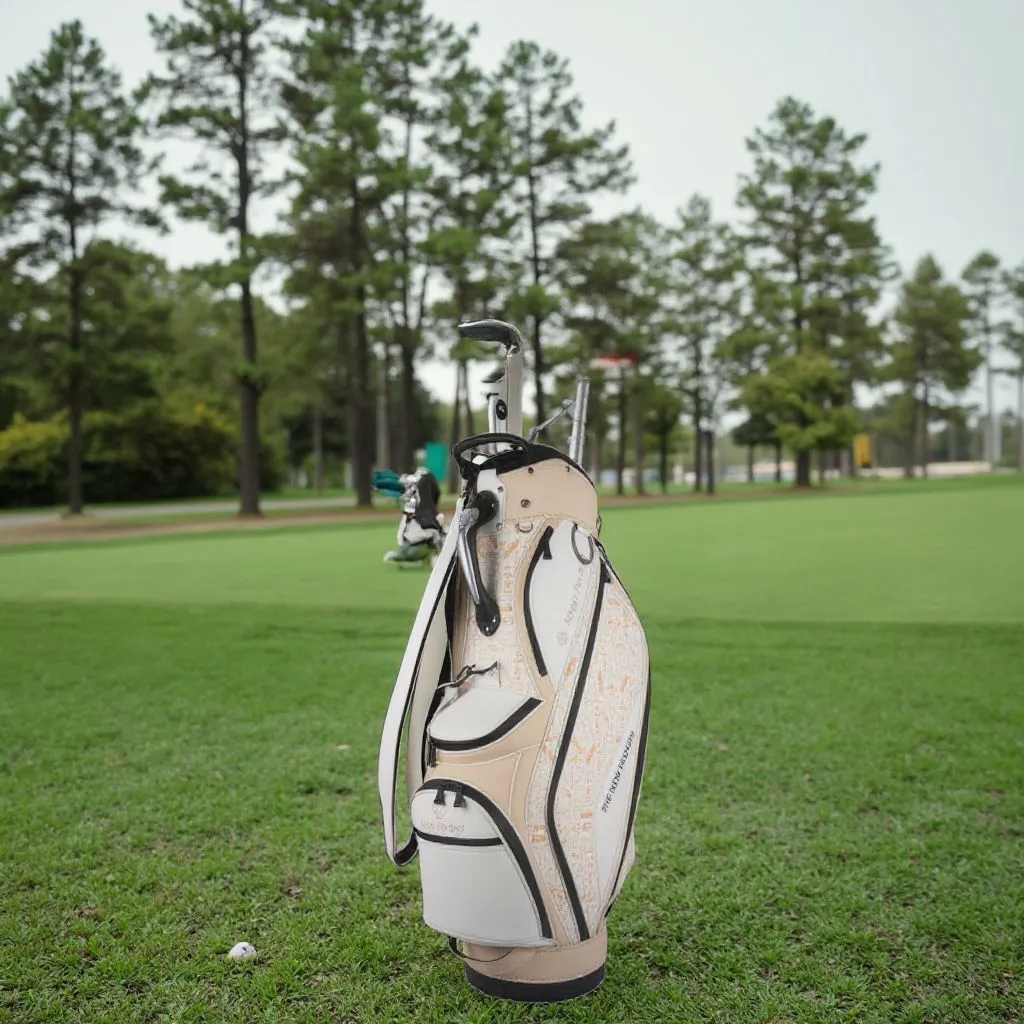
The staff bag's least-discussed function: it is the collection's photography anchor, and the images it generates market everything else. The catalog hero shot (staff bag center, line arrayed around it), the trade-show booth centerpiece, the social content that earns engagement (staff bags out-engage every other chassis in brand channels — the silhouette reads aspiration), the PR and retail-buyer kit imagery. One well-executed staff bag produces the visual library a launch runs on for a year.
The practical implication: spec the staff bag for the camera first. Color stories that photograph (the 2027 directions — muted jewel tones, full-color pastel, heritage earth — all read powerfully at staff scale), branding sized for the frame, and hardware that survives macro lenses. Programs that treat the staff bag's photoshoot as a launch deliverable — planned, art-directed, budgeted — extract the full dividend; programs that shoot it as an afterthought waste the chassis's primary function.
The Four Program Types
Brand flagship (the strategic standard): 200–500 units against the launch — photography, trade shows, key-account gifting, and a retail halo SKU at USD 299–399 that makes the USD 149 stand bag look reasonable. The launch guide builds this tier into the ladder. Corporate principals (the gifting summit): 20–100 units for the names that matter — board members, key clients, honorees — at USD 30–45 cost against a perceived value of USD 300+. Tour and academy (the visibility play): bags for teaching pros, academy staff and sponsored players — working billboards with credibility. Retail halo (the margin anchor): the pro-shop's top shelf, where the staff bag's presence reprices everything below it.
The four types share one spec principle: the staff bag must be the best-executed product in the program, visibly. A flagship that is not obviously the finest thing in the line fails at its only job. Budget the tier accordingly — the staff bag's cost is 3–5% of a program's total and decides 100% of its perceived ceiling.
MOQ Economics and the Halo Math
Staff economics at MOQ 200: USD 28–48 depending on tier, total commitment USD 5,600–9,600 — the largest per-SKU entry in the range. The price drivers: material tier (full-PU adds USD 8–12 over hybrid), hardware packages (custom pulls, metal plates, magnetic closures add USD 2–5), divider and pocket complexity, and branding execution (six positions with multi-technique work adds USD 3–6). Volume breaks matter less here than elsewhere — staff quantities are strategic, not volumetric.
The ROI math is the halo: a USD 9,000 staff program (300 units, tour-grade) typically supports a collection launch of USD 60,000–150,000 across other chassis — anchoring photography, repricing the mid-tier upward, and gifting the relationships that open retail doors. Measured as a product, the staff bag is a marginal retail performer; measured as infrastructure, it is routinely the highest-leverage line in the launch budget. The cost breakdown shows where it sits in full-program math.
Quality Control at the Top of the Range
Flagship QC runs tighter tolerances because the product is examined closer: embroidery registration at 1 mm (the ball-pocket crest is the most-scrutinized square foot in the line), panel alignment and symmetry checks (the staff silhouette must stand true — a leaning flagship is a photographed failure), hardware function cycles (magnetic closures, custom pulls, every zipper), PU surface inspection under raking light (scratches and grain defects show on showcase panels), and full six-position branding measurement against the approved layout.
AQL 2.5 sampling (ISO 2859-1) applies with the top-tier amendment: for staff quantities (200–500 units), we recommend 100% visual inspection of the hero panels in addition to statistical sampling — the cost is trivial at these quantities and the flagship cannot afford a defective unit in a photograph or a principal's office. The AQL guide covers the protocol; the staff amendment is one line in the PO.
A Worked Program: DTC Brand Launch Halo
A DTC golf brand's 2026 launch: 250 staff bags in the collection's signature deep-green full-PU with cream trim (USD 44 per unit, tour-grade hardware, metal ball-pocket plate), deployed as: the photography anchor for the entire launch library (the shoot produced 14 months of content), 40 units gifted to founding ambassadors and key retail buyers, 30 units to teaching-pro partners, and the balance retailed at USD 349 as the halo SKU.
Twelve months of reporting: the halo SKU sold slowly and deliberately (61 units — irrelevant, as planned), the ambassador seeding generated the brand's most-shared early content, two retail accounts cited the staff bag specifically as evidence the brand was "serious," and the stand bag — priced USD 130 below the halo — became the volume seller its positioning promised. The launch guide's ladder worked because the top rung was real. The staff program's USD 11,000 was 8% of the launch budget and produced, by the founder's own accounting, the majority of its credibility.
Common Staff Program Mistakes
Five recurring errors. Under-speccing the flagship: a staff bag built to mid-tier standards fails at its only job — the ceiling must be real. Branding clutter: six positions, six messages, one noisy photograph — the suite carries one identity at six scales. Expecting volume: pricing and forecasting the staff bag as a retail SKU distorts the whole line; it is infrastructure with a retail option. Skipping the photoshoot: the chassis's primary dividend is imagery — plan and budget the shoot as a deliverable. Bright hardware: polished nickel reads rental-fleet at flagship range; matte and gunmetal finishes are the tour vocabulary.
The meta-mistake is evaluating the staff bag on its own P&L. Its returns arrive on other lines: the stand bag that sells because the halo repriced it, the retail account that signed because the flagship proved the brand, the principal relationship that renewed. Spec it as the crown, deploy it as infrastructure, and let the rest of the line collect the dividend.
Staff Bag Logistics: Shipping the Heavyweight
The staff bag's weight and volume make it the range's freight outlier: at 4.5–6 kg and roughly 130 × 40 × 40 cm boxed, staff bags pack 4–6 per carton and consume container cube aggressively — per-unit ocean freight runs USD 2.20–3.80 consolidated, two to three times a stand bag's. Programs shipping 200–500 staff units should plan the container mix deliberately (staff units as the frame, Sunday and accessories nesting into the voids — the packing plan our logistics team draws at quotation), because an unplanned staff shipment is the one place freight can ambush a flagship budget.
The second logistics note is damage control: the flagship cannot arrive with a crushed top cuff or scuffed showcase panel. Staff cartons spec double-wall board with internal bracing, individual poly-bagging plus foam collar protection, and orientation markings — the packaging tier described in the packaging guide, applied at the top of the range. At USD 28–48 per unit against retail positioning of USD 199–399, the extra USD 0.60–0.90 of carton engineering is the cheapest insurance in the program.
Starting a Staff Program
The brief: program type (flagship, corporate, tour, halo), material tier and color story, branding architecture, quantity and deployment plan. Through the quote form, the quotation returns with tour-grade construction specs and the hardware package priced at your volume — samples in 8–12 working days (the top tier's detail work adds a few days), production in 40–50 days.
For programs building a line, the sequencing advice is consistent: spec the staff bag first, photograph it before launch, and let every other chassis inherit its vocabulary. The gallery shows current flagship executions. Junyuan has manufactured the ceremonial top tier for export programs since 2014 — the crown that makes the rest of the line believable.
Frequently Asked Questions
What is a staff golf bag?
The ceremonial top tier of golf bags: a 10-inch tour-style bag (4.5–6 kg) with full premium construction, six branding positions and tour-grade hardware — the bag professionals' caddies carry. For brands it functions as flagship infrastructure: photography anchor, credibility signal, principal gift tier and the design vocabulary the rest of the line inherits.
How much do custom staff golf bags cost?
At MOQ 200, FOB Xiamen: premium hybrid constructions USD 28–38, full-PU tour-grade USD 38–48. Custom hardware packages (molded pulls, metal plates, magnetic closures) add USD 2–5; six-position multi-technique branding adds USD 3–6. Retail positioning runs USD 199–399 as the collection's halo SKU.
What is the minimum order for custom staff bags?
200 pieces per design — USD 5,600–9,600 total, the largest per-SKU entry in the range. Corporate principal programs (20–100 units) typically run as part of a larger order or pooled production; the staff tier's quantities are strategic rather than volumetric, so programs plan deployment (photography, gifting, halo retail) before quantity.
Why does a brand need a staff bag if it barely sells?
Because its ROI arrives on other lines: the halo SKU at USD 299–399 reprices the mid-tier upward, the photography anchors the collection's entire visual library, the gifted units open retail doors and ambassador relationships, and the flagship's existence proves the brand's quality claims. Measured as infrastructure, it is routinely the highest-leverage line in a launch budget.
What materials suit a staff bag?
Full-PU constructions for the richest leather-goods read (USD 40–48); premium hybrids — PU showcase panels on ballistic bodies — for 90% of the visual with better abrasion behavior (USD 32–40, the recommended default); waxed canvas with leather trim for heritage programs. The flagship's material vocabulary cascades down the whole collection, so choose as if the line depends on it — it does.
How many branding positions does a staff bag have?
Six standard positions: ball pocket (the primary, 250–350 mm — the most photographed panel in golf), two side panels, spine, valuables pocket and rain hood, sized by the 55–70% hierarchy rule. The discipline is one identity at six scales — embroidery on the ball pocket, deboss on PU panels, woven labels on pockets — not six different messages.
What hardware makes a staff bag read tour-grade?
Custom-molded zipper pulls with the brand mark (USD 0.20–0.45 each), matte-black or gunmetal finishes (bright nickel reads rental-fleet), magnetic pocket closures, and a metal logo plate on the ball pocket (USD 1.50–3.00 — the single detail that most reliably reads "tour"). Individually cheap; collectively the difference between a flagship and a big bag.
Who buys custom staff bag programs?
Four program types: brand flagships (200–500 units anchoring a collection launch), corporate principals (20–100 units for board members and key clients), tour and academy visibility (staff and sponsored-player bags), and retail halo (the pro-shop top shelf that reprices everything below it). All four share one rule: the staff bag must be visibly the best-executed product in the program.
How are staff bags quality-inspected?
AQL 2.5 sampling (ISO 2859-1) with flagship amendments: 100% visual inspection of hero panels at staff quantities, embroidery registration at 1 mm tolerance, panel symmetry checks (the silhouette must stand true), PU surface inspection under raking light, hardware function cycles, and six-position branding measurement against the approved layout.
Can a staff bag match my collection’s color story?
It should lead it — spec the staff bag first and let every other chassis inherit its vocabulary. Same fabric families, lab-dipped colors and hardware finishes cascade down to stand, cart and Sunday lines. The color stories that photograph best at staff scale follow the 2027 directions: muted jewel tones, full-color pastels, heritage earth palettes.
How long does custom staff bag production take?
Samples in 8–12 working days (top-tier detail work adds a few days over standard chassis); bulk production 40–50 days after approval; ocean freight 14–35 days. Launch programs should sample the staff bag first — the photography it anchors is usually the launch's critical-path asset.
How do I deploy staff bags in a launch?
The proven split from successful launches: photography anchor first (the shoot produces 12+ months of content), 30–40 units to ambassadors and key retail buyers, a batch to teaching-pro partners, and the balance as the USD 299–399 halo SKU. Expect the halo to sell slowly and deliberately — its job is repricing the mid-tier, not volume.
How do I start a custom staff bag program?
Four details through the quote form on this site: program type, material tier and color story, branding architecture, and deployment plan. The quotation returns with tour-grade specs and hardware packages priced at your volume; samples inside two weeks — Junyuan has manufactured the ceremonial top tier for export programs since 2014.