
What a Rush Actually Asks the Factory For
A rush is a request to reorder the production system around your program: fabric pulled from stock or air-freighted in, the cutting and sewing lines rescheduled around other customers, inspection capacity booked in advance, and logistics expedited. Every stage is possible; none is free.
The 35–50 day bulk window is not padding — it is a schedule: fabric procurement and any dye-lot work (7–12 days), cutting and sewing line time (12–18 days at program volumes), decoration and kitting (3–6 days), and inspection, packing and vessel cutoffs (4–8 days, per the timeline guide's milestones). A rush request asks the factory to run this sequence out of order — pull stock fabric instead of waiting on the mill, schedule the line around other committed programs, compress approvals into days instead of weeks. The factory says yes to this constantly (event programs are a real market segment); the honest factory also prices it, because every compression spends a resource another customer was counting on.
The buyer's first move in any rush conversation is therefore not 'how fast' but 'which stages': the fabric question (does the spec require custom dye or does a stock colorway serve?), the approval question (can artwork and sample approval run in parallel instead of sequence?), and the logistics question (air, bridge or ocean — the freight decision from the incoterms guide). A rush briefed as three stage-decisions prices accurately in one pass; a rush briefed as 'faster' prices as the factory's fear plus its overtime, which is worse for everyone.
The Physics That Do Not Compress
Three constraints no premium moves. Dye-lot minimums: a custom colorway's fabric runs at the mill's minimum (typically 500–1,000 meters) and takes its 7–12 days at the calendar's start — no payment accelerates a dye bath that is already scheduled behind other mills' orders. The honest alternatives: stock colorways (the factory's standing fabric program — the matching guide's protocol shifts from lab-dip to nearest-stock verification), or print (a stock ground fabric with the color story printed — the camo guide's print discipline — trading colorway depth for calendar). AQL sampling of the produced lot: inspection needs the goods produced and the sampling plan computed on the actual count (ISO 2859-1) — the AQL guide's tables do not run faster for urgency; skipping them converts timeline risk into quality risk at the worst possible moment, delivery week.
Ocean freight: the vessel sails on the alliance schedule, not the customer's calendar — 14–20 days port to port on the major lanes is weather and schedule, not effort. The premium buys the compressible stages around the physics: air freight where the value equation supports it (the incoterms guide's 8–12× spread), production overtime where the factory has the staffing, and the structural answers in the sections below where neither premium closes the gap. The rush program that succeeds is the one that spends its premium on the stages that compress and its creativity on the stages that do not.
The Compression Ladder, Priced
The honest premium ladder for a 200–1,000 unit program, 2026 quotations: standard (35–50 days) at the standard FOB; 30-day compression at +2–5% (line rescheduling and modest overtime — the factory's least invasive compression); 25-day at +5–8% (stock-fabric requirement enters — the colorway comes from the standing program or the nearest-stock match); 21-day at +8–15% (parallel approvals mandatory, decoration simplified to the fast techniques, inspection slot booked at quotation, and the freight conversation moves to air or bridge); below 18 days, the honest answer is structural — see the bridge, hybrid and staged sections, because a 15-day full-custom bulk program is not a premium question, it is a different product.
Two clarifications the ladder saves money on. The percentages price the unit FOB, but the rush's real cost is often the freight: a 200-unit air shipment adds USD 4–6 per unit (the incoterms guide's bridge arithmetic) against the ocean's fraction — the production premium and the freight premium are separate line items and both belong in the event budget. And the ladder assumes the artwork exists: artwork development during a rush (the design desk iterating a logo while the line waits) adds days that no production premium recovers — the ordering guide's artwork discipline is a rush dependency, not a formality.
| Delivery Target | Premium | What It Requires |
|---|---|---|
| 35–50 days (standard) | Baseline | Standard sequencing, ocean freight |
| 30 days | +2–5% | Line reschedule, modest overtime |
| 25 days | +5–8% | Stock colorway, parallel approvals |
| 21 days | +8–15% + air | Simplified decoration, booked inspection, air freight |
| Under 18 days | Structural | Bridge, hybrid or staged program — see below |
The Bridge Shipment: Part Now, Bulk Behind
The bridge is the experienced buyer's favorite structure: 50–200 units air-freighted ahead of the ocean bulk — enough to open the event, stock the launch or serve the program's first customers, with the balance arriving at ocean economics three weeks later. The arithmetic from the incoterms guide's air section: 100 units at roughly 2 kg packed (the lightweight tiers) price USD 900–1,400 on consolidations — USD 9–14 per bridged unit against the ocean's fraction, and the event budget that could not afford 2,000 units by air easily affords the 100 that carry the opening. The bridge works because events rarely need all units on day one: the tournament needs the prize wall and the VIP gifts; the launch needs the first orders' stock; the corporate program needs the event-day units, not the warehouse quarter's.
The structure's discipline: the bridge and the bulk are one PO with two delivery schedules (the production sequencing runs the bridge units first — a line-order decision priced at quotation, not a second setup), the bridge units carry the same AQL inspection discipline as the bulk (a separate sampling plan for the separate lot — the AQL guide's tables computed twice), and the freight terms price separately (the bridge on air terms, the bulk on the ocean terms, per the incoterms guide). Programs that structure bridges as two POs pay two setups and lose the sequencing; one PO, two schedules, is the quotation's job to write correctly.
Hybrid Structures: Stock Chassis, Your Brand, In Days
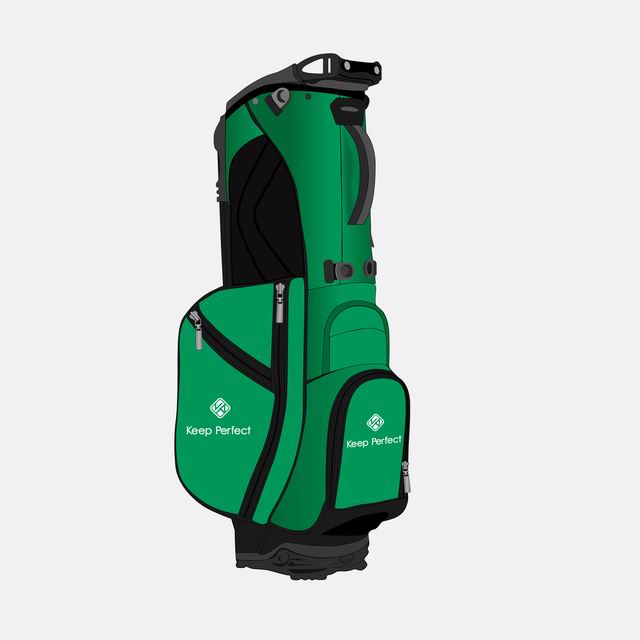
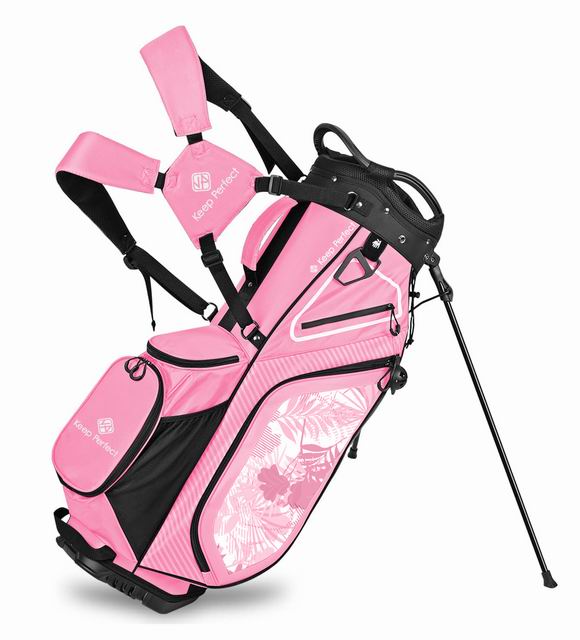
When the calendar is truly short — two weeks and under — the honest product is a hybrid: the models guide's white-label and ODM structures at their fastest. Stock chassis (the standing stand-bag or carry program in quality stock colorways), your branding applied in the fast techniques (embroidery on stocked panels, high-density print — the digitized logo runs while the stock ships), and kitting to the packaging guide's lighter tiers (polybag and hangtag rather than retail sets — the box program adds days the event does not have). The honest calendar: 3–5 days decoration and kitting on stocked goods, air or express freight of 2–5 days — a door-to-door program inside two weeks, at white-label pricing plus the decoration and expedite.
The hybrid's honest limits, stated so the buyer chooses it deliberately rather than by default: the colorway comes from stock (the custom-dye story is the physics that does not compress), the chassis is the catalog's (the OEM pattern work is the other physics), and the program serves the event rather than the brand's product line — the hybrid is the bridge to the real program, not its replacement. Programs that use it well run it as the rescue and the market test simultaneously (the event's reaction to the stock chassis and branding informs the full program that follows at standard pace); programs that mistake it for the product ship the same compromise to their flagship launch.
Staged Orders: Ship What Can Ship
The staged structure is the bridge's sibling at the SKU level: the program's full range ordered at standard pricing, with the delivery staged across the range's natural production sequence — the units whose fabric and decoration are stocked ship in the first wave, the custom-dye and complex-decoration SKUs follow in the second, and the calendar that could not deliver 500 mixed units in three weeks delivers 150 usable ones and 350 in comfortable sequence. The buyer's discipline is honest prioritization (which SKUs does the event actually need on day one — usually far fewer than the first instinct says), and the factory's discipline is the one-PO-two-schedules structure from the bridge section, extended to three waves when the range deserves it.
The staged order's economics are the standard program's economics — no compression premium on any wave, the tier pricing computed on the total commitment (the negotiation guide's tier math on the full 500, not the split), and the freight consolidated on the later waves (the second and third waves share vessels; only the first pays the expediting). The structure's hidden benefit: the staged delivery de-risks the launch itself — the first wave's market response (the sell-through, the review language, the event-day photography) informs the second wave's allocation before it ships. The rush that becomes a staged program ends up with better inventory position than the standard program that shipped everything at once.
Event Rescue: the Worked Scenario
A 144-player charity event in 28 days, standard programs quoting 35–50: the rescue structure prices at roughly +11% — a 60-unit embroidered hybrid on stocked colorways air-freighted for the event wall, plus the 84-unit bulk on the ocean behind it — and the event never knows the calendar was tight.
The scenario, built from the real structures in these guides: a corporate client calls 28 days before a 144-player charity event — 144 branded stand bags wanted for the player packs (the tournament guide's pack architecture). The physics check: 28 days against 35–50 standard bulk means the full order cannot ocean-freight and even the compressed ladder cannot guarantee all 144; the rescue structure — 60 units as a hybrid program on stocked colorways with embroidery (decoration and kitting 5 days, air freight 4 days, buffered for the artwork approval that runs first), plus 84 units on the 25-day compression at the standard ocean schedule behind it — prices at roughly +9% production on the bridge units, +6% on the compressed bulk, and an air freight add of USD 4–5 per bridged unit. The event gets its wall, its player-pack hero units and its follow-up stock; the client's total premium runs near 11% against a program that otherwise does not exist.
The rescue's discipline checklist, in sequence: artwork confirmed in 48 hours (the digitized logo runs immediately — the timeline dependency from the ladder section), the hybrid units' AQL inspection at the decoration stage (a small-lot sampling plan, computed honestly), the event delivery structured as door-to-door terms (DDP per the incoterms guide — the event calendar does not forgive a customs hold), and the client told the truth at quotation: the structure, the premiums and the buffer, in one document. Rescue programs that quote honestly arrive as heroes; rescue programs that quote optimistically arrive as apologies, at the same address.
What Breaks When Rush Breaks
The failure modes of rushed programs, in the order they occur: artwork iteration during production (the line waits on the logo — the most common self-inflicted delay, cured by the 48-hour artwork discipline); fabric substitutions discovered too late (a rush that starts on a custom-dye spec and switches to stock at day 10 has lost its best compression window — the stock decision belongs at quotation); inspection skipped or shrunk (the AQL 2.5 plan computed on a smaller sample or waived 'just this once' — the quality risk converts from statistical to certain, at delivery week, per the physics section); and freight booked to the optimistic date (the vessel missed by a day costs its full week — the freight booking belongs on the realistic date plus buffer, because a week of slack at the port is cheaper than a week of panic at the event).
The pattern across all four: each failure is a compression applied to the wrong stage — the ones that physics protects (dye, freight, inspection) instead of the ones that management controls (artwork, decisions, scheduling). The rush discipline from every section of this guide is the same sentence: compress approvals, decisions and paperwork with everything you have; compress dye lots, vessels and sampling plans with nothing at all. Programs that internalize the sentence stop needing rescue programs — which is the next section's point.
The Calendar That Never Rushes
The rush-free program is a calendar worked backwards honestly, and the timeline guide's milestones are the tool: event date minus inland and clearance (7–10 days), minus ocean transit (14–20), minus production (35–50), minus sampling and approvals (10–15) — which places the artwork approval 70–95 days before the event, and the PO 60–85 days before it. The corporate calendar from the corporate guide's 90-day countdown and the resort guide's pre-season buffers are the same arithmetic at different event types, and the golf-season calendar (the gift guide's spring peaks, the tournament season) sets the dates the arithmetic counts back from.
The calendar discipline's compounding returns: the program that orders at standard pace gets standard pricing (no premium), its full colorway (no stock compromise), its full inspection (no waiver), and its reorder structure (the consistency guide's frozen spec) — which means season two's event ordering is a release against a standing program, the 35–50 days starting whenever the release says. The rush premium is a tax on calendar surprise; the standing program is the tax's only honest exemption. The brands that never rush are not the lucky ones — they are the ones whose season-one rescue program built the standing structure that every later season releases against.
Freight Decisions Under Deadline
The freight ladder under deadline pressure, from the incoterms guide's modalities applied to rescue: express courier (2–5 days, for samples, artwork approvals and the smallest hybrid units — priced per kg, viable to roughly 30–50 units), air consolidation (4–7 days, the bridge shipment's workhorse — USD 4–14 per unit at the 100–200 unit scale), ocean (14–20 days port-to-port, the bulk's economics), and the structure's rule: the freight mode belongs to each schedule, not to the program — the bridge flies, the bulk sails, and the PO writes both terms in its delivery table.
The deadline-freight mistakes the rule prevents: booking the whole program to the optimistic single date (the missed-vessel week from the failure modes section), air-freighting the bulk because the bridge was late (paying 8–12× for a structure decision that should have been made at quotation), and the silent killer — delivery-term mismatch, where a DDP rescue quotation assumed ocean and the calendar now demands air, repricing the whole program without anyone noticing until the invoice. The freight decision belongs on the quotation's delivery table, in writing, with the buffer — the same document discipline as every other clause in these guides.
Rush and Quality: the Non-Negotiable Floor
The one red line that rush never crosses: the AQL 2.5 inspection, computed honestly on the actual lot. The rush versions that stay honest: the small-lot sampling plan for the bridge units (the ISO 2859-1 tables at 60–100 units sample 20–32 — an inspection day, not a formality), the parallel inspection booking (the slot reserved at quotation so the completed goods move straight from line to inspection to airport), and the checkpoint list trimmed to the critical classes where the event demands it (structural seams, strap anchors, branding placement — the critical defect classes from the AQL guide, with the cosmetic classes explicitly deferred to the bulk's full inspection). What rush never buys: a waived inspection, a shrunk sample computed to be convenient, or the 'we'll sort it at kitting' fiction that converts delivery-week quality risk into delivery-week certainty.
The buyer's protection clause, ported from the negotiation guide's red-line structure: 'inspection per AQL 2.5 applies to every delivery wave, sampling computed per lot; third-party option preserved; balance payment follows passed inspection on each wave separately.' The clause prices nothing extra — the inspection capacity was booked at quotation — and it is the sentence that lets a rescue program arrive as a rescue rather than a liability with an event date on it.
Pricing Transparency for Rush Programs
The quotation structure that keeps rush honest, per the negotiation guide's itemization discipline: the standard program price, the compression premium as its own line (the ladder percentage, named by stage — line rescheduling, overtime, parallel approvals), the freight premiums separated by wave (the bridge's air terms, the bulk's ocean), the inspection slot booking as the pass-through it is, and the structural alternatives quoted alongside the compression (the hybrid and staged options at their own economics — so the buyer chooses the structure with the costs visible rather than defaulting into the premium ladder's top rung). The quotation that shows the ladder AND the alternatives converts the panic conversation into an engineering one, which is where the honest money is.
The transparency runs both directions: the buyer's honest brief (the real deadline, the real event, the real budget ceiling — a rush briefed against a fake deadline prices the factory's scheduling fear, which is worse than its overtime) and the factory's honest floor (the stages that physics protects, stated at quotation so the compression premium prices what it actually buys). The rush programs that end badly are the ones where either side optimized the brief instead of the program; the ones that end well are engineering conversations with a calendar attached.
When to Say No to a Rush
Three situations where the honest quotation is no. The date is inside the physics with no structure available (a 10-day full-custom bulk request in a peak season is not a premium question — the hybrid that could serve it exists only if stock, artwork and freight align, and the factory that checks those three alignments before quoting 'yes' is the factory that never apologizes at delivery). The quality floor is the price of the date (the buyer who asks for waived inspection to hit the calendar is buying a delivery-week gamble with the brand's name on it — the negotiation guide's red-lines section applies double under deadline). And the rush is chronic — the third consecutive rescue program for the same client is not a rush, it is a planning failure wearing one, and the honest supplier's response is the standing-program structure from the calendar section, quoted as the exit from the rescue economy.
The professional no is a quotation for the possible: 'the 10-day bulk is not physics; the 10-day hybrid is, at this price; the 30-day bridge-plus-bulk is, at this one; and the standing program makes every future event a release against a schedule.' Four options, one document, no panic — which is how the best rush programs are quoted, and how the rush channel matures into the standing-program channel it should become.
Starting a Rush Program Honestly
Bring four facts and receive the structure options inside a working day: the real event date, the quantity and spec, the artwork status, and the budget ceiling.
The brief that prices a rescue correctly: the real date (not the hopeful one — the quotation schedules to the real one and the buffer protects both sides), the quantity and spec (which chassis, which branding — the hybrid and compression options branch on these), the artwork status (the 48-hour question from the ladder section: logo ready, or development needed — the answer changes the calendar by days no premium recovers), and the budget ceiling (the premium ladder's honest stop — the quotation prices the options to the ceiling rather than discovering it at the third revision). Four facts in, the structure options out: compression ladder, bridge, hybrid, staged — each with its premiums, its physics and its risk stated.
Junyuan has quoted rescue programs for export events since 2014 — the ladder, the structures and the floors in this article are our quotation practice, and the standing-program conversion that ends the rescue economy is our favorite closing line. Four sentences through the quote form (the real date, the quantity and spec, the artwork status, the ceiling) start the process; the structure options return inside one working day, because rescue programs are the one quotation that measures its own service in hours.
Frequently Asked Questions
How fast can custom golf bags be made?
Honest floors: decoration and kitting on stocked chassis (the hybrid structure) run 3–5 production days plus 2–5 days express freight — a door-to-door program inside two weeks. Compressed bulk on stock colorways runs 21–30 days at a 2–15% premium. Full-custom programs with dye lots hold near the standard 35–50 days, because dye, vessels and AQL sampling are physics. The real question is which structure serves the date — the ladder in this guide prices each.
Can I get custom golf bags in two weeks?
Yes, as a hybrid program: quality stock chassis in standing colorways, your logo embroidered or printed, kitted to the light packaging tiers, express or air freight — 3–5 production days plus 2–5 transit days, door to door. What the two-week answer costs honestly: the colorway comes from stock (custom dye is the physics that does not compress), the chassis is the catalog's, and the program serves the event while the full program follows at standard pace. It is a rescue structure and a market test in one — not a flagship launch.
Why do rush orders cost more?
Because compression spends resources another customer was counting on: the line reschedules around committed programs, staff run overtime, stock fabric substitutes for scheduled dye lots, inspection slots are pre-booked and freight moves to premium modes. The honest ladder prices it at +2–5% for 30-day compression, +8–15% plus air for 21-day, with the freight premium as a separate line (air adds USD 4–14 per bridged unit). A rush briefed as stage-decisions prices accurately; one briefed as 'faster' prices as the factory's fear plus its overtime.
What is a bridge shipment for golf bag orders?
The experienced buyer's structure: 50–200 units air-freighted ahead of the ocean bulk — the event wall, the launch stock, the first orders — with the balance arriving at ocean economics three weeks later. One PO, two delivery schedules: the bridge units run first on the line (a sequencing decision priced at quotation), each wave carries its own AQL sampling plan, and the freight terms price separately. The arithmetic: 100 units by air adds roughly USD 9–14 per bridged unit, against an event that otherwise does not happen.
Can I skip inspection to hit my deadline?
It is the one red line rush never crosses, and the most expensive skip in the program: the delivery week is the worst possible moment to convert statistical quality risk into certain quality risk. The honest rush versions: a small-lot sampling plan computed properly for the bridge wave (ISO 2859-1 at 60–100 units is an inspection day, not a formality), the inspection slot booked at quotation, and the checkpoint list trimmed to critical defect classes where the event demands. What never buys a date: a waived plan or a shrunk sample.
How far before an event should I order custom golf bags?
Work the honest backwards calendar: event date minus inland and clearance (7–10 days), minus ocean (14–20), minus production (35–50), minus sampling and approvals (10–15) — artwork lands 70–95 days out, the PO 60–85 days out. Inside 60 days the structures take over: 40–60 days runs a compressed bulk comfortably, 25–40 runs a bridge or staged order, under 21 runs the hybrid. The standing program is the exit from the arithmetic — season two's event is a release against a frozen spec, not a new countdown.
What can be compressed in a golf bag rush?
The management-controlled stages: approvals (artwork and sample decisions running in days and in parallel), scheduling (line rescheduling, overtime, inspection pre-booking), paperwork (documents assembled at balance moment per the incoterms discipline), and freight mode (air, bridge, express). What physics protects: dye-lot minimums and mill schedules, AQL sampling of the produced lot, vessel departures, and the customs process at arrival. The rush discipline in one sentence: compress decisions with everything you have; compress dye, inspection and vessels with nothing at all.
Do factories charge a rush fee for golf bags?
As a compression premium priced by stage: +2–5% for 30-day bulk (rescheduling and overtime), +5–8% for 25-day (plus the stock-colorway requirement), +8–15% for 21-day (plus simplified decoration, booked inspection and the air-freight conversation). The premium prices the unit FOB; the freight premium is its own line item on each wave. A factory that quotes one number for a rush is pricing fear; one that quotes the ladder and the structural alternatives is pricing engineering.
What if my golf bag order is late?
First, the freight booking discipline: vessels booked to the realistic date plus buffer, because a missed sailing costs its full week — the buffer week at the port is cheaper than the panic week at the event. Second, the structural options quoted before the crisis: a partial express release (the bridge logic applied to the shortfall), or a staged delivery of what completed. Third, the honest conversation with the factory — the rescue structures in this guide work best at day one of the problem, not day twenty. Programs with the two-schedule PO structure absorb lateness as a re-balancing of waves; programs with one date absorb it as a crisis.
Can rush orders maintain quality?
Yes — through the structures, not through speed: the hybrid runs on stocked chassis with the same AQL 2.5 floor (a 60–100 unit lot is honestly sampled in a day), the bridge wave carries its own sampling plan, the compressed bulk keeps the full 40-point checklist with the slot pre-booked, and the checkpoint trims touch only cosmetic classes where the event demands, never the structural red lines (seams, anchors, branding placement). Quality under deadline is a scheduling discipline, and the scheduling was priced at quotation.
How do rush programs handle shipping?
By wave and by mode: express courier (2–5 days) for samples and the smallest hybrid units, air consolidation (4–7 days, USD 4–14 per unit at the 100–200 scale) for bridge waves, ocean (14–20 days) for the bulk behind them — each wave's mode and terms written in the PO's delivery table at quotation. The mistakes the structure prevents: one optimistic booking date for everything, air-freighting the bulk because the bridge slipped, and the DDP quote that assumed ocean repricing silently when the calendar demanded air.
Should I tell the factory my real deadline?
Yes — it is the rush briefing's first honest fact, because the entire structure depends on it: the quotation schedules to the real date, the buffer protects it, and the freight terms price to it. A padded deadline prices the factory's scheduling fear at every stage (overtime for slack, air for buffer) and delivers the goods earlier than needed at premium cost. The rescue programs quoted honestly — real date, real quantity, artwork status, budget ceiling — are the ones that arrive as rescues; the ones briefed as games arrive as lessons.
How do I start a rush golf bag order?
Four facts through the quote form on this site: the real event date, the quantity and spec, the artwork status (logo ready or development needed — it changes the calendar by days no premium recovers), and the budget ceiling the premiums stop at. The structure options — compression ladder, bridge, hybrid, staged — return inside one working day, each with premiums, physics and risk stated. Junyuan has quoted export rescue programs since 2014; the standing-program conversion that ends the rescue economy is our favorite closing line.