
The Simulator Era in Outline
Screen golf runs at venue scale now: urban sim lounges, corporate sim rooms, home setups and the winter geography they convert — a fourth golf venue alongside the course, the range and the practice green, with its own equipment economics.
The venue map, in the frames a program needs: the commercial sim lounge (the urban venue model — screens, bays, the food-and-drink overlay, the league nights and the booking culture; a model Korea mainstreamed at national scale and that cities worldwide have adopted), the corporate sim room (the office and client-entertainment venue — the corporate golf day's indoor sibling, the year-round version of the seasonal event), the retail-and-fitting sim (the teaching and fitting studios — the launch-monitor infrastructure that coaching and club-fitting run on), the home sim (the enthusiast's garage and basement setups — the launch monitor market's consumer base), and the winter geography that binds them (the climates where the season runs months short — the geography that makes screen golf infrastructure rather than novelty).
Why the era matters to a bag program: each venue is a buyer (the lounge's house equipment and merch, the corporate room's branded kit, the studio's program bags, the home player's compact chassis), the usage patterns differ from course play in ways that rewrite the bag spec (the commute formats, the storage-in-venue patterns, the rack geometries — the sections below), and the demand shape flattens the industry's seasonality (the warehousing guide's reorder math running on a calendar the winter channel evens out). The simulator era is not replacing the course — it is adding a venue, and the programs that serve the venue's actual physics (rather than shrinking course bags at it) are the ones that own the channel.
What Sim Culture Changes About Bags
The honest engineering deltas between the screen venue and the course: the transport reality (the sim visit is a commute — the bag travels by car trunk, transit and rideshare to an indoor venue, which prices the compact and protected formats: the sunday and pencil chassis, the weekender formats, the soft-structure travel logic of the travel guide at commute scale), the storage reality (many venues store the player's set — the rack and bay geometry, the club-at-venue culture that makes the bag a storage address as much as a carrier), and the carrying reality (the short carry — from door to bay — which reweights the spec from all-day ergonomics to grab-and-go handles, and prices the weight classes differently than the walking round does).
What sim culture does not change — the club protection logic (the graphite-era divider discipline of the evolution guide's top-opening chapter still applies: the set that lives at the venue still wants organized, protected storage), the identity logic (the bag still brands — arguably harder, in a venue where the bag is the visible possession the lounge photographs), and the quality bar (the AQL discipline at the venue's usage intensity, which is lower per-round on weather but higher on handling cycles — the racks and the repositions). The section's summary: the sim bag is the compact-storage-commute chassis — a distinct spec, not a shrunk course bag, and the program that engineers it as its own chassis (as the sunday class already is) prices the channel honestly.
The Commute Format: Bag as Carry-On
The commute spec, held in engineering terms: the dimension discipline (the formats that live in car trunks, rideshares and the transit-commuter patterns the Japanese market's compact-transport logic mainstreamed — explicit length and height caps, the storable geometry), the protection discipline (the commute is the bag's hardest transport cycle — the trunk's tools and groceries, the rideshare's cargo areas: the structured bases and the protected tops the weekender formats carry, the travel-cover logic at the commuting scale), and the grab-and-go discipline (the single-motion carry — the handles that address the short carry, the quick organization that serves the hour-long session rather than the five-hour round).
The format economics the commute enables: the premium compact band (the commute format carries a price band its material cost does not explain and its lifestyle function does — the price-tier guide's compact-premium logic, the same phenomenon the Japanese dimension discipline prices), the commuter-culture crossover (the urban player whose golf life is the after-work sim session — the bag that lives at the office-to-venue rhythm, branded for the life it lives), and the low-MOQ structures the channel supports (the venue's merch SKUs and the commuter's personal formats — small-run programs at premium bands, the drop-guide's limited structures at commute scale).
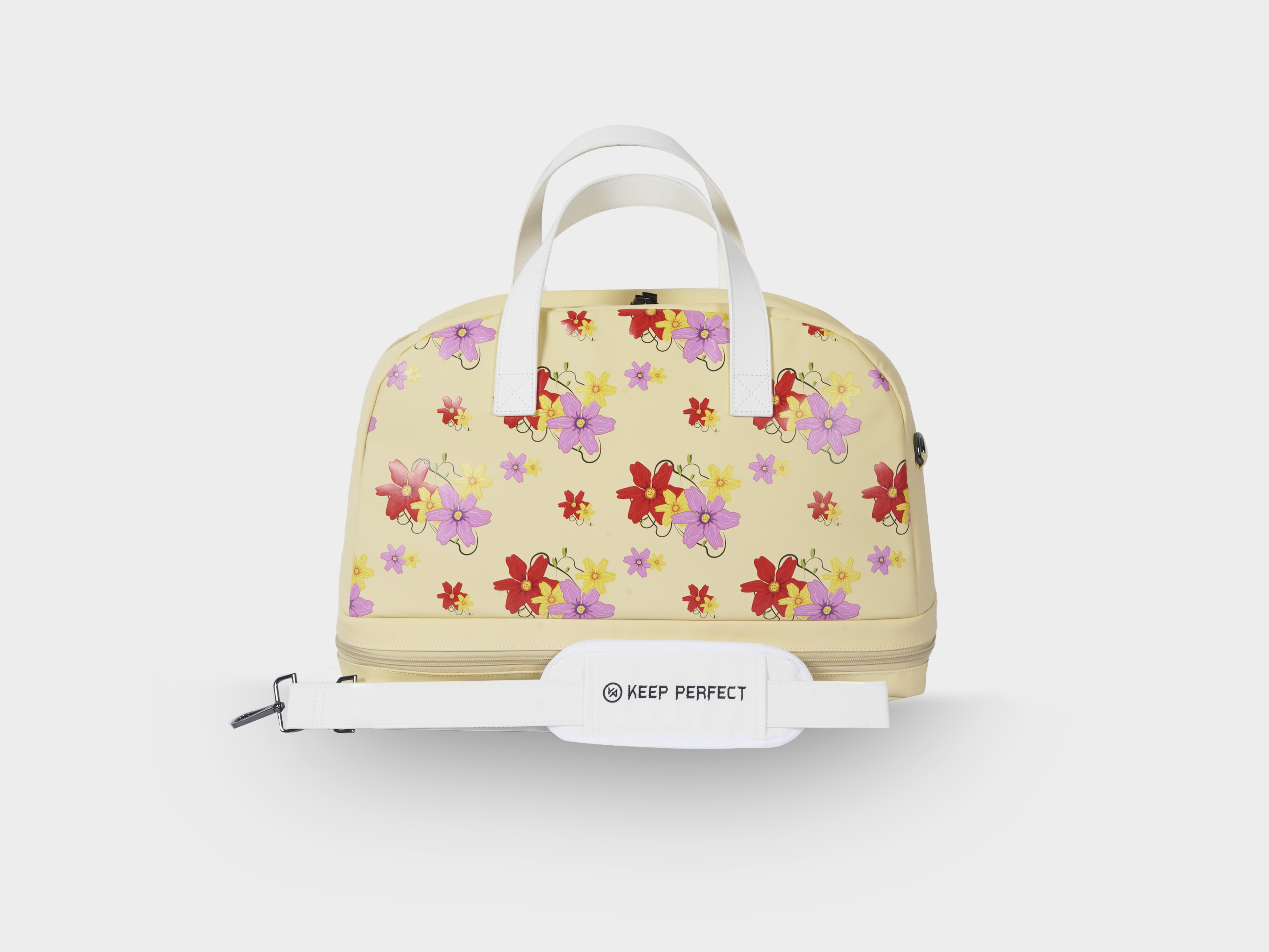
In-Venue Storage and the Rack Geometry
The storage-in-venue pattern (the player whose set lives at the sim — the regular's rack position, the member's club home) writes a distinct spec: the rack geometry (the venue's storage bays have dimensions and the bag that racks well is the bag the venue stocks and recommends — a spec line the venue can name and the supplier should ask for, the same receiver-spec logic the adaptive guide's mounting section documents: the platform's dimensions in hand before the pattern), the standing stability (the bag that lives on a rack wants a stable base geometry — the den-caddie class's standing formats, the self-supporting constructions), and the identification surfaces (the member's name, the venue's tag — the personalization logic at the storage address, the placement guide's interior-tier structures doing member-management work).
The venue-side economics of storage: the member-storage program (the venue's membership tier that includes the rack position — the bag as the membership's physical deliverable, the launch guide's membership-SKU logic), the house-bag service (the venue's loaner and house bags — the fleet logic the cart guide's fleet programs run, at indoor scale, with the reorder discipline that fleet turnover prices), and the storage-driven reorder velocity (the racks fill, the membership grows, the house fleet wears — the venue as a standing institutional buyer, which is the channel's annuity structure). The one-line summary: in-venue storage turns the sim lounge into a fleet-and-membership buyer — institutional economics at urban scale.
The Practice Bag of the Screen Era
The range-bag logic migrates to the screen venue (the Japanese guide's range-culture category finding its global venue): the sim session is a practice session (the bucket's indoor equivalent — the ball management, the station-side storage, the session-scale format), and the practice formats serve it (the den-caddie class, the standing station bags, the compact practice chassis with the ball-forward pockets the range discipline builds). The screen-era practice bag differs from its range parent in one honest way: it lives indoors (the weather spec relaxes, the handling spec tightens — the venue's traffic, the reposition cycles, the aesthetic visibility the indoor context prices).
The program crossover the category carries: the teaching and fitting studios (the screen venues that are coaching businesses — the branded practice equipment of the instruction channel, the academy structures at screen scale), the league practice (the sim's league nights as the practice culture of the urban player — the team-identity logic of the school and team guides finding an adult venue), and the home-sim crossover (the practice format that lives at the home setup — the garage-station bag, the smallest standing format, the natural DTC SKU of the home-sim market). The practice-of-the-screen-era summary: the venue's coaching and league structures buy the formats the range culture trained, at the venue's own aesthetic and handling spec.
Sim Lounge Branding Programs
The house-bag branding logic (the venue's identity carried by its equipment — the resort psychology at urban scale): the lounge's house bags (the loaner and member fleet carrying the venue's brand — the visible, photographed, tagged equipment of the membership's social posts), the merch line (the venue's retail arm — the branded compact formats the member takes home, the retail-packaging tiers at lounge scale, the souvenir logic of the destination applied to the urban venue), and the event calendar (the league nights, the corporate bookings, the tournaments the screens run — the event structures and corporate giveaway logic at venue scale, year-round).
The branding surfaces the venue prices (the placement guide's logic in the indoor context): the photographed panels (the social-media geometry — the bag that appears in the member's posts is the venue's earned media, and the panel placement optimizes for the selfie frame rather than the course's sight lines), the identity-forward executions (the venue's aesthetic — the urban lounge's design language on the compact formats, the design directions at lounge scale), and the partnership overlays (the venue's brand partnerships — the equipment and apparel co-branding, the drop structures the venue's anniversary and league-championship moments run). The section's economics: the lounge is a brand buyer — small-format, high-frequency, identity-forward programs with the reorder cadence of a retail brand and the visibility economics of an event venue.
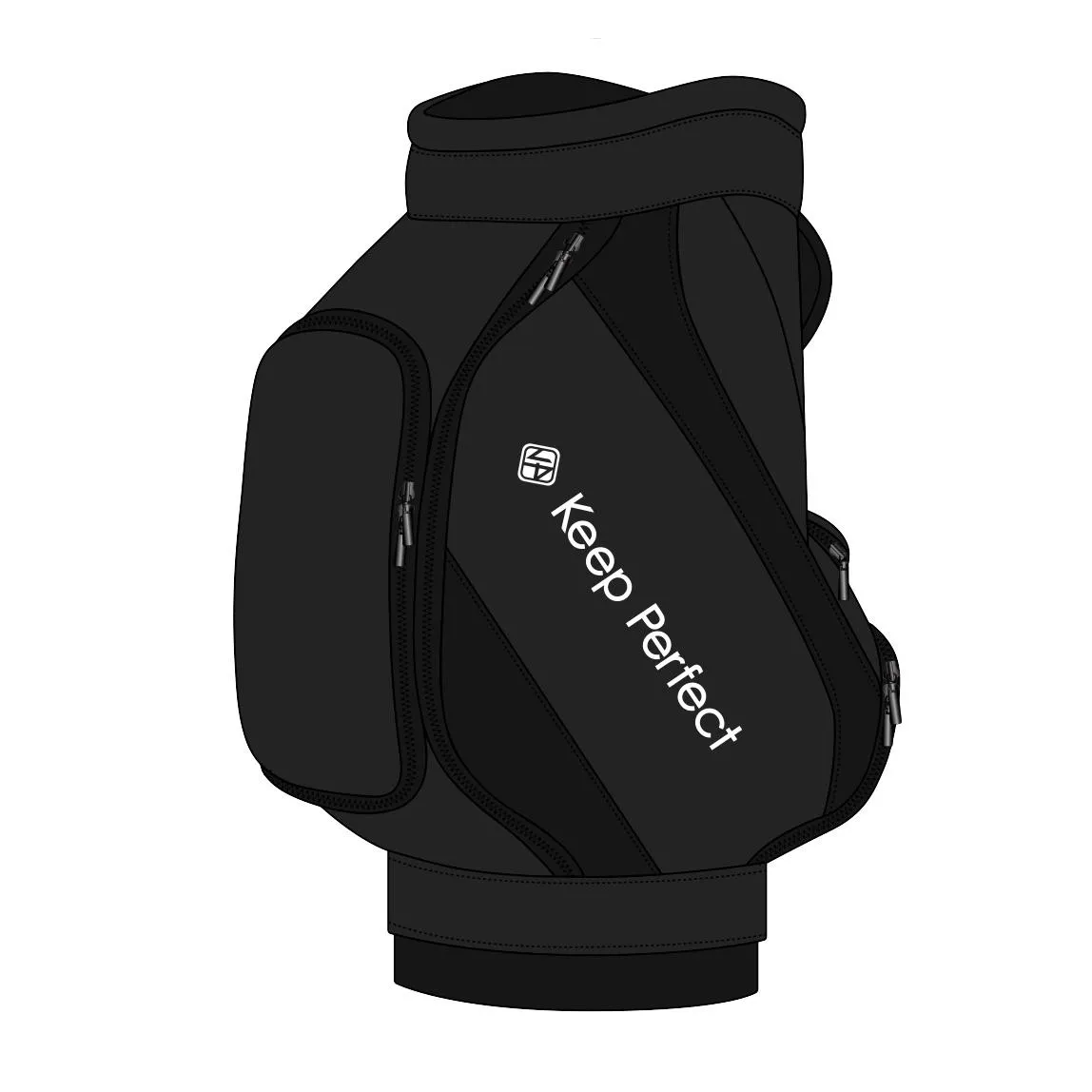
Corporate Sim Rooms and the Merch Tie
The corporate sim room is the corporate golf day's year-round sibling, and its program logic follows: the room's branded kit (the house equipment of the client-entertainment and team venue — the corporate identity on the compact formats the room's physics dictate), the client-gift tie (the branded weekender and practice formats as the corporate gift of the sim era — the gift guide's tiers at the urban-executive register, the corporate guide's structures running twelve months instead of one afternoon), and the event calendar the room runs (the client entertainment, the team events, the league the office fields — the event structures at meeting-room scale).
The corporate room's program economics: the year-round advantage (the winter geography that empties the corporate golf day's calendar fills the sim room's — the corporate channel's seasonality flattening, which makes the room's supplier programs steadier than the day's), the procurement profile (the facilities and HR budgets the rooms run on — institutional buying at corporate formality, the negotiation guide's annual structures arriving naturally), and the gift-and-merch annuity (the room's gift calendar — the client gifts and the team awards — renewing against the anchor sample the reorder discipline holds). The one-line summary: the corporate sim room converts the corporate golf day from a season into a schedule — and the programs that serve the schedule run the day's economics year-round.
The Winter Channel and Demand Flattening
The winter geography is the simulator era's economic engine: the climates where the course season runs months short (the northern tier of North America and Europe, the monsoon belts of Asia — the Japanese and Korean screen-golf cultures grew from exactly this), and the screen infrastructure converts the dead season into the year-round channel — the urban player's weekly golf life continuing at the venue through the months the course closes. The demand consequence for programs: the seasonal peak the golf bag industry's calendar runs on (the spring stocking of the ordering guides) flattens toward a steady state — the venue's house-fleet turnover, the member-storage growth and the merch line running through the calendar's quiet half.
The program structures the flattening enables: the steady-state reorder (the venue's monthly or quarterly replenishment — the warehousing guide's velocity logic at lounge scale, the 3PL structures serving the urban venue's steady turns), the winter-first launch calendar (the compact-format programs launching against the autumn — the season when the sim demand builds — rather than the spring, the launch guide's staging re-timed for the screen channel), and the counter-seasonal factory advantage (the winter-channel demand landing at the Northern factories' capacity windows — the quiet-season logic the Australian guide's inverted calendar documents, available to every winter-geography program). The one-line summary: the winter channel turns the industry's hardest quarter into the screen venue's peak — and the programs that serve it run steady economics where the industry runs its worst.
Leagues and the Team Identity Opportunity
The sim's league culture is the urban player's team golf: the lounges run leagues (the weeknight divisions, the seasons, the standings and the playoff culture — the booking-driven community structures the venues build retention on), and leagues are team-identity machines (the team guide's logic at adult-urban scale: the league's identity, the team formats, the championship moments), which makes the league the screen era's identity-program buyer — the branded compact formats the league's teams carry, the championship and season-award structures the drop guide's trophy tiers serve, the league's merch line at the venue's retail arm.
The identity program's economics: the league's annual cycle (the season renewals — the reorder discipline at league cadence, the anchor system holding the league's identity consistent across seasons), the corporate-team crossover (the office league the corporate room fields — the team identity carrying the corporate branding, the corporate structures and the league structures meeting in one program), and the community-building depth (the league as the venue's retention engine and the bag as the league's wearable identity — the placement logic optimized for the group-photo moment the league culture runs on). The section's summary: leagues are the screen era's identity economy — and identity economies buy identity programs, year after year, against the anchor sample.
What Sims Cannot Replace
The honest boundary, held commercially: the course's physics remain the industry's center (the walking round's load-bearing hours, the weather architecture, the cart life, the travel patterns — the chassis families the evolution guide documents were built for the course and remain built for it), and the sim's bag demand is an addition to that center, not a replacement of it — the commute format and the storage format and the practice format are the venue's own chassis, running alongside the course families rather than displacing them. The buyer who reads the sim era as the course bag's decline has misread the era: the screen venue grows golf's addressable hours (the winter, the urban, the after-work), which grows the game's equipment base, which grows every chassis family's market.
The cross-venue program the era actually writes (and the strongest suppliers' structure): the two-format brand — the course format and the venue format under one identity (the member who carries the brand's course bag to the weekend round and the brand's compact format to the weeknight sim — the platform strategy's one-brand-many-chassis logic, the launch guide's ladder running across venues instead of bands), served by the same anchor discipline, the same reorder system, the same consistency expectations — the brand present at every venue its player plays. The one-line summary the section earns: the sim era's winners are the programs that treat the screen as a second venue, not a second game.
A Worked Sim Lounge Program
The worked program: a 120-unit urban sim lounge order (the house program of a mid-sized lounge chain's flagship — the identity kit the venue runs): 60 house bags (the member-loaner and rack fleet — the standing compact formats the storage section specced, the venue's brand across the photographed panels, the rack-geometry dimensions the venue's floor plan supplied), 40 member-retail units (the merch line — the branded compact commute formats at the mid-premium band, the retail-packaging tiers at lounge scale), and 20 league-championship units (the season-award structures — the trophy tier's numbered executions, the league's playoff moments branded).
The economics and the calendar: the order prices across three structures (the fleet logic of the house bags, the retail logic of the merch line, the drop logic of the championship tier — one program, three reorder cadences the warehousing guide's structures each serve), the calendar runs the venue's year (the autumn launch against the winter build, the steady-state replenishment through the season, the championship order timed to the league's playoffs — the winter channel's flattening economics in one program), and the reorder shape is the annuity (the fleet turnover, the merch restock, the next season's championship run — the venue as a standing institutional buyer, the anchor sample holding the identity across every cadence). The lesson the worked program carries: the sim lounge is a three-program buyer in one account — fleet, retail and drop — and the supplier who can serve all three at compact-format scale owns the venue's calendar.
Pricing and Positioning
The channel's pricing logic, honestly held: the compact formats carry premium bands the cost stack alone does not explain (the lifestyle function, the urban visibility, the commute discipline — the Japanese market's compact-premium phenomenon generalized to every screen culture), which lets the venue's programs price at margins the course channel's equivalents envy — the merch line at retail bands, the house fleet at institutional bands with the turnover economics, the league and championship structures at the scarcity premiums the drop logic prices. The landed discipline: the compact formats' freight (the light, dense shipments the LCL arithmetic of the incoterms guide favors — small cargo, high value, the consolidation structures serving it well).
The positioning that wins the channel: the venue-native program (the compact-storage-commute chassis engineered as its own format rather than a shrunk course bag — the spec the early sections wrote), the identity-forward executions (the design vocabulary at urban-lounge register, the photographed-panel optimization the branding section priced), and the three-structure service (the fleet-retail-drop capability the worked program demonstrated — the supplier who quotes all three cadences in one program structure prices the channel's full economics). The one-line summary the section earns: price the format's lifestyle premium, serve the venue's three structures, position as venue-native — and the screen era's buyer has found a long-term supplier.
Common Mistakes in Simulator Programs
The mistakes first simulator-era programs make: the shrunk-course-bag error (the standard stand bag downsized and called a sim format — the commute and storage physics missed at the first carry, the venue's floor plan never asked for), the seasonal-calendar error (the program launched against the spring instead of the autumn — the winter channel's demand build missed by exactly the industry calendar the channel exists to flatten), the merch miss (the venue's retail arm treated as an afterthought rather than a program structure — the retail packaging tiers skipped on the formats the member takes home), and the single-structure error (the supplier who serves the house fleet but not the league's championship tier, or the merch line but not the fleet — the venue's three-program economics served at one-third).
The quieter mistakes that cost the second season: the photography miss (the branding placed for the course's sight lines instead of the lounge's selfie frames — the social-media geometry the placement logic should optimize in this channel), the rack-geometry miss (the storage dimensions discovered at delivery instead of at the RFQ — the receiver-spec discipline skipped), and the steady-state miss (the reorder program built for seasonal spikes the channel does not run — the warehousing and replenishment structures the venue's flattened demand actually wants, mispriced as a spring business). The root of all of them: reading the screen venue as a small course instead of a new venue — the channel runs its own physics, and the program that learns them owns them.
Frequently Asked Questions
Do I need a special bag for a golf simulator?
A purpose-built format serves better than a standard course bag: the commute discipline (compact, protected, grab-and-go), the venue's storage geometry if your set lives at the sim, and the short-carry ergonomics the indoor session runs. The sunday and weekender classes and the standing practice formats serve it well — the sim bag is its own chassis, not a shrunk course bag.
What bags work best for screen golf venues?
Three format families: the compact commute chassis (sunday, pencil and weekender classes) for the member who travels to the venue, the standing storage formats (the den-caddie class) for the rack-and-bay geometry of sets that live at the sim, and the house-bag fleet formats for the venue's loaner and member programs — each with the indoor-context spec (relaxed weather, tightened handling and aesthetic lines).
How do sim lounges brand their bags?
Through the identity logic of every channel this site documents, at urban scale: the house fleet carrying the venue's brand across the photographed panels (the social-media geometry — the bag in the member's posts is the venue's earned media), the merch line at the retail arm, and the league and championship structures of the drop tier. The lounge is a brand buyer: small-format, high-frequency, identity-forward.
Is screen golf growing the equipment market?
As an addition to the course's center, not a replacement: the simulator converts the winter geography and the after-work hours into golf's addressable time, which grows the game's equipment base — every chassis family's market grows with it. The screen era's honest winners are the programs that treat the venue as a second venue for the same game and the same brand.
What is the difference between a range bag and a sim bag?
The parent and the sibling: the range bag (the standing practice caddy of the driving-range culture — ball-forward, session-scale, outdoor-hardened) and its screen-era child (the same practice logic at the indoor venue — the standing station format with the indoor context's relaxed weather spec and tightened aesthetic and handling lines). The categories share formats; the venues write the differences.
Can corporate sim rooms run golf bag programs?
Year-round, which is the point: the room's branded kit, the client-gift tie (the compact formats as the sim-era corporate gift), and the event calendar running twelve months instead of the corporate golf day's season. The procurement runs on facilities and HR budgets at corporate formality, with the gift-and-merch annuity renewing against the anchor sample.
What is the winter channel in golf equipment?
The demand flattening the simulator era writes: the climates where the course season runs months short convert their dead season into the screen venue's peak — the urban player's weekly golf life continuing indoors. For programs, the flattening means steady-state reorders through the industry's quiet half, winter-first launch calendars, and the counter-seasonal factory windows the quiet demand lands in.
How do leagues create bag programs?
As the screen era's identity economy: the weeknight divisions and season structures build team identities, and identity economies buy identity programs — the branded compact formats the teams carry, the championship and season-award structures of the drop tier, the league's merch line. The league's annual cycle renews against the anchor discipline: the identity consistent across seasons.
What size golf bag is best for commuting to a simulator?
The commute spec: explicit length and height caps that fit car trunks and rideshares, the structured protection the trunk's cargo reality demands, and the grab-and-go carries the short indoor carry prices. The sunday and pencil classes and the weekender formats carry the discipline — the compact band's premium pricing is the lifestyle function, not the material cost.
Do golf bags live at the simulator venue?
Many do — the member-storage pattern (the set that racks at the venue) is a real buying structure: the member-storage tier of the venue's membership, the house-bag fleet for loaners, and the storage-driven reorder velocity of the racks and fleets. In-venue storage turns the lounge into an institutional buyer — fleet and membership economics at urban scale.
How should a brand serve both course and simulator players?
With the two-format identity: the course format and the venue format under one brand (the member who carries the brand's course bag to the weekend round and its compact format to the weeknight sim), served by the same anchor discipline and reorder system — the platform strategy running across venues instead of price bands. The brand present at every venue its player plays.
What mistakes do simulator bag programs make?
The four classics: the shrunk course bag instead of a venue-native format, the spring launch instead of the autumn build, the merch line skipped or afterthoughted, and the single-structure service (the fleet without the league, the retail without the fleet). The quieter ones: branding placed for course sight lines instead of selfie frames, and the rack dimensions discovered at delivery. The root: reading the screen venue as a small course.
Are golf simulator bags a big enough market for OEM programs?
Yes, in the venue structures that buy them: the lounge chains (fleet, retail and drop structures — the three-program account), the corporate rooms (year-round corporate formality), the teaching and fitting studios (the academy structures at screen scale), and the home-sim crossover (the smallest formats as natural DTC SKUs). The compact formats' premium bands price the channel honestly at institutional volumes.
How does a sim venue start a bag program with a manufacturer?
With the floor plan and the identity: the venue's rack and bay dimensions in hand before the pattern (the receiver-spec discipline), the brand and design language for the photographed panels, and the three-structure RFQ (fleet, retail, championship) the supplier can quote as one program. The worked 120-unit program in this guide — 60 house, 40 retail, 20 championship — is the shape.