
The Australian Golf Market in Outline
A compact, high-participation market: well over a thousand courses, one of the world's strongest participation rates per capita, a decisive cart culture, and a program calendar that peaks in the southern summer — December through February.
The market's shape, in the numbers that matter to a program: a course base in the high hundreds to low thousands (a density that supports a strong club-channel economy — the pro shops and their programs), participation rates per capita among the world's strongest (the demand base for retail and gift channels alike), and a corporate golf culture that punches far above the market's size — the charity and corporate golf day is an Australian institution, and the event programs and corporate day giveaways that elsewhere are a channel are here close to a market of their own. The retail side has consolidated the way developed golf markets do, which pushes the program opportunity toward the channels with local character: clubs, events, destinations and corporate calendars.
Why the market rewards B2B programs specifically: the Australian buyer's economics run through import (the manufacturing base is overwhelmingly offshore — the FOB structures of the cost breakdown are the market's cost base), through distance (the ocean leg and its calendar consequences — the warehousing and reorder math of the fulfillment guide run with longer, thinner pipelines), and through the small-population paradox (a market of 26 million that plays like a much larger one — programs are mid-sized, quality expectations are developed-market, and the low-MOQ structures matter because the addressable order rarely justifies a container on its own).
Cart Country: the Dominant Chassis
The chassis decision is made by the course architecture and the climate together: Australian golf is walked less and ridden more than almost any comparable market (the heat, the distances, the course design generations built around cart paths), which makes the cart bag the default program chassis — flat or molded bases sitting the cart bay, the full feature budgets a cart chassis carries (the 14-way tops, the full pocket architectures), and the price-tier logic of the cart family driving the pro shop's serious shelf. The walking counter-programs exist and are deliberate: the stand bag for the walking-strong precincts and the traveling player, the sunday and pencil chassis for the short-round and urban cultures — but the program volume sits with the cart family, and the buyer who leads an Australian program with a walking-first assortment has the market backwards.
The cart dominance has spec consequences beyond the obvious: the base geometry (the friction and orientation logic of the cart bay — the cart guide's structural points), the strap demotion (a one-orientation product in practice), the weight budget's release (cart life permits the feature sets the walking bands cannot carry — the premium band's 14-way architectures live here), and the durability emphasis (the Australian cart bag lives in the sun between rounds — the UV spec section below is the chassis's first environmental constraint, and the hardware classes face salt air in the coastal precincts where the courses concentrate).
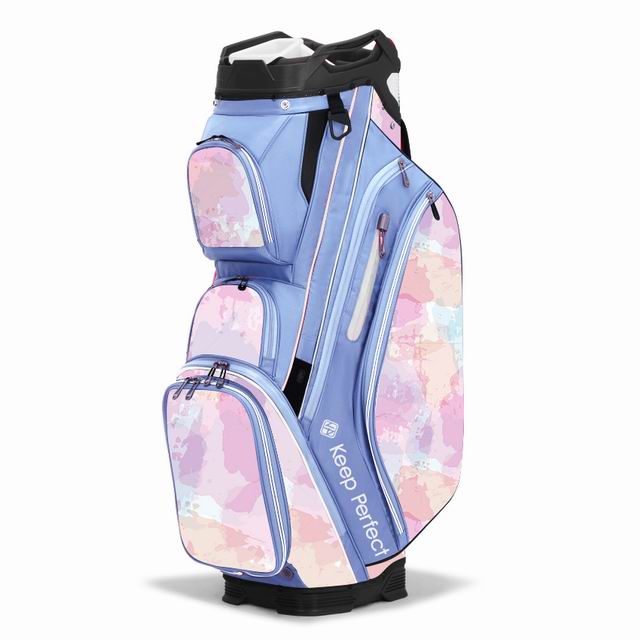
UV, Salt and Two Climate Bands
Australia's environment writes two spec lines a Northern program rarely prices. First, ultraviolet exposure at intensities the northern markets do not see: the sun-grade discipline — solution-dyed fabrics (the materials guide's class that holds color at the molecular level rather than the surface), the ISO 105-B02 lightfastness logic the resort guide applies to a single property's sun, applied here to a continent's — because a bag that fades in a Sydney or Brisbane summer fades visibly in one season, and the color discipline is only as good as the fabric under it. Second, the salt-air reality of the coastal concentration (where the courses and the clubs are): plated hardware in salt air has a corrosion clock, and the hardware grades of the premium band — anodized, stainless-minded, marine-conscious — earn their line items here.
The two climate bands a national program has to hold simultaneously: the southern temperate belt (Melbourne's four-seasons variability, the southern capitals' sun-with-chill) and the tropical north (the wet season's monsoon logic, the humidity's mildew and mold pressures — the anti-mildew packaging discipline and the maintenance guide's after-rain protocols at program scale). The honest spec response is a two-tier material map rather than one compromise fabric: the sun-grade solution-dyed shell for the national core, and the humidity-minded treatments (the packaging guide's moisture controls, the mold-inhibited storage protocols) for the tropical channel — a distinction the RFQ should name because the factory can price it, and the market will test it.
The Inverted Buying Calendar
The southern summer peaks December through February, so the program calendar inverts: samples and POs run through the Northern factories' quiet months, and the season's goods land against a late-spring freight window.
Work the inversion honestly: the Australian golf season peaks in the southern summer — December through February — with the shoulder seasons strong on both sides (the spring and autumn that in most of the country are the best playing weather of all). Backwards from a December season start: the goods want to be landing in October–November (the retail and pro-shop stocking ahead of the peak), which puts the production window at August–September (the 35–50 day production of the timeline guide plus the ocean leg), which puts the PO at July, which puts the sample cycle at May–June, which puts the program decision at April — and April in the Australian golf world is the autumn shoulder, the season just ending, which is why the inversion catches first-timers: the market is closing its season exactly when the next season's program must be decided.
The inversion's opportunity side — and the reason it rewards rather than punishes the prepared: the Northern factories' calendar has space exactly when the Australian program needs it. The May–June sample cycle and the July–August production run against the Northern summer, when the China-side capacity is between the Western holiday programs and the fall calendar — the rush guide's compressed windows are rarely needed, because the inverted program books the quiet season. The corporate and event calendar runs its own inversion worth mapping: the charity golf day season concentrates in the southern autumn and spring (the shoulder seasons' outdoor comfort), which pulls its program dates another quarter-turn from the retail logic — a multi-channel Australian program runs two calendars, both inverted, offset from each other by a season.
Border Mechanics: ChAFTA, GST and the Ocean Leg
The import economics that shape every Australian quote: the China–Australia Free Trade Agreement has phased most golf bag tariff lines (the HS 4202.92 family) to zero duty — the schedule should be confirmed on the current line, but the practical effect is that the China-side FOB structures of the MOQ guide arrive at the Australian border essentially duty-free, a cost advantage the program's landed math enjoys as a market reality rather than a negotiation win. The GST runs at 10 percent — collected at the border on consignments above the low-value threshold, and at the point of sale on low-value imported goods (the structures the drop-ship programs touch when they sell direct), recoverable for registered businesses in the standard VAT-like mechanics the European guide's VAT discussion maps in parallel.
The ocean leg and its calendar discipline: the Australia-run destinations (Sydney, Melbourne, Brisbane — the consumption centers the freight consolidates toward) price the distance honestly — the leg is long, the consolidation economics matter (the incoterms guide's FCL-versus-LCL crossover at 8–12 cubic meters applies with force in a market where the program rarely container-loads alone, and the shared-container LCL discipline is the default), and the freight calendar must absorb the southern summer's port peaks (the pre-Christmas congestion the inverted calendar lands on — the October–November landing window books against everyone else's too). The landed-cost frame the program should hold: FOB plus a realistic freight share plus GST — a thinner duty layer than almost any comparable market, which is precisely why the spec lines (UV-grade shells, salt-air hardware) should be spent on: the border is cheap; the environment is not.
Channels That Move Volume
The channel map, in the order programs actually meet them: the club pro shop economy (the strongest program channel — clubs as institutions, the pro shop as the member-facing retail arm, and the branded club program as the identity logic the club channel guide documents), the corporate and charity golf day institution (a market of its own — the event structures and gift tiers at Australian volumes, with the novelty-branded giveaway bag as the working SKU), the destination golf corridors (the Melbourne Sandbelt and the Queensland resort belts — the resort psychology and souvenir economics applied to a domestic tourism market that behaves like international travel), and the retail channel (consolidated, price-led — the wholesale structures where they apply, the entry and mid price bands where they land).
The matching logic for a program entering the market: lead with the club channel (the pro shop program is the market's center of gravity — the MOQ-200-and-up structures of the MOQ guide fit the club program's economics exactly), serve the corporate day calendar deliberately (the autumn-spring seasonality of the section above, the decoration-forward products the logo placement guide prices for visibility), and treat the destination channel as the premium corner (the souvenir tier's better constructions — the sun-graded, salt-conscious premium executions the climate sections wrote). The retail channel is the volume footnote rather than the strategy: it is real, but its price-led consolidation makes it the distributor's territory before it is a custom program's.
The Corporate Golf Day Institution
The Australian corporate golf day deserves its own section because it behaves like a channel, not an occasion: the charity and corporate day circuit runs through the autumn and spring shoulders at volumes that aggregate to serious program numbers, and its product logic is specific — the giveaway and player bag (the corporate guide's structures: the branded satchel, the event kit, the novelty execution), the sponsor-visible branding (the placement logic at its most display-minded — the course photographs the sponsor's name for the whole afternoon), and the tiered gift structures (the gift guide's price ladders, from the every-player giveaway to the winners-and-VIP tier).
The program economics of the circuit: the events are mid-sized (the 80–200 player day at the common scale — the low-MOQ structures fit the individual event, and the circuit aggregates across a season of them), the calendar is dependable (the same weeks, the same courses, the same organizing committees — a standing program structure rather than a one-off), and the repeat discipline is the profit (the event that rebooks annually is the program's annuity, and the reorder consistency that keeps year two's bags indistinguishable from year one's is what the committee notices). The honest caution: the corporate day market prices speed and novelty over construction depth — the rush structures and the decoration-forward specs are the working reality, and the program that over-engineers the giveaway bag loses the circuit's economics even as it wins its reviews.
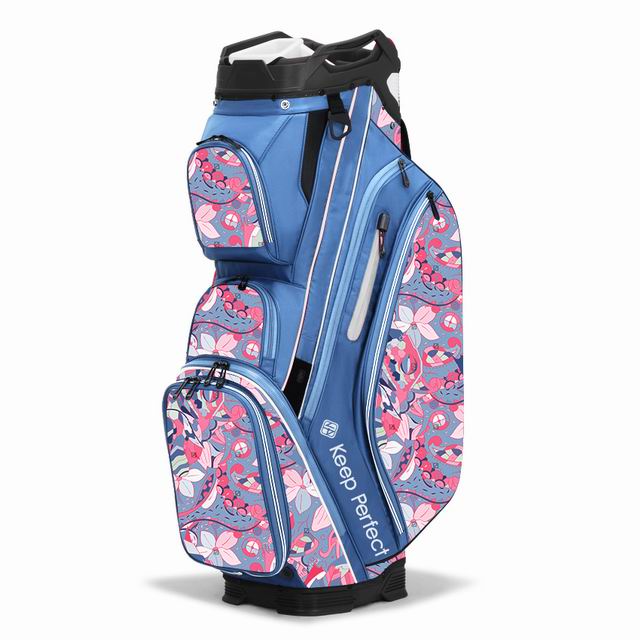
Destination Golf and the Travel Programs
Australia's destination golf runs at two speeds, and both carry program logic. The domestic tourism market (the Sandbelt pilgrimages, the Queensland resort belts, the Tasmanian links corridors) behaves like international travel in program terms — the souvenir psychology of the resort guide applies: the destination's identity carried home, the premium-mid price band the souvenir tier supports, the sun-and-elements spec the climate sections wrote. The international visitor market adds its own layer: the traveling golfer arriving for the Sandbelt season needs the travel chassis locally (the travel cover programs, the hybrid chassis the travel-heavy itineraries favor) — a niche channel with destination-retail economics (the pro shop at a destination course is a souvenir shop with a handicap, and its programs price accordingly).
The destination program's calendar note: the visitor season and the domestic season reinforce each other (the southern summer that peaks the domestic play also peaks the international arrivals — the October–April corridor), which concentrates the destination programs' stocking windows alongside the retail calendar the inverted-buying section worked. The destination program's spec note: the climate discipline doubles (the visitor's bag faces the UV and salt reality on loan, as it were — the resort-tier constructions that survive a Sandbelt summer earn their price tag in the visitor's home-market memory, which is the souvenir psychology's quiet engine: the bag that outlasted the trip sells the next trip's bag).
Spec Adjustments for Australian Programs
The spec sheet deltas, collected in one table for the RFQ stage: the shell fabric class (solution-dyed as the default rather than the premium option — the sun-grade logic of the climate section), the hardware grades (salt-air-conscious plating, anodized or stainless-minded classes on the coastal programs), the base and stand mechanics (cart-bay geometry first, with the walking counter-programs specced deliberately rather than by default), the strap systems (the cart demotion in practice — handle-forward executions on the volume chassis), the mildew and moisture disciplines (the tropical channel's treatments and packaging), and the labeling blocks (the care and content labeling the market expects, in English, with the care symbols of the maintenance guide's ISO 3758 set).
What the table does not change — the never-drop lines of the price-tier guide: the structural seams, the AQL discipline, and the labeling integrity hold at Australian spec exactly as they hold everywhere (the market's developed-country expectations and consumer-law environment price them identically). The Australian deltas are environmental spend, not quality spend: the sun and the salt are line items the market rewards, and the over-spec trap runs in reverse here — the program that saves on the UV-grade shell to fund a feature the cart chassis did not need has optimized the wrong column for the wrong climate.
| Spec Line | Northern Default | Australian Program | Why the Delta |
|---|---|---|---|
| Shell fabric | Coated poly standard | Solution-dyed as default | UV intensity grades up the lightfastness need |
| Hardware class | Standard plating | Salt-air-conscious, anodized options | Coastal corrosion clock on plating |
| Chassis priority | Market-dependent | Cart-first assortment | Decisive cart culture |
| Strap system | Ergonomic priority | Handle-forward on volume chassis | One-orientation cart reality |
| Moisture discipline | Regional option | Tropical-channel treatments | Wet-season mold pressures in the north |
| Labeling block | Market-language set | English, ISO 3758 symbols | Local consumer expectations |
Labeling and Consumer Law Basics
The regulatory layer is thin and honesty-shaped rather than certification-shaped: no golf-bag-specific conformity marks or product-safety regimes apply (the CE-clarification logic of the European guide holds here too — a bag is a bag), the consumer-law environment runs on the general consumer guarantees of the Australian Consumer Law (goods of acceptable quality, fit for purpose, matching their description — the AQL discipline is the manufacturing translation of acceptable quality), and the labeling expectations are the honest-information set: care instructions the maintenance guide's card makes a deliverable, fiber and content labeling on the textile components (the trade-descriptions discipline the labeling guide documents), and country-of-origin statements that survive scrutiny.
The claims discipline matters in Australia the way it matters everywhere the green claims harden: environmental statements run on the substantiation stack of the sustainability guide (the GRS chain for recycled content, the named-standard claims), and the consumer-law environment prices misleading claims with the same structure developed markets share. The practical summary for an Australian program: the compliance layer is lighter than Europe's stack (no operator, no EPR registrations of the European pattern) and the honesty layer is identical — the spec sheet, the label and the marketing copy must agree, and the manufacturer checklist's document review is the discipline that keeps them agreeing.
What Australian Buyers Ask For
The RFQ patterns an Australian program brings to a manufacturer, in honest outline: the UV-grade question (asked first and named specifically — the solution-dyed specification, the lightfastness expectation — a market that has been burned by northern-spec bags fading in a season), the salt-air hardware question (the coastal programs ask it; the inland ones should), the cart-geometry specifics (the base dimensions and the orientation logic against the fleet bays — the cart chassis guide's fit points), the inverted-calendar timing (the May–June sample cycle and the July PO the inverted section worked — the buyers who know the market name their dates, and the timeline guide's production window slots into a calendar the factory can verify), and the landed-cost transparency (the ChAFTA duty reality and the GST mechanics named in the quote discussion — the negotiation guide's FOB discipline with the border layer opened).
The questions that mark an experienced Australian buyer — and the answers that mark an experienced supplier: the consolidation question (the LCL-versus-FCL arithmetic of the border section, asked with cubic-meter awareness), the reorder-consistency question (the second season's bags against the first — the anchor discipline the market's long supply lines price at a premium), and the small-population question (the mid-sized program's MOQ reality — the 200-unit-and-up structures the MOQ guide documents, sized to a market where the addressable order is real but finite). The supplier conversation that answers these four questions with numbers is the conversation that earns the program.
A Worked Australian Club Program
The worked program: a 250-unit club refresh (a metropolitan club re-doing its member and pro-shop program — the club channel's classic order), cart-first as the market dictates: 180 cart bags (the molded-base, 14-way constructions of the mid-premium bands — solution-dyed shell per the climate spec, salt-air hardware per the coastal reality) and 70 stand bags (the walking counter-program for the members who walk, at the same brand identity). The calendar, inverted as the market requires: program decision in April (the autumn shoulder), samples May–June (the Northern factories' quiet season — the inversion's opportunity working as designed), PO in July, production August–September (the 35–50 day window of the timeline guide), the ocean leg through October, landing ahead of the November stocking and the December peak.
The economics, held in the market's own frames: the landed structure with ChAFTA's duty-free line (FOB plus the realistic freight share of the LCL consolidation plus the 10 percent GST — the border section's thin-duty reality), the cost stack carrying the UV-grade and hardware deltas as deliberate spend (the environmental line items the market rewards), and the reorder shape the program sets up (the second season's identical bags against the anchor discipline — the club channel's annuity). The lesson the worked program carries for the market generally: the Australian program is a calendar discipline first, a climate spec second, and a channel play third — and the three fit together tightly enough that the buyer who holds all three holds the market.
Common Mistakes in Australian Programs
The mistakes the market's first-timers make, in rough frequency order: the calendar error (treating the market as a Northern market and discovering in September that the season's goods should have been at sea in August — the inversion catches everyone once), the chassis error (the walking-first assortment against the cart-dominant reality — the European or Japanese program template applied to a market that rides), the spec error's two shapes (the northern-spec bag that fades in a Sydney summer and corrodes on a coastal cart — the UV and salt lines saved on; and the over-spec mirror, the humid-tropical treatments specced for the southern capitals where they are unnecessary weight), and the consolidation error (the program that ships alone what the LCL arithmetic says should share — the incoterms guide's crossover math ignored at real cost).
The quieter mistakes that cost programs their second season: the reorder drift (the second year's bags a visible step down from the first — the anchor system skipped because the first year went fine, which is exactly when the skipping starts), the sample-verification gap (the UV-grade claim accepted on the swatch card rather than the test report — the sun will run its own test at scale), and the corporate-circuit mistiming (the event calendar's autumn-spring seasonality missed by a program tuned only to the retail inversion). The common root: the Australian program is not a smaller Northern program — it is a market with its own physics, and the checklist discipline applied to these specifics is what separates the programs that repeat from the programs that visit.
Frequently Asked Questions
Do I need a special certification to sell golf bags in Australia?
No — golf bags sit under the general consumer-law environment (goods of acceptable quality, fit for purpose, as described) with no product-specific conformity marks or CE equivalents. The compliance layer is the honest-information set: care labeling, fiber and content labeling on textile components, and accurate origin and marketing claims — lighter than Europe's GPSR-plus-EPR stack, identical in its honesty demands.
What duty does Australia charge on golf bags from China?
Under the China–Australia Free Trade Agreement (ChAFTA), most golf bag tariff lines in the HS 4202.92 family have phased to zero duty — confirm the current schedule line for your construction, but the practical effect is that China-side FOB structures arrive essentially duty-free. GST at 10 percent applies at the border (or point of sale for low-value shipments) and is recoverable for registered businesses.
When should I order custom golf bags for the Australian season?
Inverted from the Northern calendar: the season peaks December–February, so the goods want to land in October–November; that puts production in August–September (35–50 days), the PO in July, the sample cycle in May–June, and the program decision around April. The quiet-season advantage: the May–August cycle books the Northern factories' summer lull — rush structures are rarely needed.
Which golf bag types sell best in Australia?
Cart bags, decisively — the market is one of the most cart-dominant in golf, making the molded-base, full-featured cart chassis the default program. The walking counter-programs (stand, sunday, pencil) are deliberate niches: the walking-strong precincts and the travel channel. Programs should lead with the cart family and add the walking chassis as the identity corner.
How does the Australian sun affect golf bag specs?
It upgrades the fabric class: solution-dyed fabrics become the default rather than a premium option, because UV intensity grades up the lightfastness requirement — a coated-polyester northern spec can fade visibly in one Sydney or Brisbane summer. The ISO 105-B02 lightfastness logic the resort guide applies to a single property applies here at national scale, and the color discipline is only as durable as the fabric beneath it.
Is golf popular in Australia compared to other countries?
Very — the market runs one of the world's strongest participation rates per capita, a course base in the high hundreds to low thousands, and a corporate golf culture (the charity and corporate golf day circuit) that behaves like a market of its own across the autumn and spring shoulders. The participation density is what supports the club-channel economy that carries custom programs.
What is the GST treatment for imported golf bags?
GST runs at 10 percent: collected at the border on consignments above the low-value threshold, and at the point of sale on low-value imported goods — the structure the direct-selling programs touch. For GST-registered businesses it is recoverable in the standard mechanics, making it a cash-flow line rather than a landed cost; the program that treats it as a cost prices itself a tenth too high.
Should Australian programs use LCL or full containers?
Usually LCL — the market's programs are mid-sized against a long ocean leg, and the FCL-versus-LCL crossover at roughly 8–12 cubic meters of cargo volume is rarely reached by a single program. The consolidation discipline is the default: share the container, book the freight share honestly, and hold the incoterms guide's FOB basis — the program that ships alone what the math says should share pays for the lesson.
What channels work for custom golf bags in Australia?
In order of program gravity: the club pro shop channel (the member-facing retail and identity programs — the market's center), the corporate and charity golf day circuit (event-scale, decoration-forward, autumn-spring calendar), the destination golf corridors (the Sandbelt and resort belts' souvenir economics), and the consolidated retail channel (price-led, entry-to-mid bands, the distributor's territory more than a custom program's).
How do corporate golf days work as a channel in Australia?
As an institution: mid-sized events (80–200 players is the common scale) running through the autumn and spring shoulders, with giveaway bags, sponsor-visible branding and tiered gift structures. Individually they fit the low-MOQ structures; aggregated across a season they are a standing program — and the repeat discipline (the committee that rebooks annually, against identical bags) is the channel's annuity.
What is different about ordering golf bags for tropical northern Australia?
The moisture discipline: the wet season brings monsoon-scale rain and humidity that tests mildew and mold resistance — anti-mildew treatments, moisture-controlled packaging, and the after-rain care protocols matter at program scale. The honest structure is a two-tier material map: the sun-grade solution-dyed core for the national program, the humidity-minded treatments for the tropical channel — named in the RFQ because the factory can price the split.
Are walking golf bags a viable program in Australia?
As a deliberate counter-program, yes — the walking-strong precincts, the fitness-minded segments and the travel channel support stand, sunday and pencil chassis in real volumes. The error is leading with them: the market's course architecture, climate and cart fleets make the cart family the volume logic, and the walking chassis earns its place as the identity and specialty corner of a cart-first assortment.
How long does shipping take for golf bags to Australia?
The ocean leg to the eastern ports (Sydney, Melbourne, Brisbane) prices the distance honestly — plan the production window (35–50 days) plus a realistic multi-week freight window, and book the October–November landing against the pre-Christmas port congestion the inverted calendar lands on. The freight calendar is part of the program calendar in this market, not a footnote to it.
What mistakes do first-time Australian golf bag programs make?
The four classics: the calendar inversion missed (the September discovery that the goods should have sailed in August), the walking-first assortment against the cart reality, the northern-spec bag that fades and corrodes in the local climate, and the consolidation error — shipping alone what the LCL math says should share. The quieter one that costs the second season: reorder drift after a good first year. All five are calendar, climate and channel questions — the market's own physics.