
Four Profiles, One Question
The choosing question is not which bag is best but which round you actually play: the walker's carry, the rider's cart bay, the traveler's cargo hold, the commuter's transit leg — the profile decides the chassis before any feature list does.
The framework, stated as the honest single question: what does your round physically demand of the bag? The walker's answer is a carry (the load on the spine for hours — weight, ergonomics, and the stand mechanism the walking reality prices), the rider's answer is a bay (the bag lives in a cart — geometry, orientation and feature budget matter more than the strap the cart demoted), the traveler's answer is a hold (the bag faces the airline's math — protection, packing, and the claim protocols), and the commuter's answer is a transit leg (the bag faces the trunk and the turnstile — dimensions, protection and grab-and-go). The resort player's answer is someone else's problem (the property's fleet decision, made on the resort channel's logic).
Why the profile frame beats the feature frame: the feature list asks what a bag has, the profile asks what the round does — and the mismatch between round and chassis is the category's most common waste (the premium stand bag bought by the always-riding player — its engineering paid for and never used; the cart bag bought by the walker — its feature budget spent against a bay it never rides; the travel mishap of the unprotected soft bag — the airline mathematics learned expensively). The construction history makes the point structurally: every chassis family exists because a carrier demanded it — the profile is the carrier, the chassis is the answer, and the buyer who knows the first has already chosen the second.
The Walking Golfer: Stand and Sunday Profiles
The walker's spec, in priority order: the weight class first (the sub-3-kilogram discipline the lightweight race bequeathed — every kilogram is a kilometer felt; the premium targets run lighter still, and the women's market's 1.65–2.4 kilogram sensitivity marks the ergonomic frontier), the strap and harness system second (the dual-strap physics the 1990s popularized, matured into the articulated, padded, load-spreading systems of the modern premium chassis — the hours-on-shoulders engineering), the stand mechanism third (the leg deployment the post-war engineers gave the category — tested in the store: the click, the stance, the retraction), and the divider architecture sized to the walker's reality (the full-length runs protecting graphite on the carry — the stand guide's top options at their weight-honest settings).
The walker's two sub-profiles: the full-round walker (the 18-hole regular — the engineered stand chassis at its full spec, the weight-and-features trade-off held at the walking optimum) and the short-round and urban walker (the 9-hole player, the practice-visit player, the travel-light player — the sunday and pencil class: the minimalist descendant of the caddie era, a half-set's worth of organization at a weight the shoulder forgets). The honest budget frame for both: the walking disciplines reward the mid-to-premium spend (the price bands where the weight engineering and the harness quality live — the entry band's savings paid back at the third hour of the carry), and the walker's maintenance reality (the care the maintenance guide's protocols protect — the walking bag is the bag that gets rained on, because the walker does not stop).
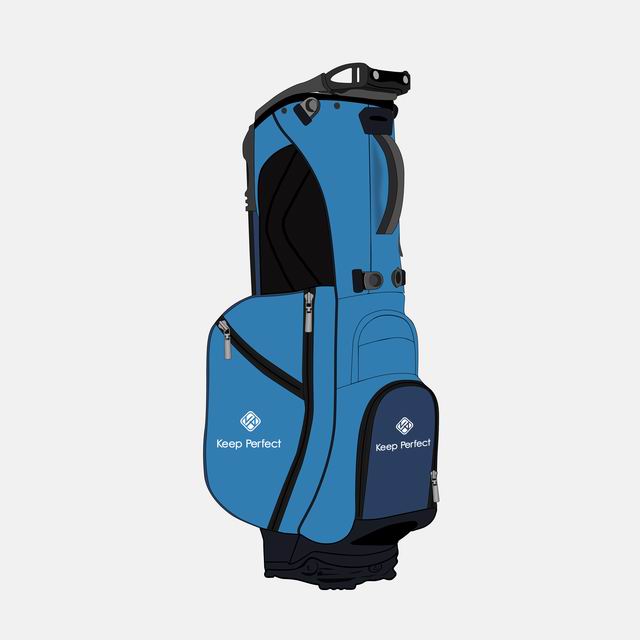
The Riding Golfer: Cart Chassis Logic
The rider's spec, reprioritized by the bay: the base geometry first (the flat or molded base that sits the cart bay and the orientation the riding round demands — the cart guide's structural points), the feature budget released (the weight the shoulder no longer prices: the 14-way full-length tops, the full pocket architectures, the cooler pockets and the valuables systems the cart life permits — the cooler constructions living their best life), the strap demotion (a functional afterthought on the riding chassis — the handles and the single orientation carrying the interface), and the durability emphasis (the cart bag's environmental reality: the sun between rounds, the bay's abrasion — the UV disciplines that the riding markets price by default).
The rider's sub-profiles and their honest variances: the always-rider (the full cart chassis — the feature-maximum, geometry-first build), the push-cart player (the walking-rider hybrid — the chassis that pushes well: the base geometry adapted to the push cart's tray, a growing profile the hybrid chassis serves), and the rider-who-walks-sometimes (the hybrid's home territory — the compromise chassis engineered to do both honestly). The budget frame: the cart channel's prices run the full band map honestly (the feature ladder visible at every band — the entry rider's functional core, the mid rider's full set, the premium rider's materials and refinement), and the rider's maintenance reality is the gentlest in the category (the cart bag's care calendar runs on the storage-side protocols — the bag that rides ages slowly, which is itself a purchase argument).
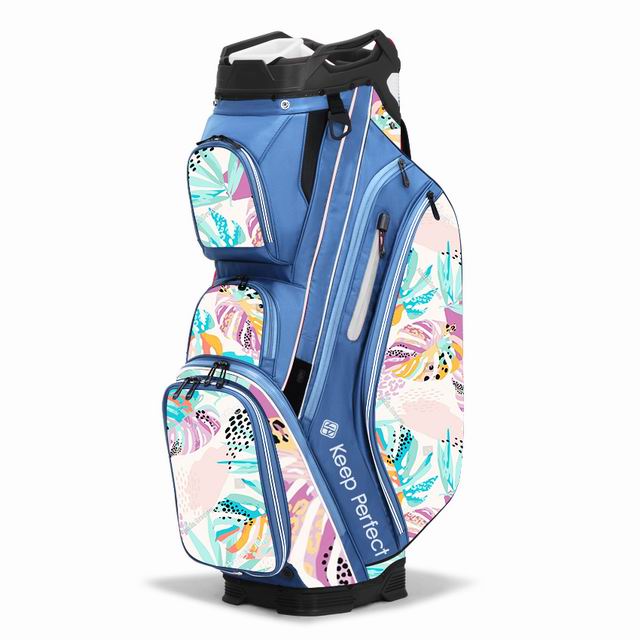
The Traveling Golfer: Protection Economics
The traveler's spec runs on a different axis entirely — the protection economics: the damage mathematics first (the airline's handling reality — the 62-linear-inch rules, the club-plus-bag weight sums, the claims the travel guide's protocols halve with the packing discipline: the internal stabilization, the club-head immobilization, the structural padding at the failure points), the system choice second (the hard-shell versus soft-cover decision the travel economics price: the hard case's protection at the weight-and-bulk price, the padded soft cover's flexibility at the protection compromise — the travel guide's comparison tables hold the arithmetic), and the travel frequency third (the once-a-year traveler's economics versus the regular's — the protection spend scaled to the trips it protects, the cost logic applied to the failure cost rather than the bag's price).
The traveler's sub-profiles: the flying golfer (the full protection system — the travel cover over the travel-capable bag, the packing protocol as ritual: the ISL drag-test logic and the claim documentation run as travel habits), the road-trip golfer (the trunk-and-hotel reality — the softer protection calculus, the weekender formats serving the multi-course drive), and the destination-booked traveler (the resort golfer whose equipment decisions the destination's rental economics sometimes replace entirely — the profile's honest exit door). The budget frame: the protection spend is the trip-priced insurance the travel guide prices per claim avoided, and the honest summary for the profile: the traveler's bag decision is a risk-management decision — the chassis matters, the system matters more, and the packing discipline matters most.
The Practice Commuter: Compact Formats
The commuter's spec — the profile the screen era mainstreamed (the simulator venue culture and the urban range habit): the dimensions first (the trunk-and-transit caps — the explicit length and height limits the compact classes honor, the Japanese transport disciplines generalized to every city), the protection second (the commute is the bag's hardest transport cycle — the structured bases and protected tops of the compact classes, the weekender logic at its most urban), the grab-and-go third (the single-motion carry, the quick organization — the hour-session chassis rather than the five-hour-round chassis), and the storage fourth (the urban dwelling's closet economics — the storable format the compact classes price at bands their material cost does not explain and their lifestyle function does).
The commuter's sub-profiles: the range regular (the practice-first player — the standing practice formats and ball-forward pocket logic of the den-caddie class, the range culture's native chassis), the sim-league player (the venue-first profile — the commute format plus the in-venue storage reality the simulator guide's rack geometries document), and the lunch-break golfer (the smallest formats' home — the pencil class at its most functional, the 6-club commute). The budget frame: the compact band's premium pricing is the honest signal (the price-tier guide's compact-premium phenomenon — the lifestyle function, not the material cost), and the commuter's honest summary: the profile buys the format, not the bag — the chassis that fits the life is the chassis that gets used, and the chassis that gets used is the only one worth buying.
The Occasional and Resort Player
The fifth profile — the player whose bag decision is borrowed: the resort guest (the rental decision made by the property — the resort channel's fleet logic, the sun-and-salt spec the destination's climate writes, the souvenir psychology the property's retail arm prices), the occasional player (the 3-rounds-a-year reality — the entry-to-mid band's honest core, the entry band's workhorse chassis doing the only job the frequency supports, and the over-spec trap's home turf: the occasional player's premium purchase is the category's most common shelf-ornament decision), and the gift recipient (the gift channel's end-user — the bag chosen by someone else's love on the gift calendar's rhythms, which is why the gift tiers price the presentation and the identity over the spec).
What the borrowed-decision profiles mean to the two readers this site serves: to the program buyer, they are the demand (the resort fleet, the gift tier, the entry band's volume — the channels this guide's five profiles map into the channel structures), and to the profile framework itself, they are the honest boundary (the fifth profile's decision is made by the property, the gift-giver or the budget — which is why the first four profiles are where the choosing discipline lives, and the fifth is where the B2B market lives). The summary line the section earns: four profiles choose bags, the fifth is chosen for — and the business of golf bags runs on both sides of that line.
Profile to Chassis: the Matching Table
The five profiles, matched in one table for the choosing wall: the chassis family, the spec priorities, the weight classes and the honest bands — the profile-to-chassis map this guide has worked, held at one view. The table's honest use: read the row that matches the actual round (not the aspirational round), and the chassis column has made the decision the feature list was about to complicate — the price-band guide's component deltas then finish the spec within the chosen family, and the 25-question FAQ runs the diligence the family deserves.
The table's second honest use — the gift-buyer's shortcut and the channel buyer's mirror: the gift-giver reads the recipient's row (the walker's grandson wants the walker's chassis, not the giver's riding preference), and the program buyer reads the table as demand geometry (which profiles a channel serves — the club's members, the resort's guests, the corporate day's players — and which chassis families the program therefore stocks: the wholesale structures serving profile mixes, not bag lists). The one-line summary the table carries: the profile decides the family, the budget decides the band, and everything else is detail the family and band make easy.
| Profile | The Round Demands | Chassis Family | Spec Priorities | Honest Band |
|---|---|---|---|---|
| Walker (full) | Hours on the spine | Stand bag, engineered | Weight class, harness, stand mechanism | Mid to premium |
| Walker (short) | Nine holes, light carry | Sunday and pencil class | Weight, minimal organization | Mid, compact-premium |
| Rider | The cart bay | Cart bag | Base geometry, 14-way top, feature budget | Entry through halo |
| Push-cart player | The tray | Hybrid chassis | Base geometry plus walkability | Mid to premium |
| Traveler (flying) | The cargo hold | Travel system over bag | Protection, packing protocol | Protection-priced |
| Commuter | Trunk and transit | Compact and weekender | Dimensions, protection, grab-and-go | Compact-premium |
| Resort and occasional | Borrowed decisions | Fleet or entry band | Durability, value | Program-priced |
Weight Classes by Playing Profile
The weight arithmetic, profile by profile: the walker's weight is felt (the carry's cumulative load — the sub-3-kilogram premium targets and the 1.65–2.4 kilogram ergonomic frontier; every hundred grams the premium band buys is a hundred grams the fifth kilometer spends), the rider's weight is spent (the released budget the cart life permits — the 14-way architecture and feature set the bands price as the riding premium), the traveler's weight is traded (the protection-versus-baggage-allowance arithmetic the airline mathematics prices — the hard shell's protection at its kilogram cost, the soft cover's flexibility at its own), and the commuter's weight is lifted (the single-motion carry and the transit leg — the compact class's discipline).
The weight classes' second-order honesty — what the scale does not say: the distributed weight (the walker's harness spreading a load the same weight's single strap would punish — the ergonomic engineering the scale's number hides), the packed weight (the traveler's system weight at full load — the clubs, the rain gear, the travel reality the airline's counter weighs), and the honest weight of features (the 14-way top and the full-length runs and the cooler pocket each carry their grams — the feature list read on the scale before the order, the chassis guides' weight tables doing the buyer's arithmetic in advance). The summary: the profile decides what the weight means — and the buyer who knows which arithmetic applies reads the spec sheet's gram counts as engineering data rather than trivia.
How Profiles Change Over a Golfing Life
The lifecycle view, because the profile is not permanent: the junior-to-walker pipeline (the age-band constructions the young player carries into the walking habit — the profile forming on the chassis the junior programs supply), the walker-to-rider migration (the classic mid-golfing-life shift — the back, the course's riding culture, the pace of the weekend: the profile the cart channel receives at scale, and the honest reason the chassis families both stay in business), and the rider-to-hybrid reconsideration (the fitness turn, the push-cart movement, the walking rediscovery — the hybrid chassis serving the profile that moved twice).
What the lifecycle means commercially — the two- or three-bag household (the walking bag and the travel system, the riding bag and the compact commuter — the multi-chassis reality the platform strategy serves within a brand: the golfer whose profile set spans families buys the family set from the brand that made the first one right), and the profile-transition moments as the market's calendar (the back diagnosis, the course change, the family schedule shift, the retirement, the urban move — the transitions the retail channel's seasons ride and the launch ladders service). The summary the section earns: profiles move, the chassis families follow, and the brand that served the first profile credibly is the brand the second profile's purchase considers first.
Multi-Profile Players and Two-Bag Households
The multi-profile reality, held honestly: most serious golfers live two profiles (the weekend walker and the trip traveler, the league rider and the lunch-break commuter — the golf life spanning rounds with different physics), and the household question is one chassis or two (the single-compromise bag that does both adequately — the hybrid's honest territory; or the two-chassis solution that does each properly — the platform logic at the household scale). The arithmetic the decision runs: the frequency-weighted profile (the bag that serves the majority round better than the compromise serves either) versus the transition cost (the second chassis's price against the first's frustration — the honest math the cost discipline prices at the household scale).
The multi-profile program structures the B2B reader serves: the household sets (the brand's two-chassis bundles — the walker's stand and the traveler's system under one identity, the launch guide's ladder made spatial), the channel's profile mixes (the club whose members walk on weekdays and ride on weekends — the pro shop's two-family shelf the wholesale structures serve honestly), and the gift channel's profile-guessing (the giver who must read the recipient's round — the section's first use of the matching table as a gift shortcut, the gift tiers' guidance doing the reading). The summary: the multi-profile player is the norm, not the exception — and the two-chassis household is the market the single-bag frame undercounts.
Budget by Profile: the Honest Spends
The budget logic, profile by profile: the walker's premium pays (the weight engineering and harness quality are felt every round — the mid-to-premium spend the walking hours amortize honestly, the band guide's premium justification at its cleanest), the rider's band runs free (the full map from entry to halo serves the profile — the feature ladder visible at every price, the honest spend set by the feature appetite), the traveler's spend is protection-priced (the claim economics set the budget — the system that protects a 1,500-dollar club set against the airline's handling is not where the frugal cut), and the commuter's spend is lifestyle-priced (the compact-premium bands — the formats that fit the life the urban golfer actually lives).
The over-spec and under-spec risks, mapped to the profiles: the walker's under-spec (the entry harness at the fifth kilometer — the back pays the difference), the rider's over-spec (the halo build the bay never appreciates — the over-spec trap at its most common), the traveler's under-protection (the claims that cost more than the system that would have prevented them), and the commuter's over-bag (the full chassis the trunk resents). The one-line summary the section earns: each profile has one honest spend and two honest mistakes — and the profile frame names all three before the feature list can muddy them.
Profiles in B2B Programs
The B2B mirror, for the program buyer reading this guide as demand geometry: the club channel (the member profiles of the club structures — the walker-and-rider mix the pro shop's shelf must serve, the junior programs feeding the pipeline), the resort and destination channel (the fifth profile's home — the fleet decisions the resort guide's economics document, the guest's borrowed decision the property owns), the corporate and event channel (the profile mix of the tournament field and the gift calendar — the event structures serving profiles at their most mixed, the giveaway chassis chosen for the average round), and the urban venue channel (the commuter profile's home — the simulator venues and range economies the compact formats serve).
The program-design discipline the profile mirror supplies: the profile census (the program buyer's first question — which profiles does my channel actually serve, in what mix: the club's 60-40 walker-rider split, the resort's 100-percent-guest reality, the corporate day's occasional-heavy field), the chassis mix that follows (the shelf and the fleet specced to the census, the band mapping within each family), and the reorder cadence the profiles set (the walker channel's wear-and-replace rhythm against the rider channel's slower calendar — the reorder-point math profile-weighted). The summary: the profile guide is a consumer frame and a program instrument — the same five profiles, read once for choosing and once for stocking.
A Worked Profile Decision
The worked decision: the golfer who plays a 20-minute-drive club weekly (walking the weekday nine, riding the weekend eighteen with friends), one fly-and-play trip a year, and a winter that closes the courses for three months — the honest profile census: a hybrid-walker primary (the weekday-walking, weekend-riding reality — the hybrid chassis or the engineered stand with a push cart), a once-a-year traveler (the protection system priced to the trip frequency — the padded soft cover and the packing protocol, not the hard case the frequent flyer justifies), and a winter commuter (the screen-era sessions — the compact format or simply the travel-light sunday class doing double duty).
The decision, held to the guide's frame: one chassis or two (the frequency-weighted answer — the hybrid serves 80 percent of the rounds; the winter's compact need is real but light: the honest call is the hybrid plus a someday-sunday, not a three-bag fleet), the band within the family (the hybrid at the mid-to-premium band — the weight discipline and harness quality the walking rounds feel, the base geometry the riding weekends need), and the profile's future read (the lifecycle view — the walker-to-rider drift the hybrid absorbs without a second purchase, the profile transitions the chassis choice has quietly pre-served). The lesson the worked decision carries: the profile census is the choosing discipline — the actual rounds, counted honestly, with the chassis that serves the count.
Mistakes Buyers Make With Profiles
The mistakes, in rough frequency order: the aspirational purchase (the walker's premium stand bought by the rider — the spine engineering paid for and never carried; the profile the buyer wishes for rather than plays), the single-question skip (the feature list consulted before the round-counting — the what-has asked before the what-happens), the borrowed-profile error (the gift bought on the giver's profile, the recommendation taken from a different round's owner), the travel under-protection (the airline's math learned at the first claim rather than at the purchase — the protection economics skipped at the spec stage), and the compact confusion (the commuter's full-size chassis — the trunk's veto discovered at the first session).
The quieter mistakes the profile frame retires: the upgrade misdirection (the band upgraded where the family should have changed — the premium stand does not serve the rider the way the entry cart would), the transition blindness (the profile that moved and the chassis that did not follow — the back diagnosis the riding channel receives every week), and the census error at the program level (the channel stocked for a profile mix it does not have — the walker-heavy club with a rider-heavy shelf). The root of all of them is the same: the round's physics ignored in favor of the catalog's logic — and the profile frame exists because the physics does not negotiate.
Frequently Asked Questions
How do I know which golf bag type is right for me?
Count your rounds honestly: if you carry or push for hours, you are a walker (stand or sunday chassis); if you ride, the cart chassis; if you fly with clubs, the protection system leads the decision; if your golf life is the urban session, the compact formats. The profile — what the round physically demands — decides the chassis family before any feature list does.
Is a stand bag or cart bag better for occasional riders?
For the rider-who-sometimes-walks, the hybrid chassis is the honest answer — engineered to ride and push both; for the rider who never walks, the cart bag outright (its base geometry and feature budget serve the bay the stand's engineering never will). The mistake is the reverse purchase: the walking engineering bought by the always-rider is the category's most common waste.
What golf bag should a walking golfer buy?
The engineered stand chassis at mid-to-premium bands: the sub-3-kilogram weight discipline, the articulated dual-strap harness, a stand mechanism tested in the store, and divider runs sized to the carry. The walking hours amortize the premium spend honestly — the entry band's savings are paid back at the third hour of the carry. The short-round walker runs the sunday and pencil class.
Do I need a 14-way divider golf bag?
Only if your round rides or pushes: the 14-way full-length architecture is the cart chassis's natural organization (the bay's feature budget carries it), and the graphite protection it provides matters most when clubs are drawn from a sitting bag. The walker trades some of that architecture for weight — the 4-to-6-way full-length options are the carrying optimum.
What is the best golf bag for air travel?
The system, not the bag: the protection economics lead — the padded soft cover or hard case over a travel-capable chassis, the packing protocol (club-head immobilization, internal stabilization) that the airline mathematics rewards, and the claim documentation habits. The frequent flyer justifies the hard case's protection; the once-a-year traveler prices the padded soft system honestly.
Can one golf bag work for both walking and riding?
The hybrid chassis is the engineered answer — the base geometry that sits the bay and the tray, the walkability that survives the carry; at the honest compromise points both ways. The frequency-weighted reality decides: the golfer whose rounds split near-even serves both adequately with one hybrid; the golfer whose profiles are strong-and-strong buys the two-chassis household.
What size golf bag fits in a car trunk?
The compact classes: the sunday and pencil formats and the weekender geometries carry the trunk-and-transit disciplines (explicit length and height caps, structured protection, grab-and-go carries). The full stand and cart chassis fit the standard trunk but dominate it — the commuter profile's honest chassis is the compact format, not the shrunk course bag.
How much should I spend on a golf bag for my profile?
The walker: mid-to-premium (the weight and harness engineering is felt every round). The rider: the full band map honestly (the feature appetite sets the spend). The traveler: protection-priced (the system scaled to the club set it protects). The commuter: the compact-premium bands (the lifestyle function, not the material cost). Each profile has one honest spend and two honest mistakes — the over-spec and the under-spec the profile frame names.
What bag does a beginner golfer actually need?
The profile question first, even for the beginner: the beginner who walks (the learning rounds, the cheap early lost balls carried in a light chassis) wants the entry-to-mid stand bag; the beginner who rides wants the entry-to-mid cart chassis. The occasional frequency (three rounds a year until the habit forms) argues against the halo spend — the entry band's honest workhorse serves the learning profile the band guide describes.
Are lightweight golf bags less durable?
Not at the honest engineering tier: the lightweight disciplines buy their weights through material science (nylon over polyester, engineered foams, alloy legs), not through construction shortcuts — the never-drop lines (structural seams, hardware classes) hold at the sub-2-kilogram premium tier. The trade is features, not durability: the walker's weight savings come from the pocket counts and divider runs the carrying round can spare.
What golf bag do women walkers need?
The ergonomic frontier: the 1.65-2.4 kilogram weight sensitivity, the strap geometry engineered for the carrying physics, and the chassis proportions the women's market documents — the walking disciplines at their most honest. The profile is walker first (the weight class and harness), the women's-market engineering second (the fit and proportions), and the band follows the walking logic: mid-to-premium where the weight engineering lives.
How often do golfers change bag types?
At the profile transitions: the walker-to-rider migration (the mid-golfing-life back and pace shifts the cart channel receives at scale), the rider-to-hybrid reconsideration (the fitness turn and the push-cart movement), the urban move or the schedule change (the commuter profile emerging), and the junior pipeline's progression. The two-bag household is the steady state — and the brand that served the first profile credibly is the brand the second one considers first.
What does a resort golfer need in a bag?
Usually, nothing — the profile's honest answer: the resort guest's bag decision is borrowed (the property's fleet, the rental economics, the sun-and-salt spec the destination's climate writes). What the traveling resort golfer needs is the protection system for the journey and the honest expectation that the destination supplies the round's chassis — the fifth profile is chosen for, and the B2B market lives on that side of the line.
How do programs choose which bag types to stock?
With the profile census: which profiles the channel actually serves, in what mix — the club's walker-rider split, the resort's guest reality, the corporate field's occasional-heavy makeup, the venue's commuter culture. The chassis mix, the band mapping and the reorder cadence all follow the census — the same five profiles this guide works, read once for choosing and once for stocking.