
Case Study
Corporate Golf Day, 500 Pieces
A financial-services client event needed 500 branded gift sets on a fixed date with zero margin for error: Sunday shells, kitted with towels, pouches and event-dated branding. Delivered to the event warehouse with nine days of buffer at USD 14.20 per player all-in.
The Brief: a Corporate Golf Day
500 attendees, a country-club date that could not move, and a brand team that wanted the gift to survive the day. The corporate program: Sunday shells in the corporate navy with a single bold logo, kitted per player.
The Kit
| Item | Branding | Cost/player (USD) |
|---|---|---|
| Sunday shell | Heat transfer logo, 18 cm | 8.40 |
| Towel | Embroidered | 3.80 |
| Ball pouch | 1.90 | |
| Insert card + poly | Event program | 0.60 |
| Total FOB | 14.70 |
Timeline and Outcome: 500 Bags, One Date
Locked 105 days out; sample with full kit in week 3; bulk 46 days; AQL 2.5 inspection photographed; DDP delivery to the event city 9 days before the date. The buffer absorbed a 4-day port delay without the event team ever feeling it — the point of the event-date discipline.
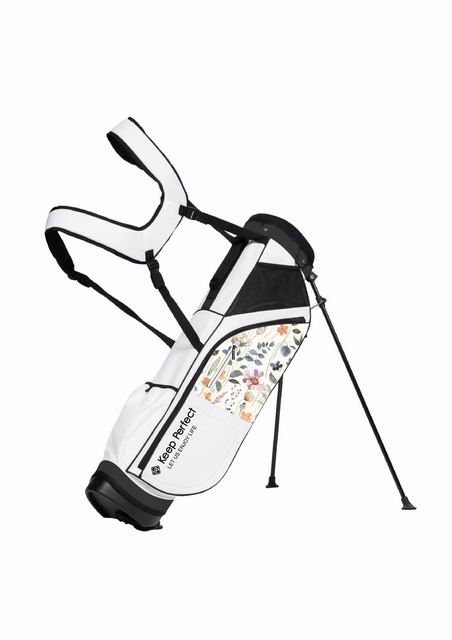
The 105-Day Schedule in Milestones
Everything on this programme was sequenced backwards from a date that could not move, which makes the schedule unusually clean to read. Five hundred sets, one country-club morning, and a 105-day lock.
| Stage | Days before event | What was fixed at this point |
|---|---|---|
| Brief and kit BOM locked | 105 | Chassis, colourway, four-item kit, per-player budget |
| Full-kit sample approved | 91 | Heat-transfer artwork, towel embroidery file, pouch print |
| Bulk production complete | 45 | 500 shells, 500 towels, 500 pouches, 500 insert cards |
| AQL 2.5 inspection passed | 43 | Photographed report, carton count confirmed |
| Departed Xiamen | 40 | Container booked, documents against B/L copy |
| Arrived destination port | 18 | 22 days ocean |
| Delivered event warehouse | 9 | DDP delivery, palletised by kit |
The nine days at the end are the whole design. A four-day port delay landed inside them and the event team never saw it. Bulk ran 46 days because the towel and pouch components ran in parallel with the shells rather than after them.
Picking a Print Method for One Bold Mark
A single 18 cm logo in one colour on a flat panel is the easiest branding brief in the category, and heat transfer was chosen for it on cost per unit, not on quality. Screen printing would have been cheaper per impression but needs a screen per colour and a flat, stable surface through the press.
| Method | Setup | Best on | Used here for |
|---|---|---|---|
| Heat transfer | One transfer plate per colour | Flat panels, fine detail, small type | 18 cm logo on Sunday shell |
| Screen print | One screen per colour | Large solid areas, high volume | Ball pouch print |
| Embroidery | Digitised file, per-position hoop | Textured fabric, premium read | Towel |
Heat transfer holds a crisp edge at 18 cm and tolerates the coated polyester used on the shell, which screen ink does not always adhere to without a primer. The heat transfer page covers the plate and colour limits; screen printing is the better route once a programme passes roughly 1,000 impressions per colour on a flat substrate.
Kit Assembly and Carton Math
Five hundred sets is a packing problem before it is a production problem. The shells were flat-packed twenty to a carton, the towels and pouches polybagged in tens, and everything consolidated at origin into master cartons of ten complete sets.
That gives 25 shell cartons, 50 polybags of towels, 50 of pouches, plus 50 master cartons of ten sets each. Stacked on standard pallets at twenty master cartons per pallet, the shipment ran to two full pallets and a part load — comfortably inside an LCL booking, and small enough that waiting for a full container would have cost more than the freight saved. Shipping from Xiamen, the ocean leg was twenty-two days to the destination port, then four days for clearance and inland delivery to the event warehouse.
Carton labelling carried the kit code and the event name on two faces, because a warehouse receiving 50 master cartons on a Friday will not open them to count. On DDP terms the seller clears duty; on FOB Xiamen the buyer's forwarder does, and the difference in who books the truck is worth settling in the quote, not in week fourteen. Schedules and Incoterms handling for the Asia–US lanes are documented by carriers such as Maersk.
Keeping Brand Assets Consistent Across a Four-Item Kit
Four items decorated by four different methods will drift apart unless one document governs all of them. The kit used a single brand sheet: Pantone reference for the navy, minimum logo width, clear-space rule, and one approved lockup for each item's shape.
The navy was matched across coated polyester shell, cotton towelling and pouches, which is the hard part — the same Pantone reads lighter on towelling and darker on coated fabric, so the sheet carried a per-substrate tolerance rather than a single swatch. Logo widths were set proportionally to each item: 18 cm on the shell, 9 cm on the towel, 6 cm on the pouch. The insert card carried the event programme and the same lockup at 30 mm, printed rather than foiled so the budget held.
What went wrong in the first sample round is instructive: the towel embroidery had been digitised from a JPEG of the logo rather than the vector, which rounded the corners of the letterforms and thickened the strokes at 9 cm. Re-digitising from the vector added three days and no cost. Textile labelling rules for the destination market sit with the US Federal Trade Commission for fibre content and care claims, which is why the insert card quoted fibre percentages rather than describing the fabric in marketing language. Textile testing and harmful-substance limits for the fabrics behind the shells and towels are published by OEKO-TEX.
The Per-Player Cost Worked Through
The per-player figure is where event budgets get approved, and it is simple arithmetic once the kit is itemised: USD 8.40 for the shell, 3.80 for the towel, 1.90 for the pouch and 0.60 for the insert card and polybag, for USD 14.70 FOB per set.
Five hundred sets at 14.70 is USD 7,350 FOB Xiamen. Ocean freight on the LCL booking added about USD 1,150 including origin charges, which brings the freight-inclusive figure to roughly USD 17.00 per player. Duty and inland delivery were carried separately by the client's own budget line, since the destination country and the event city were fixed but the clearance route was not.
The comparison that decided the chassis: a stand bag at the same branding would have started near USD 26 FOB per unit before the kit, taking the per-player figure past USD 33 — more than twice the approved budget for a gift most attendees would carry once. The Sunday shell at 12–18 FOB is the highest perceived value per dollar in the range, which is why the Sunday bag carries most corporate programmes.
Fixed-Date Failure Modes
On a fixed-date programme the failures that matter are the ones that consume buffer silently. Four were live risks here, and three were closed by decision rather than by luck.
- Late artwork. A brand team changing a colourway in week seven would have restarted towel dyeing. Declined at week seven because the buffer was already allocated to freight.
- Kit shortfall. Component counts are counted per item, not per kit. Ten spare shells and ten spare towels do not make ten spare kits if the pouches are short — overage was set at 2%, so ten of each.
- Carton labelling errors. Fifty master cartons labelled by SKU rather than by kit means the warehouse has to open and rebuild. Labels carried the kit code on two faces.
- Single-port dependency. One sailing missed is four days; two missed is the buffer gone. The booking held a fallback sailing three days later at a small premium.
Inspection ran to AQL 2.5 under ISO 2859-1 sampling plans, with the report photographed per carton so the client could see the actual goods rather than a pass mark. Consistent dimensional checks on the shell are covered in the quality process.
A Checklist Before the Artwork Freeze
The artwork freeze is the last cheap moment on any event programme; after it, every change carries a schedule cost. Six items belong on the checklist before that line is crossed.
- Vector logo files for every item, plus a Pantone reference and a per-substrate tolerance.
- Kit BOM with per-item quantity and a stated overage percentage — 2% is typical for four-item kits.
- Event date, venue receiving window and whether the venue accepts pallets or cartons only.
- Delivery terms: DDP to the event warehouse or FOB Xiamen with the client's forwarder.
- One named approver, because two approvers is the same as none.
- A written no-change date, circulated to the brand team rather than agreed verbally.
For a wider view of the same chassis in promotional use, the corporate and promotional track sets out the standard kits, and the giveaway guide covers what survives a day on the course. Pencil bags often join these kits as a second, cheaper position; see pencil bags.
Frequently Asked Questions
Why Sunday bags and not stand bags?
Giveaway economics and the photograph: the event wanted a gift that read as premium but fit budget; the Sunday chassis at 12–18 FOB buys the most perceived value per dollar in the line.
Why was the sample approved in week three rather than week one?
Because the sample was a full kit, not a shell. Towel embroidery, pouch print and the insert card all had to be produced and assembled before anyone could judge the set as a gift, which took the 6–10 day sampling window plus component lead time.
Would screen printing have been cheaper than heat transfer?
Per impression, yes; per programme, no. One 18 cm logo needs one transfer plate, while screen printing needs a screen per colour plus a flat stable surface. At 500 pieces the difference was cents per unit against days of setup.
What does DDP change compared with FOB Xiamen?
Under DDP the seller clears duty and delivers to the named place, so the event warehouse receives pallets with nothing left to arrange. Under FOB Xiamen the buyer's forwarder handles ocean, clearance and inland, which is cheaper only if the buyer already has that infrastructure.
How were the 500 kits protected against short components?
Overage was set at 2% per item rather than per kit: ten spare shells, ten spare towels, ten spare pouches. Kitting is counted item by item at packing, so a short component is a short kit regardless of how many shells remain.
Can the same kit be split across two shipping dates?
It can, but it doubles the freight and the clearance cost. On 500 sets the LCL booking was small enough that splitting added roughly 40% to freight for no scheduling gain, so it was shipped as one consignment.
How much notice does a 500-piece event programme need?
105 days from artwork lock to event warehouse, which includes 6–10 days sampling, 46 days bulk, 22 days ocean and nine days buffer. Under 90 days the programme depends on air freight or a stock colourway.
What is the per-player cost if the kit drops to three items?
Removing the insert card takes USD 0.60 off, to USD 14.10 FOB. Removing the pouch as well lands near USD 12.20, but the set then reads as a bag rather than a gift, which was the point of the programme.
Does the event-date buffer also cover customs holds?
It covered a four-day port delay and nothing more. A customs examination can hold goods for a week or longer, which is why the destination and clearance route should be fixed before the buffer is sized, not after.
Which chassis suits a smaller corporate field of 150 players?
A Sunday shell still works, and at 150 pieces the per-player figure moves up because sampling and setup spread over fewer units. A pencil bag kit is the cheaper alternative when the budget per head is under USD 10.
Ready to spec your custom golf bags?
Send your logo, bag type and target quantity — we reply with a quote, MOQ and timeline within 24 hours.