
Why Camo Endures in Golf
Because it is three niches wearing one pattern: hunting-crossover golfers buying identity, teams and academies buying distinctiveness, and fashion drops buying scarcity. Each is durable; together they make camo a permanent category rather than a seasonal print.
The crossover logic is demographic: in the US South and Midwest, the Venn diagram of golfers and hunters overlaps heavily, and the customer who wears camo to the range in November does not stop being that customer in April. The team logic is visual: a camo team bag is unmistakable on a crowded range — identity is the whole point of team gear. The fashion logic is proven: streetwear's two-decade relationship with camo made it a pattern that signals limited-ness itself. A pattern with three independent demand engines does not fade; it rotates.
The camo golf bags page covers the category's product side — licensed pattern houses, original development and the worked economics; this guide is about structuring the buying program.
The Three Buyer Groups and What Each Wants
Most failed camo programs are one buyer group's product sold to another group's customer: a woodland hunting pattern offered to a fashion drop audience reads as costume, while a pink-shifted fashion camo offered to a duck club reads as a joke they did not ask for. The segmentation work happens before the pattern decision, not after — who is buying, in what context, at what price point.
| Buyer group | Pattern preference | Product | Calendar | Price tolerance |
|---|---|---|---|---|
| Hunting crossover | Licensed woodland / waterfowl patterns | Stand and cart bags, covers | Fall-weighted, steady year-round | Mid — pays for the real pattern |
| Teams & academies | School-color camo variants | Stand bags with roster names | Season intakes (Aug / Jan) | Mid-high — identity spend |
| Fashion / limited drops | Original or remixed camo, color-shifted | Stand and Sunday bags, accessories | Drop model, 2–4 per year | High — scarcity pricing |
Licensed Patterns vs Original Development
Licensed pattern houses (the Realtree and Mossy Oak model): instant recognition with the hunting-crossover buyer, who knows the patterns by name and trusts them. Costs: royalty at 8–12% of wholesale price, a license application with brand review (2–4 weeks), style-guide compliance on how the pattern is used, and minimum annual royalties at some houses. The pattern is never yours — but for the crossover customer, the license is the product. Industry licensing practice is tracked by bodies like LIMA (Licensing International), whose royalty benchmarks these figures come from.
Original camo development: a custom pattern built from your palette — USD 300–800 one-time development cost including digitizing and repeat engineering, no royalties ever, exclusive to your program. Original suits teams (school colors in camo form), fashion drops (a pattern nobody else can sell), and private label brands building equity in their own visual assets. The development loop runs inside the normal sampling calendar: pattern draft, strike-off print on your fabric, approval, done. Many mature programs run both — licensed for the crossover line, original for the identity line.
Printed vs Woven: the Construction Decision
Printed polyester (rotary or digital print on 600D–1680D base cloth): the default. Any pattern, any colorway, small dye-lot minimums, sharp detail, cost-effective at 200 pieces. Weakness: the pattern sits on the surface — abrasion at high-wear points (bag base, cart contact rails) eventually shows the base cloth, which is why spec-level programs use coated bases and reinforce wear panels.
Yarn-dyed woven jacquard: the pattern is woven into the fabric structure itself — richer hand, no surface to abrade through, and a premium read that justifies 20–35% higher retail. Constraints: higher fabric MOQs (woven runs start at 1,000+ meters), longer lead times (add 3–4 weeks), and pattern scale limited by loom capability. Woven suits premium private label and statement pieces; printed suits everything else. ISO 105 colorfastness standards govern both — specify testing to ISO 105-X12 (rubbing) and B02 (light) at quotation, because a camo that crock-tests poorly will wear its failure on the first cart ride.
Repeat Engineering: Where Camo Programs Live or Die
A camo pattern is a repeating tile, and a golf bag is a set of shaped panels cut from that tile — which means the pattern must be engineered, not just printed. Three decisions define the result. Scale: the tile size relative to the panel — a 40 cm repeat reads as designed on a staff bag panel; the same tile on a pouch reads as wallpaper. Placement: whether panels cut randomly through the repeat (natural, waste-efficient) or centered on a motif (deliberate, waste-costly — centered cutting adds 8–15% fabric consumption). Continuity: whether adjacent panels match at the seams (the luxury standard) or break (the industry standard).
These decisions belong on the placement sheet at quotation, with costs explicit: random placement is the default, motif-centered on the ball pocket panel only is the popular middle, full seam-matching is the couture option. What you should never accept is discovering the factory's default after bulk — a camo bag where the pocket motif landed half-cut on every unit is a program defined by an accident. Our pattern engineers mark repeat decisions on the same template system described in the logo placement guide — pattern geometry and branding geometry are one discipline.
Branding on Camo: Visibility Rules
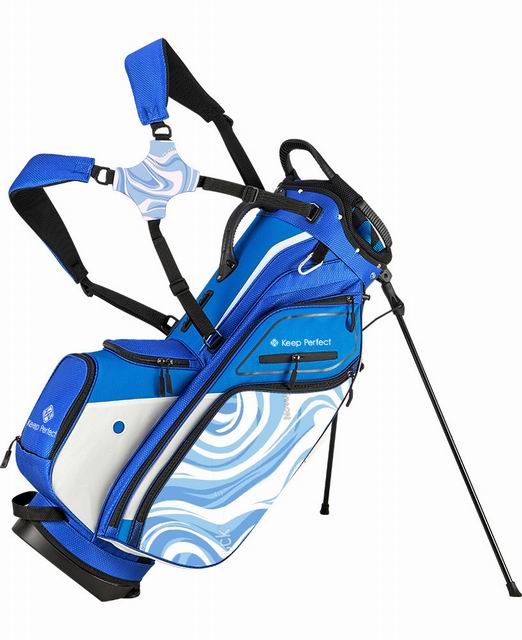
Camouflage exists to break up outlines — which makes logo visibility on camo a design problem with real rules. Solid underlays: the crest sits on a solid-color patch or appliqué panel matched to the bag's trim color, so the mark reads against calm instead of chaos. High-contrast thread: embroidery in a tone pulled from the pattern's lightest or darkest element, never a mid-tone that blends. Size up: run the primary mark 10–15% larger than you would on a solid bag — the pattern visually consumes the edges. Limit positions: camo already carries heavy visual information; two branding positions maximum, or the bag reads as noise.
The sample stage is where these rules get validated: approve the crest's readability at three meters, not three centimeters — that is the distance branding earns its money at. Tone-on-tone-on-camo is the one combination that never survives the three-meter test.
Market-by-Market Demand
United States: the home market — hunting-crossover dominance in the South and Midwest, licensed patterns mandatory for that customer, fall-weighted but steady. Japan and Korea: camo as fashion, not field — color-shifted and original patterns, premium constructions, drop-model retailing; the Japan market page covers the channel specifics. UK and Europe: smaller but real, skewing heritage — muted patterns on waxed-canvas-adjacent constructions rather than technical woodland prints. Australia: mirrors the US crossover at smaller scale.
The sourcing implication: pattern inventory follows market. A program serving both US crossover and Japanese fashion customers needs two pattern strategies from the start — shared chassis, different prints, possibly different constructions. This is routine at the factory: one production visit, two fabric specs, segmented branding.
QC for Patterned Goods
Patterned fabric adds four inspection points to the standard regime. Dye-lot consistency: camo's multiple colors make lot-to-lot drift more visible than on solids — bulk fabric from a single lot, lab-dip approval under D65 for each colorway, and the color matching protocol applied per print color. Print registration: multi-color prints can drift between color layers; registration tolerance is specified and checked at IQC. Colorfastness: ISO 105-X12 rub tests and B02 light tests on the printed base — a camo that crocks onto a white trouser leg is a return wave. Placement verification: the repeat decisions from the placement sheet checked against production panels at IPQC.
The AQL 2.5 pre-shipment inspection then runs as normal — pattern products carry no special mercy at PSI, and the photographic report documents pattern placement alongside everything else. The AQL guide details the full checkpoint system these additions plug into.
Worked Example: a Duck-Club Crossover Line
A regional outdoor retailer extends its waterfowl brand into golf: licensed waterfowl pattern (royalty 10% of wholesale), stand bag plus driver cover, 200 pieces each, motif-centered on the ball pocket, crest on a solid underlay patch. Development: license approved in three weeks, strike-off approved at sampling, PO placed July 10 for the fall season. Landed cost: bag USD 24.10 including royalty, retail USD 119.90 — the crossover customer pays for the real pattern and knows what fake costs.
Results: 71% sell-through by Christmas, the cover outselling the bag two-to-one (the classic accessory-entry pattern), and a spring reorder doubling the cover while adding a Sunday bag in the same pattern. Year two added an original marsh-grass camo developed for USD 550 — no royalty — for the brand's own pattern line, running alongside the licensed hero. Two patterns, two economics, one customer.
The Drop Model for Fashion Camo
Fashion-led camo runs on scarcity mechanics, and manufacturing must match: smaller runs (the 200-piece floor is a feature here — genuine limited editions), numbered hangtags ("1 of 200" is honest at MOQ 200), compressed calendars (drop programs book sampling and production slots around the drop date, not the season), and deliberate non-reorder discipline (the pattern retires; the next drop is a new development). The factory's role is schedule reliability above all — a drop that lands late is not a drop.
Drop economics reward the original-pattern route: no royalty line, full exclusivity, and a pattern asset that becomes part of the brand's archive. Development cost amortized across even a single 200-piece drop adds USD 1.50–4.00 per unit — the cheapest exclusivity in fashion.
Camo Identity for School and Academy Programs
School-color camo — the academy colors worked into a camo variant — solves a real team-identity problem: every school has navy bags; only yours has navy-camo bags. The development is the original-pattern route (school palette, USD 300–800), applied to the standard team architecture: crest embroidered for all, individual names by heat transfer from the roster file. Pool economics apply for smaller programs; 200-piece runs suit district and academy scale. The teams page covers roster mechanics; the camo layer is a fabric and pattern decision on top.
One caution from programs we have shipped: preview the pattern at small scale before committing. A camo built from school colors must remain readable as camo at bag distance — two school colors of similar value blend into mud. The strike-off exists to catch exactly this.
Inventory Strategy for Pattern Programs
- Secure reorder fabric at PO one. Print lots drift; a second run from a different lot sits visibly different on the shelf. Buying both runs' fabric at once is the standard hedge.
- Depth over breadth in year one. One pattern executed well across bag + cover + accessory beats three patterns thin.
- Accessories as the entry drug. Covers and pouches in your pattern let customers trial the aesthetic at USD 30 before the USD 130 bag.
- License terms in the calendar. Pattern licenses have terms and renewal dates; an expiring license with live inventory is a problem made of calendars.
- Photograph the pattern honestly. Camo reads differently in studio light than outdoors; shoot both, because the customer will see both.
Starting a Camo Program
The brief: which buyer group, licensed or original pattern, product list, quantities, target market. The quotation returns with pattern options, royalty math where applicable, repeat-placement decisions, and the sampling calendar — 24 hours, MOQ 200 per style, 6–10 day sampling with strike-off approval. Junyuan runs camo programs across all three buyer groups from Quanzhou; the quote form starts the pattern conversation.
Frequently Asked Questions
Can I get custom camo golf bags manufactured?
Yes — at MOQ 200 pieces per style, with two pattern routes: licensed pattern-house prints (Realtree-style, royalty at 8–12% of wholesale plus license approval) or original camo developed from your palette (USD 300–800 one-time, exclusive, royalty-free). Sampling runs 6–10 days including a strike-off of the actual print on your fabric.
What does a licensed camo pattern cost?
Royalty at 8–12% of the wholesale price, a license application with brand review (2–4 weeks), style-guide compliance on pattern usage, and minimum annual royalties at some houses. For hunting-crossover customers who know the patterns by name, the license is the product — the royalty buys recognition no original pattern can match in that segment.
How much does original camo development cost?
USD 300–800 one-time: palette development, digitizing, repeat engineering, and a strike-off print for approval. The pattern is then yours exclusively, royalty-free forever — across even a single 200-piece run that is USD 1.50–4.00 per unit for genuine exclusivity, and it amortizes to near zero across reorders.
Printed or woven camo — which is better?
Printed polyester for most programs: any pattern, small minimums, sharp detail, cost-effective at 200 pieces. Yarn-dyed woven jacquard for premium lines: the pattern woven into the fabric structure, richer hand, nothing to abrade through — but 1,000+ meter fabric minimums, 3–4 extra weeks, and 20–35% higher cost. Specify ISO 105 colorfastness testing either way.
How is pattern placement controlled on the bag?
By repeat engineering at quotation: tile scale relative to panel size, random versus motif-centered cutting (centered adds 8–15% fabric consumption), and seam continuity decisions — all marked on the placement template and verified at IPQC. The default is random placement; motif-centering on the ball pocket is the popular upgrade; full seam-matching is the couture option.
How do logos stay visible on camo?
Four rules: solid underlay patches or appliqué panels beneath the crest, high-contrast thread pulled from the pattern's extremes, primary marks sized 10–15% larger than on solid bags, and two branding positions maximum. Approve readability at three meters at the sample stage — camo consumes weak branding whole.
What is the MOQ for camo golf bags?
200 pieces per style and colorway for printed programs. Licensed-pattern programs may add the licensor's own minimums or annual royalty floors. Woven jacquard constructions carry higher fabric minimums (1,000+ meters) which typically means 400+ pieces or shared fabric across a collection.
Do camo golf bags sell outside the US?
Yes, but as different products: Japan and Korea buy camo as fashion — color-shifted originals, premium constructions, drop retailing; the UK and Europe skew heritage with muted patterns; Australia mirrors the US crossover at smaller scale. Programs serving multiple markets need two pattern strategies on a shared chassis — routine at the factory.
How do teams use camo in their bag programs?
School-color camo: an original pattern built from the academy palette (USD 300–800 development), applied to the standard team architecture — crest embroidered for all, individual names by heat transfer from the roster. Preview the strike-off carefully: two school colors of similar value blend into mud at bag distance.
What QC applies specifically to camo?
Four additions to the standard regime: single dye-lot bulk fabric with per-color lab-dip approval under D65, print registration tolerance checks at IQC, ISO 105-X12 rub and B02 light colorfastness testing, and placement verification against the template at IPQC. The AQL 2.5 pre-shipment inspection then runs as normal with pattern placement photographed in the report.
Can camo work as a limited drop product?
Ideally — the 200-piece floor makes "1 of 200" honest, original patterns guarantee exclusivity, and development cost adds only USD 1.50–4.00 per unit. Drop programs book sampling and production around the drop date with deliberate non-reorder discipline; the factory's critical contribution is schedule reliability, since a late drop is not a drop.
How long does a camo program take from brief to delivery?
Printed programs: 60–80 days standard (6–10 day sampling including strike-off, 35–50 day bulk, freight). Add 2–4 weeks for license approval on pattern-house routes, and 3–4 weeks for woven jacquard fabric. Fall hunting-season programs should brief by early June; fashion drops book against the drop date with buffer.
Can camo be combined with solid panels on one bag?
Yes, and it is often the strongest architecture: camo on the main body panels with solid-color pocket panels and trim gives the pattern room to breathe and gives branding a calm surface to sit on. Full-camo bags read as costume unless the program is deliberately maximal; the camo-plus-solid split is how premium outdoor brands execute, and it costs nothing extra — it is a cutting-ticket decision.
Does camo cost more than solid colors to produce?
Printed camo fabric carries a modest premium over solid polyester (print setup and the base cloth print run, roughly USD 0.80–1.60 per bag at 200 pieces); licensed patterns add their royalty on top; woven jacquard is the expensive construction at 20–35% above printed. The repeat-placement choices also carry cost: motif-centered cutting adds 8–15% fabric consumption versus random placement.
What happens to leftover camo fabric after my run?
It is your fabric — purchased against your order. Options: held for your reorder (the standard, and the reason dye-lot continuity works), converted into accessories (pouches and covers absorb remnants elegantly and extend the pattern line), or disposed on your instruction. What it never does is appear in another customer's product — fabric lots are order-specific and tracked.
Can I see the camo pattern on my chassis before committing?
Yes — the strike-off: your pattern printed on the actual base fabric, then the sample built in it. The placement sheet shows repeat scale and motif positions on your chassis's panel map before sampling, and the physical sample confirms what the sheet promised. Approve the sample at three meters — pattern scale reads differently at distance than on a desk.
How do I start a camo golf bag program with your factory?
Send five lines through the quote form: buyer group, licensed or original pattern, product list, quantities, target market. The quotation returns in 24 hours with pattern options, royalty math where applicable, repeat-placement decisions and the sampling calendar — MOQ 200, strike-off approval before bulk.