
Case Study
DTC Brand, First Collection
A first-time founder launched a floral-print Sunday bag collection at exactly 200 pieces — the minimum. Landed cost USD 17.85 per bag; the collection sold through in 11 weeks at USD 95 retail and reordered at 500 pieces with zero spec changes. The program that proved the 200-piece path.
The Brief: a First Collection
A solo founder with an Instagram-native brand and no manufacturing history wanted to test a "cute golf" concept: floral-print Sunday bags for women golfers, budget-capped at USD 4,000 for the first order. The 200-piece startup program was the only structure that fit.
Spec and Cost
Landed cost USD 18.70 per bag; retail USD 95 — the model funded its own reorder.
| Line item | Detail | USD |
|---|---|---|
| Chassis | Sunday bag, 600D print polyester | 2,700 (200 × 13.50) |
| Print development | Strike-off, 2 rounds | 140 |
| Embroidery digitizing | Script logo, 4,200 stitches | 35 |
| Woven label + hangtag | Full suite | 160 |
| Dye lot | Solid second colorway shared at 200 | 120 |
| Freight + duties | Sea, DDP to 3PL | 585 |
| Landed total | 3,740 |
Timeline and Outcome: 200 Pieces to Sell-Through
Sample in 9 days (one revision on print saturation), bulk in 41 days, delivery 7 weeks after order. Sell-through: 11 weeks, driven by the floral aesthetic photographing natively on social. The reorder ran 500 pieces on file — no re-sampling, 63 days door to door.
Launching With One Hero SKU
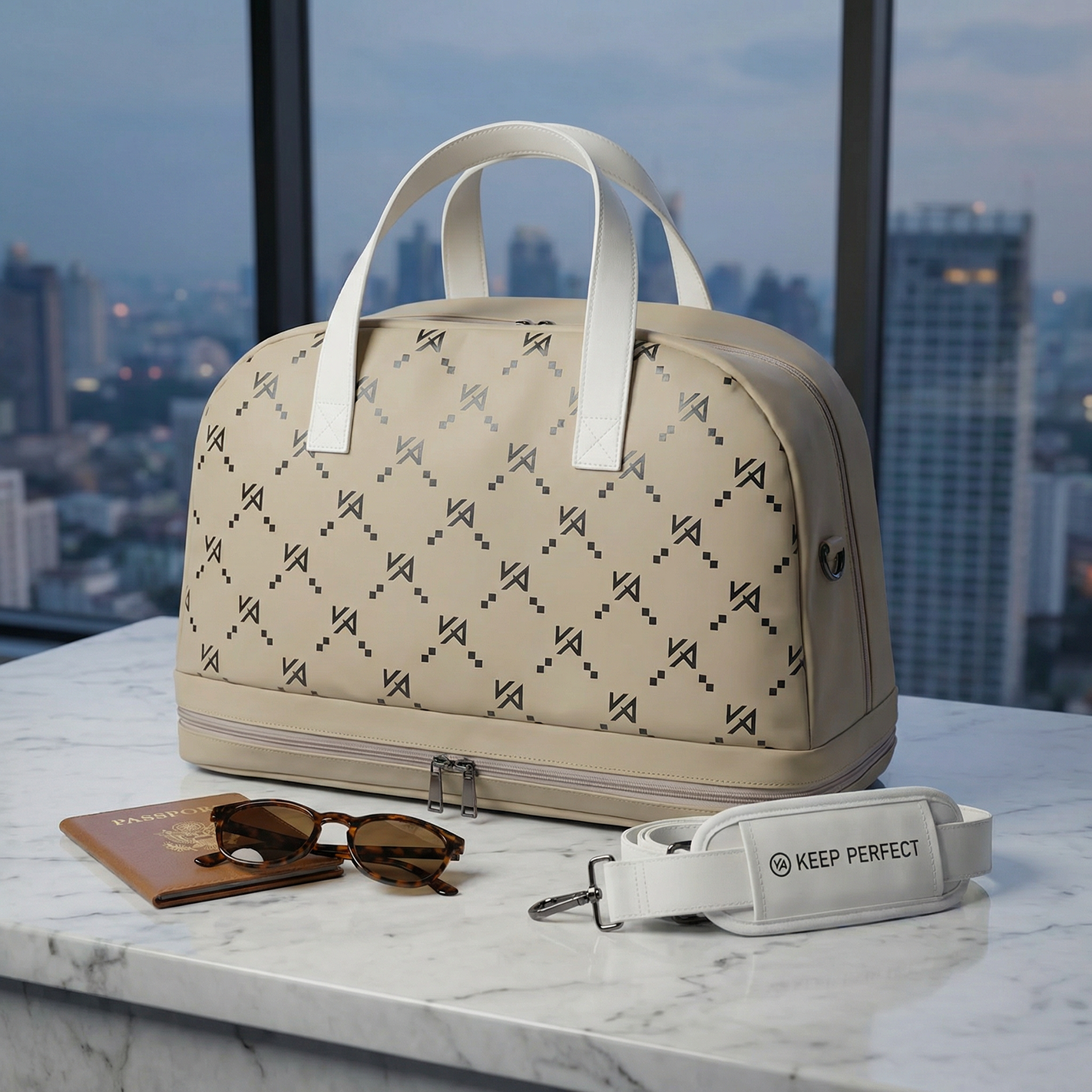
The collection launched as one hero SKU — a floral-print Sunday bag in a single print colorway — with a solid second colorway sharing the same 200-unit run, and that restraint is what kept the first order inside the founder's USD 4,000 cap. Splitting 200 pieces across five SKUs would have meant roughly 40 units per SKU, five strike-off approvals instead of one, five label setups instead of a single USD 160 suite, and sell-through data too thin to steer a reorder. One SKU at 200 pieces produced a clean read: 11 weeks to zero inventory, and a reorder decision based on evidence rather than guesswork. The structure mirrors the startup brand program playbook — prove one product, then widen the line.
| Structure | Units per SKU | Development items | Reorder signal |
|---|---|---|---|
| One hero SKU plus shared solid (this case) | 200 | 1 print strike-off (2 rounds), 1 digitizing, 1 label suite | Strong — one number, one decision |
| Three print SKUs | ~67 each | 3 strike-offs, 3 digitizings, 3 label setups | Diluted across three sell rates |
| Five-SKU capsule | 40 each | 5 of each, plus size-run splits | Too thin to read at 200 total |
The 200-Piece Cash-Flow Cadence
A 200-piece order converts cash in two stages under T/T 30/70: roughly USD 947 as a 30% deposit at order confirmation, then USD 2,208 as the 70% balance against the B/L copy before vessel departure — two outflows spaced weeks apart, not one lump sum. The billable program value came to USD 3,155: USD 2,700 for the chassis (200 × 13.50), USD 140 for the two-round print strike-off, USD 35 for digitizing the 4,200-stitch script logo, USD 160 for the woven label and hangtag suite, and USD 120 for the solid second colorway's shared dye lot. Freight and duties of USD 585 moved the goods DDP to the 3PL.
Revenue arrived on a matching rhythm: 200 bags at USD 95 retail returned USD 19,000 across an 11-week sell-through, an 80% gross margin over the USD 3,740 landed total. That margin funded the 500-piece reorder without external cash — the working-capital logic laid out in cash-flow planning for bag programs.
| Milestone | Cash event | USD |
|---|---|---|
| Order confirmed (day 0) | 30% deposit on program value | 947 |
| Strike-off and sample (day 9) | Included in program value | — |
| Bulk complete (day 41), B/L copy issued | 70% balance before vessel departure | 2,208 |
| Delivery to 3PL | Freight and duties, DDP | 585 |
| Sell-through complete (week 11) | Revenue, 200 × 95 | 19,000 in |
| Reorder, 500 pieces, zero spec changes | Funded from margin, 63 days door to door | — |
From Sample Photography to a Live Product Page
The product page went live before the bulk shipment landed, built entirely on first-article photography shot from the 9-day sample — so the launch date depended on the sample calendar, not the vessel. The asset set that carried the listing: a hero shot of the full colorway, a close-up of the 4,200-stitch embroidered script, a print-repeat detail showing the floral saturation, and the spec block pulled straight from the frozen tech pack. Because the listing ran one colorway, variant setup stayed trivial and nothing had to be re-shot mid-season.
Two compliance notes for a US-facing listing: fiber content and country of origin must be disclosed in online textile listings under FTC textile rules, and general product-safety obligations still apply to goods sold direct to consumer under CPSC frameworks. Conversion-side tactics — hero ordering, spec tables, review velocity — are covered in e-commerce listing optimization for golf bags.
What the Print Strike-Off Almost Cost
The program's single failure mode was print saturation: the first strike-off ran heavier than the approved artwork, forcing one revision that cost days but no dollars, because two rounds were priced into the USD 140 development line from the start. The lesson generalizes. Printed 600D polyester without an approved strike-off is a 200-unit misprint waiting to happen — the whole run would print at the wrong density before anyone inspects fabric. Saturation is also the variable most likely to drift between dye lots, which is why final inspection ran to AQL 2.5 under ISO 2859-1 sampling plans, checking print appearance across lots rather than seam quality alone. Testing background is in fabric colorfastness for custom bags, and revision-round pricing follows the sample policy.
Shipping 200 Units as LCL From Xiamen
Two hundred units of the Sunday bag program moved as LCL freight from Xiamen port — roughly 25 master cartons at 8 bags per carton, far below the volume where a dedicated FCL booking pays for itself. LCL adds a consolidation leg and a few days of schedule slack, which the calendar absorbed inside the 41-day bulk window plus transit. DDP terms meant freight and duties (USD 585, under the HTS 4202 family per USITC tariff schedules) were handled to the 3PL door, sparing a first-time founder a customs learning curve on order one. The program was coordinated end to end by a sourcing and program-management company working with a dedicated production facility in Quanzhou — the same coordination that lets a 200-unit order share a consolidated container without a dedicated booking. Mode-selection detail is in freight and shipping for golf bag programs.
A First-Collection Launch Checklist
Score a first collection against these checkpoints before paying the 30% deposit — every one maps to a decision this program got right.
- Cap the budget before the spec: the USD 4,000 ceiling set the 200-piece quantity, not the reverse.
- Ship one hero SKU in one colorway; let a shared solid take the second slot at USD 120 instead of a second print development.
- Price a strike-off revision round in advance — USD 140 covered two rounds here.
- Confirm sampling at 6–10 working days and shoot launch photography from the sample, not the bulk.
- Map the T/T 30/70 stages to a cash calendar: deposit at order, balance against the B/L copy.
- Check the LCL/FCL threshold — at this volume, consolidated LCL was the cheaper door.
- Keep the reorder path warm: an unchanged spec means no re-sampling, and a 500-piece reorder can run 63 days door to door.
The arithmetic that closes the loop: 200 × USD 95 = USD 19,000 of revenue against USD 3,740 landed, roughly 80% gross margin — enough to fund the reorder outright, and enough sell-through evidence to size it correctly at 500 pieces.
Frequently Asked Questions
What did the founder do right?
Frozen the spec after one revision, ordered first-article photography from the sample before bulk landed, and launched with one hero SKU in one colorway — the exact playbook on startup programs.
Can a first collection really start at 200 pieces?
Yes — 200 pieces is the standard program minimum for golf bags, and this collection ordered exactly 200. Accessory SKUs such as pencil bags carry their own quoted minimums, so mixed capsules should be quoted item by item before committing.
How much cash is due before production starts?
Under T/T 30/70, 30% of the program value — about USD 947 on this order's USD 3,155 billable total — is due at confirmation, with the 70% balance of USD 2,208 paid against the B/L copy before the vessel departs Xiamen.
How long does a first 200-piece order take?
Sampling runs 6–10 working days (9 here, including one print revision), bulk 35–50 days (41 here), then sea transit to the 3PL. The later 500-piece reorder ran 63 days door to door with no re-sampling, because the spec never changed.
Why launch one colorway instead of three?
One print colorway concentrates all 200 units behind one photograph, one strike-off, one label suite and one sell-through number. The solid second colorway shared the same dye lot for USD 120, adding range without splitting the data.
Do I need product photography before the bulk ships?
Yes. First-article photography from the 9-day sample let the listing go live while the bulk was on the water, tying the launch date to the sample calendar instead of the vessel — the biggest calendar lever a first-time founder has.
What does AQL 2.5 mean on a 200-piece order?
Final inspection follows ISO 2859-1 sampling plans at AQL 2.5, so a random sample of cartons and units is checked against defined defect levels rather than every bag — statistically sound coverage at first-order scale. Method detail is on the quality page.
Who handles customs on a first import?
This order moved DDP, so freight and duties under the HTS 4202 family were quoted and handled to the 3PL door for USD 585 total. FOB Xiamen with your own forwarder becomes worthwhile once import volumes are recurring.
When is the right moment to reorder?
At sell-through signal, not at stock-out: this collection sold through in 11 weeks and the 500-piece reorder was placed against that measured rate. With the spec unchanged, the reorder skipped re-sampling and closed 63 days door to door.
What happens if the strike-off fails twice?
Revision rounds are priced up front — USD 140 covered two rounds here — so a second failure costs schedule, not surprise invoices. If artwork cannot be matched within the priced rounds, additional sampling is agreed before any bulk commitment.
Ready to spec your custom golf bags?
Send your logo, bag type and target quantity — we reply with a quote, MOQ and timeline within 24 hours.