
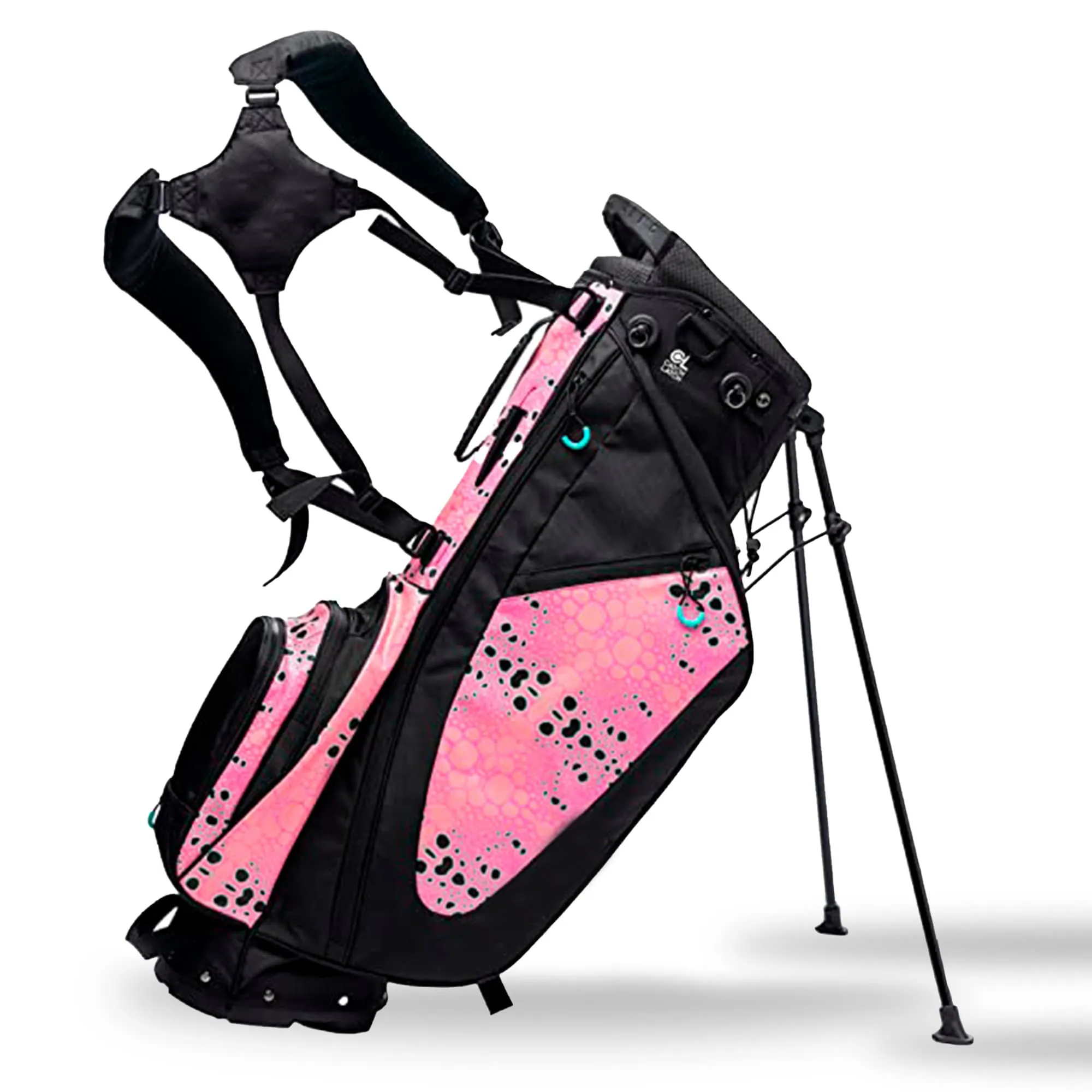
- Lock logo method by panel material to avoid rework and distortion.
- Plan packaging early to prevent transit damage and returns.
- Turn “nice-to-have” ideas into measurable requirements before sampling.
- Use a pre-production checklist to reduce late-stage changes.
- Specify tolerances and inspection criteria so bulk output matches the approved sample.
- Define a QC test plan (cycle/pull/abrasion) instead of relying on visual checks.
- Map pockets and touchpoints to real use cases to prevent feature creep.
- Document revisions with photos and a defect taxonomy for faster corrections.
Executive summary
This article turns Junior Golf Bags: Sizing, Safety, and Ergonomics into a procurement-ready manufacturing brief for Cart Golf Bags programs targeting USA. It is written for B2B buyers using a Private Label sourcing model.
It goes beyond generic “tips” by defining measurable requirements, acceptance criteria, and QC gates—so your approved sample and bulk production match.
Scope and audience
Use this guide if you are building an RFQ, reviewing a sample, or setting QC standards for bulk production. If you already have a complete tech pack, treat the checklists below as a gap audit.
Market differences usually show up in labeling expectations, packaging requirements, and compliance screening priorities. Confirm final compliance details with your own compliance team for your channel.
Engineering focus
Cart Golf Bags programs succeed when engineering decisions match real use: load paths, wear zones, and pocket geometry. These are the typical focus points for this category.
- Cart strap channel placement
- Base footprint and stability
- Organization system and pocket access on cart
- Strap channel misplacement
- Base rocking on cart
- Pockets blocked by straps
Specification checklist
This is the minimum checklist that turns “premium” into buildable parameters and keeps revision cycles under control.
- Pocket list with dimensions + intent (rangefinder, apparel, valuables)
- Color references (Pantone) + acceptable delta tolerance
- Top opening size and divider format
- Logo placements (location, size, method) + artwork files
- Material spec by panel + reinforcement zones
- Stand/cart compatibility requirements (if applicable)
- Weight target and structure targets (foam, stays, base plate)
- Strap geometry and carry comfort target
- Inspection plan and acceptance criteria (appearance, function, measurement)
- Packaging spec (polybag, hangtag, inserts, carton label)
Specification baseline
Baselines align teams quickly. Lock final values in sample approval to prevent rework and late-stage changes.
| Parameter | Baseline | Why it matters | Common mistake |
|---|---|---|---|
| MOQ baseline | MOQ baseline: 300 pcs / style | Start smaller with fewer colorways to protect consistency. | Mixing many materials at low volume increases variation. |
| Sampling timeline | Sampling: 10–18 days (typical 2–3 rounds) | Expect multiple iterations for fit + branding. | Approving without a checklist creates rework later. |
| Bulk lead time | Bulk production: 45–75 days (depends on materials and capacity) | Lead time depends on materials and capacity planning. | Ignoring peak season buffers risks delivery slip. |
| Final inspection | Final inspection: AQL 2.5 (defined defect taxonomy required) | Define defect taxonomy so checks are consistent. | AQL without defect definitions is not actionable. |
Materials and trims
Perceived quality is built from touchpoints: handles, zipper pulls, pocket edges, and reinforcement zones. Consistency across these areas matters more than a single “hero” material.
| Option | Material / component | Selection note |
|---|---|---|
| Option 1 | 600D/900D Polyester (Solution-Dyed Options) | Best when you need stable color across repeat orders. |
| Option 2 | RPET Fabrics (Recycled Content Lines) | Good balance of durability and consistent appearance. |
| Option 3 | TPU Films (Welded Pocket Windows & Details) | Works well for premium feel when paired with clean trims. |
| Option 4 | Fiberglass/Aluminum Stays (Weight vs Rigidity) | Good balance of durability and consistent appearance. |
| Option 5 | PU Microfiber (Consistent Grain + Easy Care) | Good balance of durability and consistent appearance. |
Quality plan
AQL becomes meaningful only when paired with defect definitions and a test plan. Use the table below to define what you accept and how you verify it.
| Check / test | Target | Practical guidance |
|---|---|---|
| Zipper cycle test | Target cycles + smoothness | Run cycles on representative pocket angles and curvature. |
| Pull test (handles/strap anchors) | Defined pull force + duration | Validate reinforcement layers and stitch density at stress points. |
| Abrasion test (high-wear zones) | Defined cycles + appearance criteria | Focus on base, pocket corners, and cart-contact areas. |
| Measurement sampling | Tolerances by key dimensions | Top opening, pocket sizes, and overall height are common disputes. |
| Visual + functional check | Appearance + pocket function | Confirm magnets/closures, stand system behavior, and rattle control. |
Final inspection: AQL 2.5 (defined defect taxonomy required) is recommended only when you have defined defect taxonomy and aligned checkpoints across incoming / in-line / final inspection.
| Defect category | Examples | How to make it actionable |
|---|---|---|
| Appearance | Stains, wrinkles, logo misalignment, print distortion | Define “acceptable vs unacceptable” with photos. |
| Function | Zipper snagging, pocket access issues, stand/cart fit failures | Verify using real-use scenarios (cart strap on, clubs loaded). |
| Measurements | Top opening, pocket dimensions, overall height | Define tolerance for each key dimension. |
| Construction | Loose stitching, reinforcement missing, hardware pull-out | Focus on stress-point reinforcement and stitch density. |
| Packaging | Carton crush, missing labels, damaged trim | Lock packaging spec and verify cartons before release. |
Timeline and milestones
Most delays come from late requirement changes. A professional timeline uses milestones that lock parameters before bulk production starts.
RFQ template
Copy/paste this into an email to receive a quote that matches the final build:
- Category: Cart Golf Bags (topic: Junior Golf Bags: Sizing, Safety, and Ergonomics)
- Intent: Private Label · Target market: USA
- MOQ baseline: 300 pcs / style
- Target quantity + colorways (start with fewer for consistency)
- Reference images + must-have features
- Branding: placements, methods, and artwork files
- Material preferences + Pantone references (if known)
- Packaging requirements + labeling expectations
- Timeline + preferred Incoterms (FOB/CIF/DDP)
Industry Insights: Junior Golf Bags: Sizing, Safety, and Ergonomics in Golf Bag Manufacturing
The junior golf bags: sizing, safety, and ergonomics topic represents a critical area of knowledge for B2B buyers sourcing golf bags from China. Understanding the technical requirements, industry standards, and best practices in this area directly impacts product quality, production consistency, and ultimately the commercial success of your golf bag program in the target market.
Professional golf bag manufacturing requires systematic approaches to every aspect of production, from material selection through final inspection. Junior Golf Bags: Sizing, Safety, and Ergonomics is no exception. At Junyuan Bags Manufacturing Co., Ltd., our 20 years of experience since 2004, combined with BSCI and ISO 9001:2015 certifications, ensures that every program benefits from established protocols and continuous improvement in this area.
The global golf bag market continues to evolve, with increasing demands from brands and retailers for documented quality and traceable manufacturing processes. Buyers who invest in understanding junior golf bags: sizing, safety, and ergonomics requirements are better positioned to source products that meet their quality targets, comply with market regulations, and satisfy end-user expectations. This knowledge translates directly into fewer sampling rounds, lower defect rates, and stronger long-term supplier relationships.
Market data shows that golf bag programs with strong technical specifications in areas like junior golf bags: sizing, safety, and ergonomics achieve 35 to 45 percent fewer quality disputes and 25 to 30 percent faster time-to-market compared to programs with incomplete specifications. The investment in technical knowledge pays for itself through reduced sampling costs and more efficient production cycles.
Junyuan Bags Manufacturing operates a 15,000 square meter facility with over 200 employees and 8 production lines, producing more than 200,000 golf bags annually. Our MOQ of just 100 pieces makes professional manufacturing accessible for both established brands launching new programs and emerging brands entering the market for the first time.
Step-by-Step: Implementing Junior Golf Bags: Sizing, Safety, and Ergonomics Standards
Common Mistakes to Avoid in Junior Golf Bags: Sizing, Safety, and Ergonomics
Providing vague or incomplete specifications is the most common mistake in junior golf bags: sizing, safety, and ergonomics. Replace subjective descriptions with measurable requirements. Specify exact parameters, tolerances, test methods, and acceptance criteria. If you lack internal expertise, work with your manufacturing partner to develop specifications based on their production experience.
Never proceed to bulk production without validating samples against your junior golf bags: sizing, safety, and ergonomics specifications. The cost of a sampling round (USD 150 to 800 depending on complexity) is negligible compared to the cost of bulk production errors. Always use structured review checklists, not subjective impressions.
Material lots, environmental conditions, and production personnel all vary between runs. Without ongoing monitoring, these variations accumulate into noticeable quality differences between original orders and reorders. Implement lot control procedures and maintain reference samples for every production run.
Market Trends: Junior Golf Bags: Sizing, Safety, and Ergonomics in the Global Golf Bag Market
The global trend toward documented quality and transparent manufacturing is accelerating across all golf bag markets. Buyers increasingly require test reports, certifications, and traceability documentation as standard deliverables, not premium extras. Programs that can provide comprehensive documentation command higher prices and stronger buyer loyalty.
Digital quality management systems are transforming how golf bag factories monitor and document production quality. Real-time defect tracking, automated inspection reporting, and cloud-based quality databases enable buyers to monitor production quality remotely. This technology is particularly valuable for international buyers who cannot be physically present during production.
Sustainability requirements continue to tighten across major markets. The European Union Green Claims Directive and similar regulations worldwide require documented evidence for environmental and quality claims. Golf bag buyers should ensure their manufacturing partners can provide the documentation needed to support product claims in all target markets.
Regional market dynamics continue to influence technical requirements. US buyers prioritize durability and value engineering. UK and European buyers emphasize sustainability documentation and chemical compliance. Japanese buyers demand exceptional finishing quality. Australian buyers focus on UV resistance and weather protection. Understanding these differences is essential for brands serving multiple markets.
Buyers in USA should pay particular attention to local compliance requirements, labeling standards, and market-specific preferences when sourcing cart golf bags. Junyuan Bags Manufacturing has extensive experience serving the USA market and can provide guidance on region-specific requirements. Contact our team at service@junyuanbags.com for market-specific specifications.
Expert Tips from Junyuan Bags Manufacturing
Tip 1: Document everything. Written specifications with photos are always more effective than verbal agreements. Every decision about junior golf bags: sizing, safety, and ergonomics should be recorded in your tech pack or quality plan.
Tip 2: Visit the factory if possible. Seeing production conditions firsthand provides context that documents and video calls cannot match. If travel is not feasible, request a live video factory tour with your specific questions.
Tip 3: Build relationships, not just transactions. Factories invest more effort in programs from buyers they respect and want to retain. Professional communication, fair pricing, and timely payments build the relationships that deliver the best production results.
Tip 4: Start with a trial order before committing to large volumes. A 100-piece order at Junyuan Bags (our minimum MOQ) lets you validate quality, communication, and delivery performance before scaling up.
Related Resources
- Cart Golf Bags - View Product Range
- Complete Custom Golf Bag Manufacturing Guide
- Complete Custom Golf Bag Manufacturing Guide
- Junior Golf Bags: Sizing, Safety, and Ergonomics
- Request Custom Golf Bag Quote
Complete Sourcing Checklist for Cart Golf Bags
Use this comprehensive checklist when sourcing cart golf bags for the USA market. Each item represents a critical decision point that affects product quality, cost, and timeline.
- Verify factory certifications (BSCI, ISO 9001:2015) through the certifying body database
- Request and approve material test reports for every fabric lot used in production
- Conduct pre-production meeting (PPM) to lock all specifications before bulk cutting
- Define defect taxonomy with visual reference cards for appearance, function, and measurement checks
- Specify packaging requirements including polybag thickness, carton strength, and labeling details
- Plan for seasonal capacity constraints by placing orders 90 days before needed delivery date
- Request sealed reference samples from every production lot for reorder consistency
- Implement in-line QC checks at critical operations (panel cutting, stitching, branding, assembly)
- Conduct final inspection using AQL 2.5 with minimum sample size per ISO 2859-1
- Document all approvals, changes, and decisions in written form with photos where applicable
- Establish clear communication protocols with designated contacts on both buyer and factory sides
- Plan material reservation strategy for reorders to ensure lot-to-lot color consistency
- Test finished products against real-use scenarios (cart fit, club loading, stand deployment)
- Review and approve all branding placements on physical samples under standard lighting conditions
- Confirm compliance requirements for USA market including labeling, material restrictions, and testing
Buyer Guide: Cart Golf Bags for USA Market
Sourcing cart golf bags for the USA market requires understanding of local consumer preferences, regulatory requirements, and competitive dynamics. Here are key considerations specific to this market segment.
Consumer preferences in USA tend toward larger cart bags with maximum storage capacity, bold branding, and vibrant color options. Understanding these preferences helps you specify products that resonate with end consumers and achieve stronger sell-through at retail.
Regulatory compliance for the USA market includes specific labeling requirements, material safety standards, and import documentation. Work with your manufacturing partner to ensure all requirements are addressed before shipment. Junyuan Bags Manufacturing maintains compliance documentation for all major export markets and can guide you through USA-specific requirements.
Competitive positioning in the USA cart golf bags market requires balancing quality, features, and price. Premium programs benefit from emphasizing material quality, construction durability, and branding execution. Value programs should focus on functional performance and reliable quality at competitive price points. In either case, working with an experienced OEM/ODM partner like Junyuan Bags (established 2004, 200,000+ bags annual capacity) ensures your program benefits from two decades of manufacturing expertise.
For personalized guidance on sourcing cart golf bags for the USA market, contact our team at service@junyuanbags.com or reach us via WhatsApp at +86 17750020688. Our minimum order quantity starts at just 100 pieces, making it accessible for both established brands and emerging programs to benefit from professional OEM/ODM manufacturing.
Ready to Start Your Cart Golf Bags Program?
Send us your specifications and our team will respond within 24 hours with a detailed quote and production plan.
Junyuan Bags Manufacturing Co., Ltd. | Est. 2004 | MOQ: 100 pieces | BSCI & ISO 9001:2015 Certified