
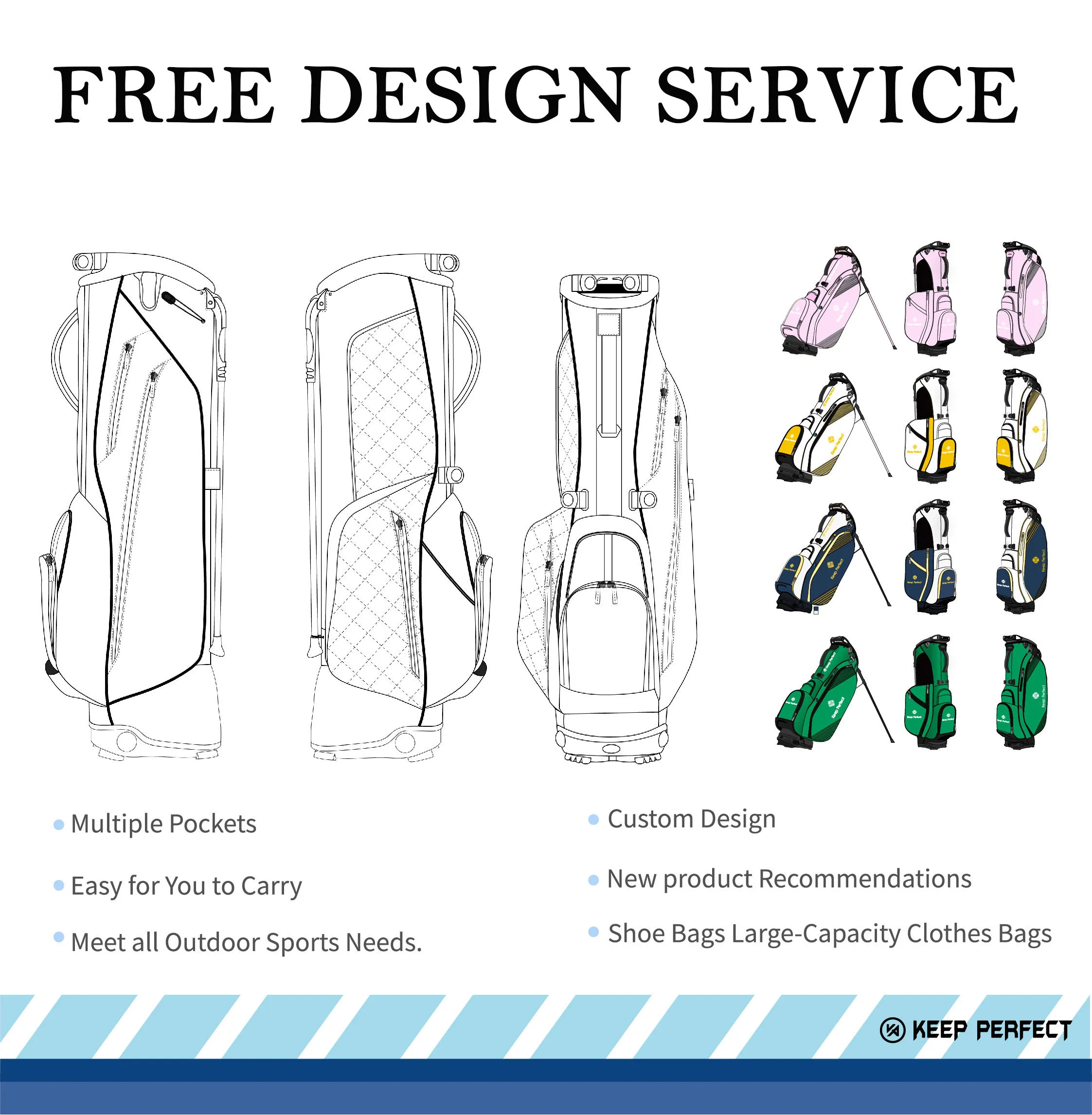
- Map pockets and touchpoints to real use cases to prevent feature creep.
- Protect reorders with material lot continuity and BOM discipline.
- Define a QC test plan (cycle/pull/abrasion) instead of relying on visual checks.
- Turn “nice-to-have” ideas into measurable requirements before sampling.
- Choose materials for abrasion and appearance consistency, not marketing names.
- Lock logo method by panel material to avoid rework and distortion.
- Plan packaging early to prevent transit damage and returns.
- Specify tolerances and inspection criteria so bulk output matches the approved sample.
Executive summary
This article turns Cart Strap Pass-Through: Placement and Testing into a procurement-ready manufacturing brief for Stand Golf Bags programs targeting Canada. It is written for B2B buyers using a OEM/ODM sourcing model.
It goes beyond generic “tips” by defining measurable requirements, acceptance criteria, and QC gates—so your approved sample and bulk production match.
Scope and audience
Use this guide if you are building an RFQ, reviewing a sample, or setting QC standards for bulk production. If you already have a complete tech pack, treat the checklists below as a gap audit.
Market differences usually show up in labeling expectations, packaging requirements, and compliance screening priorities. Confirm final compliance details with your own compliance team for your channel.
Engineering focus
Stand Golf Bags programs succeed when engineering decisions match real use: load paths, wear zones, and pocket geometry. These are the typical focus points for this category.
- Stand system angles and leg stability
- Dual-strap comfort and balance
- Base plate durability and noise control
- Leg wobble from loose hub tolerance
- Base plate cracking from thin material
- Strap anchor pull-out from weak reinforcement
Specification checklist
This is the minimum checklist that turns “premium” into buildable parameters and keeps revision cycles under control.
- Stand/cart compatibility requirements (if applicable)
- Material spec by panel + reinforcement zones
- Pocket list with dimensions + intent (rangefinder, apparel, valuables)
- Zipper brand/grade + slider type + puller details
- Weight target and structure targets (foam, stays, base plate)
- Packaging spec (polybag, hangtag, inserts, carton label)
- Strap geometry and carry comfort target
- Color references (Pantone) + acceptable delta tolerance
- Logo placements (location, size, method) + artwork files
- Top opening size and divider format
Specification baseline
Baselines align teams quickly. Lock final values in sample approval to prevent rework and late-stage changes.
| Parameter | Baseline | Why it matters | Common mistake |
|---|---|---|---|
| MOQ baseline | MOQ baseline: 300 pcs / style | Start smaller with fewer colorways to protect consistency. | Mixing many materials at low volume increases variation. |
| Sampling timeline | Sampling: 10–18 days (typical 2–3 rounds) | Expect multiple iterations for fit + branding. | Approving without a checklist creates rework later. |
| Bulk lead time | Bulk production: 45–75 days (depends on materials and capacity) | Lead time depends on materials and capacity planning. | Ignoring peak season buffers risks delivery slip. |
| Final inspection | Final inspection: AQL 2.5 (defined defect taxonomy required) | Define defect taxonomy so checks are consistent. | AQL without defect definitions is not actionable. |
Materials and trims
Perceived quality is built from touchpoints: handles, zipper pulls, pocket edges, and reinforcement zones. Consistency across these areas matters more than a single “hero” material.
| Option | Material / component | Selection note |
|---|---|---|
| Option 1 | TPU Films (Welded Pocket Windows & Details) | Useful for abrasion zones and high-touch points. |
| Option 2 | Fiberglass/Aluminum Stays (Weight vs Rigidity) | Good balance of durability and consistent appearance. |
| Option 3 | PU Microfiber (Consistent Grain + Easy Care) | Works well for premium feel when paired with clean trims. |
| Option 4 | RPET Fabrics (Recycled Content Lines) | Works well for premium feel when paired with clean trims. |
| Option 5 | PVC-Free Coatings (Water & Stain Resistance) | Best when you need stable color across repeat orders. |
Quality plan
AQL becomes meaningful only when paired with defect definitions and a test plan. Use the table below to define what you accept and how you verify it.
| Check / test | Target | Practical guidance |
|---|---|---|
| Zipper cycle test | Target cycles + smoothness | Run cycles on representative pocket angles and curvature. |
| Pull test (handles/strap anchors) | Defined pull force + duration | Validate reinforcement layers and stitch density at stress points. |
| Abrasion test (high-wear zones) | Defined cycles + appearance criteria | Focus on base, pocket corners, and cart-contact areas. |
| Measurement sampling | Tolerances by key dimensions | Top opening, pocket sizes, and overall height are common disputes. |
| Visual + functional check | Appearance + pocket function | Confirm magnets/closures, stand system behavior, and rattle control. |
Final inspection: AQL 2.5 (defined defect taxonomy required) is recommended only when you have defined defect taxonomy and aligned checkpoints across incoming / in-line / final inspection.
| Defect category | Examples | How to make it actionable |
|---|---|---|
| Appearance | Stains, wrinkles, logo misalignment, print distortion | Define “acceptable vs unacceptable” with photos. |
| Function | Zipper snagging, pocket access issues, stand/cart fit failures | Verify using real-use scenarios (cart strap on, clubs loaded). |
| Measurements | Top opening, pocket dimensions, overall height | Define tolerance for each key dimension. |
| Construction | Loose stitching, reinforcement missing, hardware pull-out | Focus on stress-point reinforcement and stitch density. |
| Packaging | Carton crush, missing labels, damaged trim | Lock packaging spec and verify cartons before release. |
Timeline and milestones
Most delays come from late requirement changes. A professional timeline uses milestones that lock parameters before bulk production starts.
RFQ template
Copy/paste this into an email to receive a quote that matches the final build:
- Category: Stand Golf Bags (topic: Cart Strap Pass-Through: Placement and Testing)
- Intent: OEM/ODM · Target market: Canada
- MOQ baseline: 300 pcs / style
- Target quantity + colorways (start with fewer for consistency)
- Reference images + must-have features
- Branding: placements, methods, and artwork files
- Material preferences + Pantone references (if known)
- Packaging requirements + labeling expectations
- Timeline + preferred Incoterms (FOB/CIF/DDP)