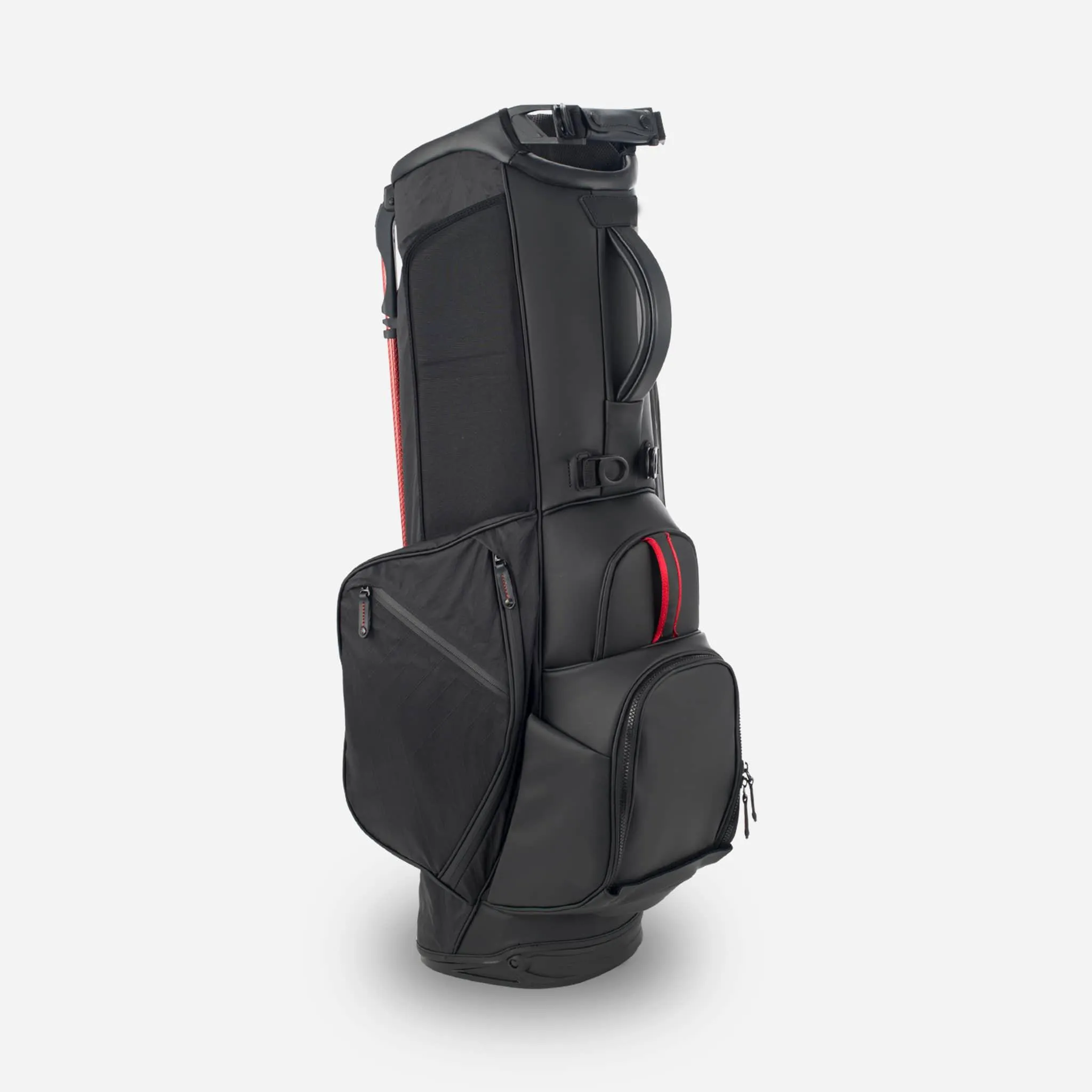
- Use a pre-production checklist to reduce late-stage changes and costly rework.
- Protect reorders with material lot continuity and BOM discipline.
- Turn subjective requirements into measurable specifications before sampling.
- Document revisions with photos and a defect taxonomy for faster corrections.
- Lock logo method by panel material to avoid rework and distortion issues.
- Specify tolerances and inspection criteria so bulk output matches the approved sample.
- Choose materials for abrasion and appearance consistency, not marketing names.
- Define a QC test plan with specific cycle counts and pull forces, not just visual checks.
Executive Summary
This article translates Artwork Files into a procurement-ready manufacturing brief for Stand Golf Bags programs targeting the Canada market. It is designed for B2B buyers operating under a Private Label sourcing model who need measurable requirements, not generic advice.
The global golf bag market reached approximately USD 1.8 billion in 2024, with OEM manufacturing in China accounting for over 60 percent of global production volume. For Canada buyers specifically, the combination of quality expectations, compliance requirements, and branding standards makes it essential to have clear documentation at every stage of the sourcing process.
This guide goes beyond surface-level tips by defining measurable requirements, acceptance criteria, and QC gates that ensure your approved sample and bulk production remain consistent. Whether you are building an initial RFQ, reviewing a factory sample, or establishing QC standards for an ongoing program, the frameworks in this article provide actionable structure for stand golf bags procurement.
At Junyuan Bags Manufacturing Co., Ltd., established in 2004 with a 15,000 square meter factory and 8 production lines, we produce over 200,000 golf bags annually for brands across Canada. Our BSCI and ISO 9001:2015 certified facility implements the exact standards described in this article, giving you a manufacturing partner who understands the gap between specification and execution.
Scope and Audience
Use this Compliance & Packaging Guide if you are building an RFQ, reviewing a sample, or setting QC standards for bulk production of stand golf bags. If you already have a complete tech pack, treat the checklists below as a gap audit to identify missing specifications that could cause production issues.
Who This Guide Is For
This guide targets purchasing managers, product developers, and brand owners who source stand golf bags from Chinese manufacturers for the Canada market. It assumes basic familiarity with golf bag construction but provides enough detail for buyers new to the category to use it effectively as a standalone reference.
When to Apply This Framework
The frameworks in this guide are most valuable during three phases: initial supplier qualification (use the specification checklist to evaluate factory capabilities), sample review (use the engineering focus section to identify construction gaps), and bulk production monitoring (use the quality plan and timeline sections to establish inspection gates).
Market differences between Canada and other regions usually manifest in labeling expectations, packaging requirements, and compliance screening priorities. Always confirm final compliance details with your own compliance team for your specific distribution channel in Canada.
How This Differs From Generic Guides
Most sourcing guides offer broad principles without actionable detail. This guide provides specific measurements, tolerances, and test methods that you can include directly in your supplier communications. Every recommendation is based on actual production experience across more than 200,000 bags per year, refined through two decades of working with global brands.
Engineering Focus: Artwork Files
Stand Golf Bags programs succeed when engineering decisions match real-world use patterns: load paths, wear zones, and pocket geometry all need to work together as an integrated system. For artwork files, these engineering considerations are particularly important for the Canada market where consumer expectations are high.
- Stand system angles and leg stability under load
- Dual-strap comfort and balance during carry
- Base plate durability and noise reduction
- Leg wobble from loose hub tolerance
- Base plate cracking from thin material selection
- Strap anchor pull-out from weak reinforcement layers
Critical Engineering Parameters for Stand Golf Bags
Every stand golf bags must balance competing requirements: weight versus durability, structure versus flexibility, capacity versus profile. The specific balance depends on your target price point and market positioning. Premium programs for Canada typically prioritize durability and material quality, while value programs emphasize functional performance at competitive cost levels.
When specifying artwork files, it is important to define not just the target specification but also the acceptable tolerance range. A panel thickness of 2.0mm plus or minus 0.3mm is a professional specification that factories can execute consistently. A panel thickness of approximately 2mm will generate disputes and inconsistent results across production runs, leading to quality complaints from Canada consumers.
Design for Manufacturing Considerations
Not all design concepts translate efficiently to manufacturing. Working with your factory early in the development process to review construction sequences, material utilization, and assembly methods can reduce costs by 10 to 15 percent without compromising quality. This is especially true for stand golf bags where panel curvature, reinforcement placement, and pocket geometry all interact during the sewing process. Early collaboration between design and manufacturing teams is one of the most effective ways to improve both product quality and cost efficiency.
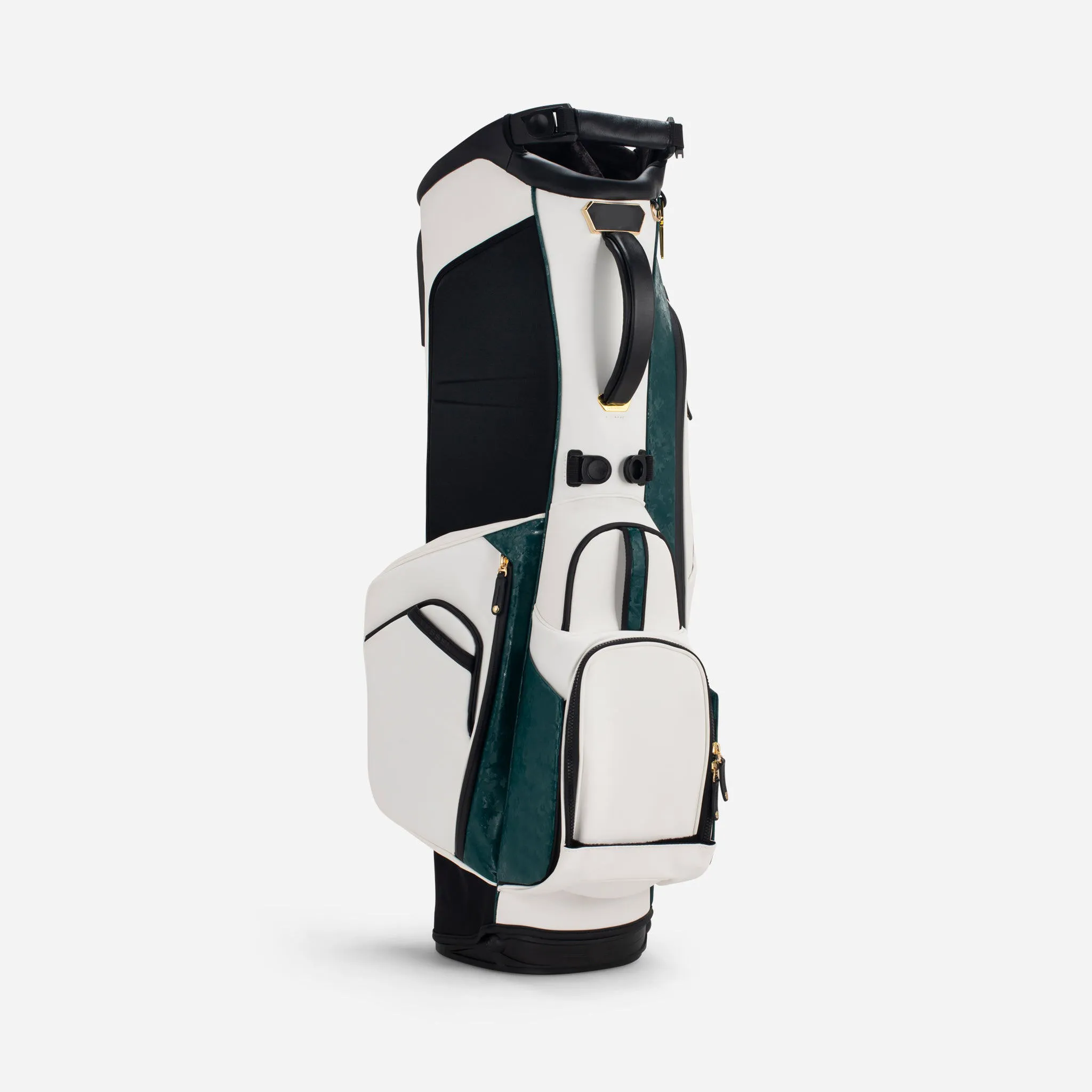
Specification Checklist
This is the minimum checklist that turns subjective terms like premium and high-quality into buildable parameters and keeps revision cycles under control. Use this when communicating with your factory or evaluating a new supplier capabilities for stand golf bags programs.
Core Specifications
- Top opening size and divider format (specify exact count and tube diameter for each divider)
- Inspection plan with acceptance criteria covering appearance, function, and measurement dimensions
- Strap geometry including width, padding thickness, adjustability range, and carry comfort target
- Packaging specification covering polybag thickness, hangtag placement, inserts, and carton labeling
- Hardware finish requirements with corrosion resistance expectations and salt spray test targets
- Complete pocket list with dimensions and intended use for each compartment including valuables protection
- Material specification by panel including reinforcement zones and backing materials with test data
- Color references using Pantone codes plus acceptable delta tolerance values under D65 lighting
- Logo placements specifying location, size, and application method with vector artwork files
- Zipper brand and grade specification plus slider type and puller details with cycle test targets
Compliance and Documentation Requirements
For the Canada market, compliance documentation typically includes material safety test reports, labeling language requirements, and packaging material declarations. Build these requirements into your initial specification rather than adding them later, as retrofitting compliance requirements after sampling can delay programs by 2 to 4 weeks and generate unnecessary sample costs.
Pre-Production Documentation
Before bulk production begins, ensure the following documents are locked and signed by both parties: approved reference sample with dated sign-off card, complete bill of materials with supplier references, color approval under standard D65 lighting conditions, packaging specification with photos of approved packing method, and QC checkpoint schedule with responsible parties identified at each stage. These documents form the contractual basis for production quality between buyer and factory.
Specification Baseline
Baselines align teams quickly and provide reference points for evaluating production samples. Lock final values in sample approval documentation to prevent rework and late-stage changes that delay delivery schedules and increase costs.
| Parameter | Baseline | Why It Matters | Common Mistake |
|---|---|---|---|
| MOQ Baseline | Prototype: 1 to 3 pcs per round | Start with fewer colorways to protect consistency | Mixing many materials at low volume increases variation |
| Sampling Timeline | 10 to 18 days (2 to 3 rounds typical) | Expect multiple iterations for fit plus branding | Approving without a checklist creates rework later |
| Bulk Lead Time | 45 to 75 days from approval | Lead time depends on materials and capacity planning | Ignoring peak season buffers risks delivery delays |
| Final Inspection | AQL 2.5 with defined defect taxonomy | Define defect taxonomy so checks are consistent | AQL without defect definitions is not actionable |
| Color Tolerance | Delta E less than 1.5 under D65 | Ensures visual consistency across production lots | Accepting without instrument measurement invites disputes |
| Stitch Density | 8 to 10 SPI for main seams | Directly affects seam strength and durability | Assuming factory default without verification |
Understanding Baseline Variations
These baselines represent industry standards for stand golf bags production. Specific programs may require tighter tolerances, particularly for premium brands targeting the Canada market. The key principle is that every parameter needs a defined target and an acceptable tolerance range, documented before production begins rather than discovered during inspection. Working with an established manufacturer like Junyuan Bags ensures these baselines are understood and can be met consistently across production runs.
Materials and Trims
Perceived quality is built from touchpoints: handles, zipper pulls, pocket edges, and reinforcement zones. Consistency across these contact areas matters more than a single hero material. Buyers who focus exclusively on the primary fabric often miss quality gaps that become apparent during actual use by Canada consumers.
| Option | Material or Component | Selection Note |
|---|---|---|
| Option 1 | RPET Fabrics (Recycled Content Lines) | Consider for sustainability-focused programs with GRS documentation support |
| Option 2 | 420D/840D Nylon (High Abrasion Grades) | Best when stable color across repeat orders is the primary priority |
| Option 3 | 600D/900D Polyester (Solution-Dyed Options) | Consider for programs requiring UV stability and long-term color consistency |
| Option 4 | PVC-Free Coatings (Water and Stain Resistance) | Best for environmentally regulated markets including Europe and Australia |
| Option 5 | Premium Hardware (YKK Zippers, Duraflex Buckles) | Reduces warranty claims and improves user experience measurably |
Material Selection Strategy for Stand Golf Bags
Material selection should balance performance requirements, cost targets, and market expectations. For the Canada market, buyers should prioritize materials that demonstrate durability in local climate conditions while meeting any applicable compliance requirements. Request material test reports from your supplier and verify them against independent lab results for critical programs. This verification step costs a few hundred dollars but prevents thousands in potential claims from material failures.
Trim Quality Impact on Perceived Value
Trims including zipper pulls, handle wraps, strap padding, and logo elements directly influence how consumers evaluate product quality at retail. Investing in premium trims typically adds only 5 to 8 percent to total unit cost but can justify 15 to 25 percent higher retail pricing. For stand golf bags targeting the Canada market, this trade-off deserves careful evaluation during product development to maximize return on material investment.
Industry Insights: Artwork Files in the Stand Golf Bags Market
The golf bag manufacturing industry has undergone significant evolution in recent years, driven by changing consumer preferences, material innovation, and increasing quality expectations from retail buyers. Understanding these trends helps Canada buyers make informed sourcing decisions that align with market direction.
Material Innovation Trends
The shift toward sustainable materials has accelerated across all major markets. Recycled polyester derived from post-consumer plastic bottles now accounts for approximately 15 percent of golf bag fabric consumption globally, up from less than 5 percent in 2020. For stand golf bags, this means buyers should evaluate RPET alternatives alongside traditional nylon and polyester options. While RPET fabrics currently carry a 10 to 20 percent cost premium, the gap is narrowing as production scale increases and technology improves across the supply chain.
Quality Expectations Evolution
Consumer quality expectations have risen significantly across all price segments in recent years. Features that were once considered premium, such as water-resistant coatings, magnetic closures, and molded base plates, are now expected even in mid-range products. This compression of feature sets means that manufacturing quality execution, rather than feature differentiation alone, increasingly determines brand reputation and customer satisfaction in competitive markets like Canada.
Supply Chain Dynamics
The global golf bag supply chain has diversified beyond traditional manufacturing centers. While China remains the dominant production base with over 60 percent of global output, buyers are increasingly adopting multi-source strategies to mitigate supply chain risk. This trend favors manufacturers who can demonstrate consistent quality, transparent communication, and flexible MOQ structures. Junyuan Bags, with our 20-year track record and 100-piece MOQ, exemplifies the type of partner that supports both initial development and scalable production programs.
Technology Integration in Sourcing
Digital tools are transforming the sourcing process from specification to delivery. 3D sampling reduces physical sample rounds by 30 to 40 percent for programs that adopt digital-first approaches. Cloud-based QC platforms enable real-time inspection reporting with photo documentation accessible from anywhere. Buyers who leverage these tools gain faster development cycles and better production visibility, particularly valuable for Canada brands managing time zone differences with Chinese manufacturing facilities.
Step-by-Step Guide: Implementing Artwork Files Standards
Follow this systematic approach to ensure consistent quality across sampling and bulk production of stand golf bags. Each step builds on the previous one, creating a framework that reduces errors, minimizes revision cycles, and accelerates time to market.
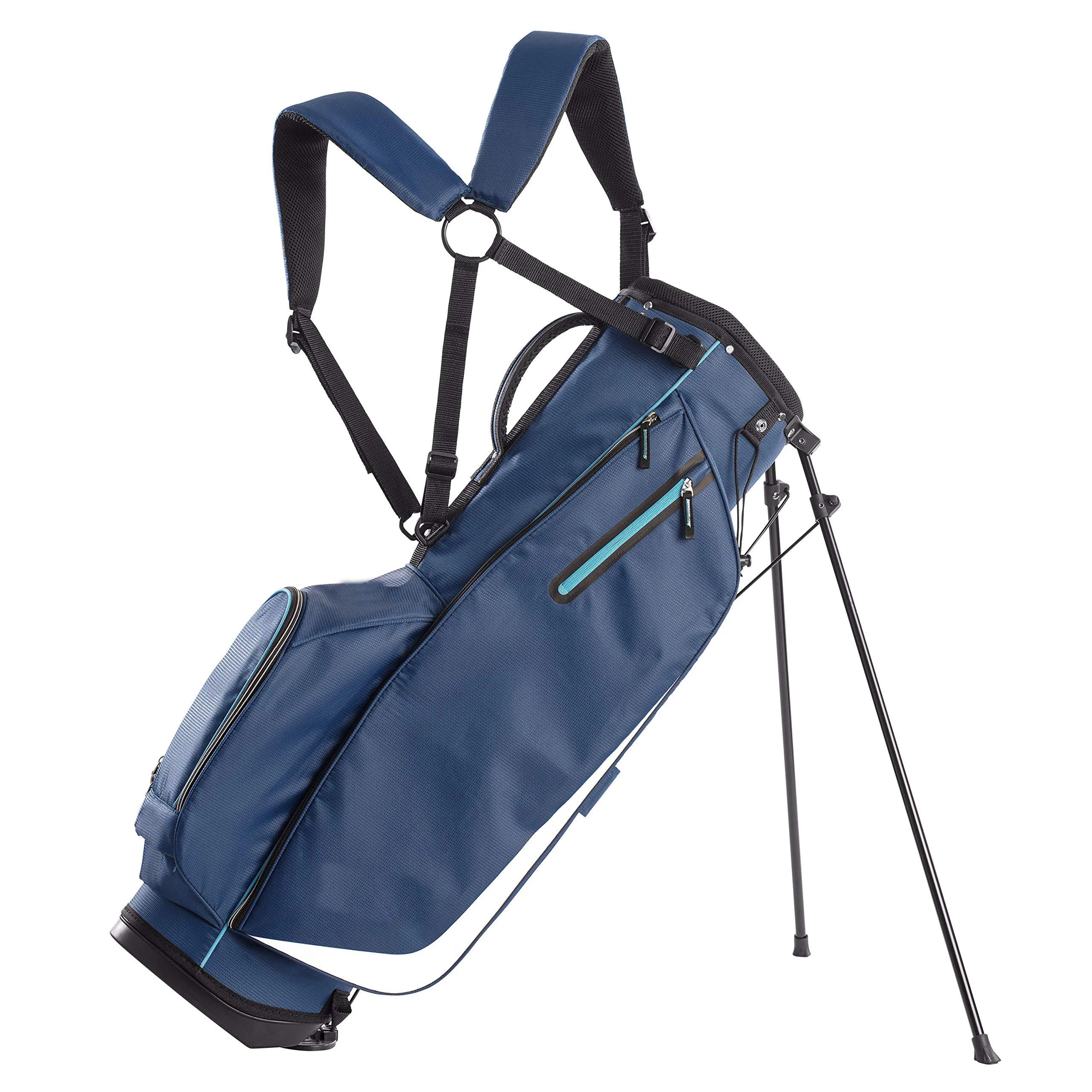
Quality Plan
AQL becomes meaningful only when paired with defect definitions and a specific test plan. Generic inspection criteria without measurements and tolerance ranges cannot resolve disputes between buyer and factory. Use the tables below to define what you accept and how you verify compliance for stand golf bags programs.
| Check or Test | Target | Practical Guidance |
|---|---|---|
| Zipper cycle test | Target cycles plus smoothness rating | Run cycles on representative pocket angles and curvature, not just straight sections |
| Pull test (handles and strap anchors) | Defined pull force plus hold duration | Validate reinforcement layers and stitch density at all stress points systematically |
| Abrasion test (high-wear zones) | Defined cycles plus appearance criteria | Focus on base, pocket corners, and cart-contact areas specific to stand golf bags |
| Measurement sampling | Tolerances by key dimensions | Top opening, pocket sizes, and overall height are most common dispute areas |
| Visual plus functional check | Appearance plus pocket function verification | Confirm magnets, closures, and structural elements under real-use conditions |
| Color consistency check | Delta E less than 1.5 under D65 lighting | Use spectrophotometer readings rather than visual comparison alone |
Defect Taxonomy Framework
| Defect Category | Examples | How to Make It Actionable |
|---|---|---|
| Appearance | Stains, wrinkles, logo misalignment, print distortion | Define acceptable versus unacceptable with reference photos under standard lighting |
| Function | Zipper snagging, pocket access issues, stand or cart fit failures | Verify using real-use scenarios with clubs loaded in the bag |
| Measurements | Dimensions outside specified tolerance range | Define tolerance for each key dimension before production authorization |
| Construction | Loose stitching, reinforcement missing, hardware pull-out | Focus on stress-point reinforcement and stitch density compliance verification |
| Packaging | Carton crush, missing labels, damaged trim | Lock packaging spec and verify cartons before container loading and release |
Final inspection: AQL 2.5 (defined defect taxonomy required) is recommended only when you have defined defect taxonomy and aligned checkpoints across incoming material inspection, in-line production checks, and final random inspection stages.
Market Trends: Stand Golf Bags for the Canada Market
Understanding market dynamics helps buyers make strategic sourcing decisions that align with consumer demand and competitive positioning. The Canada market for stand golf bags has distinct characteristics that influence specification priorities and purchasing behavior.
Global Market Size and Growth Projections
The global golf bag market is valued at approximately USD 1.8 billion in 2024 and is projected to reach USD 2.4 billion by 2030 at a compound annual growth rate of approximately 4.9 percent. Key growth drivers include increasing golf participation in emerging markets, premiumization trends in established markets, and the expansion of e-commerce channels that make specialty brands more accessible to consumers worldwide. For Canada buyers, this growth creates opportunities to expand product lines and explore new market segments.
Canada Market Specifics
The Canada market presents specific opportunities and requirements for stand golf bags buyers. Consumer preferences, climate considerations, and retail channel structures all influence what specifications deliver the best market response. Working with a manufacturer who understands these nuances, like Junyuan Bags with two decades of export experience to Canada, ensures your product development decisions align with local market expectations and regulatory requirements.
Sustainability as Market Differentiator
Sustainability claims are increasingly important across all markets, but the depth of consumer understanding and willingness to pay varies. In Canada, buyers respond positively to verifiable sustainability credentials including recycled material content, PVC-free construction, and certified manufacturing processes. Brands that invest in genuine sustainability improvements rather than superficial claims tend to build stronger customer loyalty and justify premium pricing through documented environmental benefits.
E-Commerce Impact on Product Requirements
The growth of online golf equipment sales has changed product requirements in several meaningful ways. Products must withstand individual shipping rather than palletized retail distribution, increasing packaging protection requirements. Product photography for e-commerce listings demands higher visual consistency across production lots. And return rates for online purchases are typically 2 to 3 times higher than retail purchases, making specification accuracy and quality consistency financially critical for brands selling stand golf bags through digital channels in Canada.
Common Mistakes to Avoid in Stand Golf Bags Sourcing
After 20 years of manufacturing stand golf bags, we have identified recurring mistakes that cause delays, quality issues, and strained buyer-supplier relationships. Understanding these pitfalls helps you build more effective sourcing processes and avoid costly errors.
Visual approval of a sample without documenting key measurements creates a reference with no tolerance framework. When bulk production arrives with slight dimensional variations, there is no objective basis for acceptance or rejection. Always record measurements from approved samples and define acceptable tolerance ranges for each critical dimension including top opening, pocket sizes, and overall height.
Every specification change after bulk cutting begins generates rework costs, material waste, and timeline delays. The most expensive changes involve material substitutions and structural modifications that require re-cutting panels. Lock all specifications during the pre-production phase and implement a formal change order process for any modifications requested after production launch.
Verbal agreements about quality standards, delivery dates, and pricing adjustments create disputes when memories differ between parties. Every agreement should be documented in writing with photos where applicable. This includes color approvals, packaging requirements, and inspection criteria. Written records protect both buyer and factory when questions arise during production or final inspection.
Additional Pitfalls for stand golf bags Programs
Beyond the major mistakes above, stand golf bags buyers commonly underestimate the importance of packaging specification, hardware quality verification, and reinforcement placement confirmation. Each of these areas can generate consumer complaints and warranty claims if not properly specified and verified during production. Include detailed packaging requirements that protect products during shipping, specify hardware brands and grades by name with model numbers, and verify reinforcement placement in every sample round and production inspection visit.
The cost of preventing these mistakes is minimal compared to the cost of correcting them after production begins. A focused 30-minute pre-production meeting that reviews all critical specifications can prevent weeks of delay and thousands of dollars in rework costs. This investment in upfront alignment pays for itself many times over in reduced disputes and faster production timelines.
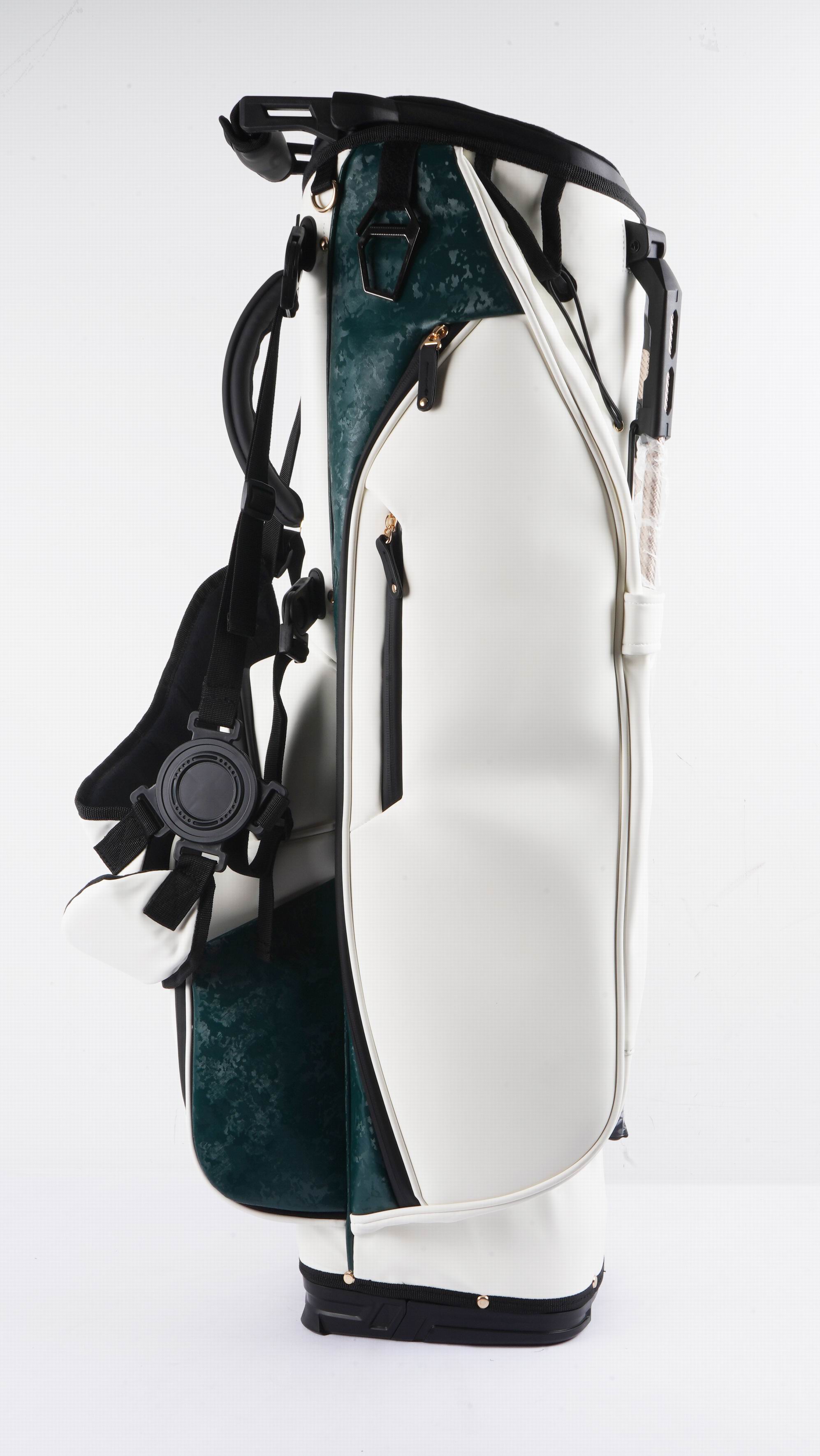
Buyers should confirm specific requirements for their target market and specify testing standards in their RFQ. Junyuan Bags Manufacturing provides complete quality packages with documented testing for all markets, with MOQ starting at 100 pieces. Contact service@junyuanbags.com for market-specific specifications tailored to Canada consumer preferences.
Expert Tips from Junyuan Bags Manufacturing
Based on 20 years of manufacturing stand golf bags for global brands, here are practical recommendations that improve sourcing outcomes and reduce the risk of quality issues.
Tip 1: Always request a complete material test report with every production lot, not just during initial sampling. Material properties can vary between supplier batches, and without ongoing verification, you risk inconsistency between reorders that becomes apparent only when products reach Canada consumers and generate complaints.
Tip 2: Invest in a sealed reference sample from each production run. Store these samples in controlled environmental conditions and use them to evaluate reorder consistency over time. When questions arise about color, material hand-feel, or construction details, having a sealed physical reference eliminates subjective debate between buyer and factory.
Tip 3: Specify packaging requirements with the same rigor as product specifications. Include polybag thickness, carton burst strength, pallet configuration, and labeling placement in your purchase orders. Packaging failures cause damage during transit that generates returns and damages brand reputation in the Canada market where consumers have high expectations for product condition upon delivery.
Tip 4: Build a direct relationship with your factory quality team, not just the sales team. Direct communication between your QC personnel and factory quality managers resolves issues faster and more accurately than relay communication through sales representatives who may not understand technical details. Schedule regular video calls to review quality data and address concerns proactively before they escalate.
Tip 5: Plan your sourcing calendar around factory capacity cycles. Chinese golf bag factories typically experience peak demand from February through May and September through November. Programs that plan 90 to 120 days ahead of needed delivery dates secure better capacity allocation and avoid the quality compromises that occur when factories rush to meet compressed timelines during peak seasons.
Related pages
Complete Sourcing Checklist for Stand Golf Bags
Use this comprehensive checklist when sourcing stand golf bags for the Canada market. Each item represents a critical decision point that affects product quality, cost efficiency, and delivery timeline.
- Verify factory certifications (BSCI, ISO 9001:2015) through the certifying body database directly
- Request and approve material test reports for every fabric lot used in production runs
- Conduct pre-production meeting to lock all specifications before bulk cutting begins
- Define defect taxonomy with visual reference cards for appearance, function, and measurement checks
- Specify packaging requirements including polybag thickness, carton burst strength, and labeling details
- Plan for seasonal capacity constraints by placing orders 90 days before needed delivery date
- Request sealed reference samples from every production lot for reorder consistency verification
- Implement in-line QC checks at critical operations including panel cutting, stitching, branding, and assembly
- Conduct final inspection using AQL 2.5 with minimum sample size per ISO 2859-1 standard
- Document all approvals, changes, and decisions in written form with photos where applicable
- Establish clear communication protocols with designated contacts on both buyer and factory sides
- Plan material reservation strategy for reorders to ensure lot-to-lot color consistency
- Test finished products against real-use scenarios including club loading, pocket access, and cart fit
- Review and approve all branding placements on physical samples under standard D65 lighting conditions
- Confirm compliance requirements for Canada market including labeling, material restrictions, and testing
Buyer Guide: Stand Golf Bags for Canada Market
Sourcing stand golf bags for the Canada market requires understanding of local consumer preferences, regulatory requirements, and competitive dynamics that influence product specifications and pricing. Consumer preferences in Canada tend toward practical features, durable construction, and designs that perform reliably in local climate and usage conditions.
Market Positioning Considerations
Competitive positioning in the Canada stand golf bags market requires balancing quality, features, and price effectively. Premium programs benefit from emphasizing material quality, construction durability, and branding execution that justifies higher price points. Value programs should focus on functional performance and reliable quality at competitive price points. In either case, working with an experienced OEM/ODM partner like Junyuan Bags (established 2004, 200,000-plus bags annual capacity) ensures your program benefits from two decades of manufacturing expertise across multiple global markets.
Regulatory Compliance for Canada
Regulatory compliance for the Canada market includes specific labeling requirements, material safety standards, and import documentation that must be prepared before shipment. Work with your manufacturing partner to ensure all requirements are addressed proactively during production rather than retrofitted after the fact. Junyuan Bags maintains compliance documentation for all major export markets and can guide you through Canada-specific requirements including material testing standards, labeling language specifications, and customs documentation.
For personalized guidance on sourcing stand golf bags for the Canada market, contact our experienced team at service@junyuanbags.com or reach us via WhatsApp at +86 17750020688. Our minimum order quantity starts at just 100 pieces, making it accessible for both established brands and emerging programs to benefit from professional OEM/ODM manufacturing with consistent quality standards.
Ready to Start Your Stand Golf Bags Program for Canada?
Send us your specifications and our team will respond within 24 hours with a detailed quote and production plan tailored to your Canada market requirements.
Junyuan Bags Manufacturing Co., Ltd. | Est. 2004 | MOQ: 100 pieces | BSCI & ISO 9001:2015 Certified