
- Choose materials for abrasion and appearance consistency, not marketing names.
- Document revisions with photos and a defect taxonomy for faster corrections.
- Define a QC test plan (cycle/pull/abrasion) instead of relying on visual checks.
- Plan packaging early to prevent transit damage and returns.
- Specify tolerances and inspection criteria so bulk output matches the approved sample.
- Turn “nice-to-have” ideas into measurable requirements before sampling.
- Use a pre-production checklist to reduce late-stage changes.
- Lock logo method by panel material to avoid rework and distortion.
Executive summary
This article turns Metal Badges: Screws, Rivets, and Pull-Out Resistance into a procurement-ready manufacturing brief for Golf Accessories Pouches programs targeting UAE. It is written for B2B buyers using a Wholesale sourcing model.
It goes beyond generic “tips” by defining measurable requirements, acceptance criteria, and QC gates—so your approved sample and bulk production match.
Scope and audience
Use this guide if you are building an RFQ, reviewing a sample, or setting QC standards for bulk production. If you already have a complete tech pack, treat the checklists below as a gap audit.
Market differences usually show up in labeling expectations, packaging requirements, and compliance screening priorities. Confirm final compliance details with your own compliance team for your channel.
Engineering focus
Golf Accessories Pouches programs succeed when engineering decisions match real use: load paths, wear zones, and pocket geometry. These are the typical focus points for this category.
- Zipper durability
- Lining selection
- Compartment logic and usability
- Zipper snagging
- Weak stitching at corners
- Cluttered branding on small surfaces
Specification checklist
This is the minimum checklist that turns “premium” into buildable parameters and keeps revision cycles under control.
- Pocket list with dimensions + intent (rangefinder, apparel, valuables)
- Material spec by panel + reinforcement zones
- Weight target and structure targets (foam, stays, base plate)
- Top opening size and divider format
- Inspection plan and acceptance criteria (appearance, function, measurement)
- Strap geometry and carry comfort target
- Logo placements (location, size, method) + artwork files
- Zipper brand/grade + slider type + puller details
- Hardware finish requirements (corrosion expectations)
- Color references (Pantone) + acceptable delta tolerance
Specification baseline
Baselines align teams quickly. Lock final values in sample approval to prevent rework and late-stage changes.
| Parameter | Baseline | Why it matters | Common mistake |
|---|---|---|---|
| MOQ baseline | MOQ baseline: 500 pcs / style | Start smaller with fewer colorways to protect consistency. | Mixing many materials at low volume increases variation. |
| Sampling timeline | Sampling: 10–18 days (typical 2–3 rounds) | Expect multiple iterations for fit + branding. | Approving without a checklist creates rework later. |
| Bulk lead time | Bulk production: 45–75 days (depends on materials and capacity) | Lead time depends on materials and capacity planning. | Ignoring peak season buffers risks delivery slip. |
| Final inspection | Final inspection: AQL 2.5 (defined defect taxonomy required) | Define defect taxonomy so checks are consistent. | AQL without defect definitions is not actionable. |
Materials and trims
Perceived quality is built from touchpoints: handles, zipper pulls, pocket edges, and reinforcement zones. Consistency across these areas matters more than a single “hero” material.
| Option | Material / component | Selection note |
|---|---|---|
| Option 1 | EVA Foam (Comfort + Structure) | Consider for sustainability lines with documentation. |
| Option 2 | 420D/840D Nylon (High Abrasion Grades) | Good balance of durability and consistent appearance. |
| Option 3 | 600D/900D Polyester (Solution-Dyed Options) | Best when you need stable color across repeat orders. |
| Option 4 | YKK Zippers (Standard & Water-Resistant) | Good balance of durability and consistent appearance. |
| Option 5 | PU Microfiber (Consistent Grain + Easy Care) | Useful for abrasion zones and high-touch points. |
Quality plan
AQL becomes meaningful only when paired with defect definitions and a test plan. Use the table below to define what you accept and how you verify it.
| Check / test | Target | Practical guidance |
|---|---|---|
| Zipper cycle test | Target cycles + smoothness | Run cycles on representative pocket angles and curvature. |
| Pull test (handles/strap anchors) | Defined pull force + duration | Validate reinforcement layers and stitch density at stress points. |
| Abrasion test (high-wear zones) | Defined cycles + appearance criteria | Focus on base, pocket corners, and cart-contact areas. |
| Measurement sampling | Tolerances by key dimensions | Top opening, pocket sizes, and overall height are common disputes. |
| Visual + functional check | Appearance + pocket function | Confirm magnets/closures, stand system behavior, and rattle control. |
Final inspection: AQL 2.5 (defined defect taxonomy required) is recommended only when you have defined defect taxonomy and aligned checkpoints across incoming / in-line / final inspection.
| Defect category | Examples | How to make it actionable |
|---|---|---|
| Appearance | Stains, wrinkles, logo misalignment, print distortion | Define “acceptable vs unacceptable” with photos. |
| Function | Zipper snagging, pocket access issues, stand/cart fit failures | Verify using real-use scenarios (cart strap on, clubs loaded). |
| Measurements | Top opening, pocket dimensions, overall height | Define tolerance for each key dimension. |
| Construction | Loose stitching, reinforcement missing, hardware pull-out | Focus on stress-point reinforcement and stitch density. |
| Packaging | Carton crush, missing labels, damaged trim | Lock packaging spec and verify cartons before release. |
Timeline and milestones
Most delays come from late requirement changes. A professional timeline uses milestones that lock parameters before bulk production starts.
RFQ template
Copy/paste this into an email to receive a quote that matches the final build:
- Category: Golf Accessories Pouches (topic: Metal Badges: Screws, Rivets, and Pull-Out Resistance)
- Intent: Wholesale · Target market: UAE
- MOQ baseline: 500 pcs / style
- Target quantity + colorways (start with fewer for consistency)
- Reference images + must-have features
- Branding: placements, methods, and artwork files
- Material preferences + Pantone references (if known)
- Packaging requirements + labeling expectations
- Timeline + preferred Incoterms (FOB/CIF/DDP)
FAQ
How much detail is “enough” for a quote?
Why do samples often need multiple rounds?
What causes “looks good in sample, inconsistent in bulk”?
Which logo method is safest for durability?
How do brands reduce returns for premium programs?
What should change by market (USA vs EU vs UK)?
Industry Insights & Market Trends
The global golf accessories market has experienced steady growth, with accessories pouches emerging as one of the fastest-growing subcategories. Industry reports indicate that the golf accessories segment is projected to reach $4.2 billion by 2028, driven by increasing participation rates and the rise of premium branded merchandise programs. Private label brands account for approximately 35% of this growth, particularly in North American and European markets where golf courses and pro shops are expanding their retail offerings beyond core equipment.
Manufacturing trends in golf accessories pouches have shifted toward multi-functional designs that serve both on-course and off-course purposes. Brands that offer convertible pouches—those that transition from rangefinder holders to everyday carry cases—have seen 40% higher sell-through rates compared to single-purpose designs. This reflects the broader consumer preference for versatile products that justify purchase through multiple use cases, whether at the course, the office, or during weekend activities.
Material innovation in the accessories pouch category has accelerated significantly. Recycled polyester (RPET) fabrics now represent over 25% of material selections for premium programs, up from just 8% three years ago. Water-resistant coatings, welded seam construction, and molded EVA shells are no longer reserved for high-end lines—they have become baseline expectations across multiple price tiers. Manufacturers offering vertically integrated services from material sourcing through finishing deliver better lead time consistency and quality control.
Step-by-Step Manufacturing Guide
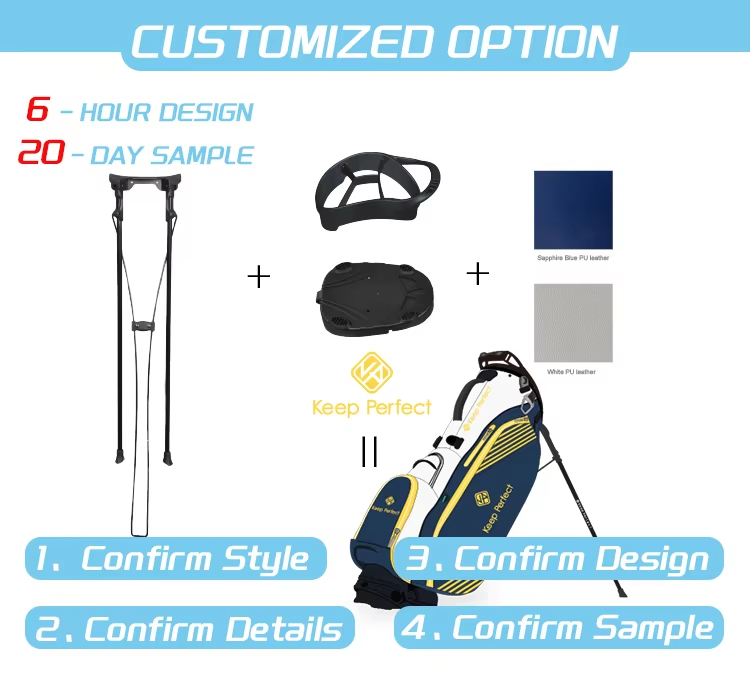
Follow this structured approach to ensure your Golf Accessories Pouches Wholesale program for the UAE market meets quality targets and ships on schedule. Each step builds on the previous one, creating a systematic workflow that reduces revision cycles and prevents costly late-stage changes.
Step 1: Define the product requirements matrix. Before approaching manufacturers, document your target market, price positioning, distribution channel, and competitive set. Map every feature to a specific user need—for golf accessories pouches, this means defining pocket configurations, protection zones, carry systems, and branding placements. This analysis prevents feature creep and ensures manufacturing decisions align with commercial objectives.
Step 2: Develop a comprehensive tech pack. A complete tech pack includes dimensioned drawings, bill of materials with supplier references, Pantone color standards, branding artwork files, hardware specifications, packaging instructions, and quality standards with AQL levels. For golf accessories pouches, include specific details about foam density, reinforcement placement, zipper grades, and lining materials. This document is your single source of truth throughout development.
Step 3: Request and evaluate samples systematically. Use a structured evaluation checklist rather than subjective impressions. Test dimensional accuracy against your tech pack, material hand-feel against approved swatches, zipper and hardware function through repeated cycling, and branding quality for registration and color accuracy. For golf accessories pouches, also test load-bearing capacity, structural stability, and real-world usability with typical contents.
Step 4: Lock specifications with a pre-production sign-off. Once the pre-production sample is approved, document every detail in a sign-off checklist that both buyer and manufacturer agree to. Include material lot references, color acceptance ranges (Delta E values), construction tolerances, and functional test criteria. This becomes the reference for production QC and dispute resolution.
Step 5: Implement in-line quality checkpoints. Build quality checks into critical production steps: after cutting (verify dimensions and grain direction), after main assembly sewing (check seam allowances and reinforcement), after hardware attachment (test closures and load-bearing points), and after finishing (visual inspection against approved sample). In-line checks catch issues when they are fixable—final inspection only identifies them.
Best Practices for Buyers
These best practices are drawn from Junyuan Bags Manufacturing experience producing 200,000+ golf bags annually across 8 production lines for brands in UAE and global markets. Each practice addresses a common challenge that affects quality, lead time, or cost in golf accessories pouches programs.
Maintain a running quality log across all production runs for your golf accessories pouches programs. Document every issue found during incoming inspection, in-line checks, and final inspection. Over time, this data reveals recurring patterns that drive continuous improvement conversations with your manufacturing partner. The goal is to reduce defect rates with each production cycle.
Build strong relationships with your manufacturing team beyond transactional interactions. Visit the factory, meet the production managers and QC team, and understand their capabilities and constraints. Manufacturers that understand your brand positioning make better decisions on the production floor for details not explicitly covered in your tech pack.
Plan material lot continuity for reorders. The most common cause of quality complaints on reorders is material lot variation. Request that your manufacturer reserves fabric from the same dye lot and builds a 3-5% buffer quantity into each material purchase. This preparation ensures reorders match the original production within 12 months without color or texture drift.
Separate critical dimensions from cosmetic features in your inspection criteria. Dimensional tolerances should be treated as pass/fail. Cosmetic features should have defined tolerance ranges with photo references for acceptable and unacceptable boundaries. This distinction prevents unnecessary production holds for minor appearance variations that do not affect function or consumer satisfaction.
Market Trends by Region
The market for golf accessories pouches shows strong growth across all major regions, with North America leading demand at approximately 38% of global procurement volume. American buyers prioritize brand consistency across full product sets, which drives larger average order quantities but also raises the bar for color matching and branding precision. The trend toward direct-to-consumer brands has created new opportunities for smaller programs that require flexible MOQ structures.
European markets show increasing demand for sustainability-certified products. GRS certification and bluesign approval are appearing in RFQs with growing frequency, particularly for Scandinavian and German brands. European buyers also expect detailed material traceability documentation and compliance with REACH standards. These requirements are becoming baseline expectations rather than differentiators.
Asia-Pacific markets, particularly Japan and Korea, maintain the highest quality standards in construction and finishing. Tolerances are tighter and visual inspection criteria more stringent than Western markets. Manufacturers serving these regions invest in precision cutting equipment and trained finishing teams. The return comes through higher unit prices, stronger retention, and credibility when serving global brand portfolios.
Common Mistakes to Avoid
Avoid these frequent errors that cause costly delays, rework, and quality failures in Golf Accessories Pouches Wholesale programs. Each mistake has been observed across multiple buyer-manufacturer relationships and can be prevented with systematic planning.
1. Approving samples without a checklist. Subjective approval creates disputes when bulk arrives with different expectations. Instead, use a structured checklist with measurable criteria: dimensions within tolerance, zipper function verified, branding placement confirmed, material hand-feel compared to approved swatch. Every criterion should have a clear pass/fail standard that both parties agree to before production begins.
2. Skipping the pre-production meeting. A 30-minute pre-production meeting between buyer and factory team prevents weeks of rework. Review every construction detail, confirm material lots, agree on tolerances, and document any last-minute changes. This meeting is especially critical for Wholesale programs where customization increases complexity and the cost of errors is multiplied across the full production run.
3. Ignoring material lead times. Custom-dyed fabrics and branded hardware can require 30-45 days before production starts. If your timeline assumes materials are ready when bulk begins, you risk delivery delays of 2-4 weeks. Always confirm material availability and lead times before setting your delivery schedule, and build buffer time for unexpected supply chain disruptions.
4. Underestimating packaging requirements. Packaging specifications that seem minor become major issues at scale. A polybag thickness difference across 5,000 units creates rework. Include packaging in your tech pack with the same rigor as construction details—polybag dimensions and thickness, hangtag placement and attachment method, carton specifications with inner dividers, and labeling requirements for your target market.
5. Not planning for reorders. Successful brands plan reorders from day one: reserve material dye lots, document the exact BOM used in production, photograph finished goods from multiple angles, and archive approved samples. This preparation ensures reorders match the original production within 12 months. Without these steps, color drift, material substitutions, and construction variations create customer complaints and erode brand trust.
Why Choose Junyuan Bags Manufacturing
Junyuan Bags Manufacturing Co., Ltd. has been producing premium golf bags since 2004, operating a 15,000 square meter facility with 200+ skilled staff across 8 dedicated production lines. Our annual capacity of 200,000+ golf bags serves brands across UAE, Europe, Japan, Korea, UAE, and other global markets. We bring two decades of manufacturing expertise to every Golf Accessories Pouches program, whether it is a 100-piece initial order or a 10,000-piece annual supply agreement.
Our quality management system is certified to ISO 9001:2015, and our social compliance program meets BSCI standards. Every production run undergoes three-tier inspection: incoming material checks, in-line production audits, and final random inspection using AQL standards with defined defect taxonomy. This systematic approach ensures that your Golf Accessories Pouches programs meet consistent quality standards across production runs and reorders, reducing the risk of customer complaints and returns.
With a flexible MOQ of 100 pieces, comprehensive OEM/ODM capabilities, and deep experience across Wholesale programs, we help brands of all sizes bring their golf bag visions to market efficiently. Our team provides end-to-end support from material sourcing and prototyping through bulk production and shipping documentation, making international sourcing straightforward and transparent.
Key capabilities for your Golf Accessories Pouches program include:
- Material expertise: 420D-1200D nylon, polyester, RPET recycled fabrics, EVA foam molding, TPU welding, and premium leather options
- Branding precision: Embroidery, heat transfer, screen printing, rubber patches, metal badges, laser engraving, and woven labels
- Quality assurance: ISO 9001:2015 certified, BSCI compliant, AQL-based inspection with photographic defect references
- Capacity and flexibility: 200K+ units/year across 8 lines with MOQ starting at 100 pieces per style
- Market compliance: Extensive experience with UAE market requirements including labeling, material safety, and packaging specifications
Frequently Asked Questions
What is the typical MOQ for custom golf accessories pouches programs?
The standard MOQ is 300 pieces per style for most manufacturers. Junyuan Bags Manufacturing offers flexible MOQ of 100 pieces for initial orders and sampling programs. Lower quantities support material testing and market validation phases. The MOQ threshold ensures material lot consistency and production efficiency. For multi-style programs, combining quantities across 2-3 colorways can meet requirements while diversifying your range.
How do I ensure color consistency across golf accessories pouches reorders?
Request that your manufacturer locks the dye lot for initial production and reserves equivalent fabric for reorders within 12 months. Provide Pantone references with your order and specify acceptable delta tolerance (Delta E less than or equal to 1.5 is industry standard). For critical brand colors, order 5-10% additional fabric from the original dye lot as a safety buffer for future reorders.
What branding method works best for golf accessories pouches?
The optimal method depends on panel material and artwork complexity. Embroidery offers highest durability on structured panels with adequate foam backing. Heat transfer suits complex multi-color graphics on flat panels. Rubber patches and metal badges deliver premium aesthetics but require proper mounting structure. Always request a branded sample and conduct durability testing before bulk approval.
What is the lead time from order to delivery for golf accessories pouches?
Sampling takes 10-18 days per round (2-3 rounds typical). Bulk production ranges from 45-75 days depending on materials and capacity. Total timeline from first sample to delivery is typically 90-120 days including shipping. Peak season (March-June) can add 10-15 days. Advance planning and material pre-ordering minimize timeline risk.
How should I document quality requirements for my golf accessories pouches supplier?
Create a quality manual covering: dimensional tolerances with measurement points, material specs with Pantone references, construction details with seam allowances, branding placements with artwork files, packaging requirements with labeling instructions, and AQL levels with defined defect taxonomy. Supplement with photo references showing acceptable vs. unacceptable boundaries for subjective criteria.
Related Resources
Explore additional resources to support your Golf Accessories Pouches sourcing and manufacturing program:
- Golf Accessories Pouches Product Range - View our full selection of golf accessories pouches for OEM/ODM and wholesale programs.
- Product Directory
- Manufacturing Capabilities
- Quality Assurance Standards
- Private Label Manufacturing
- Sustainability Commitment
- Request a Quote
- About Junyuan Bags
- Sample Policy
- Material Options
- Complete OEM/ODM Manufacturing Guide - Our comprehensive pillar page covering the full manufacturing process from concept to delivery.
- Contact Our Team - Send your RFQ or request a sample consultation with our product development team.