Japan Private Label Tour Golf Bags Pricing Checklist: Umbrella + Towel Placement
Pricing Checklist | Japan Market | Tour Golf Bags | Junyuan Bags Manufacturing
Overview: Umbrella + Towel Placement for Tour Golf Bags
Sourcing tour golf bags for the Japan market requires careful attention to umbrella + towel placement as a critical specification area. This pricing checklist provides comprehensive guidance for private label buyers who need to make informed decisions about product specifications, quality control checkpoints, and cost management across their tour golf bags programs.
The global golf bag market continues to grow steadily, with the premium segment expanding at approximately 5.2 percent annually according to recent industry reports from the Golf Manufacturers Association. As competition intensifies across all distribution channels, the details that distinguish premium products from value offerings increasingly center on specification areas like umbrella + towel placement. Buyers who understand these technical details can negotiate more effectively, set appropriate quality standards, and build product programs that deliver consistent value to their end consumers.
Whether you are launching a new tour golf bags line, transitioning to a new manufacturing partner, or optimizing an existing program, this guide provides actionable specifications and checkpoints that apply directly to your sourcing workflow. Junyuan Bags Manufacturing, established in 2004 with an annual capacity exceeding 200,000 bags, brings two decades of experience in private label tour golf bags for markets worldwide.
Technical Deep Dive: Umbrella and Towel Placement Ergonomics
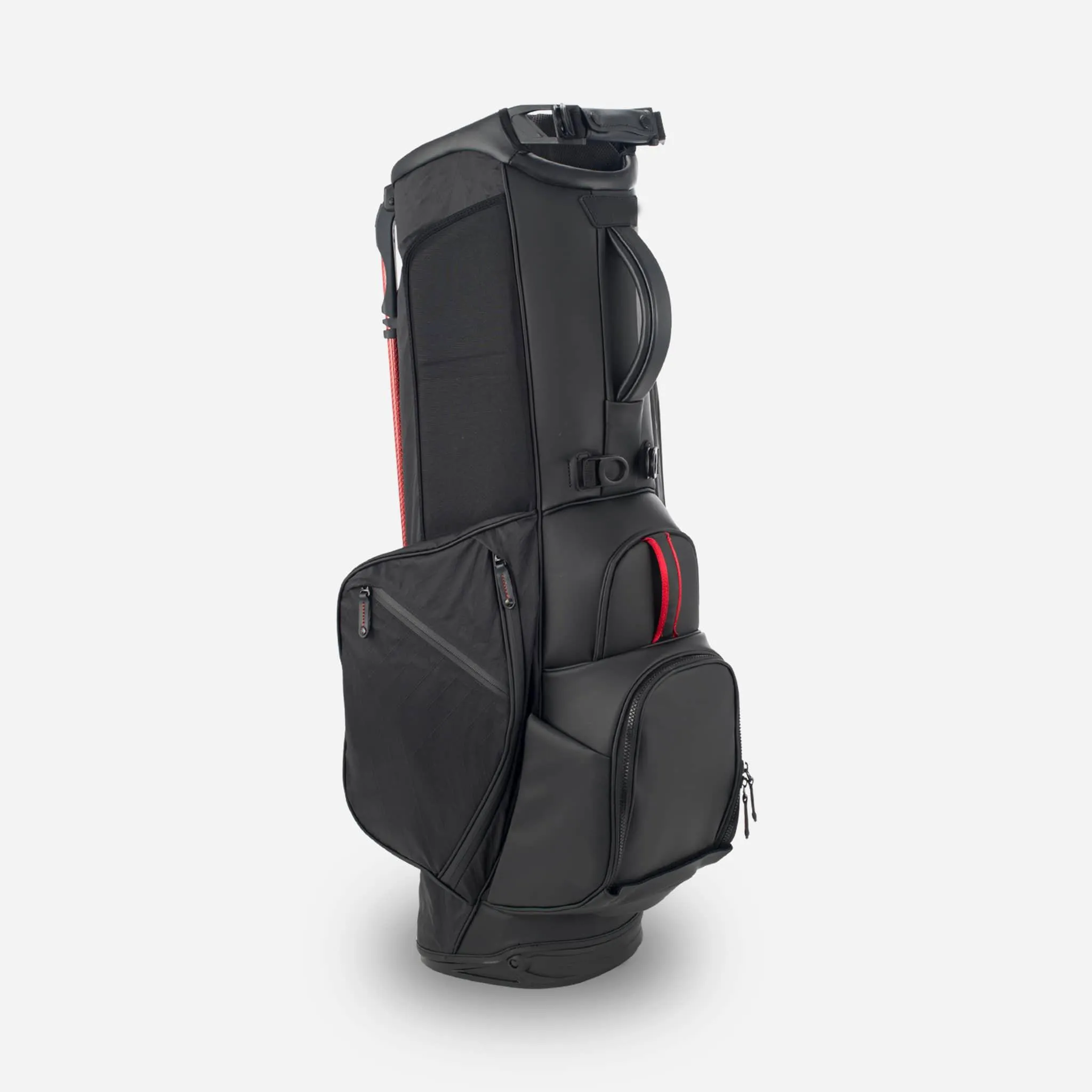
The placement of umbrella holders and towel rings on tour bags directly affects user experience and perceived quality. These accessories must be positioned for natural, intuitive access without interfering with club access or other pocket features on the bag.
Key Parameters and Specifications
Position the umbrella holder on the rear left side of the bag at a 15 to 20 degree angle from vertical for right-handed golfer accessibility. The holder should accommodate umbrellas up to 35 millimeters shaft diameter. Towel rings should be positioned on the front right side at waist height for easy access. Specify spring-loaded towel ring mechanisms that hold the towel securely during cart movement.
Testing Standards and Methods
Every specification must be accompanied by a defined test method and acceptance criteria. Common testing standards applicable to tour golf bags include ISO 105 for color fastness, ISO 2411 for coating adhesion, ASTM D3359 for tape adhesion cross-hatch testing, ASTM B117 for salt spray corrosion resistance, and ISO 811 for hydrostatic head water resistance testing. Specify these standards in your purchase order and require test reports with every production lot to maintain full traceability and quality assurance across your supply chain.
Best Practices and Step-by-Step Guide
Implementing best practices for umbrella + towel placement in your tour golf bags program requires a systematic approach that covers specification, sampling, production monitoring, and final inspection. The following step-by-step guide walks through each phase with specific checkpoints and decision criteria.
Step 1: Define Your Specification Requirements
Begin by establishing clear, measurable requirements for umbrella + towel placement. Vague specifications like "high quality" or "premium feel" create ambiguity that leads to inconsistency in production. Instead, define quantifiable targets: specific measurement ranges, material properties, test standards, and acceptable quality limits. Document these in your technical specification sheet or tech pack, referencing industry standards where applicable. For tour golf bags targeting the Japan market, consider regional preferences and expectations that influence consumer purchasing decisions.
Step 2: Sample Development and Approval
Request pre-production samples that specifically demonstrate your umbrella + towel placement requirements. During the sampling phase, test multiple options if you are evaluating material choices or construction methods. Document the results of each sample with photographs, measurements, and performance test data. Create a sample approval form that lists every checkpoint with pass or fail criteria. Always load tour golf bags with standard equipment (14 clubs, accessories in all pockets) and evaluate performance in realistic scenarios to reveal functional issues that static inspection cannot detect.
Step 3: In-Line Production Monitoring
Once bulk production begins, implement in-line quality checks at critical operations. For umbrella + towel placement, identify which production steps most directly affect the final quality attribute and schedule inspections at those points. In-line monitoring catches problems early when correction costs are minimal. The cost of reworking a batch of 200 bags at the sewing stage is approximately USD 80 to USD 150. The cost of addressing the same issue after packing and shipping can exceed USD 2,000 when including freight, duties, and customer relationship impact.
Industry Insights: Umbrella + Towel Placement
The tour golf bags manufacturing industry has evolved significantly over the past decade, driven by changing consumer expectations, advances in material science, and increasing regulatory scrutiny. Understanding these industry dynamics helps buyers make forward-looking decisions that position their products for long-term success in competitive markets.
Consumer Expectations Are Evolving
Golfers today expect more from their equipment than previous generations. The proliferation of online reviews and social media sharing means that product quality issues receive rapid, widespread attention. For tour golf bags, consumers increasingly evaluate products not just on visual appearance but on tactile quality, functional performance, and durability over extended use. Products that feel premium in hand but fail after one season generate negative reviews that damage brand reputation far beyond the cost of the original product. Industry surveys show that 73 percent of golfers who play more than 30 rounds per year factor durability and construction quality into their purchasing decisions above brand recognition alone.
Manufacturing Innovation and Capability
Modern tour golf bags manufacturing combines computer-aided pattern design, precision cutting, automated stitching in repetitive operations, and skilled hand assembly for complex components. Leading factories invest in operator training programs that elevate construction quality consistently across production runs. Junyuan Bags Manufacturing maintains a BSCI-certified facility with ISO 9001:2015 quality management, reflecting the industry standard for professional manufacturing operations that serve international brands across all major golf markets.
Supply Chain Considerations for Japan
Global supply chain disruptions have taught buyers the importance of diversifying material sources and building stronger relationships with manufacturing partners. For tour golf bags programs, this means working with factories that maintain relationships with multiple fabric mills, zipper suppliers, and hardware vendors. Single-source dependencies create vulnerability to price increases and availability disruptions that can delay entire production programs. Factories with diversified supply chains and established backup vendors provide more reliable delivery timelines and greater flexibility for rush orders or specification adjustments.
Market Trends and Data: Tour Golf Bags in the Global Market
The global golf bag market is projected to reach USD 2.1 billion by 2028, growing at a compound annual growth rate of approximately 4.8 percent according to industry analysis. Several key trends are shaping demand patterns and specification requirements for tour golf bags across different regional markets.
The Premiumization Trend
The shift toward premium products continues across all golf equipment categories. In tour golf bags, the USD 150 to USD 300 retail price segment is growing fastest, particularly in the Japan market. This trend drives demand for higher-quality materials, more sophisticated construction methods, and enhanced branding execution. Manufacturers who can deliver consistent premium quality at competitive production costs gain a significant advantage in securing long-term buyer relationships. The premium segment also attracts higher margins, with gross margins of 45 to 55 percent compared to 30 to 40 percent for value-oriented programs.
Sustainability Requirements Across Markets
Environmental sustainability requirements continue to tighten across all major markets. Recycled polyester, bio-based coatings, and reduced-packaging programs are transitioning from premium differentiators to baseline expectations. The Japan market shows particularly strong demand for sustainably produced tour golf bags, with GRS-certified recycled materials increasingly specified in RFQs. Factories that invest in certified sustainable materials and processes position themselves for growing demand while reducing the regulatory compliance burden on their brand partners.
Regional Demand Variations
Different markets prioritize different product attributes. The Japan market tends to emphasize durability and weather resistance in product construction. Asian markets like Japan and Korea prioritize precision finishing, attention to detail, and flawless cosmetic appearance. European markets focus on material compliance, sustainability credentials, and REACH documentation. North American markets value functional innovation and brand storytelling. Understanding these regional preferences helps buyers specify products that resonate with their target consumers while meeting local regulatory requirements and distribution channel expectations.
Buyers sourcing tour golf bags for the Japan market should confirm specific regional requirements including labeling standards, material compliance regulations, and testing protocols. Junyuan Bags Manufacturing maintains compliance documentation for all major export markets and provides market-specific guidance. Contact service@junyuanbags.com for market-specific specification recommendations tailored to your product program.
Pricing Checklist: Key Checkpoints for Tour Golf Bags
Quality control for tour golf bags requires systematic inspection at multiple stages of production. The following checkpoints address the most critical quality attributes related to umbrella + towel placement and general construction standards that ensure consistent output quality.
Incoming Material Inspection
| Checkpoint | Standard | Method | Frequency |
|---|---|---|---|
| Fabric weight | Within plus/minus 5% of spec | Digital scale, 100cm2 sample | Every roll |
| Color fastness | Grade 4 minimum (ISO 105) | Crockmeter test | Every lot |
| Coating adhesion | Minimum 3N/mm peel strength | Peel test per ISO 2411 | Every lot |
| Zipper durability | 500 cycles minimum | Cyclic open-close test | Every lot |
| Hardware corrosion | 48-hour salt spray minimum | ASTM B117 | Every lot |
In-Line Production Checks
| Checkpoint | Standard | Method | Frequency |
|---|---|---|---|
| Stitch density | 8-10 SPI consistent | Visual count per 25mm | Every 50 pieces |
| Seam alignment | Within 2mm tolerance | Tape measure | Every 25 pieces |
| Bar tack placement | Within 3mm of pattern mark | Visual and measure | Every 50 pieces |
| Pocket opening size | Within plus/minus 3mm | Tape measure | Every 25 pieces |
| Panel symmetry | Left-right match within 2mm | Fold comparison | Every 25 pieces |
Final Random Inspection (AQL Standards)
| Defect Class | AQL Level | Sample Size (300pc lot) | Accept/Reject |
|---|---|---|---|
| Critical defects | AQL 0 | Full inspection | 0 / 0 |
| Major defects | AQL 2.5 | 32 pieces | 2 / 3 |
| Minor defects | AQL 4.0 | 32 pieces | 3 / 4 |
Cost Drivers and MOQ Planning for Tour Golf Bags
Understanding the cost structure of tour golf bags helps buyers make informed decisions about specification trade-offs and order quantity planning. The following analysis breaks down the key cost components and their sensitivity to specification changes that affect your total program investment.
Typical Cost Breakdown for Tour Golf Bags
| Cost Component | Percentage of FOB | Sensitivity to Spec Changes |
|---|---|---|
| Fabric and lining materials | 28-35% | High - material grade directly affects cost |
| Labor (cutting, sewing, assembly) | 25-32% | Medium - complexity affects labor time |
| Hardware (zippers, buckles, D-rings) | 10-15% | Medium - brand and material selection matters |
| Branding (embroidery, transfers, patches) | 5-10% | High - method and complexity vary significantly |
| Packaging and labeling | 3-5% | Low - standardized across programs |
| Overhead and margin | 12-18% | Low - relatively fixed per factory |
MOQ Planning Strategy
For private label tour golf bags, minimum order quantities typically start at 100 pieces per style at Junyuan Bags Manufacturing. This accessible MOQ allows brands to test new designs, enter new markets, or build exclusive product lines without excessive inventory commitment. As order quantities increase to 300, 500, and 1,000 pieces per style, unit costs decrease progressively due to amortized setup costs and material purchasing efficiencies that benefit larger programs.
Plan your MOQ strategy around your distribution channel requirements and reorder cycle timing. A first order of 200 pieces allows you to validate market response while maintaining enough inventory for a 60 to 90 day selling period. Reorder quantities should be sized to cover your lead time (typically 45 to 60 days production plus 20 to 30 days shipping to the Japan market) plus safety stock of 30 days sales to prevent stockouts during peak demand periods.
Common Mistakes to Avoid in Umbrella + Towel Placement
Providing vague specifications leads to inconsistent results and multiple sample rounds. Every dimension, material property, and quality attribute should be defined with measurable criteria. A well-written tech pack reduces sample rounds from four or five down to two or three, saving weeks of development time and significant sample costs that accumulate quickly across multiple revision cycles.
The pre-production meeting (PPM) aligns the factory team on every specification before bulk cutting begins. Skipping this step is the single most common cause of bulk production errors. A 30-minute PPM covering materials, construction sequence, branding placement, and inspection criteria prevents problems that cost thousands of dollars to correct after production is complete.
Pre-production samples receive extra attention from the factory's best operators. Production samples must be drawn from regular production output to verify that quality standards are maintained at production speed and with standard staffing levels. Always request in-line production samples for critical checkpoints to ensure consistency.
Packaging protects your product during transit and creates the first impression for retail display. Specifying polybag thickness, carton construction, packing method, and labeling requirements in your purchase order prevents transit damage and ensures products arrive in sellable condition. For the Japan market, confirm that packaging meets all local labeling and compliance requirements.
Expert Tips from Junyuan Bags Manufacturing
Tip 1: Build a sealed reference sample library for every active style. Keep one sealed sample at your office and one at the factory. When questions arise about construction details, color, or finish, both parties can refer to the identical physical reference rather than relying on memory or photographs that may not accurately represent the approved standard.
Tip 2: Request material lot test reports with every shipment. Fabric properties can vary between production lots even from the same mill. Having test data for each lot allows you to track consistency over time and identify potential issues before they affect finished product quality in ways that impact your brand reputation.
Tip 3: Visit the factory during your first production run. Seeing your product being made provides insights that no sample or report can convey. You will understand construction challenges, identify opportunities for design improvement, and build the personal relationship that strengthens the manufacturing partnership and improves communication over time.
Tip 4: Plan your sourcing calendar around factory capacity cycles. The period from February through April represents peak production demand for fall and holiday season products. Placing orders during this period may extend lead times by 10 to 15 days. Planning orders 90 days ahead of your needed delivery date provides buffer against unexpected delays and seasonal capacity constraints.
Buyer Guide: Tour Golf Bags for Japan Market
Sourcing tour golf bags for the Japan market requires understanding of local consumer preferences, regulatory requirements, and competitive dynamics that shape product expectations. The Japan market has distinct characteristics that influence product specification and quality expectations throughout the sourcing process.
Consumer preferences in the Japan market tend toward practical, well-constructed products that deliver reliable performance over multiple seasons. Quality consistency across orders is valued more than occasional spectacular samples followed by inconsistent bulk production. Building a reputation for reliability with your Japan customers requires partnering with a factory that maintains consistent quality standards across every production run regardless of order size.
Regulatory compliance for the Japan market may include specific labeling requirements, material safety standards, and import documentation. Work with your manufacturing partner to ensure all requirements are addressed before shipment. Junyuan Bags Manufacturing maintains compliance documentation for all major export markets and can guide you through Japan-specific requirements to ensure smooth customs clearance and market entry.
Competitive positioning in the Japan tour golf bags market requires balancing quality, features, and price effectively. Premium programs benefit from emphasizing material quality, construction durability, and branding execution that commands higher retail prices. Value programs should focus on functional performance and reliable quality at competitive price points that deliver strong margins. In either case, working with an experienced manufacturing partner like Junyuan Bags ensures your program benefits from two decades of production expertise.
For personalized guidance on sourcing tour golf bags for the Japan market, contact our team at service@junyuanbags.com or reach us via WhatsApp at +86 17750020688. Our minimum order quantity starts at just 100 pieces per style, making it accessible for both established brands and emerging programs to benefit from professional private label manufacturing with full quality assurance.
Ready to Start Your Tour Golf Bags Program?
Send us your specifications and our team will respond within 24 hours with a detailed quote and production plan for your Japan market program.
Junyuan Bags Manufacturing Co., Ltd. | Est. 2004 | MOQ: 100 pieces | BSCI & ISO 9001:2015 Certified